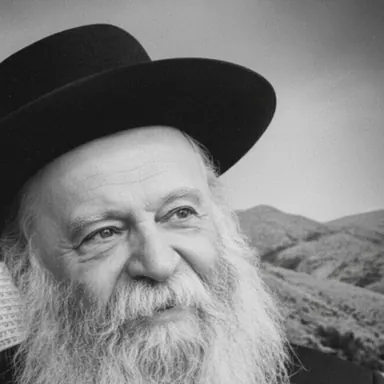
Ideological Leadership, Editorial Enterprise, and Statist Theology: The Work and Torah Teaching of Rabbi Zvi Yehuda HaKohen Kook
17 min read3,334 words
Summary
This text surveys the highly influential figure of Rabbi Zvi Yehuda HaKohen Kook (the Ratzyah), focusing on his decisive role in shaping modern Religious Zionism. The work analyzes how the Ratzyah transformed the abstract thought of his father, the Rayah Kook, into a political and social program of action that confers theological sanctity on the State of Israel and its institutions, and in particular on the army and the settlement enterprise. A survey of his work reveals the complex hermeneutic labor of editing his father's writings, alongside the establishment of the Mercaz HaRav yeshiva as an ideological center that produced a generation of leaders imbued with messianic self-confidence. Ultimately, the source presents the Ratzyah as a bridging figure who merged halakhic conservatism with active statism, thereby laying the foundation for the deepest political and territorial transformations in Israeli society.
Rabbi Zvi Yehuda HaKohen Kook (the Ratzyah) stands as one of the most influential and formative figures in shaping the Religious Zionist stream in the State of Israel and in the political and social upheaval of Israeli society in the second half of the twentieth century [cite: 1]. As the only son and foremost disciple of his father, Maran Rabbi Abraham Isaac HaKohen Kook (the Rayah), the Ratzyah served as a historical and theological bridge that translated his father's metaphysical, poetic, and profound thought into the language of concrete action: political, pioneering, and settlement-oriented [cite: 2, 3, 4]. His thought is not merely a direct continuation of his father's teaching, but a unique dialectical development that adapted messianic theory to the concrete reality of a sovereign state that bears an army, governing institutions, and geographical borders [cite: 5, 6, 7]. An in-depth analysis of his work and teaching reveals how the Ratzyah transformed Religious Zionism from a movement seeking to integrate into the secular Zionist enterprise into a pioneering force of messianic self-confidence that aspires to lead the processes of redemption in the Land of Israel [cite: 1, 3].
Chapter 1: Stations of Life and Processes of Spiritual Growth
Rabbi Zvi Yehuda Kook was born on the festival of Passover, the 15th of Nisan 5651 (22 April 1891), in the town of Zheimel in the Kovno Governorate, then within the Russian Empire and today in Lithuania [cite: 1, 3]. His mother, the Rebbetzin Raiza-Rivka, was the daughter of Rabbi Zvi Yehuda Rabinovitz Teomim, after whom the Ratzyah was named [cite: 1]. In 5656 (1896) the family moved to Bauska following the appointment of the father as the city's rabbi, and there the boy acquired the foundations of his learning from local rabbis such as Rabbi Reuven Gotfried Yedidya and Rabbi Binyamin Menashe Levin, alongside the study of Scripture with Rabbi Moshe Seidel and private lessons in Russian [cite: 1, 4]. However, the principal guide and influence on the shaping of his personality was his father, who described him as almost the only one able to fathom his thought and to listen to the discourse of his soul [cite: 1, 8].
With the family's immigration to the Land of Israel on the 28th of Iyar 5664 (1904), following the Rayah's appointment as rabbi of Jaffa and the colonies, the Ratzyah began to integrate into the local Torah creativity [cite: 1, 4]. He studied for a short period at the "Torat Chaim" yeshiva in the Old City of Jerusalem under Rabbi Zerach Ephraim Epstein, and afterward returned to Jaffa and took an active part in founding the local yeshiva in the "Sha'arei Torah" building in 5669 (1909) [cite: 1, 4]. In Jaffa he assisted Rabbi Yaakov Moshe Charlap in editing his book "Tzvi LaTzadik" and recruited outstanding students for the yeshiva, among them Hillel Perlman, who later became known as the mysterious figure "Mr. Shoshani" [cite: 1, 9].
In his search for a quiet corner for Torah study without public disturbances, the Ratzyah studied for a short period at the "Porat Yosef" yeshiva [cite: 4]. In 5674 (1914), on the advice of Rabbi Binyamin Menashe Levin, he traveled to the city of Halberstadt in Germany, where he combined sacred studies with broadening his general education in science and the humanities [cite: 4, 9]. With the outbreak of the First World War he was arrested in Germany as a subject of an enemy state (Russia), and only after great efforts was he released and joined his father in neutral Switzerland [cite: 4]. These years in Switzerland were a fruitful period in which he studied with his father "the entire Torah," as he himself defined it [cite: 3].
After the war he returned to the Land of Israel in 5606 (1920) and began to teach at the "Netzach Yisrael" Talmud Torah in Petach Tikva, an institution established as a modern religious alternative to secular education, headed by Rabbi Moshe Auerbach [cite: 4]. In 5682 (1922) he married, in Warsaw, Chava Leah Hutner, an educated woman active in the field of Jewish education in Poland [cite: 4]. Their life together lasted 22 years without children, and upon her death from illness on the 7th of Shevat 5704 (1944), the Ratzyah condemned himself to a life of extreme solitude and modesty in his home on Obadiah Street in Jerusalem for about forty years, while devoting all his vitality to leading the Mercaz HaRav yeshiva, which was founded in 5683 (1923) [cite: 1, 4].
Chapter 2: The Hermeneutic Enterprise – Editing the Writings of the Rayah as a Theological Formation
The Ratzyah's greatest scholarly and Torah contribution, which preceded his later political activity, was the enterprise of editing his father's writings [cite: 3, 10]. This work was not technical in character, but constituted a creative, interpretive, and structuring act of the first order [cite: 10, 11]. Rabbi Kook wrote his reflections in stormy personal diaries, in notebooks, and in collections written out of prophetic inspiration, without systematic order or a defined thematic division [cite: 12, 13]. The Ratzyah, alongside Rabbi David Cohen ("the Nazirite Rabbi"), took upon himself to organize, sort, cut, and reformulate these paragraphs into a complete theological system [cite: 10, 14].
According to the research of the scholar Yosef Avivi in his book "Kabbalat HaRayah" ("The Kabbalah of the Rayah"), the Rayah's teaching is written in the kinnui (code-word) language of the kabbalists, in which sublime and ornate words in fact serve as concealed designations for divine sefirot and emanative processes [cite: 12, 15, 16]. The Ratzyah was among the few who held the key to deciphering this language, and through his editing he gave the essays and books their systematic structure [cite: 11, 12]. A prominent example of the Ratzyah's sophisticated editorial intervention is found in the introduction to the book "Shabbat HaAretz," which deals with the laws of the Sabbatical year [cite: 10, 11]. A comparison of the original manuscript with the printed text reveals that the Ratzyah divided the original composition into dozens of separate segments, rearranged them in an entirely different order, and created a new conceptual structure that contributed to the work's readability [cite: 11]. The Rayah himself was aware of this editorial intervention and approved it during his lifetime [cite: 11].
The Ratzyah saw strategic importance in printing his father's halakhic writings before publishing his thought writings, in order to establish the Rayah's halakhic authority as a first-rank halakhic decisor in the Haredi and religious world [cite: 10]. He edited and published his father's central responsa books: "Mishpat Kohen," "Da'at Kohen," "Ezrat Kohen," and "Orach Mishpat" [cite: 10]. This editorial enterprise also included the editing of the prayer book "Olat Re'iyah," into which the Ratzyah incorporated halakhic passages he had summarized alongside his father's commentaries drawn from other works such as "Ein Ayah" on tractates Berakhot and Shabbat [cite: 17, 18, 19].
This intensive editorial enterprise later drew criticism with the publication of the original, unedited "Eight Notebooks" beginning in the 1990s, which stirred a deep controversy among the Ratzyah's disciples, who argued that one must adhere solely to the version edited by their teacher and by the Nazirite Rabbi [cite: 10, 13].
Chapter 3: A Theological-Political Teaching: The State, Redemption, and the Controversy over Messianism
The core of the Ratzyah's teaching lies in conferring absolute theological status on the real State of Israel [cite: 5]. Whereas the Rayah saw the state as a sublime idea, his son applied this conception to the complex reality of the secular state [cite: 5, 20]. The Ratzyah saw in the state the fulfillment of the prophets' vision and the "revealed end" of which the Sages spoke in tractate Sanhedrin (98b) with regard to the flourishing of the Land of Israel [cite: 6].
This teaching was developed, among other things, out of stormy polemical confrontations with opposing views [cite: 21, 22]. A key article for understanding his teaching is "Torah and Redemption," written as a direct response to a journalistic article by Dr. Yeshayahu (Isaac) Carlebach from 5692 (1932) [cite: 22]. Carlebach argued that historical Jewish messianism is an anarchistic movement that seeks to abolish the authority of the commandments and of halakha (based on the Sages' saying "the commandments will be nullified in the time to come") [cite: 22]. The Ratzyah published his response thirteen years late, in 5705 (1945), in the newspaper "HaTzofeh," with his references to the Holocaust that took place in Europe interwoven in the interim [cite: 22]. In his article the Ratzyah drew a clear distinction: Jewish messianism does not detach itself from halakha, but is the driving force of the nation's national existence in its land, and the commandments are not nullified but rise to a more complete collective level [cite: 22, 23].
Another central issue on which the Ratzyah confronted ideological trends within Religious Zionism was the "Torah and Labor" controversy [cite: 21]. In his article "On Torah and on Labor," written in honor of the HaPoel HaMizrachi conference in 5713 (1952), the Ratzyah contended with two opposing approaches:
- The restrictive Haredi approach: which seeks to shut itself within the four cubits of halakha, ignoring the national and practical building of the state [cite: 21].
- The sectoral, semi-secular approach: prevalent among some members of "Torah and Labor," who saw these two concepts as separate and even contradictory values, setting physical labor up as a value standing on its own, detached from Torah [cite: 21].
The Ratzyah rejected both of these options [cite: 21]. He explained that "labor" in its broad sense includes the service of God in the Temple, the practical commandments, and also the physical labor of building the nation and its political frameworks [cite: 21]. The power of labor derives directly from the power of Torah, and the Torah aspires to be revealed in the full expanse of earthly and national life [cite: 21]. To establish the essential equality between Torah and nation, the Ratzyah cited the words of Rav Saadia Gaon in his book "Emunot ve-De'ot" ("Beliefs and Opinions"), taking care to be precise about the book's wording: "Our nation is a nation only by virtue of its Torahs" – in the plural, which refers both to the Written Torah and to the Oral Torah, accompanying the nation at every stage of its historical development [cite: 21].
Chapter 4: The Army, the Integrity of the Land, and the Dialectic of Statism
A practical implication of the sanctity of the state in the Ratzyah's teaching is the sanctified attitude toward the Israel Defense Forces [cite: 7]. The Ratzyah developed a revolutionary approach that sees military service and the bearing of arms as truly sacred service that elevates the Divine Presence [cite: 7]. He based this position on the words of Nahmanides (Ramban), according to which the commandment of inheriting the Land requires permanent Jewish sovereignty, "that it not be left in the hand of any other of the nations" [cite: 7, 24].
All the instruments that serve this purpose – tanks, rifles, and uniforms – hold the sanctity of instruments for an all-Israel commandment [cite: 7]. For this reason, the Ratzyah rejected the concept of "exemption" for yeshiva students and regarded the arrangement for their enlistment merely as a "deferment of service" for the sake of strengthening the nation's spiritual fortresses, which are the morale engine of the entire state [cite: 4, 7].
This dynamic reached its dramatic peak on the eve of Independence Day 5727 (1967), three weeks before the Six-Day War [cite: 6]. In his famous sermon, known as "Psalm 19 of the State of Israel," the Ratzyah cried out over the tearing apart of the historical regions of the Land – Hebron, Shechem, Jericho, and Transjordan – and over the fulfillment of Joel's prophecy "and they have divided My land" [cite: 6, 25]. When these regions of the Land were liberated just a few weeks later in the war, his disciples underwent a profound messianic experience that confirmed their teacher's prophecy and gave birth to the "Gush Emunim" movement in 5734 (1974) [cite: 5, 6, 28].
The settlement enterprise in Judea, Samaria, the Gaza region, and the Golan enjoyed an especially strong tailwind with the rise to power of Menachem Begin and the Likud movement in 5737 (1977), an event that gave unprecedented momentum to the establishment of new settlements under the direct spiritual guidance of the Ratzyah [cite: 8]. At the same time, the Ratzyah formulated a negating and rigid position against any initiative of territorial concession [cite: 26, 28]. In the "Statement of Opinion" leaflet that he published in Sivan 5735 (1975), he determined that uprooting the commandment of settling the Land falls under the category of "be killed rather than transgress," and that a government prepared to evacuate settlements or to rely on the support of Arab parties in a coalition desecrates the Name and is not worthy of being called a normal government [cite: 26, 27].
Chapter 5: Education, Public Leadership, and the Establishment of the Institutional Enterprise
The Ratzyah's public leadership rested on changing the sociological structure of the Mercaz HaRav yeshiva and turning it into the beating heart of Religious Zionism [cite: 1, 3]. The turning point took place with the arrival of the members of the Gachelet nucleus (Garin Chalutzi Lomdei Torah, the Pioneering Nucleus of Torah Learners), members of the "Eitanim" tribe of the Bnei Akiva movement (among them Rabbi Tzefaniah Drori and Rabbi Chaim Druckman) [cite: 29, 30]. These young people aspired to strengthen the Torah side of the movement, to put an end to mixed dancing, and to empower Torah study as a supreme value integrated with the settlement enterprise [cite: 29]. They saw the Ratzyah as their foremost teacher and rabbi, and he, for his part, turned them into the next generation of leaders of Religious Zionism [cite: 1, 30].
In his civic activity the Ratzyah showed direct involvement in national struggles:
- Aid to the underground movements: he encouraged his disciples who joined the Etzel and Lehi underground movements against the British Mandate [cite: 1].
- Civil security service: during the War of Independence he volunteered for service in the "Mishmar HaAm" (People's Guard) in Jerusalem and helped build fortifications [cite: 1].
- Political involvement: he placed himself in the symbolic 119th place on the "HaPoel HaMizrachi" list in the elections to the Second Knesset in 1951 [cite: 1].
- International struggles: he led the public struggle for opening the gates of the Soviet Union to Jewish emigration [cite: 1].
In halakhic matters the Ratzyah presented positions that were both conservative and statist [cite: 1]. He forbade ascending the Temple Mount on grounds of ritual impurity, strictly supported his father's "Heter Mechira" (sale permit) enterprise in the Sabbatical year, and opposed the conscription of women into the IDF, directing them instead to national activity within the framework of national-civil service [cite: 1, 31].
After his death in 5742 (1982), the Rabbi Zvi Yehuda Institute (the Ratzyah Institute) was established in his memory alongside the Mercaz HaRav yeshiva, headed by Rabbi Ben Zion Shapira and under the presidency of the head of the yeshiva, Rabbi Yaakov Shapira [cite: 19]. The institute devoted itself to the systematic publication of many manuscripts of the Rayah and the Ratzyah, alongside the documentation and summarizing of his many lessons [cite: 19, 32].
Chapter 6: Summary and Conclusions
Rabbi Zvi Yehuda HaKohen Kook was not merely the guardian of his great father's legacy, but a practical philosopher and political leader who reshaped Religious Zionism and turned it into a leading and dominant force in the history of the State of Israel [cite: 1, 3, 5]. His path was characterized by an impressive ability to combine two poles: on the one hand, uncompromising halakhic zeal for the integrity of the Land, the definition of its physical borders, and its public halakhot; and on the other hand, deep love, patience, and exceptional moral sensitivity toward the secular public and the builders of the state, whoever they might be [cite: 1, 9, 26].
His complex life's work – from the scholarly and hermeneutic editing of the Rayah's writings, through turning the Mercaz HaRav yeshiva into a focus of attraction for the pioneers of Bnei Akiva, to the leadership of the "Gush Emunim" movement – created the theological and practical foundation out of which the Torah world of the Land of Israel grows to this very day [cite: 1, 3, 30]. His written and institutional legacy continues to serve as a focus of stormy discussions and controversies, and underscores his central place as the spiritual architect of the generation of redemption and national revival [cite: 3, 10, 35].
Sources35
- 1.צבי יהודה הכהן קוק - ויקיפדיה, he.wikipedia.org/wiki/צבי_יהודה_הכהן_קוק
- 2.מנחיל תורת הגאולה | הרב אליעזר מלמד | בית המדרש - אתר ישיבה, yeshiva.org.il/midrash/2112
- 3.לנתיבות ישראל סט ספרים: משנתו של מו"ר הרב צבי יהודה, ybe.org.il/product/לנתיבות-ישראל-סט-2/
- 4.הרב צבי יהודה קוק - Mercaz Harav, mercazharav.org.il/רבותינו/הרב-צבי-יהודה-קוק/
- 5.אתחלתא דתקווה - נאמני תורה ועבודה, toravoda.org.il/אתחלתא-דתקווה/
- 6.מזמור י"ט של מדינת ישראל - ויקיפדיה, he.wikipedia.org/wiki/מזמור_י"ט_של_מדינת_ישראל
- 7.הרצי"ה ויחסו לצבא - Mercaz Harav | מרכז הרב, mercazharav.org.il/2019/07/05/הרציה-ויחסו-לצבא/
- 8.הרצי”ה - בית הרב קוק, beit-harav.org.il/haratzia.pdf
- 9.סיפור חייו המרתק של הרצי"ה קוק » ﬣקיבוץ ﬣקדוש (האתר של משה נחמני), hakibbutz.org.il/3303
- 10.כתבי הראי"ה - ויקיפדיה, he.wikipedia.org/wiki/כתבי_הראי"ה
- 11.אומנות ואמנות בעריכת הרצי״ה קוק את כתבי הראי״ה קוק: עריכת ה'מבוא׳ ל'שבת הארץ׳ - מקרה מבחן, researchgate.net/publication/262132817_wmnwt_wmnwt_brykt_hrzyh_qwq_t_ktby_hryh_qwq_rykt_h'mbw_l'sbt_hrz_-_mqrh_mbhn
- 12.ספרי הרב קוק ומשנתו זול ספר ספרי קודש, zolsefer.co.il/171616/d794d7a8d7912dd7a7d795d7a7
- 13.הערפל בטהרתו – על העריכה בכתבי מרן הראי"ה קוק זצ"ל - ספריית אסיף, asif.co.il/wpfb-file/maagalim5-279-315-pdf/
- 14.כתבי הראי"ה – ויקישיבה, yeshiva.org.il/wiki/index.php/כתבי_הראי"ה
- 15.קבלת הראי"ה / יוסף אביבי | ספר | אביבי, יוסף בן אריה מחבר (יד יצחק בן צבי (ירושלים)), nli.org.il/he/books/NNL_ALEPH990044096340205171/NLI
- 16.קבלת הראי"ה - בין השיטין והשיטות, avivibooks.com/ספר-קבלת-הראיה/
- 17.מחבר:אברהם יצחק הכהן קוק - ויקיטקסט, he.wikisource.org/wiki/מחבר:אברהם_יצחק_הכהן_קוק
- 18.עולת ראי"ה - ויקיטקסט, he.wikisource.org/wiki/עולת_ראי"ה
- 19.אודות מכון הרצי"ה - Mercaz Harav | מרכז הרב, mercazharav.org.il/ספרי-מכון-הרציה/אודות-מכון-הרציה/
- 20.יסוד כסא השם בעולם - ויקיפדיה, he.wikipedia.org/wiki/יסוד_כסא_השם_בעולם
- 21.1 (2)(3) - ספריית אסיף, asif.co.il/wpfb-file/1-23-pdf-21/
- 22.הרקע למאמרו של רבנו הרב צבי יהודה קוק "התורה והגאולה" ויחסי הראי"ה והרצי"ה עם ד"ר עזריאל קרליבך / הרב ידידיה שנדורפי - מכון שלמה אומן, machonso.org/hamaayan/?gilayon=78&id=2957
- 23.שיעורים בנושא לנתיבות ישראל | בית המדרש | שיעורי תורה - אתר ישיבה, yeshiva.org.il/midrash/category/1378
- 24.ביקור אצל הרב צבי יהודה קוק - Rabbi Tovia Preschel, toviapreschel.com/he/ביקור-אצל-הרב-צבי-יהודה-קוק/
- 25.מזמור י"ט - Mercaz Harav | מרכז הרב, mercazharav.org.il/2019/07/05/מזמור-יט/
- 26.המאבק על שלמות ארצנו - חלק ג' | מרן הרב צבי יהודה הכהן קוק זצ"ל | בית המדרש | אתר ישיבה, yeshiva.org.il/midrash/3895
- 27.ממשלת מיעוט | מרן הרב צבי יהודה הכהן קוק זצ"ל | בית המדרש - אתר ישיבה, yeshiva.org.il/midrash/43400
- 28.אנציקלופדיה יהודית דעת - קוק הרב צבי יהודה ;, daat.ac.il/encyclopedia/value.asp?id1=851
- 29.קרב איתנים: השבט שקבע את עתיד הציונות הדתית - מקור ראשון, makorrishon.co.il/magazine/local-magazine/article/257070
- 30.ישיבת מרכז הרב – ויקישיבה - אתר ישיבה, yeshiva.org.il/wiki/index.php/ישיבת_מרכז_הרב
- 31.שירות בנות בצבא | שאל את הרב - כיפה, kipa.co.il/שאל-את-הרב/שירות-בנות-בצבא/
- 32.מכון הרב צבי יהודה הכהן קוק – ויקישיבה, yeshiva.org.il/wiki/index.php/מכון_הרב_צבי_יהודה_הכהן_קוק
- 33.לנתיבות ישראל מנוקד חלק ב' | הרב צבי יהודה הכהן קוק - זול ספר - ספרי קודש, zolsefer.co.il/לנתיבות-ישראל-מנוקד-חלק-ב-הרב-צבי-יהודה-הכהן-קוק.html
- 34.לנתיבות ישראל - ב' חלקים - ספריית חוה, chavabooks.co.il/product/לנתיבות-ישראל-ב-חלקים/
- 35.הוויכוח על גבולות המדינה — סוגיה של דת ומדינה? - המכון הישראלי לדמוקרטיה, idi.org.il/media/3435/pp96.pdf