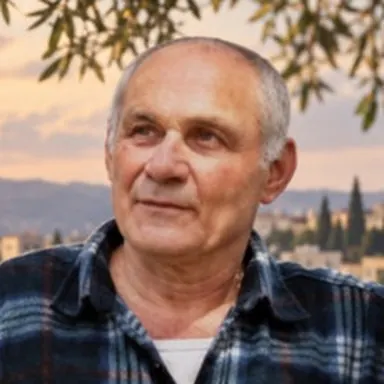
Creative Leadership, a Torah of Life and the Secret of Grafting: The Work and Torah Teaching of Rabbi Hanan Porat
19 min read3,826 words
Summary
This text surveys the complex portrait of Rabbi Hanan Porat, a spiritual and public leader who sought to unite the world of Torah with the life of action and settlement. The central axis of his thought is based on "the secret of grafting," a theological conception that sees the material and the holy as complementing each other in the process of national redemption. The source details his wide-ranging work, from the restoration of Gush Etzion and the founding of yeshivot to social legislation and the founding of charitable organizations for the needy. Alongside this, it highlights his unique interpretive method known as the "Oral Tanakh," which combines a physical connection to the landscapes of the Land with modern Hebrew poetry. The purpose of the text is to present a legacy that combines Torah depth with active pioneering, out of a constant aspiration to increase "light and goodness" in Israeli society.
Introduction: The Spiritual Portrait of a Man of Faith and of Connections
In his life and teaching, Rabbi Hanan Porat represented a unique model of spiritual and public leadership in Religious Zionism, a model that sought to unite the thought of the study hall with action in the field, political struggle and the plowing of the land [cite: 1]. His figure, identified more than anything with the enterprise of renewing settlement in Judea and Samaria and with the "Gush Emunim" movement, was not merely that of a political activist or a charismatic field leader [cite: 2]. At the foundation of his activity there always stood a deep and complex theological world, which drew its inspiration from the teaching of Rav Kook (the Ra'ayah) and his son Rabbi Zvi Yehuda Kook (the Ratziyah), and which underwent an original and practical reworking in the face of the challenges of the era [cite: 2, 3, 4].
Rabbi Porat's teaching is based on a cosmic-historical conception of the redemption of Israel, in which matter and spirit are not two opposing poles but two dimensions of the same unfolding divine reality [cite: 4, 5]. In his eyes, the struggle for the Land, agricultural labor, moral legislation in the Knesset and social concern for the needy were inseparable parts of an all-encompassing Torah, a "Torah of life," meant to illuminate hearts and to establish the kingdom of Israel as the throne of God in the world [cite: 1, 4, 6].
The Roots of His Father's House and the Growth of a "Ben Chen"
Rabbi Hanan Porat's soul was shaped in the shadow of the stormy events of the rebirth of the State of Israel and the destruction of Gush Etzion [cite: 7]. He was born "Hanan Spitzer" in Kfar Pines, and the name "Porat" was adopted by his family following the underground code name of his father, Yosef, in the "Haganah" organization [cite: 2]. When he was only half a year old, his parents, Yosef and Shlomit, moved to settle in the young kibbutz of Kfar Etzion [cite: 7]. With the outbreak of the War of Independence in 1948, the women and children of the kibbutz, among them young Hanan, were evacuated to the Ratisbonne Monastery in Jerusalem [cite: 7]. His father, Yosef, was saved from the tragic fate of most of the men of the kibbutz, who were killed by the Jordanian Legion, because at that time he was taking part in organizing the convoys to Jerusalem [cite: 2]. The experience of collective orphanhood of the "children of the Gush" and the great rupture of the fall of the place left a deep mark on Hanan's soul and gave birth in him to a fierce aspiration to return home and rebuild the ruins [cite: 7].
He began his Torah studies at the Kfar HaRoeh yeshiva high school, and from there continued to Yeshivat Kerem B'Yavneh, where he combined Torah study with military service in the framework of the Nahal and the hesder program [cite: 2, 7]. The main part of his Torah and his spiritual personality he acquired at Yeshivat Merkaz HaRav, where he studied under Rabbi Avraham Elkana Kahana Shapira and under his principal teacher, Rabbi Zvi Yehuda HaKohen Kook, who kindled in him the fire of the idea of redemption [cite: 2, 3]. Rabbi Porat saw himself as a link in a chain of deep ideational transmission, descending from the teaching of the Ramchal, through the doctrine of redemption of the Gra, to Rav Kook (the Ra'ayah) and his outstanding disciple Rabbi David HaKohen ("the Nazir"), from all of whom he heard and received Torah [cite: 4, 8].
| Category of information | Biographical and family details | References |
|---|---|---|
| Birth name and roots | Born "Hanan Spitzer" in Kfar Pines. The family name "Porat" was adopted following the code name of his father, Yosef, in the "Haganah" organization. His mother was Shlomit [cite: 2, 7]. | [cite: 2, 7] |
| Early childhood and evacuation | Moved to Kfar Etzion at the age of half a year. Evacuated to Jerusalem (the Ratisbonne Monastery) with the outbreak of the War of Independence in 1948. His father was saved from the massacre in Gush Etzion because he was engaged in organizing convoys in Jerusalem [cite: 2, 7]. | [cite: 2, 7] |
| Secondary and yeshiva education | Studied at the Kfar HaRoeh yeshiva high school, at Yeshivat Kerem B'Yavneh (in the framework of a Nahal core group and hesder), and at Yeshivat Merkaz HaRav [cite: 2]. | [cite: 2, 7] |
| Principal spiritual teachers | Rabbi Zvi Yehuda HaKohen Kook (his principal teacher), Rabbi Avraham Elkana Kahana Shapira, and Rabbi David HaKohen ("the Nazir") [cite: 2, 4]. | [cite: 2, 4, 8] |
| Family unit | Married to Rachel Hovav (of Masuot Yitzhak, daughter of his childhood kindergarten teacher, Dina). Father of ten biological children and one foster daughter (Liz) [cite: 2, 9]. | [cite: 2, 9] |
| Notable family ties | His son Amitai Porat (former secretary-general of HaKibbutz HaDati); his son-in-law Rabbi Natan Israel (Chabad emissary in Kfar Etzion); his brother-in-law Rabbi Yigal Ariel; his cousin, former Knesset member Moti Yogev [cite: 2]. | [cite: 2] |
His Theological Teaching: "The Secret of Grafting" and the Two Messiahs
Rabbi Porat's theological teaching is based on a cosmic-historical conception of the redemption of Israel, which bridges the material dimension and the spiritual dimension [cite: 4, 5]. At the foundation of this conception stands "the secret of grafting," based on Ezekiel's prophecy concerning the union of the two sticks – the stick of Joseph and the stick of Judah – into one living, fruit-bearing tree [cite: 4, 8]. In his teaching these forces are interpreted as historical and spiritual expressions that drive our era [cite: 4, 8]. The Messiah son of Joseph, represented by the tree of Joseph and serving as the root stock, represents the building of the material, economic, sovereign and military foundation of the people of Israel, and he is tangibly embodied in the secular Zionist movement and in the State of Israel [cite: 4, 5, 8]. In contrast, the Messiah son of David, represented by the tree of Judah and serving as the canopy of branches, represents the upper storey of holiness and divine morality clothed upon the physical infrastructure [cite: 4, 8].
Rabbi Porat saw the split between these two forces as the central tragedy of the generation, and conducted a sharp ideological polemic with prominent rabbis, among them Rabbi Shlomo Aviner, who tended to declare the end of the historical role of secular Zionism [cite: 5]. Rabbi Porat argued forcefully that secular Zionism had not exhausted its role, and issued his famous call "Joseph is yet alive," out of the understanding that spiritual completeness would be attained only by containing the material dimension within the holy, and not by rejecting it [cite: 4, 5, 8].
Rabbi Porat held that the spark of the Messiah son of David acts in every person who breathes the soul of the nation into his spirit, while the Messiah son of Joseph dwells in everyone who gives of his strength to the material building of the Land [cite: 4, 8]. This vital combination found distinct expression in the activities of the "Gesher" seminar, in which Rabbi Porat took part already in his youth, with the aim of creating direct and unmediated dialogue between religious and secular people and deepening the shared Jewish identity [cite: 2].
The "Oral Tanakh" Methodology and the Topographical Bond with the Land
Rabbi Porat's interpretive approach, which became known as the "Oral Tanakh" methodology, sought to turn the Written Torah into a Torah of the heart that awakens and illuminates hearts [cite: 10, 11, 12]. This methodology rests on close adherence to the plain meaning of the text while understanding the dramatic and human dimension hidden in it [cite: 6, 13, 14, 15]. Rabbi Porat avoided flattening the biblical figures and presented them with all their dilemmas and moral struggles, as expressed in his analysis of the story of Cain and Abel, in which he placed the human power of free choice as the central axis explaining his behavior [cite: 1, 6]. Alongside this, he regarded the topography and archaeology of the Land of Israel as an interpretive tool of the first order, and argued that it is impossible to grasp the depth of the verses of the Tanakh without walking physically through the landscapes of the Land [cite: 10, 11].
As part of his topographical method of study, Rabbi Porat took care to analyze the stories of the Patriarchs with precise geographical identification of the biblical sites [cite: 10, 11]. A prominent example of this is his treatment of the episode of Joseph's journey to meet his brothers and his departure from the house of Jacob [cite: 16]. Rabbi Porat analyzed the verses and explained that if Jacob lived at the site identified today as Elonei Mamre – located on an archaeological tell north of Hebron – then he accompanied Joseph northward toward Wadi al-Zarqa (which lies between Hebron and Halhul), and from there Joseph continued on his way [cite: 16]. This analysis, which combines the Talmudic and midrashic sources with a topographical understanding of the Hebron valley and its streams, demonstrates how Rabbi Porat saw Scripture as a living book whose routes are plowed literally on foot [cite: 10, 11, 16].
Another unique aspect of his writing was the combination of modern Hebrew poetry alongside the words of the Sages and the early commentators [cite: 2, 13, 14, 15]. Rabbi Porat believed that poetry, even that written by authors who are not observant, carries within it sparks of divine inspiration that help decipher the secrets of Scripture in a new and fresh light [cite: 2, 13, 14, 15]. He regularly published Sabbath leaflets under the title "Me'at Min HaOr" ("A Little of the Light"), in which he secretly included poems of his own under the pen name "Guy Ben Etzel," out of a wish to preserve his modesty and to prevent his political identification from clouding the reception of the work [cite: 2, 17].
Pioneering Action, the Founding of Institutions and the Struggle for the Holy Places
The return to Gush Etzion after the Six-Day War was for Rabbi Porat a physical realization of the doctrine of redemption he had absorbed in the study hall [cite: 2, 3]. He was the moving spirit behind the historic return to Kfar Etzion, which received the official approval of Prime Minister Levi Eshkol in his famous declaration to the returning children of the Gush [cite: 2, 7]. Out of the conviction that settlement needs a firm spiritual anchor, Rabbi Porat initiated in 1968 the founding of Yeshivat "Har Etzion" in Alon Shvut and personally approached Rabbi Yehuda Amital to head it [cite: 2, 7].
Later in his career, he worked to found further Torah institutions that expressed his unique teaching [cite: 2, 7]. He established Yeshivat "Beit Orot" on the Mount of Olives together with Rabbi Benny Elon, with the aim of commemorating his commander who fell in the battles for the liberation of Jerusalem, Giora Ashkenazi [cite: 2, 7]. Rabbi Porat also taught at the Yeshiva of HaKibbutz HaDati in Ein Tzurim, where he led the "Integration Program" combining rigorous Torah study with full military service, and founded the "Elisha" pre-military academy in the Jericho area to serve as a guide for young people seeking their spiritual path [cite: 2, 7].
| Name of the institution / enterprise | Character of the activity and its ideological contribution | References |
|---|---|---|
| Yeshivat Har Etzion | Founded in Alon Shvut in 1968 on the initiative of Rabbi Porat, who approached Rabbi Yehuda Amital to head it. This institution became a symbol of the combination of deep scholarship with intellectual openness [cite: 2, 7]. | [cite: 2, 7] |
| Yeshivat Beit Orot | Founded on the Mount of Olives in partnership with Rabbi Benny Elon, in commemoration of Rabbi Porat's commander, Giora Ashkenazi, who fell in the battle for Jerusalem in the Six-Day War [cite: 2, 7]. | [cite: 2, 7] |
| The "Elisha" pre-military academy | Founded in Elul 5758 in the Jericho area, and served as a spiritual home for young people seeking to combine preparation for combat service with deep study of faith [cite: 2]. | [cite: 2] |
| The Yeshiva of HaKibbutz HaDati in Ein Tzurim | Rabbi Porat taught there in the 80s within the "Integration Program," which combines Torah study with full military service [cite: 2, 7]. | [cite: 2, 7] |
| The Orot movement and the Orot Chesed association | Founded in 1999 with the aim of spreading the teaching of Rav Kook alongside a system of social assistance for the needy throughout the country [cite: 7, 9, 18, 19]. | [cite: 7, 9, 18, 19, 20] |
| Galei Israel radio broadcasts | Rabbi Porat presented a regular weekly program of thought from 2010, with the aim of making the Torah accessible to the wider public [cite: 2]. | [cite: 2] |
Alongside his founding enterprises, Rabbi Porat conducted difficult public and security struggles to protect the holy places [cite: 7, 9, 21]. During the negotiations on the Oslo II Accords, when the fear arose that Rachel's Tomb would remain outside the boundaries of Israeli control, Rabbi Porat initiated an urgent and charged meeting with Prime Minister Yitzhak Rabin together with Rabbi Meir Porush [cite: 21]. Rabbi Porat exerted deep emotional pressure, weeping and delivering a moving speech on the historical importance of Rachel our Mother, which touched Rabin's inner Jewish point and led to a change in the original plan and to the site remaining under Israeli control [cite: 21]. At the same time, he worked to protect Joseph's Tomb in Shechem following the Western Wall Tunnel riots, personally persuading Prime Minister Benjamin Netanyahu not to evacuate the compound [cite: 7].
Rabbi Porat's public leadership suffered more than once from serious media distortions, the most prominent of which occurred on Purim 5754 after the massacre in the Cave of the Patriarchs [cite: 7]. Rabbi Porat came to an emergency gathering in Kiryat Arba and greeted those present with the customary greeting "Happy Purim," but immediately afterward voiced a sharp condemnation of and shock at the act of murder [cite: 7]. The Channel 2 news broadcast chose manipulatively to air only the first seconds of the greeting, and thereby presented him, completely falsely, as someone who rejoiced at the massacre – a media distortion that caused him great sorrow and severely damaged his public image [cite: 7].
Moral Legislation and the Active Arm of Loving-Kindness
Rabbi Porat's Torah outlook was not confined to the walls of the study hall or the boundaries of the settlements, but was translated into progressive social legislation and extensive charitable activity [cite: 1, 20, 22]. As chairman of the Knesset Constitution, Law and Justice Committee, he led the enactment of the law "You shall not stand idly by the blood of your neighbor," which enshrines the Jewish moral duty to extend help to a person in immediate danger of life [cite: 2, 22, 23]. This law, enacted at the original request of Rabbi Zvi Yehuda Kook, reflected his conception that the sanctity of life and human morality are supreme universal values that require active legal intervention [cite: 23].
Upon his retirement from the parliamentary arena, he turned to founding the "Orot movement" and the "Orot Chesed" association, which distributed hundreds of thousands of food parcels to the needy [cite: 7, 9, 20]. The flagship project "Tinokot shel Chesed" ("Babies of Kindness") provided food security to babies from families of limited means in their first year of life, out of deep concern for the future of the young generation [cite: 18, 19, 24, 25]. This path of active loving-kindness was also expressed in the founding of the "Ma'amin VeZore'a" ("Believes and Sows") fund to support the farmers of Gush Katif on the eve of the evacuation, and in his extensive activity for the immigration of members of the Beta Israel community from Addis Ababa, after he had visited there personally and been shocked by their living conditions [cite: 7, 9, 20].
| Title of the work | Type of literature and content | Guiding theoretical idea | References |
|---|---|---|---|
| Et Anat Anokhi Mevakesh / Et Achai Anokhi Mevakesh ("I Seek Anat" / "I Seek My Brothers") | A collection of letters of faith based on a correspondence with a secular girl who became religiously observant [cite: 2]. | Developing a non-sectoral language of dialogue based on mutual respect, deep faith, redemption and love of the Land [cite: 1, 2]. | [cite: 1, 2, 7] |
| Me'at Min HaOr ("A Little of the Light," 5 volumes) | A series of talks and articles on the weekly Torah portion based on Sabbath leaflets [cite: 2, 7, 13, 17]. | Combining the plain meaning of Scripture with the midrashim of the Sages, classical commentary and modern Hebrew poetry [cite: 13, 14, 15]. | [cite: 2, 7, 13, 15, 17, 26] |
| Or VeDror ("Light and Freedom") | Commentary and reflection on the Passover Haggadah [cite: 2, 7]. | An analysis of the concept of freedom and redemption in connecting the historical past with our own day [cite: 2, 7]. | [cite: 2, 7] |
| Tanakh she-be-al Peh ("Oral Tanakh") | Recorded lectures delivered at the Tanakh study days of Herzog College [cite: 2, 27]. | Presenting Scripture as a living Torah of the heart, which illuminates the geographical contexts of the Land of Israel [cite: 10, 11]. | [cite: 2, 7, 10, 11, 27] |
| Le-Etz Echad ("Into One Tree") | A theological essay on the figures of the two Messiahs – Joseph and Judah [cite: 2, 4, 8]. | An analysis of the theory of redemption through the writings of the Ramchal, the Gra and Rav Kook [cite: 4, 8]. | [cite: 2, 4, 8] |
| Lichyot Tehillim ("Living Psalms") | Literary and spiritual studies of the Psalms [cite: 2]. | Revealing the deep existential and emotional dimension hidden in the prayer of the individual and of the community [cite: 2]. | [cite: 2] |
| Ohev Tehor Lev ("He Who Loves Pureness of Heart") | Lectures and studies on the mussar book "Mesillat Yesharim" ("The Path of the Just") by the Ramchal [cite: 2]. | Presenting the world of personal ethics and self-improvement as spiritual work necessary for the completeness of the nation [cite: 2]. | [cite: 2] |
Summary and Conclusions: A Legacy of "Light and Goodness"
The work and Torah teaching of Rabbi Hanan Porat present a model of integrative leadership that refused to accept the conventional partitions in Israeli society [cite: 1]. While the main streams of Religious Zionism sometimes tended to turn inward or to focus on narrow sectoral and territorial struggles, Rabbi Porat set forth an alternative of the holy connected to the profane, and of a Torah connected to loving-kindness and to society [cite: 1, 5, 20].
His theological teaching, as formulated in the idea of "the secret of grafting," offers an ideational foundation for coping with the structural rifts in Israeli society [cite: 4, 5, 8]. In his view, material national existence is not a temporary instrument to be cast aside, but an essential component of the complete divine edifice, which must be cultivated, honored and healed with the dew of life of Torah and morality [cite: 4, 5, 8]. The charitable enterprises he left behind, together with the enactment of moral laws that anchor Jewish morality in the state's statute book, are living testimony that for him the Torah was not an abstract theory but a living, practical and creative force affecting everyday reality [cite: 1, 20, 22, 23]. His habitual blessing, "light and goodness," is the distilled essence of his legacy – a constant aspiration to add the light of Torah and social good, out of deep faith in man, in the Land and in God [cite: 1].
Sources27
- 1.חנן פורת סיפור חייו - חגי הוברמן | עברית - חנות ספרים, e-vrit.co.il/product/2036/חנן-פורת-סיפור-חייו
- 2.חנן פורת - ויקיפדיה, he.wikipedia.org/wiki/חנן_פורת
- 3.איש אמונים - בית אבי חי, bac.org.il/videos/?videoID=8670
- 4.לעץ אחד - משיח בן יוסף, משיח בן דוד וסוד הרכבתם | חנן פורת - זול ספר - ספרי קודש, zolsefer.co.il/לעץ-אחד-משיח-בן-יוסף-משיח-בן-דוד-וסוד-הרכבתם-חנן-פורת.html
- 5.הציונות החילונית לא מיצתה את תפקידה: ספר חדש מכתבי חנן פורת - מקור ראשון, makorrishon.co.il/judaism/article/249034
- 6.פרק מספרו של הרב חנן פורת ז"ל: תנ"ך שבעל פה - כיפה, kipa.co.il/יהדות/פרק-מספרו-של-הרב-חנן-פורת-זל-תנך-שבעל/
- 7.הרב חנן פורת - ואלו תולדות חייו - תנועת אורות, torot.org.il/life-time/
- 8.משיח בן יוסף משיח בן דוד וסוד הרכבתם / חנן פורת|לעץ אחד / חנן פורת הוצאת קורן - ספרי חיים, hbooks.co.il/product/לעץ-אחד---משיח-בן-יוסף-משיח-בן-דוד-וסוד-הרכבתם--חנן-פורתלעץ-אחד--חנן-פורת-הוצאת-קורן
- 9.חנן פורת - תשפ"ז - מינהל החינוך הדתי, hemed.education.gov.il/libat-hemed/leoram-nelech/rabbi-hanan-porat/
- 10.תנ"ך שבעל פה - חנן פורת | עברית - חנות ספרים, e-vrit.co.il/product/2988/תנ"ך-שבעל-פה
- 11.תנ"ך שבעל פה -חנן פורת - ידיעות ספרים שאוהבים, ybook.co.il/products/3625104
- 12.חנן פורת | עברית - חנות ספרים, e-vrit.co.il/author/1835/חנן-פורת
- 13.סט מעט מן האור - Kodeshbook, kodeshbook.co.il/product/סט-מעט-מן-האור
- 14.סט מעט מן האור | הרב חנן פורת - ספריית בית אל, beitel.co.il/products/סט-מעט-מן-האור-הרב-חנן-פורת
- 15.סט מעט מן האור על התורה ה' כרכים / הרב חנן פורת | פרשת שבוע - ספרי חיים, hbooks.co.il/product/סט-מעט-מן-האור-על-התורה-ה-כרכים--הרב-חנן-פורת
- 16.מעמק חברון לעמק דותן, hatanakh.com/download/file/fid/9661
- 17.סט מעט מן האור על התורה \ חנן פורת - זול ספר - ספרי קודש, zolsefer.co.il/171616/סט-ספרי-מעט-מן-האור-חנן-פורת
- 18.תנועת אורות (ע"ר) - Jgive, jgive.com/new/he/usd/charity-organizations/790
- 19.תנועת אורות - Jgive, jgive.com/new/he/ils/donation-targets/70072
- 20.אורות חסד - תנועת אורות, torot.org.il/אורות-חסד/
- 21."אור החיים" הקדוש-פרשת השבוע - מורשת יהדות מרוקו, moreshet-morocco.com/category/אור-החיים-הקדוש-פרשת-השבוע/page/3/
- 22.חוק לא תעמוד על דם רעך - תרבות.il, tarbutil.cet.ac.il/article/חוק-לא-תעמוד-על-דם-רעך/
- 23.חוק לא תעמוד על דם רעך - ויקיפדיה, he.wikipedia.org/wiki/חוק_לא_תעמוד_על_דם_רעך
- 24.סיוע למשפחות נזקקות / תנועת אורות / רחובות - כל שירות, kolsherut.org.il/p/card/c/42886903
- 25.תנועת אורות פרויקט 'אורות חסד' על שם חנן פורת זצ"ל - דף הבית, torot.org.il/
- 26.מעט מן האור - סדרת ספרים - סימניה, simania.co.il/series/מעט מן האור
- 27.תנ"ך שבעל פה / חנן פורת - Pomeranz Bookseller, pomeranzbooks.co.il/he/shop/036200051047-תנ-ך-שבעל-פה-חנן-פורת-25784