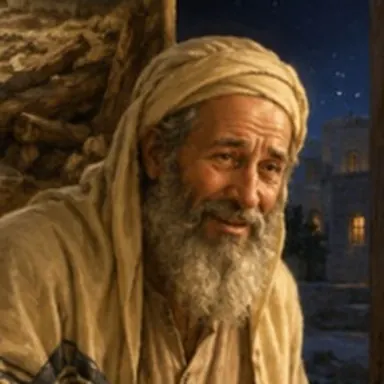
The Work, Torah Teaching and Public Leadership of Hillel the Elder: A Historical, Hermeneutical and Comparative Legal Study
23 min read4,555 words
Summary
The text surveys the figure of Hillel the Elder as a key figure in the history of the leadership of the people of Israel, focusing on three central layers: his life story as a model of self-sacrifice for the Torah, his methodological innovations in biblical interpretation (the seven middot) and his public activity as Nasi of the Sanhedrin. The article highlights Hillel's social sensitivity through his revolutionary ordinances, such as the prozbul, which were intended to bridge economic gaps and to ensure tikkun olam (the repair of the world). Alongside this, it analyzes his moral and theological conception, which emphasizes humility, love of one's fellow creatures and tolerance, foundations that became the hallmark of Beit Hillel in the ideological confrontation with Beit Shammai. Ultimately, the source seeks to show how Hillel's leadership shaped the Oral Torah as a dynamic entity that enables the spiritual survival of the people at all times.
Introduction and Historical Background: The Rise of Hillel the Elder and the Seat of the Nasi
Hillel the Elder, who was active at the end of the Second Temple period and under the rule of King Herod, is considered one of the most formative and influential figures in the history of the Oral Torah and of Jewish leadership.[1] He was active about a hundred years before the destruction of the Second Temple.[1] Hillel went up to the Land of Israel from Babylonia at the age of forty, bearing an exalted family lineage reaching back to King David.[1, 2, 3] This lineage laid the foundation for the establishment of a stable dynasty of Nesi'im that led the people for four hundred and fifty years, until the abolition of the institution after the destruction of the Temple, the dynasty extending over fourteen generations down to Rabban Gamliel VI.[1, 3]
Hillel's life, which lasted one hundred and twenty years, is divided in the sources of the Sages into three symmetrical segments of forty years: forty years of residence and study in Babylonia, forty years of study and serving the sages in the Land of Israel, and forty years of leadership and providing for the public as Nasi of the Sanhedrin.[1] This biographical parallel places Hillel in one line with historical leaders such as Moses our teacher, Rabban Yochanan ben Zakkai and Rabbi Akiva.[1] Despite his distinguished family lineage, Hillel's ascent to the Land of Israel was accompanied by extreme poverty and a daily existential struggle.[1, 2, 4] He earned his living as a woodcutter and earned a meager coin of one tropaik a day, which was equivalent to half a dinar.[1, 2, 4] Half of this paltry wage served to support his family, while the other half was paid to the guard of the study hall to allow him to enter and learn from the mouths of the great sages of the generation, Shemaya and Avtalyon.[1, 3, 4]
This extreme self-sacrifice made Hillel a historical model of withstanding material trials for the sake of Torah study. The Talmud establishes that "Hillel obligates the poor," since his poverty and his efforts deprive every other person of the excuse of economic difficulties as grounds for refraining from study.[3, 5, 6] This conception stands in contrast to other figures such as Rabbi Elazar ben Harsom, who obligates the rich because of his devotion to the Torah despite his enormous wealth, and Joseph the Righteous, who obligates the wicked in the struggle with the evil inclination.[5, 6]
Below is a summary of the biographical milestones and the characteristics of the life of Hillel the Elder:
The Transition in Leadership: Hillel and the Bnei Beteira
Hillel's rise to the seat of the Nasi is described in the sources as a formative moment representing a transition between generations and between conceptions of authority.[7, 8] The event took place in a year in which the eve of the Passover festival (the fourteenth of Nisan) fell on the Sabbath, and the leaders of the generation at that time, the Bnei Beteira, had forgotten the halakha and did not know whether the offering of the paschal sacrifice overrides the prohibitions of labor on the Sabbath.[7, 8] In this situation of leadership embarrassment, the Bnei Beteira were referred to Hillel the Babylonian, who was known as one who had devotedly served Shemaya and Avtalyon.[7, 8]
Hillel resolved the question by using complex interpretive and logical tools.[7, 8] First he presented an argument of kal va-chomer (a fortiori): if the daily tamid offering, the neglect of which carries no penalty of karet, overrides the Sabbath, all the more so the paschal sacrifice, whose deliberate neglect incurs the penalty of karet, should override the Sabbath.[7, 8] However, the Bnei Beteira refuted this kal va-chomer, arguing that the two cannot be compared, since the tamid offering possesses two unique characteristics that do not exist in the paschal sacrifice: it is "frequent" (offered every day) and it is "whole" (burned entirely on the altar).[7]
To overcome this refutation, Hillel had to present the principle of gezerah shavah (verbal analogy) based on the word "in its appointed time" (mo'ado), which appears both in the passage on the Passover sacrifice and in the passage on the tamid.[7, 8] Despite the sharpness of the logical arguments, the Bnei Beteira accepted his ruling and agreed to it as practical halakha only when he testified before them that he had heard this halakha explicitly from his foremost teachers, Shemaya and Avtalyon.[7, 8, 9, 10] Following the revelation of his superiority in Torah, the Bnei Beteira voluntarily gave up their position, seated him at the head and appointed him Nasi over them.[7, 8]
This event illustrates the transition from hereditary institutional authority to authority based on comprehensive hermeneutical knowledge and a direct connection to the chain of transmission.[7, 8] During the halakhic discussions of that day, practical questions were also discussed, such as how the slaughtering knives are brought on the Sabbath, and Hillel instructed them to rely on the custom of the people ("Leave it to Israel: if they are not prophets, they are the sons of prophets"), alongside halakhic permissions based on defining certain actions as "driving an animal in an unusual manner" or on consecrating obligations that have a fixed time on the festival and on the Sabbath.[7]
The Methodological Revolution: The Seven Middot by Which the Torah Is Interpreted
The greatest revolution that Hillel the Elder brought about in Torah teaching is the formulation and presentation of the seven middot (hermeneutical principles) by which the Torah is interpreted, before the elders of the Bnei Beteira.[11, 12] Until the days of Hillel, halakhic decision-making relied mainly on monolithic traditions passed down orally from generation to generation. Hillel presented an orderly logical-interpretive system that makes it possible to extract new halakhot and to ground existing rulings directly in Scripture.[12] These seven middot constituted the infrastructure for the later expansion of the middot into the thirteen middot of Rabbi Yishmael and the thirty-two middot of Rabbi Eliezer.[11, 12]
The commentators stress that there is no real contradiction between the different divisions of the middot; Hillel counted only seven middot because he focused on the middot that he had in orderly form at that time, or because their rules and conditions were not known to the wider public, or because many other middot are integrally included in these seven middot (for example, Hillel's middot of the general and the particular include all the sub-types of generalizations and particularizations that appear in the thirteen middot).[11]
Kal va-chomer (a fortiori): this principle deals with transferring a law from a lenient case to a stringent case.[12] When there are two matters, one of which is more stringent than the other, then something that must be done (or must not be done) in the lenient case is self-evidently obligatory (or forbidden) in the stringent case as well.[12] The reverse inference works in a similar way: something that was permitted in the stringent case is permitted in the lenient case as well.[12] The inference is subject to strict limitations, among them the rule "dayo – it is sufficient for the conclusion derived from the inference to be like the case from which it is derived" (which forbids imposing a stringency greater than that found in the source from which it is learned) and the principle that one does not punish on the basis of an inference.[12] The principle of kal va-chomer is considered a logical principle based on reasoning, and therefore in principle it applies to the Noahides as well.[11]
Gezerah shavah (verbal analogy): learning a halakha in one matter from another matter, on the basis of identical or similar words found in the Torah in both these matters.[12] Unlike kal va-chomer, which is based on human reasoning, gezerah shavah requires a tradition from Sinai, and it was established that "a person may not derive a gezerah shavah on his own" unless he received the verbal tradition from his teachers.[9, 10, 12]
Binyan av mi-katuv echad (a paradigm from one verse): extracting a general principle from a single biblical source, which serves as a model (an "av," a "father") for all other cases similar to it.[11, 12]
Binyan av mi-shnei ketuvim (a paradigm from two verses): creating a halakhic generalization from two different sources that share a common denominator.[11, 12] The inference is based on negating the unique characteristics of each of the sources in order to prove that it is their common denominator ("the common aspect") that causes the law, and therefore the law applies to any third case possessing the same characteristic.[12] This principle is limited by the rule that two verses that come as one do not teach, since if it were a general law there would be no reason to write the law twice.[12]
Kelal u-ferat (the general and the particular): when a general expression (a "kelal") appears and is followed by a detailed list of items (a "perat"), the list of particulars comes to restrict and qualify the general, so that the law is limited exclusively to the items explicitly mentioned.[12] An example of this is the command to offer "of the animals" (general) "of the herd and of the flock" (particular), which limits the offerings to these kinds alone.[12]
Ka-yotze bo be-makom acher (similarly in another place): understanding an obscure matter in one place by means of a parallel to a similar matter that appears and is explained elsewhere in Scripture.[11, 12]
Davar ha-lamed me-inyano (a matter learned from its context): understanding a law or concept from its general context and the textual environment in which it is written.[12] A classic example of this is the identification of the prohibition "You shall not steal" in the Ten Commandments as a prohibition on stealing persons (kidnapping), since all the commandments adjacent to it deal with capital matters that carry the death penalty (murder and adultery), as opposed to the theft of money, whose penalty is only monetary.[12] This principle is strong enough that it may prevail over the explicit plain meaning of the text, as was done in the passage of the goring ox in order to save the owner of the ox from an actual death penalty and to replace it with a monetary ransom payment.[12]
Halakhic Ordinances and Tikkun Olam
Hillel's public leadership was characterized by deep social sensitivity and a desire to adapt biblical law to the economic and social changes of his time, under the conceptual umbrella of ordinances made "for the sake of tikkun olam."[4, 13, 14] Two central ordinances that Hillel enacted illustrate this tendency:
The Ordinance of the Prozbul
According to Torah law in the portion Re'eh, the Sabbatical year (shemitah) cancels monetary debts at its end, and the lender is forbidden to demand his money ("he shall not exact it of his neighbor or his brother").[15, 16] Hillel saw that the public refrained from lending money to the needy close to the Sabbatical year, for fear that their money would be lost, and thereby transgressed the Torah's warning "Beware lest there be a base thought in your heart."[15, 17] To solve this grave economic and social failure, Hillel enacted the prozbul (a word of Greek origin meaning an ordinance that benefits the rich and the poor alike: the rich, so that they not lose their money, and the poor, so that the gates of lending not be locked before them).[17, 18]
Legally, the prozbul is based on the principle that the cancellation of debts applies only to debts between a person and his fellow, but does not apply to debts handed over for collection through the rabbinic court, since the judges are not private persons but representatives of the public.[15, 17] The prozbul document constitutes a declaration by the lender that he hands over his private debts to the court.[15, 16, 17] Hillel simplified the process and established that there is no need to actually hand over the promissory notes to the court, but that it is sufficient to deliver a declaratory notice in the following wording: "I hand over to you... that any debt owed to me I may collect whenever I wish."[17, 18]
The laws of the prozbul and its application include many complexities:
The land requirement: for the prozbul to take effect, the borrower must own some land from which the court could theoretically collect the debt.[13] Rashi explains that the Sages did not enact an ordinance for uncommon cases (since people do not usually lend to someone who has no land), whereas Rabbenu Tam holds that when the borrower has land, the debt is considered as already collected and held by the court.[13] Since the cancellation of debts in our time is rabbinic according to most decisors, the Sages were very lenient regarding this requirement, and even ownership of a perforated flowerpot standing on pegs suffices; one may even confer some land on the borrower without his knowledge ("one may confer a benefit on a person in his absence") in order to make it possible to write a prozbul.[13, 15]
- The court requirement: according to the essence of the ordinance, a prozbul is written specifically before an important court that has the power to expropriate property ("property declared ownerless by the court is ownerless").[13] However, today it is customary to write a prozbul before any court of three Torah-learned men who understand the nature of the document, because of the rabbinic character of the law today.[13, 18]
- The laws of agency: one may appoint an agent to write a prozbul (even by telephone or via the internet), but the appointment must be made by the creditor himself and not by an attorney on his behalf, since the Talmudic rule "mili la mimseran li-shliach" applies (mere words may not be handed over to an agent for the purpose of appointing a secondary agent).[15]
- Not writing a prozbul: a lender who did not write a prozbul is not entitled to demand the debt.[15] However, if the borrower repays the debt of his own accord, the lender must say to him "I release it."[15] Only if the borrower replies "even so" (I wish to give it to you as a gift) may the lender accept the money.[15]
The Ordinance on Houses in Walled Cities
The second ordinance that Hillel shaped concerns the biblical law of one who sells a house in a walled city.[14, 19] According to Torah law, the seller is entitled to redeem his house within twelve months of the day of the sale; if a year has passed and the house has not been redeemed, it passes permanently into the possession of the buyer.[19] Hillel identified a phenomenon in which manipulative buyers would hide and conceal themselves on the last day of the year, in order to prevent the seller from returning their money to them, and thereby ensure that the house became theirs permanently.[19]
To protect the weak sellers, Hillel enacted an ordinance according to which the seller may throw the redemption money into the Temple treasury chamber ("he throws his money into the chamber"), and thereby repay his debt unilaterally, break the lock of the house and enter it again, while the buyer would come and take his money from the chamber at his leisure.[14, 19]
Below is a comparative analysis of the mechanisms of the prozbul and of Hillel's halakhic ordinances:
His Moral Teaching and Theological Thought
The thought of Hillel the Elder places at its center the human being, his dignity and the importance of maintaining humility, patience and social peace.[4, 20, 21] Clear evidence of his welcoming and forgiving approach is found in the famous story of the three gentiles who sought to convert.[21, 22] Whereas Shammai drove them away in his strictness with the builder's cubit in his hand (the professional building measure that he used as a builder), Hillel received them with exceptional patience and converted them.[21, 22]
- The first convert: he asked to convert on condition that he would learn only the Written Torah, since he did not believe in the Oral Torah.[22] Shammai drove him away, but Hillel received him, and while teaching him the letters of the alphabet he reversed the order of the letters on the second day in order to prove to him that even the simplest learning of reading rests on accepting an oral tradition, and thereby instilled in him faith in it.[22]
- The second convert: he asked to learn the entire Torah while standing on one foot.[21, 22] Hillel took up the challenge and formulated the essence of the entire Torah: "Da-alakh sani le-chavrakh la ta'aved – zo hi kol ha-Torah kulah, ve-idakh perushah hu; zil gemor" (What is hateful to you, do not do to your fellow; this is the entire Torah, and the rest is its commentary; go and learn).[4, 20, 21, 22]
- The third convert: he heard about the garments of the High Priest and asked to convert on condition that he be appointed High Priest.[21] Hillel received him, and the convert himself learned and understood by means of a kal va-chomer that if the children of Israel, who are considered the children of God, are forbidden to approach the Tabernacle ("and the stranger who comes near shall be put to death"), all the more so a convert who has no priestly lineage cannot serve as High Priest.[21] In later days these three converts met and said: "Shammai's strictness sought to drive us from the world; Hillel's humility brought us near, under the wings of the Shekhinah."[21]
Hillel's extreme humility also stood at the center of an attempt to anger him on a Sabbath eve, when a man wagered four hundred zuz that he would succeed in making Hillel lose his composure.[21] The man pestered Hillel again and again while he was washing his head, with provocative and inane questions (such as why the eyes of the people of Tadmor are bleary and why the feet of the Africans are wide).[21] Hillel wrapped himself in his cloak, went out to him again and again, and answered him with patience and respect, giving geographical and environmental explanations for his questions.[21] When the man realized that he had lost his money and burst out in anger, Hillel answered him calmly: "Hillel is worth your losing four hundred zuz and yet another four hundred zuz on his account, and Hillel will not lose his temper."[20, 21]
Hillel's sayings in tractate Avot (chapter 2) present a complete teaching of moral and social balances:
Hillel warned against a materialistic pursuit that empties a person's spiritual life, listing five negative matters as against four positive ones [23]:
"The more flesh, the more worms; the more possessions, the more worry (lest he lose them); the more wives, the more witchcraft; the more maidservants, the more lewdness; the more menservants, the more robbery."[20, 23]
By contrast, the positive and spiritual things have no moral limit or harmful side effect:
"The more Torah, the more life; the more sitting in study, the more wisdom; the more counsel, the more understanding; the more charity, the more peace."[23]
He concluded that one who acquires a good name acquires it for himself in this world, but one who acquires words of Torah acquires for himself eternal life in the World to Come.[23]
In the theological aspect, Hillel presented a profound conception of individual providence and cosmic justice.[20] When he saw a human skull floating on the surface of the water, he said to it: "Al de-atefet atfukh, ve-sof metifayikh yetufun" (Because you drowned others, they drowned you, and in the end those who drowned you will themselves be drowned).[20] This saying makes clear that God governs the world with meticulous justice, and that even when a person chooses to harm his fellow out of an evil free choice and will be punished for it, the one harmed received his punishment through deliberate divine providence.[20]
The Polarity of Thought and Halakha: Beit Hillel and Beit Shammai
At the center of the world of the Oral Torah stands the prolonged controversy between the two great study houses: Beit Hillel and Beit Shammai.[22, 24] These two groups of disciples were permanent disputants who were active in the Sanhedrin at the end of the Second Temple period.[22, 24] Despite the sharp halakhic rivalry, both houses earned the title "the fathers of the world."[22]
The dispute between them is not a collection of ad hoc rulings, but reflects a deep conceptual, philosophical and theological polarity:
Potential Versus Actual
Beit Shammai represent a conception that gives supremacy to the potential inherent in a thing (the "potential") and to its root source, whereas Beit Hillel focus on the practical, real and gradual expression of the thing in reality (the "actual").[24] This polarity is expressed in several places:
- Honeycombs and honey: Beit Shammai deem them susceptible to impurity as a liquid from the moment a person has made up his mind to make them into a liquid (once he has thought about it), since then the potential of the liquid already exists, whereas Beit Hillel deem them susceptible only once he has actually made them into a liquid.[24]
- Hanukkah lights: Beit Shammai hold "decreasing progressively," since on the first day the potential of all eight days exists in potentia, and it decreases with each day that passes, as opposed to Beit Hillel, who rule "increasing progressively," following the actual days of light that have come into actuality.[24]
The power of the general versus the power of the particular: Beit Shammai give weight to the power of the general and do not enter into the particulars of the matter, whereas Beit Hillel give weight to the power of the particular and its practical details.[24]
The Tension Between Truth and Peace
Beit Shammai insist on absolute and static truth, even when it creates social unpleasantness, whereas Beit Hillel prefer the ways of peace, harmony and respect for people.[22] This polarity is embodied in the question of how to treat a bride on her wedding day, in which Beit Hillel taught that "a person's disposition should always be in harmony with people" and permitted praising the bride as beautiful and graceful even if she has flaws, whereas Beit Shammai demanded adherence to the pure truth for fear of the prohibition "Keep far from a false matter."[22]
Chesed Versus Gevurah
The source of the souls of Hillel and his disciples stems from the attribute of chesed (loving-kindness), which looks at creation "from above to below" through divine spectacles in which everything is nullified before God and capable of rising to holiness, which leads to welcoming and lenient rulings.[25] By contrast, Beit Shammai stem from the attribute of gevurah (might) and din (judgment), which looks "from below to above" through the eyes of created beings who feel themselves separate and full of husks (kelipot), which requires struggle, rigid boundaries, stringency and prohibition.[25]
Despite the fierce debates, a deep mutual esteem was preserved between them, and they did not refrain from marrying one another or from relying on one another's purity practices.[22] The halakha was decided according to Beit Hillel in the overwhelming majority of the disputes.[22, 24, 26] The explanation given in the Gemara states that Beit Hillel merited this not because of intellectual superiority, but because they were "kindly and humble" (modest and lowly of spirit), and they would study both their own words and the words of Beit Shammai, and would even mention the words of Beit Shammai before their own.[1, 22, 24, 26] Nevertheless, the teaching of Hasidism notes that in the future to come, in the days of the Messiah, when the evil inclination will be nullified and the world will rise to a spiritual level at which it will be able to withstand the pure attribute of judgment, the halakha will follow Beit Shammai.[26]
Below is a comparison between the two central study houses:
Summary
The work and Torah teaching of Hillel the Elder constitute the most significant turning point in the transition from the centralized world of the Temple to the dynamic and mobile world of the Oral Torah.[1, 12] His leadership combined a bold hermeneutical vision, expressed in the formulation of the seven middot by which the Torah is interpreted, with halakhic pragmatism and deep social responsibility, as expressed in the ordinances of the prozbul and of the houses in walled cities.[12, 13, 19] Placing love of one's fellow creatures, humility and the pursuit of peace at the top of his scale of values not only shaped the character of Beit Hillel and halakhic decision-making for generations, but made his teaching an eternal legacy that ensured the spiritual survival of the Jewish people even in the face of the impending destruction of the Second Temple.[1, 21, 26]
Sources26
- 1.הלל הזקן - מגדולי חכמי ישראל | פרשת יהדות, parashat.co.il/hillel-the-old-man/
- 2.הלל הזקן - תנועת אריאל, tariel.co.il/guides/111/
- 3.הלל הזקן - חב"דפדיה, chabadpedia.co.il/wiki/הלל_הזקן
- 4.הלל הזקן - ויקיפדיה, he.wikipedia.org/wiki/הלל_הזקן
- 5.ביאור:בבלי יומא דף לה - ויקיטקסט, he.wikisource.org/wiki/ביאור:בבלי_יומא_דף_לה
- 6.עני ועשיר ורשע באין לדין - ויקיפדיה, he.wikipedia.org/wiki/עני_ועשיר_ורשע_באין_לדין
- 7.פסחים ס"ו ע"א: הלל ובני בתירא - הצעה שנייה להוראת הסוגיא - לב לדעת, levladaat.org/materials/פסחים-סו-עא-הלל-ובני-בתירא-הצעה-שנייה-ל/
- 8.ביאור שטיינזלץ על פסחים ס״ו א | ספריית ספריא, sefaria.org.il/Steinsaltz_on_Pesachim.66a
- 9.קובץ יסודות וחקירות, גזירה שווה | ספריית ספריא, sefaria.org.il/Kovetz_Yesodot_VaChakirot,גזירהשווה
- 10.שלוש עשרה מידות שהתורה נדרשת בהן - לימוד יומי, limudyomi.com/שלוש-עשרה-מידות-שהתורה-נדרשת-בהן-2/
- 11.קובץ יסודות וחקירות, מידות שהתורה נדרשת בהן | ספריית ספריא, sefaria.org.il/Kovetz_Yesodot_VaChakirot,מידותשהתורה_נדרשת_בהן
- 12.מידות שהתורה נדרשת בהן - ויקיפדיה, he.wikipedia.org/wiki/מידות_שהתורה_נדרשת_בהן
- 13.פרוזבול – ויקיפדיה, he.wikipedia.org/wiki/פרוזבול
- 14.ביאור:משנה גיטין פרק ד - ויקיטקסט, he.wikisource.org/wiki/ביאור:משנה_גיטין_פרק_ד
- 15.פרוזבול היום - חותמים למען חברה צודקת - ארגון רבני צהר, your.tzohar.org.il/prozbul/
- 16.שמיטת כספים - בית המדרש להלכה בהתישבות, bhl.org.il/שטר-פרוזבול/
- 17.מהו פרוזבול וכיצד הוא פועל? - סולמות, sulamot.org/מהו-פרוזבול-וכיצד-הוא-פועל/
- 18.מה זה פרוזבול? מתי עושים את זה? ולמה? - אם אתם לא מעוניינים לוותר על כספים שחייבים לכם (ואתם לא...) אל תשכחו לבצע את הפרוזבול בשנת השמיטה תשפ"ב - BeitChabad.com - בית חב"ד, he.chabad.org/library/article_cdo/aid/5205831
- 19.משנה ערכין ט - ויקיטקסט, he.wikisource.org/wiki/משנה_ערכין_ט
- 20.15 דברי חכמה של הלל הזקן - BeitChabad.com - בית חב"ד, he.chabad.org/library/article_cdo/aid/6454263
- 21.הילל ושמאי... | חיבורים בספריא, sefaria.org.il/sheets/110495
- 22.בית הלל ובית שמאי - ויקיפדיה, he.wikipedia.org/wiki/בית_הלל_ובית_שמאי
- 23.פירוש ישראלי חדש על פרקי אבות ב׳:ז׳ | ספריית ספריא, sefaria.org.il/A_New_Israeli_Commentary_on_Pirkei_Avot.2.7
- 24.בית שמאי ובית הלל - חב"דפדיה, chabadpedia.co.il/wiki/בית_שמאי_ובית_הלל
- 25.שבע המידות - מעיינותיך, toratchabad.com/שבע-המידות
- 26.בֵּית שַׁמַּאי וּבֵית הִלֵּל / קַוִּים לִדְמוּתם - בית הספר לתלמוד, thetalmud.wordpress.com/2017/07/02/בֵּית-שַׁמַּאי-וּבֵית-הִלֵּל-קַוִּים/