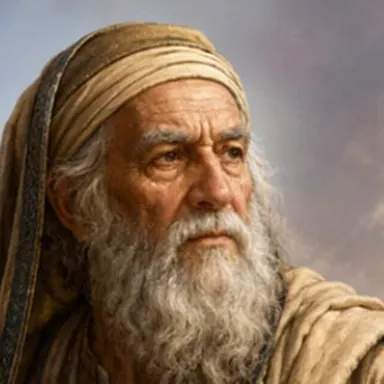
The Legal Work, Torah Teaching and Historical Figure of Shammai the Elder
22 min read4,444 words
Summary
This survey presents a comprehensive portrait of Shammai the Elder, a key figure in the spiritual leadership of the last days of the Second Temple, examining his work as av beit din alongside Hillel the Elder. The text sketches the outlines of his ethical teaching, which stresses fixed times for Torah study, doing much rather than speaking, and deciding judgment out of mathematical precision and strict rigor striving for absolute truth. The author delves into the method of ruling of Beit Shammai, which prefers the potential inherent in a thing (in potentia) over its manifest realization, and analyzes formative historical events such as the decrees of the eighteen matters and the complex relations with Beit Hillel. In conclusion, the source discusses the metaphysical dimension of this method, which is destined to become binding halakha in the time to come, and surveys the various traditions concerning Shammai's burial place in the Galilee region.
Introduction and Biography: Shammai the Elder in the Historical Context of the Late Second Temple
Shammai the Elder, also called in the ancient literature of the Land of Israel by the names "Shammay" or "Shammaya," was one of the greatest of the Tannaim and fathers of the nation at the end of the Second Temple period.[1, 2] He was active in the second half of the first century BCE and the beginning of the first century CE, a politically and religiously stormy period that largely overlapped the reign of King Herod in the Land of Israel.[1, 2] Shammai was born around 50 BCE and died around 30 CE, at the age of 79.[2] Nevertheless, there is a firm tradition attributing to him an exceptionally long life of one hundred and twenty years, like his partner in leadership Hillel the Elder, something reflected in his historical epithet "the Elder."[3]
Shammai and Hillel were the fifth and last "pair" in the period of the Pairs (Zugot).[2, 4] While Hillel served as Nasi of the Sanhedrin, Shammai served as the sixth av beit din of the Great Sanhedrin.[2, 4] Shammai's entry into the office of av beit din took place after the departure of his predecessor, Menachem, as recorded in the Mishnah in Tractate Chagigah: "Menachem went out and Shammai came in."[2] Together with Hillel the Elder, Shammai led the Pharisaic current, and in the literature of the Sages they are called by the title "fathers of the world."[2, 5]
Shammai received his Torah teaching from the leaders of the fourth generation of the Pairs, Shemaya and Avtalyon, and he defended with devotion and exceptional precision the halakhic tradition he had received from his teachers.[1, 2] His methodological strength and his deep Torah conception shaped a splendid beit midrash, and his many disciples were renowned for their exceptional intellectual sharpness and wit, which at times surpassed that of Hillel's disciples.[1] Among the direct and foremost disciples of Shammai and of the school of his beit midrash are counted Bava ben Buta, Rabbi Yochanan ben HaHoranit and Rabban Yochanan ben Zakkai, who continued to develop the Shammaite tradition in the following generation.[2, 3, 4]
Linguistically and conceptually, the name "Shammai" carries a deep mystical and ideational meaning. In the language of the Sages the origin of the name is connected with the words "shum" or "shumah" (assessment), as learned from the verse "ve-sam derekh" ("and he who sets his way"), interpreted as one who "weighs and evaluates his ways."[3, 6] The spelling of the name in the precise manuscripts of the Mishnah and in the Tosefta often appears without the letter aleph (as "Shammay," spelled shin-mem-yod-yod), as also recorded in the text of the Jerusalem Talmud and in the Book of Chronicles.[6]
Professionally, the Talmudic sources indicate that Shammai was a builder by trade.[2] This occupation finds tangible expression in various stories in which he is mentioned as holding in his hand a "builder's cubit" - a rigid builders' measuring rod used for precise assessment and for setting right angles.[2, 5, 7] Shammai's professional occupation fits his spiritual and halakhic work well, for his worldview was characterized by mathematical precision, the setting of clear boundaries, structural stability and a striving for absolute truth that is not subject to compromises or temporary biases.[1, 7]
Shammai's Moral Figure and Ethical Thought in the Teaching of Avot
In the collective memory of the Torah world, Shammai the Elder is perceived as a strict, stringent and conservative personality, to the point that his name has become a byword for the attribute of strict judgment and rigidity.[1, 2, 8] The Sages even directed later generations to keep away from this trait, declaring: "A person should always be humble like Hillel and not impatient like Shammai."[2] Nevertheless, a thorough analysis of the ethical and pedagogical thought of Shammai himself reveals a complex, balanced and remarkably sensitive side, striving for a complete fusion between exacting judgment and a lofty human duty toward one's fellow.[7]
The ethical foundations of his teaching are carefully formulated in Tractate Avot (chapter 1, mishnah 15), where three short sayings are brought that constitute Shammai's educational teaching, directed against the three pillars set up by Shimon the Righteous [4, 6]:
Make your Torah study fixed
Shammai sets Torah study as the most fixed and stable axis in a person's life.[6] The accepted interpretation of Rabbi Ovadia of Bartenura holds that Shammai's intention is that a person must make the Torah the principal occupation of his thought and action by day and by night, while work and livelihood are to be secondary to it, so that only when he is weary from study should he turn to engage in mundane work.[6]
In the ethical literature, Rabbeinu Yonah warns that a person who makes his Torah secondary and his work primary, even if he has not actually sinned, lowers his spiritual value and defines himself as secondary in the world to come.[9]
On the other hand, Rashi and other commentators explain that since it is customary to conduct oneself in the way of the world (derekh eretz) alongside the Torah, Shammai does not demand complete abstention from work, but establishes that the hours devoted to study must be stable, not to be undermined or cancelled because of the troubles of everyday life.[6, 9]
Another aspect of the term "fixed" is connected with peace of mind and tranquility of spirit.[9] According to this interpretation, the learner must seclude himself and find a place quiet from noises and idle talk that impair the capacity for understanding and memory, and thereby ensure that the Torah is fixed in his soul.[9]
On the halakhic and practical plane, the version appearing in Avot de-Rabbi Natan establishes that "make your Torah study fixed" demands consistency in rulings and moral uncompromisingness, according to which a person must not be lenient for himself and stringent for others, or the reverse, but must hold to one Torah that is stable, equal and absolute for all.[6, 9]
Say little and do much
This principle, directed against Shimon the Righteous's pillar of "service," demands of a person to minimize declarations, promises and talk, and to concentrate most of his strength on concrete action and good deeds.[6, 10] Avot de-Rabbi Natan connects this trait with the figure of the righteous, who promise little but do beyond their promise, as Abraham our father did, who offered the angels a modest "morsel of bread" but in practice hurried and prepared for them a rich meal of fine-flour cakes and beef.[10] By contrast, the wicked are accustomed to make great promises ("they say much") but in practice do not do even a little.[10] Shammai, as a man of action and building, demands complete correspondence between the spoken word and the actual deed.[7]
And receive every person with a pleasant countenance
A fascinating paradox arises from the fact that it is precisely Shammai, known for his uncompromising strictness, who is the source of the moral duty to greet every person with a smile and a cheerful face.[7, 8, 9] The combination of the two traits teaches that for Shammai, "a pleasant countenance" is not merely social courtesy or the expression of a spontaneous, changeable emotion, but a fixed halakhic duty.[8] Shammai demands that a person control his inner emotions and give his fellow respectful, warm and cheerful treatment, out of an understanding that a human smile and cheerful face are able to heal hearts and to influence body and soul for the good.[7, 8]
The apparent contradiction between this instruction and the fact that Shammai drove away gentiles who came to convert with the builder's cubit in his hand is resolved by a deep educational distinction.[5, 7] Shammai took care to receive every upright person with a pleasant countenance, but his strictness was aroused when he identified contempt, frivolity or self-interest toward the Torah.[7]
When a gentile approached him and asked to learn the entire Torah while standing "on one foot," or when another gentile asked to convert while completely denying the Oral Torah, Shammai saw this as a grave insult to the Torah, which demands depth, perseverance and great toil.[5, 7] His rejection of them with the builder's cubit did not stem from personal anger or impatience, but from setting a clear and uncompromising boundary against attempts to make Torah study shallow and turn it into a superficial and quick matter.[7]
The Legal Methodology of Shammai and Beit Shammai: Between "Potential" and "Actual"
Whereas Hillel and Beit Hillel generally represent a lenient, flexible halakhic approach adapted to the changing circumstances of the individual's life, Shammai and Beit Shammai represent a conservative, formalist method of ruling that strives for absolute truth without compromise.[1, 5, 11]
In the literature of Kabbalah and Hasidism it is explained that the soul-root of Shammai and his disciples derives from the sefirah of Gevurah ("the supernal left") and from the attribute of judgment, which is characterized by contraction, the setting of boundaries, stringency and the creation of strict safeguards in order to protect holiness.[3, 11] By contrast, Hillel and Beit Hillel derive from the sefirah of Chesed ("the supernal right"), which represents expansion, free flow and an attempt to elevate and to judge actual reality favorably.[11]
One of the deepest methodological and philosophical differences separating these two halakhic schools is the question of the relationship between the potential inherent in a thing ("in potentia") and its practical, actual realization in reality ("in actu").[11] Shammai and Beit Shammai give decisive halakhic and conceptual weight to the potential as it exists in potentia, whereas Hillel and Beit Hillel focus on the manifest reality as it is actually realized at that moment.[11]
This fundamental dispute affects a long series of halakhic and conceptual issues in the Talmud, as shown in the following table:
The Political-Halakhic Struggle: The Assembly of the Eighteen Matters and the Confrontation in the Sanhedrin
Although in most disputes the halakha was decided according to Beit Hillel, there is an exceptional historical case in which Beit Shammai prevailed by force of majority and political influence, and the halakha was decided according to them, exceptionally.[5, 15] This event, known as the enactments of the eighteen (18) matters, took place in the upper chamber of Chananya ben Chizkiya ben Garon when the sages of both houses went up to visit him.[15]
On that hard and tense day, which the Amoraim of the Land of Israel defined as the hardest day for the nation since the sin of the golden calf, the disciples of Beit Shammai exploited their numerical majority to decree a series of 18 stringent halakhic decrees.[5, 15] These decrees dealt mainly with strict social and economic separation from gentiles and the prevention of assimilation, alongside excessive stringencies in matters of impurity and purity in order to safeguard the sanctity of terumah.[5, 15]
The Jerusalem Talmud describes an exceptional, dramatic and violent way in which the majority was achieved at that assembly.[5, 15] According to the testimony of Rabbi Yehoshua Onaya, the disciples of Beit Shammai stood armed at the entrance of the building ("below") and prevented by force of arms the disciples of Beit Hillel from going up to the upper chamber and tipping the balance of power in the vote: "The disciples of Beit Shammai stood below and were killing the disciples of Beit Hillel. It was taught: six of them went up and the rest stood over them with swords and spears."[5, 15] Several ancient manuscripts even note that some three thousand disciples were killed in this violent and stormy confrontation.[15]
Of fifty-four discussions held that day, eighteen matters were decreed with full agreement, another eighteen remained in dispute without a decision, and on another eighteen matters Beit Shammai outnumbered Beit Hillel and decided the halakha according to themselves by force of the majority.[15] The commentators on the Mishnah and Talmud tried to soften the harsh impression of that day in various ways:
Maimonides (Rambam) stresses in his Commentary on the Mishnah that all the great sages of the generation and the heads of the yeshivot were present at that assembly, and the decision was taken lawfully according to the Torah rule "incline after the majority," since the majority of those physically present in that upper chamber did indeed belong to the school of Beit Shammai.[15]
The Chatam Sofer explains that no actual physical killing took place, but the disciples of Beit Shammai stood below with firearms in order to prevent the frightened disciples of Beit Hillel from abandoning the place and thereby dispersing the session without reaching a decision.[15] Meanwhile, six of the heads of Beit Shammai went up to the upper chamber, presented their legal arguments, succeeded in persuading some of the disciples of Beit Hillel, and thereby obtained a lawful majority and decided the halakhot according to themselves.[15]
To understand the nature of the decrees and stringencies adopted that day, the following table presents the first seven decrees (of the eighteen matters), which deal with the laws of impurity and purity and teach of the striving to keep people away from impurity and to protect the sanctity of terumah [15]:
The Mutual Relations Between Beit Shammai and Beit Hillel: Social Unity Alongside Polar Dispute
Despite the halakhic polarity and the hard struggles that sometimes took place within the walls of the beit midrash, the two houses maintained mutual respect, shared legitimacy and deep social and family unity.[5, 16] The members of the two schools saw each other as legitimate currents of the same Torah, and of them the Sages said: "Every dispute that is for the sake of Heaven will in the end endure... Which is a dispute for the sake of Heaven? That is the dispute of Hillel and Shammai."[5, 16]
This social unity was put to a very hard practical test in the areas of lineage, marriage and kashrut.[5] Beit Shammai and Beit Hillel disagreed on grave laws of forbidden relations, which according to one view made certain children mamzerim disqualified from entering the congregation, and on laws of kashrut and impurity that made the food of one house impure and forbidden for the other house.[5]
Nevertheless, the Mishnah in Tractate Yevamot records that they never refrained from marrying one another, or from using the vessels and food of the other house: "Beit Shammai did not refrain from marrying women from Beit Hillel, nor Beit Hillel from Beit Shammai... they did not refrain from preparing pure things relying on one another."[5] They acted with complete transparency, informed each other of cases of halakhic doubt, and relied on the moral integrity of their colleagues.[5] A clear example of this family bond is the figure of Rabbi Eliezer the Great, one of the heads of Beit Shammai, who was married to Imma Shalom, a daughter of the patriarchal family of Beit Hillel.[5]
Moreover, the halakhic dynamic was not one-sided; the sources present various cases in which Beit Hillel retracted and ruled according to Beit Shammai after being persuaded of the justice of their arguments.[1, 5] An example of this is brought in Tractate Yevamot (chapter 15, mishnah 3) concerning a woman who came from overseas and testified that her husband had died.[1]
At first Beit Hillel held that her sole testimony is not to be relied upon unless she came from the area of the harvest only, but after Beit Shammai presented to them the text of the woman's ketubbah ("that if you marry another, you shall take what is written for you"), Beit Hillel retracted and ruled entirely according to Beit Shammai and permitted her to remarry or to enter levirate marriage on the basis of her testimony in every place.[1]
The final and complete decision according to the view of Beit Hillel was accepted only generations later.[5] The Jerusalem Talmud describes a dramatic event in which Bava ben Buta - who was one of the foremost disciples of Beit Shammai but recognized the need to make peace and to decide according to Beit Hillel - led the bringing of 3,000 sheep that had been examined for blemishes to the Temple Mount, and declared that whoever wished to offer a sacrifice could lay his hands on it according to the view of Beit Hillel.[5] At that impressive public assembly the power of Beit Shammai on this matter was broken, and the halakha was fixed according to Beit Hillel in a final manner not open to appeal.[5]
With the destruction of the Second Temple and the failure of the Great Revolt, in which many of the sages of Beit Shammai who were identified with the zealot, fighting faction were killed, the power of the Shammaite school in the Sanhedrin declined.[2, 5] In the period of Rabban Gamliel's presidency a few individual sages of Beit Shammai still remained (such as Rabbi Eliezer), but in the generation of Rabbi Akiva the method of Beit Hillel became the prevailing and exclusive method among the people of Israel.[5]
The Eschatological Status of the Halakha of Beit Shammai in the Time to Come
One of the most fascinating and profound traditions in the thought of Kabbalah and Hasidism concerns the future status of the halakha of Beit Shammai in the messianic era.[16, 17] According to the teaching of the holy Ari (from the mouth of Elijah the Prophet) and in the books of Hasidism and Kabbalah, in the time to come all will agree that the practical halakha will be fixed according to the view of Beit Shammai, in complete contrast to the ruling prevailing today according to Beit Hillel.[16, 17]
This profound explanation is based on the metaphysical analysis of the supernal sefirot of holiness and the spiritual development of the world [11, 16]:
In this world (the era of tikkun and contraction): the present world is flawed, limited and full of kelipot and the evil inclination.[11, 16] In this weak reality, human beings are unable to withstand the absolute and rigid demands of truth of the attribute of judgment and Gevurah that characterize Shammai's soul.[11, 16] Therefore the governance of the world today operates according to the attribute of Chesed and expansion of Beit Hillel, which judges favorably, is lenient, permits, and enables complex reality to survive and to be included in holiness.[11, 16]
In the time to come (the era of perfection and redemption): the evil inclination will be completely abolished from the world, and all of reality will be refined and rise to a supreme spiritual level at which there will no longer be any need for the leniencies and permissions of the attribute of Chesed.[11, 16] In that era, humanity will be able to contain and apply perfectly the pure and uncompromising light of truth of the sefirah of Gevurah and the attribute of judgment of Beit Shammai, without this leading to destruction or to the breaking of the vessels.[11, 16]
From a halakhic and legal point of view, this change does not constitute an infringement of the eternal laws of the Torah.[17] The Lubavitcher Rebbe explains that in the time to come, with the re-establishment of the Great Sanhedrin, the members of the Sanhedrin (who will be at a far higher intellectual and spiritual level than previous generations) will sit and discuss anew all the ancient disputes.[17]
Out of their great wisdom, the sages will understand the depth of the reasoning of Beit Shammai, will agree with it unanimously, and will decide the halakha according to them for the first time in history.[17] Nevertheless, the halakhic decisors stress that until Elijah the Prophet comes and the Sanhedrin is actually established, it is absolutely forbidden to rule according to Beit Shammai in places where the ruling was according to Beit Hillel, and whoever tries to act according to Beit Shammai stringently in a place where the halakha was fixed according to Beit Hillel is considered a sinner and a halakhic transgressor.[17]
The Geography of Shammai the Elder's Burial: Traditions and Archaeological Findings
The question of the exact burial place of Shammai the Elder stands at the center of many contradictory traditions in the literature of pilgrims through the generations, focused mainly on two sites in the Mount Meron area, alongside an isolated historical testimony pointing to the Dalton area.[2]
The Meron Tradition: The Cave of Hillel and Shammai
The earliest sources (from the end of the 11th century) identify Shammai's burial within the Cave of Hillel located in Meron, near the compound of the tomb of Rabbi Shimon bar Yochai.[2, 18] According to these traditions, Shammai was buried in the same cave together with his great disputant Hillel the Elder, Shammai's wife, and the disciples of Beit Hillel and Beit Shammai.[2, 18]
Before the 16th century and the immigration of the Spanish exiles, the Cave of Hillel and Shammai was considered the central and most important site in Meron, and only under the influence of the Zohar and the rise of the Kabbalah did the center of importance for pilgrims shift to the adjacent compound of the tomb of the Rashbi.[18]
The Khirbet Shema Tradition: The Mausoleum and the Burial-Niche Cave
On the other hand, a later and stronger tradition identifies Shammai's tomb at the top of the mountain opposite Meron - at the archaeological site called Khirbet Shema.[2, 19, 20] At Khirbet Shema rich remains of an ancient Jewish settlement from the period of the Mishnah and Talmud have been uncovered, including an ancient synagogue that was destroyed and rebuilt several times, a mikveh, olive presses and residential quarters.[20, 21, 22]
At this site there are several landmarks attributed to Shammai and his family:
The mausoleum (Sela ha-Me'uberet, "the Rock of the Pregnant Woman"): a huge, impressive two-story stone structure standing on the Israel National Trail.[19, 20, 21, 23] On its first story there are burial niches and large stone coffins resembling two bathtubs.[19, 20] According to an ancient folk tradition, the structure is called "the Rock of the Pregnant Woman" because Shammai's daughter-in-law gave birth there and died in childbirth, and was buried in the place together with Shammai the Elder and his wife.[3, 19, 20] However, modern archaeological excavations have determined that the direct attribution of the mausoleum to Shammai is not scientifically correct, since it is a typical Roman burial structure entirely different from the character of Jewish burial customary in that period.[20]
- The Cave of the Twelve Burial Niches: directly behind the mausoleum structure and one level below it is a large Jewish burial cave hewn in the rock with 12 burial niches (kokhim) (and another two niches at the entrance of the cave).[2, 19] Scholars estimate that the upper mausoleum was built in the Roman period to mark the location of the real Jewish burial cave beneath it, in which Shammai the Elder, his wife and his family members were probably indeed buried.[2, 19] Around the ancient settlement 31 further Jewish burial caves have been uncovered, testifying to a large Jewish cemetery in the area.[20]
- The Cave of Shammai's Disciples: halfway up the ascent to the top of the mountain is another cave containing 11 or 12 low, ruined burial niches, identified as the burial place of the disciples of Shammai the Elder.[2, 20] According to this tradition, Shammai himself was buried in the middle of the cave under a large heap of stones that was cleared away and no longer exists today.[2]
The Testimony of Mount Dalton
In complete contrast to the Meron traditions, there is a unique historical testimony in "Megillat Evyatar" (an ancient manuscript from the Cairo Genizah written by Rav Evyatar Gaon), pointing to Shammai's burial in the Mount Dalton area.[2] The scroll describes the funeral journey of a sage to Dalton and notes: "And he was buried at the top of the mountain beside R. Yose the Galilean. And around him Yonatan ben Uzziel and Hillel and Shammai and Elazar ben Arakh and Elazar ben Azariah..."[2]
Scholars of biblical geography explain that by the term "and around him" Rav Evyatar Gaon did not mean Mount Dalton itself as the physical burial site of all of them, but the broad and encompassing geographical area of the Upper Galilee in that district, including Amuka (the tomb of Yonatan ben Uzziel), Alma (the tombs of Rabbi Elazar ben Arakh and Rabbi Elazar ben Azariah) and Meron (the tombs of Hillel and Shammai).[2]
Sources23
- 1.שמאי | מקורות מתוך ספריית ספריא, sefaria.org.il/topics/shammai
- 2.שמאי הזקן – ויקיפדיה, he.wikipedia.org/wiki/שמאי_הזקן
- 3.שמאי הזקן - חב"דפדיה, chabadpedia.co.il/wiki/שמאי_הזקן
- 4.מסכת אבות- פרק א משנה טו - דבר תורה, dvar-tora.co.il/מסכת-אבות-פרק-א-משנה-טו/דברי-תורה-לחגים-וימים-טובים/פרקי-אבות/
- 5.בית הלל ובית שמאי - ויקיפדיה, he.wikipedia.org/wiki/בית_הלל_ובית_שמאי
- 6.משנה אבות א טו - ויקיטקסט, he.wikisource.org/wiki/משנה_אבות_א_טו
- 7.שמאי - סבר פנים יפות וקפדנות שלובים זו בזה - לב לדעת, levladaat.org/materials/שמאי-סבר-פנים-יפות-וקפדנות-שלובים-זו-ב/
- 8.כוחו ומעלת החיוך - המצווה הגדולה מכולם | חיבורים בספריא, sefaria.org.il/sheets/699869
- 9.Avos 1:15 עֲשֵׂה תוֹרָתְךָ קֶבַע אֱמֹר מְעַט וַעֲשֵׂה... (all) - ספריא, sefaria.org.il/sheets/583203
- 10.אמור מעט ועשה הרבה - ויקיפדיה, he.wikipedia.org/wiki/אמור_מעט_ועשה_הרבה
- 11.בית שמאי ובית הלל – חב"דפדיה, chabadpedia.co.il/wiki/בית_שמאי_ובית_הלל
- 12.דרכי לימוד - מוסיף והולך או פוחת והולך מחלוקת בית שמאי ובית הלל - ישיבת ההסדר בני-עקיבא מעלות, yesmalot.co.il/64186/
- 13.המחלוקת הראשונה בישראל - ישיבת ההסדר בני-עקיבא מעלות, yesmalot.co.il/66342/
- 14.מסכת סוכה פרק א - מאגר ספרות הקודש, kodesh.snunit.k12.il/b/h/h26.htm
- 15.שמונה עשר דבר – ויקיפדיה, he.wikipedia.org/wiki/שמונה_עשר_דבר
- 16.בֵּית שַׁמַּאי וּבֵית הִלֵּל / קַוִּים לִדְמוּתם - בית הספר לתלמוד, thetalmud.wordpress.com/2017/07/02/בֵּית-שַׁמַּאי-וּבֵית-הִלֵּל-קַוִּים/
- 17.לעתיד לבוא הלכה תהיה כבית שמאי - דין | שאל את הרב, din.org.il/2013/12/02/לעתיד-לבוא-הלכה-תהיה-כבית-שמאי/
- 18.מערת הלל - ויקיפדיה, he.wikipedia.org/wiki/מערת_הלל
- 19.קבר שמאי הזקן וכלתו - חורבת שמע ⋆ כוכב הנופש, cochav-hanofesh.com/temple/קבר-שמאי-וכלתו/
- 20.חורבת שמע – ויקיפדיה, he.wikipedia.org/wiki/חורבת_שמע
- 21.טיולים בסביבת אמירים – בצפון | צימר בצפון - צימר באמירים, אור בראשית, zimmernorth.co.il/טיולים-בסביבת-אמירים-בצפון/
- 22.תשובה היסטורית: סיור בבתי הכנסת העתיקים - ynet, ynet.co.il/articles/0,7340,L-3947525,00.html
- 23.טיול אל הר מירון: 12 קילומטרים של נוף גלילי מקסים - OUTPANEL, outpanel.co.il/mount-meron/