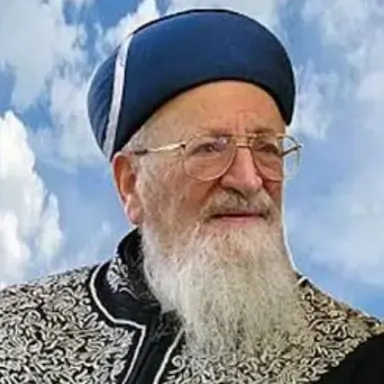
The Legacy of Maran Rishon LeZion Rabbi Mordechai Eliyahu: A Life Story, Halakhic Thought and Public Leadership in the Era of Revival
15 min read2,979 words
Summary
The text surveys the many-sided work of Rabbi Mordechai Eliyahu, a dominant spiritual leader who served as Rishon LeZion and strove to combine ruled halakha with the esoteric teaching. The survey opens with the Rabbi's biographical background, from his childhood in the shadow of poverty in Jerusalem to his service as a judge and as a supreme halakhic authority, emphasizing the ideological transformation he underwent from underground activity in his youth to an approach of "ways of pleasantness" and bringing hearts closer. The core of the text analyzes his distinctive halakhic thought, based on the tradition of the sages of Babylon and the Ari, and presents the professional disputes with Rabbi Ovadia Yosef over the question of stringencies and Kabbalah. In addition, the source describes his national worldview regarding the integrity of the Land and redemption, and details his extensive literary output and the "Darkei Horaah" institutions that continue his legacy. The aim of the work is to illuminate his figure as a bridge uniting Religious Zionism with the Sephardi tradition, a leader who succeeded in combining uncompromising religious meticulousness with a broad love of Israel that earned him the epithet "Father of Israel."
Introduction: The Figure of the "Pious One in Office" as a Bridge between Generations
The figure of Rabbi Mordechai Eliyahu (5689-5770, 1929-2010) constitutes a central juncture in the history of halakha and Jewish leadership in the twentieth century and the beginning of the twenty-first. His service as Rishon LeZion and Chief Rabbi of Israel, alongside his activity as a judge in the Supreme Rabbinical Court, were not merely administrative or judicial roles but expressions of a comprehensive worldview that seeks to unite the revealed with the hidden, nationalism with religiosity, and the ancient communal tradition with the needs of the modern state.[1, 2] Rabbi Eliyahu succeeded in creating a unique synthesis between the severity of halakha and the warmth of Hasidism, between meticulous care for the details of custom and a broad, uncompromising love of Israel, which earned him the epithet "Father of Israel."[2, 3]
The in-depth analysis of his work reveals a leader who saw the Torah as an organic unit that cannot be divided. His halakhic ruling did not rely only on dry legal codes but was nourished from the depths of esoteric teaching and Kabbalah, with absolute loyalty to the lineage of the sages of Babylon and Jerusalem.[4] On the public plane, he stood as the pillar of Religious Zionism on the one hand, and as a supreme spiritual authority for Sephardi and Eastern Jewry on the other, bridging social and political gaps in times of national crisis.[2, 5]
Chapter 1: The Roots of Formation, between Baghdad and Jerusalem
The beginning of the rise of Rabbi Mordechai Eliyahu is planted in the sacred soil of the Old City of Jerusalem, in an atmosphere that combined extreme material poverty with inexhaustible spiritual wealth. He was born on the 21st of Adar 5689 to his father, Rabbi Salman Eliyahu, a key figure in the world of Jewish mysticism at the beginning of the century.[6] Rabbi Salman, who immigrated from Baghdad on the direct instruction of his teacher, the author of the "Ben Ish Chai," was considered one of the great Kabbalists in Jerusalem and engaged in esoteric teaching and the governance of the world.[2, 6] The family lineage of Rabbi Mordechai bound him at his very navel to the glorious Babylonian tradition: his mother, Mazal, was the sister of Rabbi Yehuda Tzedaka and a grand-niece of the Ben Ish Chai.[2]
The early orphanhood, with the death of his father when he was only eleven, shaped the Rabbi's personality as a figure capable of understanding the hearts of the downtrodden. The poverty at home was so great that he was forced to work as a seller of cooked chickpeas in the Jerusalem market in order to help support the family.[2] Later he engaged in checking mezuzot written by his brother, Rabbi Naim ben Eliyahu.[2] Despite the difficulties, his thirst for Torah knew no satiety; lacking books at home, he received a special key to the hall of the "Porat Yosef" yeshiva from Rabbi Ben-Zion Hazan, and there he would study Torah every night.[2] His Torah education was shaped by the giants of the generation, among them Rabbi Ezra Attia and Rabbi Yosef Babliki, who gave him the foundations of his precise halakhic method.[2]
Milestones in the Early Biography and Their Influence on His Leadership
Chapter 2: The Brit HaKanaim and the Ideological Transformation
A lesser-known but decisive chapter in shaping the public figure of Rabbi Eliyahu is his involvement in the "Brit HaKanaim" organization in the early 1950s. Under the underground pseudonym "Yair," the Rabbi acted to establish a state of halakha and to enforce the laws of the Torah by active means.[2] He was arrested in 1951 and confessed to 24 counts of indictment including possession of weapons and causing damage to property that desecrated the Sabbath.[2] His words in court, "I believed that through the underground we could establish a Torah life in the state," reflect the revolutionary fervor of a young man who felt the contempt for the values of Judaism in the young state.[2]
However, the deep significance of this period lies not in the underground activity itself but in the lesson he drew from it. Rabbi Eliyahu underwent a deep inner transformation, and understood that the way to impart the Torah to the people of Israel does not pass through coercion or underground action but through "ways of pleasantness" and education.[2] He declared in later years that although the Torah had not changed, the way to instill it in the people in our generation had changed completely.[2] This insight is what made him a consensual leader capable of speaking with all parts of the people, from reconnaissance-unit (sayeret) soldiers to Kabbalists versed in the hidden.[2]
Chapter 3: The World of the Judiciary and the Chief Rabbinate: Authority and Service
For over forty years Rabbi Eliyahu served as a judge, a role to which he approached with holy awe and rare erudition.[1] Already in his youth at "Porat Yosef" he stood out in his ability to rule, when his fellow students would turn to him for sharp halakhic decisions.[7] In 5743 (1983) he was chosen to serve as Rishon LeZion and Chief Rabbi of Israel, a role that under his leadership became a focus of spiritual strength and public accessibility.[1]
His tenure was marked by unprecedented openness; his office was open to every city rabbi, judge or ordinary person who sought advice.[1] He saw the Chief Rabbinate as a tool for strengthening the bond with Diaspora Jewry, and went on dozens of journeys around the world to decide complex questions of Jewish law and to encourage distant communities.[1] This approach made the Rabbinate a central and dynamic address involved in all areas of life in the State of Israel.
Central Aspects of His Activity as Chief Rabbi and Judge
- Ruling in the rabbinical courts: dealing with complex problems of personal status, monetary law and heirs' rights, while integrating human sensitivity.[4]
- Strengthening the Diaspora: journeys to decide halakhic questions in the communities of the Diaspora and providing guidance to community rabbis.[1]
- Making the Rabbinate accessible: turning the office into a place where "the corridor is full of city rabbis" every day.[1]
- Preserving the tradition of halakhic ruling: standing firm on the fine points of halakha and Sephardi custom as received from previous generations.[8]
Chapter 4: Halakhic Thought, the Wondrous Synthesis of Peshat and Kabbalah
The core of the work of Rabbi Mordechai Eliyahu lies in his distinctive halakhic thought. The Rabbi saw no contradiction between the world of "peshat" and the world of "sod" (the hidden); on the contrary, he held that the two complement one another and form a single complete storey of the service of God.[4] The influence of the Zohar and the sages of Kabbalah on his ruling is one of the prominent characteristics that distinguish him from other decisors of his generation.[4]
Basic Principles in the Rulings of Rabbi Eliyahu
Rabbi Eliyahu adopted the halakhic line of Maran Rabbi Yosef Karo in the "Beit Yosef," according to which in places where the Gemara does not decide explicitly against the Zohar, one should follow the opinion of the Zohar.[4] This trend grew stronger in his rulings, out of a belief that the words of the Zohar were given at Sinai.[4] He emphasized that since the great immigration to the Land of Israel, customs resting on Kabbalah have strengthened, such as the prohibition of putting on tefillin on Chol HaMoed.[4]
Comparison between the Sources of Peshat and the Sources of Sod in Selected Rulings
The Approach to "Feeling the Halakha"
One of the Rabbi's spiritual innovations was the demand to reach a level at which "the body feels the halakha by itself."[7] He was not content with dry study but educated his students to constant alertness to every aspect of halakha at every given moment. A clear example of this is his personal conduct; when he opened the door of his home without a suit and hat, he explained that in this way he was defining the boundaries of "respectable dress" according to halakha.[7] In examining etrogim, he testified that sometimes flaws are hidden from the eye until a moment of "siyata di-shmaya" (Heavenly assistance), as happened to him in examining an etrog that was disqualified after many examinations by other rabbis.[7]
Chapter 5: The Halakhic and Comparative Struggle: Rabbi Eliyahu versus Rabbi Ovadia Yosef
An analysis of Rabbi Eliyahu's thought is not complete without a comparison with his central halakhic interlocutor, Rabbi Ovadia Yosef. Whereas Rabbi Ovadia sought to restore the crown to its former glory through ruling solely according to the "Shulchan Arukh" ("koach de-heteira"), Rabbi Eliyahu leaned more toward the stringent direction and the integration of Kabbalah, in accordance with the tradition of the "Ben Ish Chai."[8, 9]
A prominent example of this dispute is the preparation of black coffee on the Sabbath. Whereas Rabbi Ovadia permitted pouring from a first vessel onto coffee that had been roasted (on the assumption that there is no cooking after baking or roasting), Rabbi Eliyahu was stringent and permitted only pouring from a second vessel.[9] These differences reflect two worldviews in modern Sephardi Judaism: one that seeks uniformity around the Shulchan Arukh, and the other (that of Rabbi Eliyahu) that seeks to preserve the richness of the mystical customs and stringencies received in the tradition of the sages of Babylon.[8, 9]
Chapter 6: His Literary Work, the Bookshelf of "Ma'amar Mordechai"
Rabbi Eliyahu left behind an enormous Torah legacy, encompassing all areas of life. His books are characterized by clear language, logical arrangement and an appeal to all strata of the public.[10]
Survey of His Main Works
- Ma'amar Mordechai: a series that includes the laws of weekdays, five volumes on the laws of the Sabbath, the laws of the festivals, and the holidays.[11, 12, 13]
- Responsa of the Chief Rabbi: two volumes gathering his responses from his term as Chief Rabbi, dealing with modern technological, medical and legal questions.[1, 12, 13]
- Darkei Taharah: a foundational book on the laws of family purity and modesty. The book is unique in that it is suitable for all communities, integrates up-to-date medical knowledge and is written in an easy and welcoming language.[10, 11]
- Divrei Mordechai on the Torah: five volumes of commentary and thought on the weekly Torah portions.[12, 13]
- The "Kol Eliyahu" siddur: a prayer book that became the most widespread among members of the Eastern communities, including precise laws of prayer according to his rulings.[12, 14]
Kitzur Shulchan Arukh with the notes "Darkei Halakha": an adaptation of the Ashkenazi abridgment book to Sephardi customs according to the Shulchan Arukh and the Ari.[8, 11]
Guidance Literature and the Festivals
Chapter 7: National Outlook, the Land of Israel, Redemption and Revival
For Rabbi Mordechai Eliyahu, the State of Israel and the Land of Israel were sacred concepts that cannot be measured by politics alone. He saw the settlement of the Land as a commandment from the Torah even in our time, and encouraged Diaspora Jews to immigrate and settle in it.[5]
The Integrity of the Land and Opposition to Withdrawals
The Rabbi held a firm position against handing over territories of the Land of Israel to foreign control. He argued that "their appetite only grows as they receive" and that no leadership has the authority to give up parts of the land that was promised to our forefather Jacob.[5] He sharply criticized extreme-left organizations and the judicial system, seeing them as "those who spread an evil report about the Land."[5]
The Disengagement as a National Trauma
The Disengagement Plan from Gush Katif was for the Rabbi a "great breaking" and a destruction.[5] He worked tirelessly to prevent the expulsion, and in his sermons emphasized the deep pain over the destruction of the settlements. After its implementation, he engaged extensively in comforting the evacuees and strengthening their spirit, while refusing to come to terms with the loss of parts of the Land.[5]
Attitude toward the State and the Army
Despite his criticism of the judicial system (the High Court of Justice), the Rabbi saw the establishment of the State as divine kindness for which one must give thanks.[5] He ruled that Hallel (without a blessing) should be recited on Independence Day and that Tachanun should not be recited.[2] He showed deep concern for IDF soldiers, and was known for stories of the rescue of forces in the field thanks to his prayers or his spiritual guidance (as in the case of Efi Eitam and the minefield).[2, 5]
Chapter 8: "Father of Israel," Leadership of Love and Kindness
The title "Father of Israel" reflects the way in which the Rabbi was perceived among the masses of the people. He refused to discriminate between Jews on a religious or ethnic basis, and saw every person of Israel as a sacred part of the nation.[2]
The Connection with Kabbalists and the General Public
The Rabbi was very close to tzaddikim such as Rabbi Mordechai Sharabi and the Baba Sali (Rabbi Israel Abuhatzeira).[2] Many stories document his spiritual power and his being an address for blessings and salvations.[3, 15] Nevertheless, he always remained at eye level, devoting special time to children and educating them to love of Torah and good character traits.[16]
Works of Kindness and Welfare
As one who rose out of poverty, the Rabbi established a network of institutions of kindness and charity. The "Darkei Horaah for Rabbis" association operates funds to assist the needy, food distribution, and gemachim (free-loan societies).[17, 18] His concern went beyond the spiritual plane and encompassed the most basic needs of petitioners from all strata of the population.[2]
Chapter 9: Institutions and Successors, Securing the Future
In order to preserve his distinctive teaching, the Rabbi established the "Darkei Horaah for Rabbis" network of institutions. These institutions today constitute the spearhead in the training of spiritual leadership in Israel and the world.[13, 18]
Arms of the Institutions' Activity
- Institute for training rabbis and judges: imparting the Rabbi's method of ruling to outstanding students.[18]
- World Halakhic Ruling Center: providing answers to halakhic questions in ten languages.[17, 18]
- Book publishing: publishing his writings and preserving his Torah legacy.[13, 18]
- Institute for training security forces: Jewish studies in coordination with the IDF.[18]
- Education for the younger generation: curricula in schools and Torah activities for children.[18]
His sons, Rabbi Shmuel Eliyahu (rabbi of Safed) and Rabbi Yosef Eliyahu, alongside distinguished students such as Rabbi Menachem Burstein and Rabbi Shmuel Zafrani, continue his path in public leadership and in disseminating his teaching.[2] They work to preserve the model that their father bequeathed: a rabbinate that is an inseparable part of the life of the people, connected to the finest threads of the nation's soul and to the depths of esoteric teaching.
Summary
The legacy of Rabbi Mordechai Eliyahu is a glorious tapestry of connections: a connection between the generation of old Jerusalem and the generation of the modern state; a connection between rigorous halakhic ruling and human warmth; and above all a connection between the revealed Torah and the hidden Torah. His work as a judge, as Chief Rabbi and as a spiritual leader shaped the identity of modern Sephardi Judaism and gave Religious Zionism a mystical depth and deep rootedness. In his writings and institutions the Rabbi laid the foundation for Jewish leadership based on erudition, awe of Heaven and infinite love of Israel, a legacy that continues to illuminate and shape the face of Israeli society even years after his passing.
Sources18
- 1.קורות חייו • אתר הרב מרדכי אליהו, harav.org/dmuto/korot-hayav/
- 2.מרדכי אליהו – ויקיפדיה, he.wikipedia.org/wiki/מרדכי_אליהו
- 3.סיפורים - אתר הרב מרדכי אליהו, harav.org/dmuto/סיפורים/
- 4.מבוא לשו"ת • אתר הרב מרדכי אליהו, harav.org/books/mahamar_mordechay_shot1-m1/
- 5.ארץ ישראל Archives • אתר הרב מרדכי אליהו, harav.org/tags-shihurim/ארץ-ישראל/
- 6.הולדתו - אתר הרב מרדכי אליהו, harav.org/dmuto/korot-hayav/huladeto/
- 7.דרכי הלכה - אתר הרב מרדכי אליהו, harav.org/dmuto/korot-hayav/more-horaha/
- 8.ספר קיצור שולחן ערוך עם פסקי הלכה של הרב מרדכי אליהו זצ"ל - ספריית חוה, chavabooks.co.il/product/ספר-קיצור-שולחן-ערוך-עם-פסקי-הלכה-של-הרב/
- 9.על פסיקתו של הרב אליהו - כיפה, kipa.co.il/יהדות/על-פסיקתו-של-הרב-אליהו/
- 10.קיצור דרכי טהרה - המדף היהודי, hamadaf-y.co.il/חנות/הלכה-ושותים/טהרת-המשפחה/קיצור-דרכי-טהרה/
- 11.הרב מרדכי אליהו - אביטה, abita.co.il/lessons/הרב-מרדכי-אליהו/
- 12.הרב מרדכי אליהו | ספרים נוספים - ספרי חיים, hbooks.co.il/category/הרב-מרדכי-אליהו
- 13.ספרי הרב - אתר הרב מרדכי אליהו, harav.org/sfarim/
- 14.הרב מרדכי אליהו - המדף היהודי, hamadaf-y.co.il/חנות/חסידות-וסיפורי-צדיקים/הרב-מרדכי-אליהו/
- 15.אביהם של ישראל - מרגש - לכבוד הילולת מרן הרב מרדכי אליהו - אשובה, ashoova.co.il/אביהם-של-ישראל-מרגש-לכבוד-הילולת-מרן-ה/
- 16.אביהם של ילדי ישראל | סיפורים לילדים על הרב מרדכי אליהו זצ"ל - YouTube, youtube.com/watch?v=7zFfhx5fmmo
- 17.דרכי הוראה לרבנים (ע"ר) - יצירת קשר - גיידסטאר, guidestar.org.il/organization/580176808/contact
- 18.דרכי הוראה לרבנים (ע"ר) | גיידסטאר - אתר התאגידים של ישראל | משרד המשפטים, guidestar.org.il/organization/580176808