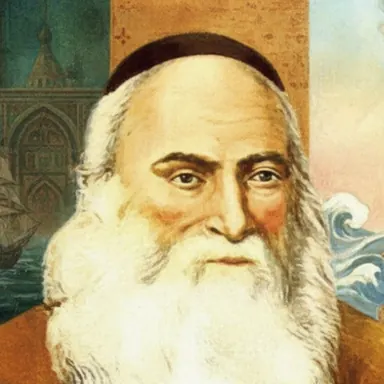
The Works of Don Isaac Abravanel: Political Leadership, Torah Philosophy and Messianic Thought at the Dawn of the Modern Era
18 min read3,536 words
Summary
This source surveys the life and wide-ranging teaching of Don Isaac Abravanel, a key figure in the transition from the Middle Ages to the Renaissance who combined senior political leadership with prolific Torah writing. The text examines Abravanel's forced wanderings between Portugal, Spain and Italy, and explains how his personal experiences as a treasury minister and an exile shaped his original exegetical method, characterized by the use of a comprehensive "list of difficulties" and by a historical-realistic analysis of Scripture. Alongside this, the article delves into his bold political theory, which rejects absolute monarchy in favor of a republican model and the decentralization of powers, as well as into his philosophical and messianic thought, which sought to strengthen the spirit of the people after the expulsion. Ultimately, the source points to Abravanel's unique influence not only on Jewish thought but also on the Christian thinkers in Europe who saw in his writings an intellectual foundation for the legitimacy of the modern state.
Lineage, Stations of Life and Historical-Social Context
Don Isaac Abravanel (1437–1508) represents one of the most complex and influential figures in the history of the Jewish people in the transition from the end of the Middle Ages to the beginning of the modern era.[1, 2] Abravanel was born in Lisbon, Portugal, to an ancient Spanish-Jewish noble family.[3] According to family tradition, which traced its roots directly to the dynasty of King David, his forefathers reached the Iberian Peninsula immediately after the destruction of the First Temple, bearing with them a special genealogical scroll of the tribe of Judah and a family seal attesting to their lofty lineage.[3] Some have interpreted the name "Abravanel" (which he himself wrote as "Abravaniel") as an acronym expressing the phrase "Av-rav, Ben-El" ("great father, son of God").[3]
The family history was saturated with dramatic upheavals that reflected the fate of the Jews of the Iberian Peninsula.[4] His grandfather, Rabbi Shmuel Abravanel, was forced to convert outwardly to Christianity during the riots of 5151 (1391), but later returned openly to his Judaism, while some historical sources hold that Rabbi Isaac's father, Don Yehuda Abravanel, underwent a similar experience of forced conversion.[3] Nevertheless, the family succeeded in preserving its economic and social standing, and Isaac's father served as treasury minister to the king of Portugal.[3] In his childhood and youth Isaac received a comprehensive Torah and general education.[1] He studied Torah with his principal teacher, Rabbi Yosef ben Avraham Chayun, and at the same time acquired a comprehensive philosophical education with Rabbi Yosef ibn Shem Tov, while being exposed to the prominent scientific and philosophical writings of his time, Jewish and Christian alike.[1, 3] Already in his youth he displayed brilliant literary and intellectual talent, and composed the works "Ateret Zekenim" and "Tzurat ha-Yesodot."[3]
Abravanel's public and economic activity was divided among several European kingdoms, as described in the chronological table of his life:
The circumstances of Abravanel's life did not leave him a detached thinker, but rather an intellectual who experienced firsthand the extreme fragility of the favor of kings.[8] The experience of redeeming captives in Morocco left upon him a deep imprint of national responsibility, which found expression later when he pleaded with King Ferdinand three times to annul the decree of expulsion, despite the fierce opposition of Queen Isabella, who stood at the king's right hand to oppose him.[3] Even after his death, his dynasty continued to influence the Jewish sphere: his descendants dispersed to Holland, England and the Ottoman Empire, and some of them immigrated to the Land of Israel in the middle of the 19th century and were among the first to break out beyond the walls of the Old City of Jerusalem to establish the new neighborhoods.[3]
The Methodology of Biblical Exegesis, the Method of Questions and the Controversy over Sources
Abravanel's commentary on Scripture is regarded as one of the most important methodological turning points in the history of Jewish exegesis, since it combined the principles of the scholastic thought of the Middle Ages with the historical-realistic outlook of the Renaissance period.[1, 2]
The Methodical Structure and the Method of Questions
The most prominent characteristic of Abravanel's commentary is its rejection of the local exegetical approach, which interprets verse after verse in isolation from its broader context.[9] Instead, Abravanel divided the biblical text into complete thematic units of study.[9]
The preliminary list of difficulties: At the opening of each chapter or unit of content, Abravanel sets out a complex array of questions and puzzles.[9] In the portion of "Bereshit" the number of questions reaches 120 difficulties, whereas in the book of Deuteronomy ("Mirkevet ha-Mishneh"), with which he began his writing, he limited the number of questions to 30 at most at the opening of each portion.[3, 9]
Focus on the plain meaning and the juxtaposition of topics: In response to his questions, Abravanel presented a long and sophisticated essay examining the logical sequence of the verses, the literary structure and the historical context of the events.[9] Although in the Prophets he declared that he was focusing on the plain meaning of Scripture, he did not refrain from incorporating midrashim of the Sages and homiletical interpretations of his own.[9]
Integration of multidisciplinary learning: As the scholar Benzion Netanyahu noted, Abravanel's uniqueness stemmed from his ability to incorporate into his commentary on Scripture analyses from the fields of political science, economics and general history, while comparing them with the political regimes of his time.[8, 10]
The Vicissitudes of the Commentary "Mirkevet ha-Mishneh"
His first book on the Torah, the commentary on the book of Deuteronomy known as "Mirkevet ha-Mishneh," carries with it a dramatic history that reflects his tribulations.[3, 9] Abravanel began writing the work in Lisbon around 1476, but with his hasty flight from Portugal in 1483 the manuscript was lost.[3, 9] About 20 years later, while he was staying in Naples, the draft was found under mysterious circumstances, which enabled him to edit, complete and publish the version we have today.[3, 9]
The Controversy over Sources and the Accusations of Plagiarism
Some of Abravanel's commentaries are saturated with quotations from and parallels to commentators who preceded him, often without explicit mention of their names.[9] This phenomenon was especially prominent in his relation to his friend and contemporary, Rabbi Yitzchak Arama, author of the philosophical-homiletical book "Akedat Yitzchak."[9, 11] Abravanel incorporated ideas, parables and entire exegetical structures from "Akedat Yitzchak" under indirect designations or without any hint of their source.[9]
This conduct aroused great anger in the son of the author of the Akedah, Rabbi Meir Arama, who publicly accused Abravanel of plagiarism.[9] Evidence for this was found in the fact that in the early draft of "Mirkevet ha-Mishneh" (written in Portugal before Abravanel was exposed to Arama's writings) there is indeed no trace of these quotations.[9] Abravanel himself provided a kind of principled defense against these accusations in his work "Nachalat Avot" (on Tractate Avot), where he wrote that the fact that authors take ideas from one another is no nullification or disgrace, since the source of all truth is divine, and wisdom belongs to all of humanity.[3, 9]
Political Teaching: Anti-Monarchism, Republicanism and the Principle of Subsidiarity
The political teaching of Don Isaac Abravanel is regarded as one of the most original and daring chapters in Jewish and general political philosophy.[3, 4] Whereas most medieval thinkers saw monarchy as the natural and divine regime reflecting the unity of the Creator in the universe, Abravanel developed a distinctly republican theory based on the negation of human monarchy.[3, 4]
The Historical and Personal Background of Anti-Monarchism
The experience of betrayal he suffered at the hands of the king of Portugal, João II, and his failure to prevent the expulsion at the hands of the Catholic Monarchs in Spain, left in Abravanel bitter residues that became the theoretical basis of his critique.[3, 8] He came to realize that absolute one-man rule tends by its nature toward corruption, capriciousness and tyranny.[8] In addition, his thought was shaped as a counter-view to the Christian and Spanish conceptions of his time.[2] In this period the thinker Vasco de Lucena was active in Portugal, who justified turning the royal court of João II into an absolutist one and demanded absolute obedience from the subjects.[2]
Abravanel's famous commentary on the section of the king (Deuteronomy 17) was written in 1496 as a direct and sophisticated response to Lucena's arguments.[2] Abravanel disputed the accepted conception that likened the rule of the king in the body (the heart or the brain) to his rule in the state, and argued that the state is not an organic body but an artificial association of free human beings.[4] Nevertheless, with a profound recognition of the unlimited power of the absolute king in Iberia, Abravanel developed a complex thesis: although monarchy is a bad and dangerous regime, once the king has already been appointed and rules, the people has no legal or halakhic right to rebel against him and remove him, and he presented two complex legal arguments in defense of this position of preventing anarchy.[2]
The Model of the State and the Mixed Regime
The alternative Abravanel presented to monarchic rule is based on a mixed regime, which combines democratic elements of popular election alongside an aristocratic intellectual leadership [3]:
The Sanhedrin as the supreme institution: The highest sovereign body, composed of 71 sages drawn from the intellectual and spiritual aristocracy (chiefly priests and Levites), headed by the judge-president (Nasi).[3] This institution, which chooses its own members on the basis of qualifications, is empowered to legislate laws, to judge and to conduct wars.[3]
The principle of subsidiarity and the decentralization of powers: Inspired by Jethro's advice to Moses in the book of Exodus, Abravanel stressed the importance of decision-making at the levels closest to the citizen.[3, 4] Beneath the Sanhedrin operate local courts in each and every city, whose members are elected directly by the people (in a structure of 3 judges for monetary cases and 23 judges for capital cases).[3]
Regional administrative councils: For each tribe or geographical region there are four councils of different sizes, elected by the public for a fixed term, whose role is to manage the ongoing administrative and secular affairs of the state without a concentration of powers.[3]
The Theological Basis for the Negation of Monarchy
In Abravanel's eyes, the demand of the Children of Israel to appoint a human king in the days of the prophet Samuel was a grave religious error, since God Himself is the lawgiver and savior of the nation, and the covenant with Him makes the need for a flesh-and-blood sovereign superfluous.[3, 4] The appointment of a human king was seen by him almost as an act of idolatry, which assumes that God's leadership is insufficient.[4] This understanding directly influenced his view regarding the role of the Messiah: the Messiah will serve as a political king ruling by force of arms only with respect to the nations of the world; for the people of Israel, by contrast, he will be a spiritual leader and prophet only, since the whole people will of itself conduct itself according to morality and the laws of the Torah without need for governmental mechanisms of coercion and oppression.[3, 4]
Cosmology, the Creation of the World and His Relation to the Legacy of Maimonides (Rambam)
Abravanel's philosophical thought is shaped by a built-in tension and a constant dialogue with the rationalism of Maimonides, while striving to redefine the boundaries of faith against the demand to subordinate the intellect to the Aristotelian laws of nature.[3, 12]
The Creation of the World versus Its Eternity
In his principal philosophical books – "Shamayim Chadashim" (1498) and "Mif'alot Elohim" (1501) – Abravanel deals at length with the question of the creation of the world.[3] He concedes that from a purely logical and rational standpoint, Aristotle's arguments in favor of the eternity of the world appear well-founded at first glance.[3] Nevertheless, he determines that divine revelation is superior to limited human intellect, and establishes the belief in creation ex nihilo as the foundation of the Torah.[3]
According to his analysis, were the world eternal and subject to an eternal mechanistic order, God would be unable to intervene in reality, to work miracles that alter nature, to reveal Himself to prophets or to give a binding Torah.[3] In his work "Shamayim Chadashim" Abravanel used astronomical data and observations of the motion of the heavenly bodies to prove that the universe is not a fixed and eternal system but a created one, while attempting to reconcile this theory with the general system of Maimonides.[3]
The Doctrine of Reward and the Soul
His early philosophical work "Tzurat ha-Yesodot" (written in his youth) presented the foundations of his view on nature, divine providence and the immortality of the soul.[3] Abravanel dealt extensively with the doctrine of reward and punishment, and wrote the monumental work "Sefer Tzedek Olamim" (which was lost after the expulsion from Spain and partially reconstructed by him).[3] This book was divided into three comprehensive treatises that discussed the doctrine of retribution in three different systems:
- Retribution within the material reality of this world.[3]
- Spiritual retribution in the world of souls after a person's death.[3]
- The final and absolute retribution that will take place in the world to come after the resurrection of the dead.[3]
The Controversy over Prophecy and the Book "Machazeh Shaddai"
Abravanel's deepest disagreement with Maimonides centered on the question of prophecy.[3, 12] In his lost book "Machazeh Shaddai" (named after Balaam's prophecy in Numbers 24: "who sees the vision of the Almighty, fallen down yet with eyes uncovered") and in his unfinished work "Lahakat Nevi'im," Abravanel attacked the rationalist conception of Maimonides in the "Guide of the Perplexed."[3, 12, 13] Maimonides saw prophecy as a natural process of the perfection of the intellect and the imagination, occurring in one who has completed his scientific and moral preparation, unless it is withheld from him by a miraculous divine will.[3, 14]
Abravanel, by contrast, argued that prophecy is an absolute miracle bestowed as a direct and volitional divine effluence, not subject to the laws of nature or to prior intellectual preparation.[3] He drew on the commentaries of the earlier authorities (such as Onkelos, the Rashbam and the Ralbag) on Balaam's prophecy to illustrate how the prophetic state involves the complete suspension of the physical senses ("falling from great seclusion") and entry into a supra-rational state of consciousness that is not the product of independent intellectual perfection.[13]
Eschatology, Interreligious Polemic and the Messianic Trilogy
The national catastrophe of the expulsion from Spain and the spread of the phenomena of apostasy and of the conversos of Castile and Portugal created a critical need to strengthen the spirit of the exiles and to prevent their religious and social disintegration.[1, 3, 4] Abravanel devoted the best of his years in Italy to writing the "Messianic Trilogy" (also called "Migdal Yeshuot"), which analyzed the course of history eschatologically and established certainty in the imminent redemption.[3, 15]
The Three Legs of Salvation
The trilogy was built of three distinct works that complement one another into a complete vision:
Interreligious Polemic and the Dismantling of the Midrashim
In his book "Yeshuot Meshicho," Abravanel deals directly with the attempts of Christian theologians to appropriate the literature of the Sages in order to prove the truth of their faith.[16] He analyzes difficult midrashim and ancient eschatological traditions and gives them a rigorous Jewish interpretation.[16]
He deals with complex rabbinic sayings such as the famous homily of Rabbi Akiva on the verse "There shall step forth a star out of Jacob" with respect to Bar Kokhba (Bar Koziba), and explains the meaning of historical failures as a temporary stage on the way to the complete redemption.[17] Likewise, he interprets symbolically and historiographically difficult Talmudic sayings such as the dictum "The son of David will not come until all the souls in the guf (the treasury of souls) are exhausted" [18], or the parable of "the fish of the sea: the larger swallows the smaller, so too human beings."[18]
According to his view, these sayings describe a deterministic state of political collapse, world anarchy and geopolitical upheaval, in which the great empires will swallow one another (as was seen in the clash between Christianity and Islam following the fall of Constantinople in 1453), and thereby the background will be prepared for the appearance of the Messiah.[2, 3]
Kabbalah and Intellectual Influence on Christian Hebraism
Although Abravanel's thought is formulated for the most part with rational and scholastic philosophical tools, his attitude toward the esoteric teaching was deep and respectful.[3] He testified of himself candidly that he had not merited to study the wisdom of Kabbalah in an orderly fashion from the mouth of a kabbalist teacher.[3] Nevertheless, he held the kabbalists in enormous respect, used to call them in his works "the sages of truth," and incorporated into his commentaries on the Torah many passages and ideas from the book of the Zohar, finding in them an exegetical depth that complements the plain meaning of Scripture.[3]
His Influence on Christian Hebraism and the Rise of Modernity
A unique and surprising part of the historiography of Abravanel's writings is their enormous circulation among Christian scholars (Hebraists) in Europe of the 16th and 17th centuries.[2] With the rise of the Protestant Reformation and the demand to return to the original biblical text ("Ad Fontes"), professors at leading universities in Europe began to translate Abravanel's commentaries into Latin.[2, 19]
The idea of the "Hebrew Republic" (Respublica Hebraeorum): Abravanel's political writing, which presented the biblical regime as a model of a republic based on the rule of law and the decentralization of powers, served as an inspiration for political thinkers who sought to redefine the legitimacy of the modern state.[19]
- The justification of republican regimes: The arguments Abravanel developed in his commentary on the book of Samuel against monarchic rule served as an intellectual foundation for prominent publicists and thinkers, such as Hugo Grotius, John Selden and John Milton, during the struggle against absolute monarchy in England and the Low Countries.[19]
- A complex influence and an ambivalent attitude: As illustrated in the studies of Theodoricus Hackspan (1607–1659) and Johannes Frischmuth at Lutheran universities, the Christian scholars read his writings with a built-in ambivalence; on the one hand, they admired his breadth of mind and his exegetical methodology, and on the other they used his arguments to argue against his theological and Jewish conclusions, while attempting to harness his political model to their own internal needs.[2]
Conclusions
The Torah teaching and public work of Don Isaac Abravanel place him among the most brilliant figures at the dawn of the modern era.[1, 2] His importance goes beyond his direct exegetical and philosophical contribution, since he knew how to translate his personal tribulations and the national rupture of his generation into an ordered and systematic body of thought.[1, 3]
Through constructing the methodical method of questions, he succeeded in giving the generation of exiles intellectual tools for coping with the complexity of Scripture and with interreligious polemic.[9, 16] His political thought, ahead of its time in its republican thinking and in its adoption of the principle of the decentralization of powers, sets forth a moral alternative of government based on absolute subordination to the divine law and not to human dominion.[3, 4]
At the same time, his insistence on the belief in the creation of the world and on the character of prophecy as a direct miracle fortified the walls of traditional faith against the dangers of extreme rationalism.[3] His magnificent life's work remains a living testimony to the power of spiritual and practical leadership, capable of building, out of destruction and wandering, a magnificent edifice of thought that deeply influenced both internal Jewish thought and the general political philosophy of Europe at the beginning of the modern era.[1, 2, 19]
Sources19
- 1.דון יצחק אברבנאל - מרכז זלמן שזר, shazar.org.il/מוצרים/גדולי-הרוח-והיצירה-בעם-היהודי-דון-יצחק-2/
- 2.The Hebrew-Jewish tradition captivated early modern European intellectuals, fueling Christian Hebraism, a phenomenon that emerge, religionen.uni-hamburg.de/judaistik/meldungen/alles/2024/2024-12-04-workshop-abravanel-latinus/programme-workshop-abravanel-latinus.pdf
- 3.יצחק אברבנאל - ויקיפדיה, he.wikipedia.org/wiki/יצחק_אברבנאל
- 4.The Court Jew Who Hated Kings - Jewish Review of Books, jewishreviewofbooks.com/jewish-history/10855/the-court-jew-who-hated-kings/
- 5.מחבר:יצחק אברבנאל - ויקיטקסט, he.wikisource.org/wiki/מחבר:יצחק_אברבנאל
- 6.כ"ט בתשרי רס"ט: נפטר דון יצחק אברבנאל - היום לפני - משב - מה שיהודי בישראל, mashav.tv/today/abarbanel/
- 7.דון יצחק אברבנאל (1437-1508) - תולדוט - מטח, historynet.cet.ac.il/pages/item.asp?item=3513&kwd=356
- 8.Don Isaac Abravanel-Statesman and Philosopher, by B. Netanyahu, commentary.org/articles/jacob-agus-2/don-isaac-abravanel-statesman-and-philosopher-by-b-netanyahu/
- 9.פירוש אברבנאל - ויקיפדיה, he.wikipedia.org/wiki/פירוש_אברבנאל
- 10.דון יצחק אברבנאל: מדינאי והוגה־דעות - ויקיפדיה, he.wikipedia.org/wiki/דון_יצחק_אברבנאל:מדינאיוהוגה־דעות
- 11.יצחק עראמה - ויקיפדיה, he.wikipedia.org/wiki/יצחק_עראמה
- 12.אברבנאל על מורה נבוכים - ספריא, sefaria.org.il/Abarbanel_on_Guide_for_the_Perplexed
- 13.נאם שמע אמרי־אל אשר מחזה שדי יחזה נפל וגלוי עינים: (במדבר פרק כד פסוק ד) - מקראות גדולות הכתר, mgketer.org/tanach/4/24/4
- 14.פרק טז - הנבואה - פניני הלכה, ph.yhb.org.il/category/אמונה-ומצוותיה/20-16/
- 15.Mashmi'a Yeshu'ah by Yitzhak ben Yehudah Abarbanel, 1437 - Center for Jewish Art, cja.huji.ac.il/browser.php?mode=set&id=35305
- 16.רבי יצחק אברבנאל - חב"דפדיה, chabadpedia.co.il/wiki/רבי_יצחק_אברבנאל
- 17.חישובי קיצין | Voices on Sefaria - ספריא, sefaria.org.il/sheets/533429
- 18.דון יצחק אברבנאל / ישועות משיחו - הרב משה צוריאל, ravzuriel.com/wp-content/uploads/2019/06/אברבנאל-ישועות-משיחו.pdf
- 19.The Biblical Century - Azure - Ideas for the Jewish Nation, azure.org.il/article.php?id=546