The Thought, Work and Legacy of Rabbi Abraham Abulafia: The Doctrine of Prophetic and Ecstatic Kabbalah in a Comprehensive Scholarly Perspective
23 min read4,523 words
Summary
This article surveys the thought of Rabbi Abraham Abulafia, a radical thinker of the thirteenth century who founded the current of prophetic and ecstatic Kabbalah. The text presents the history of his stormy life, from his wanderings in search of the Ten Tribes to his bold messianic attempt to meet the Pope, emphasizing the contrast between his method, focused on the transformation of human consciousness, and the accepted theosophical Kabbalah. At the heart of the article stands the "science of combination" (chokhmat ha-tzeruf), a spiritual technology that uses letters and breaths to attain mystical union with the Active Intellect, an experience that Abulafia defined as modern prophecy. The author analyzes the sharp polemic with the Rashba that led to the ban against Abulafia, but concludes by presenting his decisive and continuing influence on the Kabbalah of Safed, on Hasidism and on modern academic scholarship, which sees in him a key figure in shaping Jewish mysticism.
Introduction: The Mystical Revolution of the Thirteenth Century and the Emergence of Prophetic Kabbalah
The thirteenth century stands as one of the most decisive and turbulent periods in the history of Jewish thought. In this period, situated on the seam between strict Maimonidean rationalism and the rise of theosophical-sefirotic Kabbalah (that which would find its supreme expression in the Zohar), the unique figure of Rabbi Abraham Abulafia appeared.[1, 2] Abulafia was not only a Kabbalist in the traditional sense of the word; he was a radical thinker, an eternal wanderer, and a visionary who sought to transform Jewish mysticism from a system of abstract symbols into a practical spiritual technology enabling the individual to attain the level of prophecy.[1, 3]
Abulafia's thought, which he called "prophetic Kabbalah" (or "Kabbalah of names"), stands as a distinct alternative to the "Kabbalah of the sefirot" that was prevalent among the circles of Kabbalists in Spain.[2, 3] Whereas the theosophical Kabbalists focused on describing the inner structure of the Godhead (the sefirot) and on influencing the upper worlds through the commandments, Abulafia turned his gaze inward, toward human consciousness and the ways of its transformation.[3] For him, Kabbalah is a tool for unio mystica (Unio Mystica) – a mystical union between the human intellect and the Active Intellect, an experience that he defined as prophecy in its original and deepest sense.[3]
Abulafia's figure arouses immense interest not only because of his mystical method but also because of his fascinating life story, which includes an attempt to convert the Pope, wanderings among Greece, Italy, Spain and Sicily, and a sharp polemic with the great figures of his generation that led to his excommunication and his marginalization to the edges of history for hundreds of years.[1, 4, 5] Only in recent centuries, and more intensely in modern scholarship headed by Gershom Scholem and Moshe Idel, has Abulafia been restored to his central place as one of the shapers of Jewish mysticism across the generations, having a decisive influence on the Kabbalah of Safed, on Hasidism, and even on the Christian Kabbalah of the Renaissance.[1, 6, 7]
Chapter 1: The Course of His Life – Wanderings, Revelation and Messianism
The life story of Abraham ben Shmuel Abulafia is testimony to spiritual restlessness and a search for divine truth that knows no geographic or religious boundaries. His wanderings were not merely a necessity of circumstances, but an expression of his method: the belief that the prophet must detach himself from the familiar environment in order to open himself to the divine abundance.[5, 8]
His Early Years and the Search for the Ten Tribes
Abraham Abulafia was born in 1240 (the year 5000) in Saragossa in the province of Aragon, Spain.[2, 7] His family moved shortly afterwards to Tudela, where he received a traditional Torah education from his father, Shmuel Abulafia, who taught him Scripture and Talmud.[2, 5, 7] In 1258, when Abulafia was only 18 years old, his father died – an event that shook his world and sent him on a journey of wanderings that would last until the day of his death.[2, 5, 9]
Two years after his father's death, in 1260, Abulafia set out on a first significant journey toward the Land of Israel. His goal was bold and messianic in character: the search for the legendary Sambatyon River and the lost Ten Tribes.[5, 7, 10] He reached the port city of Acre, but found a land devastated and bleeding as a result of the Crusades and the wars between the Mamluks and the Mongols. The political and security chaos prevented him from penetrating into the interior of the land, and he was forced to return to Europe.[5, 7, 9] This journey attests to an early messianic frame of mind; the search for the lost tribes was not merely a geographic matter, but an attempt to hasten the process of national redemption.[9]
The Stop in Italy and the Study of Maimonidean Philosophy
On his way back from Spain, Abulafia stopped in Greece and married there, but he devoted most of his time in the 1260s to studies in Capua in Italy.[2, 7, 10] Under the patronage of the philosopher and physician Rabbi Hillel of Verona (apparently Hillel ben Shmuel), Abulafia plunged into the depths of Aristotelian and Maimonidean philosophy.[2, 5, 10] He studied the Rambam's "Guide of the Perplexed" with great enthusiasm, and it became the intellectual foundation of all his later thought. Despite his admiration for the Rambam, Abulafia felt that philosophy alone did not satisfy his spiritual thirst; he sought the way to turn abstract concepts into living experiences.[7, 10, 11]
The Revelation in Barcelona and His Becoming a Kabbalist
Around 1270 Abulafia arrived in Barcelona in Catalonia. There the foundational turning point of his life took place. He drew close to a circle of Kabbalists headed by Rabbi Baruch Togarmi, a mysterious figure who introduced him to the world of "combination" (tzeruf) and gematriot.[2, 9, 10] Until then, Abulafia had treated Kabbalah with disdain, but in Barcelona he began to study the "Sefer Yetzirah" and its commentaries, and discovered in them a structured system of mystical techniques.[2, 10]
At the age of 31 (in 1271), Abulafia testified that he had merited a first prophetic revelation. In his view, the divine speech began to flow through him as a result of the use of the holy names and the combinations of letters.[8, 9, 10] This experience changed his destiny: he saw himself as a prophet sent to disseminate the new path to redemption – not political redemption alone, but the redemption of the human intellect from the fetters of matter.[1, 9]
Chapter 2: His Torah Thought – Prophetic Kabbalah versus Theosophical Kabbalah
Abulafia's thought is one of the most complex and consistent systems of thought in Jewish philosophy. It constitutes a synthesis between the psychology and epistemology of the Rambam and mystical linguistic techniques originating in the Hasidism of Ashkenaz and in the Heikhalot literature.[2, 3, 7]
Prophetic Kabbalah (Ecstatic Kabbalah) and Its Essence
Abulafia called his method by various names: "prophetic Kabbalah," "Kabbalah of names" or "the science of combination."[2, 3, 13] What they all share is the final goal: the attainment of a state of mystical union with the Godhead, which he identifies with biblical prophecy.[3] In contrast to other Kabbalists who saw prophecy as a historical event that had ceased, Abulafia claimed that prophecy is a permanent human potential, attainable through precise intellectual and technical preparation.[1, 3]
He divided the world of Kabbalah into two central currents, as he detailed in his epistle "Ve-Zot li-Yehuda" ("And This Is for Judah"):
- Kabbalah of the sefirot: deals with knowing the Name through the ten sefirot. Abulafia saw this current as a necessary preparatory stage, but inferior in rank. He even attacked sharply some of the Kabbalists of the sefirot, claiming that they create a plurality in the Godhead reminiscent of the Christian Trinity ("they made Him ten" instead of "they made Him three").[2, 3, 5]
- Kabbalah of names: this is the supreme Kabbalah, dealing with the twenty-two letters and the holy names. At this level, the Kabbalist does not deal with the metaphysical structure of the worlds, but uses the letters as instruments for purifying the intellect and for drawing the divine abundance directly into his soul.[2, 13]
The Attitude to the Sefirot and Their Psychological Interpretation
Whereas the mainstream of Kabbalah (as it appears in the Zohar) sees the sefirot as divine powers or vessels through which God acts in the world, Abulafia proposed a fundamentally different interpretation. For him, the sefirot represent the "separate intellects" in the cosmological chain (according to the Neoplatonic-Aristotelian model), or alternatively – inner psychological states within the human soul.[3, 14]
Contemplation of the sefirot is a process of intellectual transcendence intended to bring a person to the level of the "Active Intellect" – the highest intellectual entity mediating between the corporeal world and the Godhead.[3, 11] In this sense, Abulafia's system is introspective: God and the upper worlds are reflected within human consciousness after it has been purified and cleansed of images of matter.[3]
Prophecy as a Synthesis of Intellect and Imagination
Relying on the Rambam, Abulafia explained that prophecy is a flow of "abundance" from the Active Intellect to the human intellect, and from there to the faculty of imagination.[3, 7, 10] Abulafia's uniqueness lay in the claim that this flow can be activated actively. The "science of combination" serves as a tool for dismantling the ordinary intellectual structures, and thereby enables the divine abundance to penetrate within.[3, 11]
The mystical experience described in his writings includes clear physical and psychological stages:
- Fear and trembling: the beginning of the penetration of the abundance causes the body to shake deeply.[5, 7]
- Illumination (Photism): seeing powerful lights that fill the room or the consciousness.[7]
- Dialogue with the "self": at the peak of the experience, the Kabbalist may see a figure resembling himself, speaking to him. Abulafia explains that this figure is in fact the "Active Intellect" clothing itself in the form of the Kabbalist himself – a kind of spiritual mirror in which a person meets his prophetic essence.[3]
Chapter 3: The Science of Combination – The Technology of Ecstasy
The practical core of Abulafia's teaching is the "science of combination" (Tzeruf). This is a sophisticated method of linguistic meditation, based on the assumption that the Hebrew language and the letters are the building blocks of reality and of thought itself.[7, 10, 11]
The Mechanism of Combination: Writing, Pronunciation and Thought
Abulafia details a technique of three main stages for attaining an ecstatic state:
- The written stage: the Kabbalist takes holy names (such as the Name of 72 or the Tetragrammaton) and combines their letters in various ways on paper. The technical act of writing is intended to concentrate thought and to disconnect it from the environment.[3, 7, 15]
- The spoken stage: pronouncing the letters and combinations aloud. This stage includes a complex system of vocalization, in which each vowel (kamatz, patach, tzere, etc.) is accompanied by a specific breath and a head movement in a particular direction.[3, 7, 15]
- The mental stage: after the Kabbalist has mastered writing and pronunciation, he moves on to purely mental combination. The letters become abstract images "running" through the intellect at an ever-increasing speed, until they lose their literal meaning and become pure spiritual energy.[3, 7]
Breaths, Head Movements and Music
Abulafia was among the few Kabbalists who described in detail the physiological aspects of meditation. He emphasized the importance of breathing (similar to yoga or Sufi techniques), and claimed that the Kabbalist must inhale and exhale at a rhythm coordinated with the pronunciation of the names.[3, 7, 15] He also instructed moving the head in directions corresponding to the form of the vowel points: for example, with a "cholam" the head should be tilted upward, and with a "chirik" downward.[7, 15] He compared the science of combination to music: just as the musician produces harmony from a combination of different sounds, so the Kabbalist produces "prophecy" from a combination of letters and names.[6]
Moral and Bodily Preparation
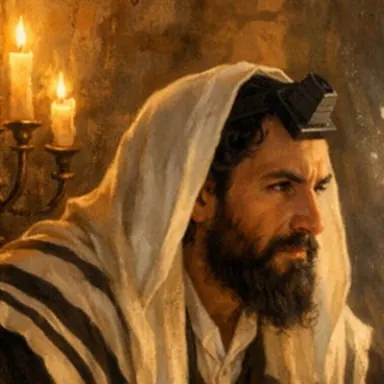
The use of these techniques is not merely technical; Abulafia warned that only one who has refined his character traits, studied philosophy and halakha, and reached a high level of purity is permitted to engage in combination.[9, 15, 16] The preparation includes seclusion (Hitbodedut) in a dark room, wearing white garments, wrapping in a tallit and tefillin, and fasting.[5, 7, 14] The goal is to "mortify" the bodily senses in order to revive the spiritual intellect.[3]
Chapter 4: The Mission to Rome – The Meeting with the Pope and the Miracle at Soriano
The dramatic climax of Abulafia's messianic activity occurred in 1280. In contrast to other Kabbalists who were content with theoretical writing, Abulafia believed that he was obligated to act on the world historical stage in order to bring redemption.[1, 9, 11]
The Background to the Mission
Following prophetic visions that he experienced, Abulafia came to the conclusion that he must meet with Pope Nicholas III on the eve of Rosh Hashanah of the year 5041 (1280).[5, 9, 10] The exact purpose of the meeting remains a matter of interpretation: some claim that he sought to convert the Pope to Judaism, and some hold that he sought to free the people of Israel from exile by means of spiritual persuasion of the head of the Church.[5, 9, 12] In his writings, Abulafia noted that the "spirit of the Lord" urged him to set out on this mission.[12]
The Death of the Pope and the Rescue from the Stake
The Pope, who heard of the Jewish Kabbalist's arrival, was not impressed by his pretensions. While staying at his summer palace in Soriano (near Rome), Nicholas III ordered a stake to be prepared outside the palace gate, in order to burn Abulafia as soon as he arrived.[5, 10, 12]
Although he knew of the sentence, Abulafia continued on his way to Soriano without fear. On 22 August 1280, just as he passed through the gates of the city, the news arrived: the Pope had died the previous night of a stroke (Apoplexy).[5, 10, 12] The stake was left deserted. Abulafia was arrested by the Franciscans (the Minorites) and held in prison in Rome for four weeks (some say 28 days), but was released unharmed.[5, 9, 12] This event was perceived by him as a manifest divine miracle confirming the righteousness of his path and his messianic standing.[11, 12]
The Period in Sicily and the Island of Comino
After his release from Rome, Abulafia moved to Sicily, where he was active in the cities of Messina and Palermo.[5, 8] In Sicily he enjoyed great success and established circles of disciples who saw him as a prophet and messiah.[5, 8, 9] However, his success aroused the wrath of the local leaders, who turned to the Rashba asking for help. The persecution following the Rashba's ban forced Abulafia to flee to the small and isolated island of Comino near Malta.[2, 5, 7] On this island, in complete solitude and severe physical deprivation, Abulafia composed some of his deepest works, foremost "Sefer ha-Ot" ("The Book of the Sign").[7, 10, 11]
Chapter 5: The Polemic with the Rashba – A Clash between Authority and Mysticism
The confrontation between Rabbi Abraham Abulafia and Rabbi Shlomo ben Aderet (the Rashba) is one of the foundational confrontations in the history of halakha and Kabbalah. It is not merely a personal dispute, but a clash between two religious worldviews.[4, 5, 13]
The Rashba's Claims against Abulafia
The Rashba, one of the great figures of the generation and a defender of the halakhic tradition in Barcelona, saw in Abulafia a grave danger to the Jewish community. His opposition was based on several points:
- False messianism: the Rashba feared that Abulafia's messianic pretensions would end in disappointment and catastrophe, as happened in earlier messianic movements.[5, 12]
- Breaching the bounds of secrecy: Abulafia taught Kabbalah publicly, and even approached Christians. For the Rashba, Kabbalah had to remain the possession of the select few within a conservative framework.[5, 9]
- Deviation from the sefirotic model: the Rashba advocated the theosophical Kabbalah of the sefirot and saw Abulafia's method, which emphasizes the union of the intellect with God, as a dangerous deviation in a philosophical-ecstatic direction.[4, 12]
In a sharp letter that he sent to the community of Palermo, the Rashba called Abulafia by pejorative names and warned that he was misleading the people.[5, 12] The Rashba's ban was so effective that Abulafia's writings were forbidden for study in many communities in Spain and North Africa for hundreds of years.[5, 7, 13]
Abulafia's Response: The Epistle "Ve-Zot li-Yehuda"
Abulafia did not remain silent. In the epistle "Ve-Zot li-Yehuda" (sent to Rabbi Yehuda Salmon), he defends his method with eloquence and intellectual depth.[4, 13] He argues that the Rashba judges him without knowing his teaching ("it is no wonder that those who did not know it deny it").[2]
In this epistle he makes a famous distinction between the types of Kabbalah, claiming that it is precisely his Kabbalah of names that is the highest, whereas the Kabbalah of the sefirot is only a preparatory stage.[2, 5] He accuses his critics of recoiling from the truth because they are unable to raise their intellect from potentiality to actuality.[2] Despite his brilliant defense, Abulafia remained an excommunicated figure during his lifetime, which forced him to wander until his death around 1291.[2, 7]
Chapter 6: His Literary Work – Roadmaps to Prophecy
Abulafia's literary legacy is immense. He composed some 50 books and epistles, of which some 30 survive.[2, 7] His books are not merely theoretical treatises, but "operating manuals" for the soul seeking its Creator.[2, 7, 11]
The Practical Guidance Books
These are the books that detail the methods of combination and meditation:
The Life of the World to Come (Sefer Chayei HaOlam HaBa): regarded as one of his most important and widespread books (first printed only in the nineteenth century). The book is devoted entirely to techniques of combining the Name of 72 (the Name of seventy-two letters) by means of circles and tables.[2, 8, 15]
- The Light of the Intellect (Or HaSekhel): a guide written at the request of his disciples in Capua. It deals with the holy names, the ways of attaining prophecy, and a mystical explanation of the commandments of the Torah.[2, 13, 17]
- Words of Beauty (Imrei Shefer): a work analyzing the essence of language and the divine names as instruments of illumination.[2, 7]
- The Book of Desire (Sefer HaCheshek): describes mystical longing and the technical ways of attaining union.[7, 13]
Philosophical and Kabbalistic Commentaries
Abulafia sought to show that his method is anchored in the foundational texts of Judaism:
- Secrets of the Torah (Sitrei Torah): a profound commentary on the Rambam's "Guide of the Perplexed." Abulafia interprets the Rambam's philosophical concepts as allusions to Kabbalistic techniques.[2, 8]
- A Locked Garden (Gan Na'ul): a commentary on Sefer Yetzirah, focusing on the magical-mystical power of the letters.[2, 13]
The Key of Names and the Key of the Sefirot: part of a series of five "key" books (Maftechot) that he composed as a commentary on the Torah, which use the methods of gematria and combination to reveal the hidden secrets in the Pentateuch.[2, 7]
The Books of Prophecy and Vision
These books were written in biblical language and describe his personal visions:
- The Book of the Sign (Sefer HaOt): written on Comino. This book is a kind of personal apocalypse, including visions of the wars of Gog and Magog (in the spiritual sense) and a description of the figure of the "angel" who guides him.[7, 11, 16]
- The Crucible of the Intellect (Matzref HaSekhel): includes seven short "books of prophecy" in which the divine speech flowing from within the Kabbalist is described.[16]
Chapter 7: Deep Insights – Language as the DNA of Consciousness
A deep examination of Abulafia's teaching reveals psychological and philosophical insights that anticipate their time by centuries. He sees language not merely as a tool of communication, but as the "primal matter" of reality.[10, 11]
The Deconstruction of Language
The great innovation of the "science of combination" is the use of language to dismantle language. Abulafia argues that ordinary words (such as "house," "bread") bind thought to the corporeal world.[10, 11] By breaking words down into individual letters and mixing them (Tzeruf), the Kabbalist frees the intellect from accepted semantic associations. The letters become "empty vessels" through which the unlimited divine abundance can flow.[7, 11] This is a process of cleansing consciousness of material images in order to enable pure intellectual intuition.[3, 10]
Auto-Suggestion and the Spiritual Mirror
Abulafia is aware that the Kabbalist's visions are influenced by his inner world. In his writings (and especially in "Sha'arei Tzedek," written by his disciple), it is explained that the prophetic figure that a person sees is in fact a projection of his own powers.[3] A person sees himself as in a mirror, but it is a refined "self" that has united with the Active Intellect.[3] This insight turns Abulafia's mysticism into a sophisticated psychological system, in which the boundaries between the "I" and the "divine" become fluid in moments of ecstasy.[3]
The Seven Paths of the Torah
Abulafia developed a unique interpretive methodology detailed in the epistle "Sheva Netivot ha-Torah" ("The Seven Paths of the Torah"). He divides the study of Torah into seven increasingly deepening levels:
- Peshat: the literal meaning.
- Derash: the interpretation of the Sages.
- The allegorical path: philosophical interpretation.
- The mystical path (the sefirot): theosophical Kabbalah. ...until he reaches the seventh path: the prophetic path, in which Scripture becomes a collection of holy names and combinations of letters that activate the soul.[2, 10] For him, the Torah is not merely a book of laws or history, but a mystical "code" intended to bring a person to prophecy.
Chapter 8: Legacy and Influence – From the Underground to the Center
Despite the official ban, Abulafia's teaching never disappeared. It seeped through underground channels and became one of the strongest engines of mystical renewal in Judaism.[1, 7, 13]
Influence on the Kabbalists of Safed and the Ramak
In the sixteenth century, in the golden age of the Kabbalah of Safed, Abulafia's writings returned to center stage. Rabbi Moshe Cordovero (the Ramak), one of the great systematizers of Kabbalah, integrated extensive parts of Abulafia's methods into his book "Pardes Rimonim."[7, 14] Rabbi Chaim Vital, the foremost disciple of the Ari, also devoted the fourth part of his book "Sha'arei Kedushah" to describing Abulafia's techniques of combination and seclusion (this part remained in manuscript for hundreds of years because of its secrecy).[7, 18]
Hasidism and Ecstatic Devekut
The Hasidic movement, which arose in the eighteenth century, drew great inspiration from the Abulafian model. The concepts of "devekut" (cleaving) and "hitpashtut ha-gashmiyut" (the stripping away of corporeality) in Hasidic Judaism are very close in spirit to Abulafia's prophetic ecstasy.[3, 14] Figures such as the Baal Shem Tov and the Maggid of Mezritch emphasized the importance of the letters in prayer, and saw them as living entities that must be "enlivened" through inner intention – a conception that echoes directly the "Kabbalah of names."[3, 7] Scholars point out that manuscripts of Abulafia were found in the libraries of the great Hasidic masters (such as Pinchas of Koretz) and influenced their meditative practices.[3, 7]
Christian Kabbalah and the Renaissance
Abulafia is the Jewish Kabbalist who influenced the Christian world most deeply in the Renaissance period. His writings were translated into Latin and Italian by the convert Flavius Mithridates for Christian humanists such as Giovanni Pico della Mirandola.[1, 2, 7] Pico saw in Abulafia's "Kabbalah of names" proof that Judaism contains universal metaphysical secrets, and he used the techniques of combination to build a system of "natural magic" and Christian Kabbalah.[7]
Abulafia in the Modern Era
In the twentieth and twenty-first centuries, Abulafia became the focus of immense scholarly and cultural interest. Moshe Idel, in his groundbreaking studies, showed how Abulafia represents a central mystical current that was pushed to the margins, and compared his techniques to Eastern practices such as yoga and Zen.[1, 15] His influence went beyond the bounds of academia and reached literature (for example, in the novel "Foucault's Pendulum" by Umberto Eco) and contemporary spiritual communities seeking a meditative and ecstatic Judaism.[1, 7]
Summary and Conclusions
Rabbi Abraham Abulafia remains one of the boldest and most fascinating figures to have arisen among the people of Israel. He was a polymath who sought to unite intellect and heart, strict philosophy and the wildest mysticism. His Torah enterprise is not merely a collection of books, but a call to the spiritual awakening of the individual.
The conclusions arising from an analysis of his work are:
- Prophecy as a human achievement: Abulafia democratized mysticism, claiming that access to the Godhead depends not on grace alone, but on hard self-work and on the correct use of the power of language.[1, 3, 7]
- Language as metaphysics: his conception of the Hebrew language as the DNA of reality provides a unique bridge between linguistics, psychology and theology.[10, 11]
Inner redemption as the key to national redemption: for Abulafia, the repair of the world begins with the repair of consciousness. His messianism was not merely political, but spiritual in essence – the transformation of humankind into an "intellectual" and prophetic being.[7, 12]
Despite the bans and the wanderings, his steadfast stand before the Pope on the one hand and before the Rashba on the other attests to the inner strength of a man who was convinced of the truth of his vision. Today, as his writings are studied in study halls and in academies alike, it becomes clear that the voice of the "prophet" from Comino continues to resonate and to inspire all who seek the living and direct connection with the Absolute.[1, 7, 19]
Sources19
- 1.אברהם אבולעפיה | שיעור 1 - תולדות חייו | פרופ' משה אידל - YouTube, youtube.com/watch?v=b16nZoOrLdw
- 2.אברהם אבולעפיה – ויקיפדיה, he.wikipedia.org/wiki/אברהם_אבולעפיה
- 3.Abraham Abulafia & Ecstatic Kabbalah - My Jewish Learning, myjewishlearning.com/article/abraham-abulafia-ecstatic-kabbalah/
- 4.אגרת וזאת ליהודה | ספריית ספריא, sefaria.org.il/VeZot_LiYehuda
- 5.ABULAFIA, ABRAHAM BEN SAMUEL - JewishEncyclopedia.com, jewishencyclopedia.com/articles/699-abulafia-abraham-ben-samuel
- 6.The Mystical Experience in Abraham Abulafia : Moshe Idel : 965-223-688-8 : magnespress.co.il : Books, magnespress.co.il/en/book/The_Mystical_Experience_in_Abraham_Abulafia-3212
- 7.Abraham Abulafia - Wikipedia, en.wikipedia.org/wiki/Abraham_Abulafia
- 8.Full text of "Moshe Idel: Abraham Abulafia and Ecstatic Kabbalah" - Internet Archive, archive.org/stream/MosheIdelAbrahamAbulafiaAndEcstaticKabbalah/MosheIdelAbrahamAbulafiaAndEcstaticKabbalah_djvu.txt
- 9.THE CENSORSHIP OF ABULAFIA AND HIS ATTEMPT TO CONVERT THE POPE - Kotzk Blog, kotzkblog.com/2018/07/187-censorship-of-abulafia-and-his.html
- 10.Abraham Abulafia | Religion Wiki - Fandom, religion.fandom.com/wiki/Abraham_Abulafia
- 11.Amazing Sefer HaOt by R' Abraham Abulafia - Kabbalah Empowerment, kabbalahempowerment.com/sefer-haot-r-abraham-abulafia/
- 12.ניקולאוס השלישי – ויקיפדיה, he.wikipedia.org/wiki/ניקולאוס_השלישי
- 13.אברהם אבולעפיה | מקורות מתוך ספריית ספריא, sefaria.org.il/topics/abraham-ben-samuel-abulafia
- 14.Jewish meditation - Wikipedia, en.wikipedia.org/wiki/Jewish_meditation
- 15.Abraham Abulafia – A Jewish Yogi – ויג'נאנה יוגה - Vijnana Yoga, vijnanayoga.com/מאמר-ניסיון/
- 16.מצרף השכל וספר האות - רבי אברהם אבולעפיה - המדף היהודי, hamadaf-y.co.il/חנות/ספרי-קבלה/ספרי-רבי-אברהם-אבולעפיה/מצרף-השכל-וספר-האות-רבי-אברהם-אבולעפיה/
- 17.Ohr HaSekhel - אור השכל - ספריא, sefaria.org.il/Ohr_HaSekhel
- 18.Meditation and Kabbalah, betemunah.org/Meditation and Kabbalah.pdf
- 19.אברהם אבולעפיה | שיעור 3 - משיחיות | פרופ' משה אידל - YouTube, youtube.com/watch?v=8MzM-RIXrwQ