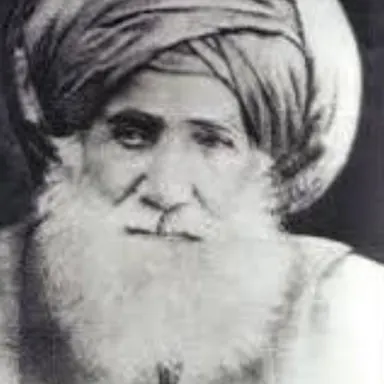
The Torah and Social Transformation of Rabbi Abdallah Somekh: Leadership, Halakha and Education in Babylonian Jewry in the 19th Century
14 min read2,826 words
Summary
This text surveys the monumental work of Rabbi Abdallah Somekh, who was the chief architect of the Torah and social revival of Babylonian Jewry in the course of the 19th century. The work focuses on the founding of the Midrash Beit Zilkha, a revolutionary educational institution that trained generations of spiritual leaders and made Baghdad a world halakhic center linking the Far East with the Land of Israel. The author stresses the rabbi's halakhic creativity, which combined fidelity to tradition with openness to the innovations of modernity and technology, while strengthening Jewish autonomy vis-à-vis the Ottoman government. In conclusion, the article shows how the legacy of Rabbi Somekh, embodied in the figure of his disciple the "Ben Ish Chai," continues to influence Sephardic religious identity and the world of modern halakhic ruling to this day.
The Historical and Geopolitical Context of the Middle East in the 19th Century
During the 19th century the Ottoman Empire underwent a series of deep structural changes known as the "Tanzimat" reforms. These processes, which officially began in 1839, sought to turn the antiquated empire into a more modern and centralized political entity, while granting relative equality of rights to non-Muslim subjects.[1, 2] In the heart of the Babylonian region, the city of Baghdad experienced these processes with great intensity: on the one hand, Western and technological influences began to penetrate, and on the other, the Jewish community was required to redefine its identity vis-à-vis the changing Turkish government and the surrounding Muslim community.[1] In this period of transition from the Middle Ages to the modern era there emerged the figure of Rabbi Abdallah (Ovadia) Avraham Yosef Somekh, who was not only a halakhic decisor but a social architect who shaped the face of Babylonian Jewry for generations.[3, 4]
Historical analysis indicates that the Jewish community of Baghdad in the first half of the 19th century suffered a significant spiritual decline. The traditional institutions of learning had weakened, and the sages of the previous generation had died without leaving behind them a stable pedagogical infrastructure that would ensure the continuity of Torah leadership.[3] At the same time, the economic growth of Baghdad as a center of trade between Europe and the Far East created a class of wealthy magnates, but these did not always possess profound Torah training, which created a gap between economic power and spiritual authority.[1] Rabbi Abdallah Somekh recognized that without an educational revolution that would train a new generation of rabbis who understood the challenges of the hour, the community might lose its spiritual backbone in the face of the winds of modernity.[3, 5]
Lineage and the Shaping of the Leader's Personality
Rabbi Abdallah Somekh was born in the year 5573 (1813) in Baghdad, to a family that belonged to the social and spiritual elite of the community.[3, 5] The Somekh family was known for its illustrious lineage, the family tradition linking it directly to Rabbi Nissim Gaon, author of "Ha-Viduy ha-Gadol" (the Great Confession) and one of the key figures of the Geonic period in Babylonia.[3, 6] This lineage gave Rabbi Abdallah not only social standing, but also a sense of historical mission to renew the days of Babylonia as a world center of Torah. His father, Rabbi Avraham Somekh, was a wealthy Torah scholar who combined engagement in commerce with extensive support for Torah institutions, and in his home Abdallah grew up as the eldest of eight sons and eight daughters, in an atmosphere in which Torah and worldly greatness were united at one table.[5, 6]
Rabbi Abdallah began his studies with Rabbi Yaakov bar Yosef HaRofe, one of the greatest rabbinic judges in Baghdad at that time, who imparted to him the foundations of traditional Babylonian scholarship based on broad expertise in the Talmud and the halakhic decisors.[5, 6] His marriage to Sarah produced a large family, and his children (Salach, Harun, Raphael, Chatun, Avraham, Sasson, Mas'uda, Rachel and Simcha) eventually took their place in the social and economic fabric of the community, but Rabbi Abdallah himself chose to devote most of his energy to founding educational institutions.[5] Although at a certain stage of his life he engaged in commerce for his livelihood, reflection on the spiritual state of the community led him to the decision to make the rabbinate and education his central calling.[5]
Personal and Family Data of Rabbi Abdallah Somekh
The Founding of the Midrash Beit Zilkha: The Big Bang of the Babylonian Torah World
In the year 5600 (1840), Rabbi Abdallah began to implement his plan for the rehabilitation of the Torah world. The undertaking began modestly: gathering ten talented boys from the local Talmud Torah and guiding them personally in the study of Gemara and the halakhic decisors, without payment.[3] The focus on the "kids" (gedayim), the young generation, stemmed from a profound understanding of generational processes: leadership is not built in a day, but requires organic growth out of in-depth study. The success of the venture drew the attention of the magnate Yechezkel ben Reuven Menashe (Zubaida), a key figure in Baghdad's economy, who recognized the potential inherent in the rabbi's educational enterprise. Yechezkel Menashe placed at the rabbi's disposal a special building that became known as the "Midrash Abu Menashi" and took upon himself the full funding of the students' maintenance, thereby freeing them and the rabbi from worries about livelihood.[3, 5]
Over the years the institution kept expanding, and its name was changed to the "Midrash Beit Zilkha." The yeshiva became the nerve center of Babylonian Jewry, and its pedagogical structure was innovative for its time. Instead of frontal teaching alone, the yeshiva was divided into "chavurot," small study groups each headed by an experienced sage.[7] By 1869 ten such chavurot were already operating in the yeshiva, comprising dozens of students and sages who specialized in different fields of halakha. The model of "Beit Zilkha" created continuity of leadership: the older students served as tutors to the younger ones, and over all of them Rabbi Abdallah bestowed his spirit and his Torah.[3, 7] The influence of the yeshiva extended far beyond the borders of Baghdad; it became the source of authority and training for rabbis who were sent to communities in India, Persia and the Far East, thereby creating a worldwide Torah network that endured until the middle of the 20th century.[2, 5]
The Structure and Organization of the Midrash Beit Zilkha
His Halakhic Teaching: Between Babylonian Tradition and "Rabbinic Creativity"
Rabbi Abdallah Somekh laid the foundations for the modern Sephardic-Babylonian method of halakhic ruling, characterized by a combination of uncompromising fidelity to halakha with openness of mind and a realistic analysis of the changing reality. His central halakhic work, "Zivchei Tzedek" on the Shulchan Arukh, Yoreh De'ah, became the foundational book for ritual slaughterers and rabbis throughout the East.[3, 5] The choice to focus on the laws of slaughter and treifot stemmed from the urgent need to unify procedures in the dispersed communities of the Baghdadi diaspora, where strict observance of kashrut was the main tool for preserving the boundaries of the community.[5]
Modern scholars point out that Rabbi Abdallah Somekh developed a model of "Rabbinic Creativity," which, unlike the Orthodox-Ashkenazi response in Europe (which adopted the principle that "the new is forbidden by the Torah"), chose to confront modernity with classical halakhic tools.[8, 9] A classic example of this is his famous ruling of 1877 on travelling by train on the Sabbath in India.[8] When he was asked whether Jews were permitted to travel on a train operated by gentiles on the Sabbath day (having paid for the ticket in advance), he did not hasten to forbid it as a "weekday activity" (uvdin de-chol), but analysed the problem in a technical-halakhic way: he distinguished between travel within the Sabbath boundary (which does not involve the Torah prohibition of leaving the boundary) and intercity travel.[8] This approach reflects a halakhic self-confidence that does not feel threatened by technology, but seeks to subordinate it to the rules of halakha while taking into account the living needs of the modern merchant community.[1, 8]
Likewise, his rulings stand out in matters of monetary law, divorce and marriage, in which he was required to answer questions that came from distant communities that faced complex social situations as a result of migration and international trade.[7] His ability to write responsa in a variety of languages (Hebrew, Aramaic, Judeo-Arabic, Persian and Turkish) attests that he did not see language as a barrier, but as a tool for disseminating the word of halakha and making it accessible to the public of questioners.[7] His halakhic conception advocates "koach de-hetera" (preferring the lenient side as far as possible), out of an understanding that halakha must be a way of life that can be sustained, and not a burden cut off from social reality.[8, 9]
His Torah and Literary Work
Public Leadership and His Standing before the Authorities
Rabbi Abdallah Somekh was not content with being a "head of a yeshiva" in the narrow sense, but saw himself as responsible for the welfare and security of all of Babylonian Jewry. In a period when the community was subject to an Ottoman government that was not always stable, the rabbi's standing as an authoritative and impressive figure served as a protective barrier for the Jews.[1, 3] Reports from the period relate that awe and respect for him were felt not only by the members of his community, but also by the Muslims and Christians of Baghdad. When he passed through the street, the Arab merchants would rise in his honour, and he earned the epithet "anshei tzurah" (men of distinguished presence), which attests to an exceptional spiritual majesty.[3]
A formative event in his leadership was the struggle with the wali (governor) of Baghdad over the independence of the Jewish legal system. When the government tried to interfere in the appointment of rabbinic judges or in changing judgments, Rabbi Abdallah displayed uncompromising determination. The story of the policemen who were sent to bring him to the governor and were struck with fear at the sight of him sitting at the head of hundreds of sages illustrates the public power he had accumulated.[3] The rabbi made clear to the governor that in religious matters "the decision is according to the Torah of Moses and it cannot be changed," a position that was ultimately accepted by the authorities and strengthened the autonomy of the community.[3]
Beyond dealing with the foreign government, Rabbi Abdallah acted as an internal mediator within the Jewish community. He succeeded in restraining the power of the wealthy magnates and ensuring that the community's institutions would serve the weaker strata as well. Sociological analysis of the period shows that thanks to him the Jewish community was the first in Baghdad to adopt modern values of management and organization while preserving a solid Orthodox identity, which gave the Jews an enormous economic and social advantage in the period of the British Mandate that followed.[1, 2]
The Generation of Disciples: Spreading the Message from Baghdad to Jerusalem
Rabbi Abdallah Somekh's ability to raise disciples who themselves became giant leaders is perhaps his most significant legacy. He did not seek to create "copies" of himself, but developed a learning environment that allowed each student to find his own unique path in Torah.[3] Among his principal disciples is Rabbi Yosef Chaim, the "Ben Ish Chai," who was not only his disciple but also his brother-in-law and his chief successor in the leadership of Babylonian Jewry.[3, 5] The Ben Ish Chai combined his teacher's revealed Torah with the wisdom of the hidden (Kabbalah), thereby creating a spiritual synthesis that captured the hearts of the Jews of the East.[3]
Another prominent disciple was Rabbi Yaakov Chaim Sofer, author of the "Kaf ha-Chaim," who moved the center of his activity to Jerusalem and brought the halakhic tradition of "Beit Zilkha" to the Land of Israel, where it became one of the pillars of modern Sephardic halakhic ruling.[5, 6] One may also count Rabbi Eliyahu Mani, who became the rabbi of Hebron and spread the Torah of Baghdad among the Old Yishuv, and the Kabbalist Rabbi Yehuda Fatiya, whose works on the world of souls and spirits are studied to this day.[3, 6] The geographical and thematic spread of his disciples attests that Rabbi Abdallah succeeded in creating a network of spiritual leadership that covered all areas of Jewish life, from practical halakha to profound mysticism.[3, 6]
A List of Selected Disciples and Their Influence
His Last Days and the Miracle after His Death
Rabbi Abdallah Somekh died on the eve of the holy Sabbath, 18 Elul 5649 (13 September 1889), in the midst of a severe cholera epidemic that struck Baghdad.[3, 5] The circumstances of his death were tragic not only because of the loss of the leader, but also because of the health restrictions that the authorities imposed on burial. For fear of contagion, it was forbidden to bury the dead within the city, and Rabbi Abdallah was initially buried in the courtyard of the tomb of Joshua the High Priest, outside Baghdad.[3, 5] The Jewish community was in deep mourning and uneasy over the fact that their great rabbi had not been laid to rest in the honoured place befitting him.
After 84 days, when the epidemic had subsided, the community received permission to move the body for permanent burial within the city. When the grave was opened, a sight was revealed that left a tremendous impression on all present: the body of Rabbi Abdallah was found completely whole, without any decay or damage, as though it had just been laid there.[3, 6] The event aroused enormous emotion and was interpreted in the community as heavenly proof of the rabbi's righteousness and holiness. The eulogy by his disciple, the Ben Ish Chai, linked the wholeness of the body with the rabbi's life's work in renewing the study halls, and the event became an inseparable part of the ethos of Babylonian Jewry.[3]
The Modern Legacy: From Rabbi Abdallah to Rabbi Ovadia Yosef
Rabbi Abdallah Somekh's influence did not stop in the 19th century, but continued to shape the face of Sephardic Judaism in the 20th and 21st centuries. A clear example of this is the connection between Rabbi Abdallah and Rabbi Ovadia Yosef, the spiritual leader of Shas and the man who changed the face of the religious-political map in Israel. Rabbi Ovadia Yosef was named "Ovadia" after Rabbi Abdallah (Abdallah in Arabic is Ovadia), and his family emigrated from Baghdad carrying with it the spiritual heritage of the "Beit Zilkha" yeshiva.[10] Rabbi Ovadia Yosef saw himself as a continuer of Rabbi Abdallah's path in a method of halakhic ruling based on fidelity to the sources while taking modern reality into account, and he frequently cites the "Zivchei Tzedek" as a supreme authority.[10, 11]
The move of Babylonian Jewry to Israel in the middle of the 20th century brought with it Rabbi Abdallah's disciples and his disciples' disciples, who took their place in the institutions of the Chief Rabbinate and in the Sephardic yeshivot (such as "Porat Yosef"). Thus the educational revolution that began with ten boys in Baghdad in 1840 became the spiritual infrastructure of hundreds of thousands of Jews in Israel and throughout the world.[1, 10]
Summary of Rabbi Abdallah Somekh's Contribution by Historical Parameters
Conclusions and Final Analysis
Rabbi Abdallah Somekh represents the ideal type of the Sephardic-Babylonian "chacham": a profound scholar who is not cut off from the world, a firm leader who does not lord it over his people, and an educator who foresees what is to come. His success in rehabilitating the world of Torah in Babylonia stemmed from a rare combination of economic understanding (enlisting the magnates), pedagogical sensitivity (the method of chavurot) and halakhic courage (confronting technological innovations).[1, 3, 8] In a period when other communities were torn between religious extremism and assimilation, he offered a path of "Torat Chaim," a Torah that lives within reality, guides it and gives it meaning, without giving up a jot or tittle of the tradition.[9] His legacy, reflected in his books and his disciples, continues to inspire spiritual leadership that seeks to combine halakhic depth with social and national responsibility.
Sources11
- 1.THE SOCIAL TRANSFORMATION OF IRAQI JEWRY, utoronto.scholaris.ca/bitstreams/8b16351b-a09b-4e6e-982e-a423222d9bff/download
- 2.Chapter 1 Nineteenth-Century Network and Connections in - Brill, brill.com/display/book/9789004460560/BP000013.xml
- 3.רבם של גדולי עולם: 10 עובדות על הרב עבדאללה סומך - הידברות, hidabroot.org/article/212870
- 4.עבדאללה סומך – ויקיפדיה, he.wikipedia.org/wiki/עבדאללה_סומך
- 5.Rabbi Abdallah Somekh - Tzadikim, dailyzohar.com/tzadikim/493-Rabbi-Abdallah-Somekh
- 6.הִילּוּלָא קַדִּישָׁא • רבי עבדאלה עובדיה סומך זצ"ל - JDN, archive.jdn.co.il/breakingnews/1203262/
- 7.מדרש בית זלכה - ויקיפדיה, he.wikipedia.org/wiki/מדרש_בית_זלכה
- 8.Sephardic Halakha, History, and the Israeli-Arab Conflict | jewishideas.org, jewishideas.org/article/sephardic-halakha-history-and-israeli-arab-conflict
- 9.Rabbinic Creativity in the Modern Middle East, meforum.org/middle-east-quarterly/book-reviews/rabbinic-creativity-in-the-modern-middle-east
- 10.עובדיה יוסף - ויקיפדיה, he.wikipedia.org/wiki/עובדיה_יוסף
- 11.שיטת פסיקה – ויקישיבה, yeshiva.org.il/wiki/index.php/שיטת_פסיקה