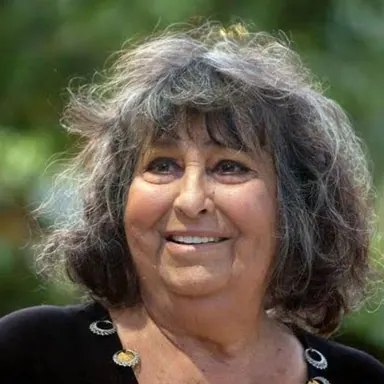
Shofar of Redemption: The Life's Work and National-Spiritual Teaching of Geula Cohen
11 min read2,296 words
Summary
This survey traces the multidimensional figure of Geula Cohen, from her underground activity as "the voice of Lehi" to her emergence as a central political and spiritual leader in the history of the State of Israel. The text highlights her faith-based teaching, which identifies territorial sovereignty as a metaphysical process of redemption, and examines the complex dialogues she conducted with key figures such as the Lubavitcher Rebbe and Rabbi Zvi Yehuda Kook. Across the chapters her outstanding parliamentary achievements are described, above all the enactment of Basic Law: Jerusalem, alongside her extensive literary work and the founding of institutions for passing on the national heritage. In the end, the source presents Cohen as a unique bridge that joined secular revolutionary activism with the religious fervor of Gush Emunim, out of an uncompromising commitment to the integrity of the Land.
Family Roots and Joining the Lehi Underground
Geula Cohen was born in Tel Aviv on 8 Tevet 5686 (25 December 1925) into a family that blended within it the extremes of the Jewish and Land-of-Israel experience [cite: 1, 2]. Her father, Yosef Cohen, who had immigrated from Yemen, was one of the founders and prominent leaders of the Federation of Yemenites in the Land of Israel [cite: 1, 2]. Her mother, Miriam, was a daughter of the Old Yishuv and a native of the Old City of Jerusalem [cite: 1, 2]. This family union – between the Torah rootedness of Yemenite Jewry and the living historiography of the alleys of Jerusalem – instilled in Cohen from childhood a deep national consciousness and an immediate bond with the holiness of the Land and with the Book of Books.
Cohen was educated at the "Balfour" school in Tel Aviv and continued her studies at the Levinsky Teachers' Seminary for women [cite: 1]. However, the ordinary course of her life was cut short at the end of 1943, when she decided to join the ranks of the organization "Fighters for the Freedom of Israel" (Lehi) [cite: 1, 2]. Following her public identification with the positions of Lehi, which the establishment of the organized Yishuv regarded as a "dissident" organization, Cohen was expelled from the Levinsky Seminary [cite: 1, 2]. Under the underground code name "Ilana," Cohen became the official announcer of Lehi's clandestine broadcasting station [cite: 1]. Her voice became the revolutionary shofar of the underground, breathing into the hearts of its listeners a spirit of revolt, redemption and self-sacrifice, and shaping public consciousness around the idea of national freedom.
Her Torah and Faith Teaching: Defining Faith and the Interface with the Great Figures of the Generation
Although she did not grow up in the world of institutional halakha and did not define herself as a religious woman in the narrow Orthodox sense, Geula Cohen's thought is saturated with deep theological foundations, drawing direct inspiration from the Bible, from Kabbalah and from Hasidic and messianic thought. Her worldview saw in Zionism and in the creation of the State a metaphysical, Torah-grounded process of the return of the people of Israel to the center of the historical stage.
A Theology of Faith versus Rationalism
In her writings and lectures Cohen set the concept of "faith" as the highest existential and spiritual level of the human being [cite: 3]. In a sharp philosophical analysis, she distinguished between the wise, the learned or the artistic person and the believing person [cite: 3]. She held that whereas an encounter with a wise or learned person leaves the listener in the same state in which he was before – since wisdom is an external tool – the encounter with a believing person brings about an inner transformation [cite: 3]. Cohen explained that the true faith of the believer actively radiates onto his surroundings, since the believer is not content with holding a dogmatic truth but also believes in the hidden powers of the other and rouses them to action [cite: 3].
The Tense Dialogue with the Lubavitcher Rebbe
This view of the creative power of faith underlay her meetings and the exchange of letters she conducted with the Lubavitcher Rebbe, Rabbi Menachem Mendel Schneerson, whom she described as the clearest example of a "believing person" who serves as an "artist of truth" [cite: 3]. The conceptual relationship between them revealed a deep theological tension concerning the paths of redemption:
- The appeal in the 5720s (the mid-1960s): Cohen, who was then known as a leading figure of the national leadership for the integrity of the Land, called on the Rebbe to immigrate to the Land of Israel and to lead the spiritual struggle from within it [cite: 4]. The Rebbe answered her that he must be in a place where his words would be heard, namely in the United States, and added that the Land of Israel was rife with disputes and internal rifts that made a unifying spiritual influence difficult [cite: 4].
- The appeal in 5741 (1981): Cohen approached the Rebbe with a dramatic proposal that he exert his enormous influence on the tens of thousands of his Hasidim and disciples throughout the world, and instruct them not only to immigrate to the Land of Israel but to settle actively on the front line of settlement in Judea, Samaria and Hebron [cite: 5].
- This dialogue reflected a polar disagreement: whereas Cohen saw in the territory and in the physical hold on the soil of the Land the necessary foundation from which metaphysical redemption grows [cite: 2, 5], the Rebbe held to a global strategy that saw the strengthening of the spiritual center in the Diaspora as a vital instrument for preserving the integrity of the people, supporting the integrity of the Land in principle while refraining from giving an institutional directive for active settlement beyond the Green Line.
The Conceptual Alliance with the Mercaz HaRav Yeshiva and Gush Emunim
In parallel with the dialogue with Chabad Hasidism, Cohen found a deep common language with the heads of messianic religious Zionism, foremost among them the head of the "Mercaz HaRav" yeshiva, Rabbi Zvi Yehuda HaKohen Kook (the Ratziyah) [cite: 6]. The Ratziyah, who devoted his life to editing the writings of his father the Rayah (such as the book "Shabbat HaAretz" in 1910) [cite: 6], and lived a life of asceticism and holiness in Jerusalem [cite: 6], presented a theology that saw in the State of Israel and its army the divine instrument for revealing the Divine Presence in the world.
Cohen identified a clear similarity between the revolutionary activism of Lehi and the Ratziyah's dynamic conception of redemption. This connection was translated into a close political and settlement partnership with the "Gush Emunim" movement and with its prominent leader, Rabbi Hanan Porat [cite: 2, 7]. Porat, who was regarded as the charismatic symbol of the movement and the renewer of settlement in Gush Etzion [cite: 7], supplied the practical and spiritual fervor that Cohen sought to instill into the secular political system. In her eyes, the religious pioneers in Judea and Samaria were the direct successors of the underground fighters: a band acting out of a burning faith that is not subject to temporary political constraints [cite: 2].
Her Public Work, the Parliamentary Enterprise and Historic Legislation
Geula Cohen's political and public career spanned many decades, during which she served as a bridge between the secular ideological right and religious, settlement-oriented Zionism. She served in the Knesset for 19 consecutive years, from the Eighth Knesset until 1992 [cite: 1, 2].
On entering the legislature on behalf of the Likud list, Cohen established the Immigration and Absorption Committee and stood at its head, out of the conviction that the ingathering of the exiles is the demographic and spiritual engine of the Zionist enterprise [cite: 1, 2]. Her uncompromising struggle for the opening of the gates of the Soviet Union and for the best possible absorption of the immigrants expressed her belief that the Jewish people constitutes a single organism that is not whole as long as parts of it are cut off from Zion [cite: 1].
In 1978, following the signing of the Camp David Accords by Menachem Begin and the consent to evacuate the Sinai settlements, Cohen decided to leave the Likud [cite: 2]. She saw territorial concession as a grave injury to the historic covenant of the people with its land. Together with Professor Yuval Ne'eman and other figures from the national and religious camp, she founded the "Tehiya" movement, which became the political spearhead of the settlement enterprise in Samaria, Judea and the Gaza district [cite: 2].
Her most outstanding parliamentary achievement was recorded on 30 July 1980 (17 Av 5740), with the enactment of "Basic Law: Jerusalem, Capital of Israel" [cite: 2, 8]. This law, passed by a sweeping majority of 69 in favor against 15 opposed, constitutionally anchored the status of complete and united Jerusalem as the official capital of the State of Israel, fixed there the seat of the institutions of government and guaranteed the protection of the holy places of all religions [cite: 8]. This legislation was a direct practical translation of her spiritual teaching, which saw Jerusalem as the beating heart of Jewish sovereignty.
In 1990 Cohen was appointed Deputy Minister of Science in the government of Yitzhak Shamir, a post in which she tried to combine advanced technological development with Zionist national values [cite: 1]. Nevertheless, her commitment to settlement remained above any state office. In December 1994, following a wave of severe terror attacks in the Hebron area, Cohen temporarily left the center of the country and moved to live part-time in Kiryat Arba [cite: 1, 9]. This step was meant to strengthen the spirit of the local residents and to demonstrate physical solidarity with those she regarded as the pioneers of the generation [cite: 9].
Literary Work and Passing On the National Heritage
Alongside her political work, Cohen was a prolific writer, a publicist and an intellectual. From the 1960s she published a regular column in the newspaper "Maariv" and presented a popular personal segment on the state radio "Kol Israel" [cite: 1]. Her literary and journalistic writing served her as a tool for passing on the founding myths of the struggle for the freedom of Israel and for shaping national memory.
To present her literary work and written thought in concentrated form, the following table lists her major works, the year of their publication and their conceptual contribution to the national culture:
Cohen's drive to pass on the heritage led her to initiate long-term educational and cultural enterprises:
- The National Midrasha: founded on her initiative in 1970 within the Herut movement, and in 1977 incorporated into the activity of the Jabotinsky Order, with the aim of giving young people in-depth knowledge of Zionism, Judaism and the history of the Etzel and Lehi undergrounds [cite: 1, 2].
- The Uri Zvi Greenberg Heritage House: established by Cohen in 1998/1999 in Jerusalem [cite: 2, 9]. Cohen ran the house as a volunteer for many years, out of the understanding that the prophetic and topical poetry of Uri Zvi Greenberg is a key to understanding the spiritual standing of the Jewish people [cite: 2]. The institution operates under the auspices of an academic council whose members include literary scholars from all ends of the political spectrum, a fact that reflects her aspiration to make the national heritage the possession of all [cite: 2].
Summary and Conclusions
Geula Cohen passed away on 20 Kislev 5780 (18 December 2019), a few days before her 94th birthday, and was buried on the Mount of Olives in Jerusalem – the place identified more than any other with the Jewish people's longing for redemption [cite: 1, 2, 9]. She left behind a rich legacy and a son, former Knesset member and minister Tzachi Hanegbi [cite: 1, 9].
During her lifetime, Cohen received broad state recognition for her pioneering public work. In 2003 she was awarded the Israel Prize for special contribution to society and the State [cite: 2, 9], and in 2007 she was named a "Distinguished Citizen of Jerusalem" (Yakirat Yerushalayim) [cite: 9]. In 2014 she was awarded the title "Distinguished Figure of Settlement" at the Jerusalem Conference, and in the same year she lit a torch at the official torch-lighting ceremony on the 66th Independence Day of the State of Israel [cite: 9].
Analysis of her teaching and work shows that Geula Cohen was not an ordinary pragmatic politician but an ideologue driven by a deep historical consciousness. She succeeded in creating a unique synthesis between the revolutionary pioneering of the secular undergrounds and the religious, Torah-inspired fervor of religious Zionism after the Six-Day War [cite: 2, 7]. Basic Law: Jerusalem, the educational enterprises she founded and her literary works stand as living testimony to a teaching that identifies political and territorial sovereignty in the Land of Israel as a vital instrument for fulfilling the spiritual and Torah destiny of the people of Israel [cite: 1, 2, 8].
Sources13
- 1.כהן גאולה – “אילנה” - העמותה להנצחת מורשת לח״י, lehi.org.il/he/כהן-גאולה-אילנה/
- 2.גאולה כהן - remember.bio, remember.bio/he/remember_pages/גאולה-כהן/
- 3.גאולה כהן נפגשת עם הרבי - BeitChabad.com - בית חב"ד, he.chabad.org/library/article_cdo/aid/391623
- 4.הבקשות מהרבי שיעלה לארץ ישראל - חב"דפדיה, chabadpedia.co.il/index.php?title=הבקשות_מהרבי_שיעלה_לארץ_ישראל&mobileaction=toggle_view_desktop
- 5.שלימות הארץ ובטחון העם, המלחמה של הרבי שליט"א מלך המשיח - הגאולה, hageula.com/moshiach/prophesy/24874.htm
- 6.הרב צבי יהודה קוק - סיורי סליחות ביפו | gyafo, gyafo.co.il/blank
- 7.חנן פורת - ויקיפדיה, he.wikipedia.org/wiki/חנן_פורת
- 8.חוק יסוד: ירושלים בירת ישראל - ויקיפדיה, he.wikipedia.org/wiki/חוק_יסוד:ירושליםבירת_ישראל
- 9.גאולה כהן - ויקיפדיה, he.wikipedia.org/wiki/גאולה_כהן
- 10.סיפורה של לוחמת מאת גאולה כהן - סימניה, simania.co.il/bookdetails.php?item_id=26809
- 11.מפגש היסטורי / גאולה כהן - העמותה להנצחת מורשת לח״י, lehi.org.il/product/מפגש-היסטורי/
- 12.אין לי כוח להיות עייפה מאת גאולה כהן - סימניה, simania.co.il/bookdetails.php?item_id=229297
- 13.אין לי כוח להיות עייפה - העמותה להנצחת מורשת לח״י, lehi.org.il/product/אין-לי-כוח-להיות-עייפה/