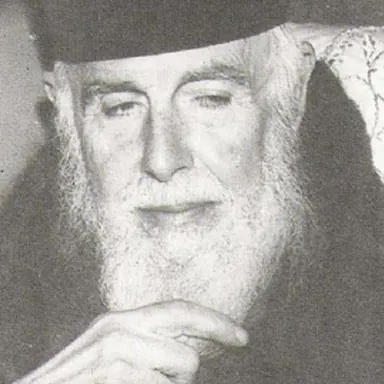
Rabbi Raphael Baruch Toledano
13 min read2,663 words
Summary
This survey presents the life and teaching of Rabbi Raphael Baruch Toledano, one of the great spiritual leaders of Moroccan Jewry in the twentieth century, sketching the distinctive structure of his leadership, which combined halakha, ethics and social activism. The text details the rabbi's move from Morocco to Israel, with emphasis on formative cultural projects such as his work "Kitzur Shulchan Arukh HaShalem" and the famous piyyut "Ashorer Shira," which serve as pillars of Sephardi identity. Alongside his religious rulings, the source highlights his devotion to education and welfare among disadvantaged populations and his resolute struggle to preserve the Torah heritage in the face of the challenges of modernity and immigration. Ultimately, the work aims to show how his figure served as a bridge between worlds, connecting ancient roots in Toledo with the revival of the Sephardi Torah world in the modern State of Israel.
Halakhic Leadership and Social Change: The Teaching and Work of Rabbi Raphael Baruch Toledano
The Dynasty and the Historical Background: The Foundations of the Toledano Family in Morocco
To grasp the depth of Rabbi Raphael Baruch Toledano's influence on Moroccan Jewry and on the Sephardi Torah world in the twentieth century, one must first examine the family and historical foundation from which he grew. The Toledano family is not merely a surname but a hallmark of spiritual and judicial leadership that has accompanied Sephardi Jewry since the days of the Golden Age. The family originates from the city of Toledo in Spain, a fact reflected in its name, and with the expulsion from Spain in 5252 (1492), the forefathers of the family wandered to North Africa and settled in Morocco, where they became one of the pillars of the Jewish community.[1, 2, 3]
Rabbi Raphael Baruch was born in 5650 (1890) in the city of Meknes, which was called "the Jerusalem of Morocco" because of the multitude of Torah scholars and study halls in it.[1, 3] His father, Rabbi Yaakov Toledano, served as the rabbi of Meknes and was a dominant figure in the spiritual leadership of the entire country. His mother, Chana née Sudri, shared in the atmosphere of holiness and learning that pervaded the home.[1, 3] Growing up in a home that was a center of halakhic ruling and of care for public needs shaped his early consciousness: for him, the Torah was not merely an abstract concept studied within the walls of the yeshiva, but a living instrument that governs the life of society, the economy and the law.[4]
The education he received in his youth was characterized by a synergy between profound theoretical study and the world of ethics (mussar). His principal teacher in the study of Gemara and halakha was Rabbi Chaim Berdugo, while he acquired the teaching of mussar and the conduct of the soul from Rabbi Chaim Messas.[1, 3, 4] This combination produced a figure characterized on the one hand by halakhic firmness and broad erudition, and on the other by gentleness of soul, humility and a deep moral commitment to others.[4, 5]
A Chronology of His Life and Major Milestones
Rabbi Raphael Baruch's transition from the position of a young Torah scholar to that of a community leader took place relatively quickly, as he was called upon to fill the enormous void left by the giants of the previous generation.
Judicial and Political Leadership: Between the Seat of Judgment and the Royal Palace
Rabbi Raphael Baruch's tenure as head of the rabbinic court (av beit din) in Meknes was not merely a religious office but a significant position of political and social power under the rule of the French Mandate and the Moroccan monarchy. The Jewish courts in Morocco enjoyed broad autonomy in matters of marriage and inheritance, and Rabbi Raphael Baruch was known for his ability to run a legal system that was both efficient and imbued with absolute integrity and justice.[7] He sat on the bench of the court alongside key figures such as Rabbi Yehoshua Berdugo, Rabbi Yosef Messas and Rabbi Baruch Avraham Toledano.[1]
His leadership went beyond the bounds of the Jewish community. The authorities recognized his moral authority and his organizational ability. The King of Morocco, Hassan II, awarded him the decoration "Wissam Alaouite," while the French government awarded him the decoration of the Legion of Honor.[3, 6] These honors reflect the complexity of his leadership: the ability to preserve the uncompromising Torah tradition while conducting a respectful and fruitful dialogue with foreign and modern governing authorities.
The Structure of the Community and the Institutions of Kindness under His Leadership
Rabbi Toledano saw the community as an organic body in which spirituality and welfare are intertwined. He established a dense network of organizations intended to meet every human need, out of the conception that poverty and illness are barriers to spiritual growth.[3]
- Welfare enterprises: the founding of the "Bikur Cholim" organization for free medical aid to the poor, and of "Malbish Arumim" for the provision of basic and dignified clothing.[3]
- Support for the family: the "Mohar HaBetulot" organization provided financial support to young couples without means, thereby ensuring the continuity of the generations.[3]
- Economic activism: every Friday the rabbi used to distribute personally the charity money he had collected from the residents of the city during the week, thereby preventing charity from turning into a cold bureaucracy.[3, 6]
- Preservation of culture: the founding of the "Dovev Siftei Yeshenim" printing house was intended to publish the writings of the early sages of Morocco, thereby strengthening the cultural and Torah pride of the community.[3]
His Halakhic Teaching: "Kitzur Shulchan Arukh HaShalem" as a Book for the People
Rabbi Raphael Baruch's most impressive literary achievement is "Kitzur Shulchan Arukh HaShalem" (the Complete Abridged Shulchan Arukh).[1, 8] This book is not merely a halakhic summary but a cultural project intended to bridge the gap between settled halakha and actual custom among the Jews of Morocco. The book was built on the basis of the "Kitzur Shulchan Arukh" of Rabbi Shlomo Ganzfried and the "Shulchan Arukh" of Maran Rabbi Yosef Karo, but it incorporates the rulings of the "Kaf HaChaim" (Rabbi Yaakov Chaim Sofer) and the distinctive ruling traditions of Morocco.[1, 8]
The choice to rely on the "Kaf HaChaim" attests to the inclination of the sages of Morocco to combine the plain sense (peshat) and the secret (the teaching of Kabbalah) within practical ruling. Rabbi Toledano created an accessible book, written in clear language, that enables every Jew, even one who is not an accomplished Torah scholar, to know the deed that he must do.[1, 8]
Selected Halakhic Issues and Customs in His Writings
In his halakhic teaching the rabbi took care to preserve customs that constituted the identity of the community, even when they seemed to contradict the bare ruling of the Shulchan Arukh. For example, on the question of lighting the Sabbath candles, he supported the custom of the women of Morocco to light first and only afterwards to recite the blessing, contrary to the rule of "before their performance" (over la'asiyatan).[9] He was also stringent in matters of the eruv and of carrying on the Sabbath, ruling that a street 16 cubits wide is considered a public domain by Torah law, and therefore a "form of a doorway" (tzurat hapetach) is of no avail in it — a ruling that had great practical influence on daily life in his community.[9]
Educational Activism: The "Shuvu Banim" Movement and the Yeshiva for the Sons of the Villages
One of the most innovative aspects of Rabbi Raphael Baruch's work was his going out beyond the bounds of the established city to the geographical and spiritual periphery. He understood that the greatest danger to Moroccan Jewry was not external oppression but ignorance and religious dropout under the influence of modern French culture.
The rabbi established a special yeshiva for the sons of the villages and small towns near Meknes.[3] He did not wait for the students to come to him; he himself traveled to remote villages, spoke with the parents and gathered boys in order to give them a Torah education. His care for the students was holistic: he provided them with food, lodging, clothing and even personal medical care.[3] This approach, which saw education as a social mission and not only an intellectual one, was ahead of its time and laid the foundations for the rehabilitation of the Sephardi Torah world.
At the same time, he founded the "Shuvu Banim" movement — an organization for bringing people back to religious observance that worked among young people who had been influenced by the modern spirit.[3, 7] This activity aroused opposition from modernist elements in the community who tried to curb his influence, but the rabbi stood like a firm rock and continued his struggle for the character of the young generation.[7]
The Piyyut "Ashorer Shira" as a Spiritual Testament
Rabbi Raphael Baruch's spiritual world was not limited to halakhic prose. He was a liturgical poet of the highest grace, and the piyyut he composed, "Ashorer Shira Likhvod HaTorah" (I Shall Sing a Song in Honor of the Torah), became one of the most popular piyyutim in the Sephardi world.[5, 7, 10] The piyyut, which comprises about 30 stanzas, was written, according to tradition, after a dream in which its text was revealed to him.[2]
The piyyut is in fact a moral and educational treatise that extols the value of Torah study and of overcoming the evil inclination. The phrase "Happy is the man who prevails over his inclination" became a motto representing his moral outlook: true heroism is not physical but spiritual.[2, 10] The piyyut weaves in verses from Psalms and Proverbs to describe the Torah as "enlightening the eyes" and "making wise the simple," and in this way it makes the profound ideas of the teaching of mussar accessible to the broad public through song and melody.[10]
A Thematic Analysis of the Piyyut "Ashorer Shira"
The Move to Israel: The Struggle for the Souls of the Immigrants
In 5723 (1963), at the height of the period of the great immigration from Morocco, Rabbi Raphael Baruch immigrated to Israel and settled in Bnei Brak.[1, 3] For him, immigration was not the end of the story but a new arena of struggle. He was shaken by the spiritual state of the immigrants from Morocco in the immigrant settlements and the transit camps (ma'abarot), and by the fact that many of them abandoned the heritage of their fathers upon arriving in the Land.
The rabbi became a key figure in the "Agudat Israel" movement and took part in the fifth "Great Assembly" (Knessia Gedola) in 5724 (1964).[1, 3] In his speech there, regarded as one of the formative moments of Sephardi Haredi Judaism in the Land, he cried out: "How shall I go up to my father, if the lad be not with me?"[1, 3] He placed the responsibility for the state of Sephardi youth on the Ashkenazi Haredi public and called for urgent action to save the young generation.
He did not content himself with words. Despite his advanced age, the rabbi set out on journeys among the immigrant settlements, delivered sermons of awakening and persuaded parents to send their sons to holy yeshivot.[1, 3] He saw yeshiva education as the only lifeline that would prevent the disappearance of the glorious heritage of Moroccan Jewry.
His Ties with the Great Sages of the Generation and His Influence in Bnei Brak
In Bnei Brak the rabbi lived at first in the Zichron Meir neighborhood and later in Ramat Aharon.[1, 3] He became an inseparable part of the city's spiritual landscape, maintaining close ties with the great Lithuanian Torah leaders, among them Rabbi Elazar Menachem Man Shach, who eulogized him at his funeral.[7] His ability to bridge the Lithuanian yeshiva world and Moroccan warmth and tradition made him a figure revered by all circles. He was known for his lengthy prayer with mystical intentions (kavanot) and unifications (yichudim), and for his enormous care in answering "Amen" and in mentioning God's name with trembling.[5]
Responsa "Rabbi Baruch": The Late Halakhic Work
After his passing, dozens of halakhic responsa that he had written over the years on the sections "Orach Chaim" and "Yoreh De'ah" were published under the title "Responsa Rabbi Baruch" by the Ahavat Shalom Institute.[1, 7] These responsa reveal the depth of his mastery of the sources of halakhic ruling and his ability to apply the principles of the Torah to the changing modern reality. Further responsa on the sections "Even HaEzer" and "Choshen Mishpat" have remained in manuscript, and they bear witness to his intensive engagement with capital and monetary law (dinei nefashot and dinei mamonot) throughout all the years of his rabbinate.[1]
He won enormous esteem from the decisors of his generation. Maran Rabbi Ovadia Yosef, in his book "Yabia Omer," calls him "the famous rabbi and gaon, who shall be called holy, pure and upright in his deeds."[11] The exchange of letters and books between them attests to the mutual recognition of Rabbi Raphael Baruch's importance as a vital connecting link in the chain of Sephardi halakhic ruling.
Continuity and Institutions: The Living Legacy
Rabbi Raphael Baruch's descendants continued his path by establishing splendid Torah institutions that disseminate his teaching to this day. His sons, among them Rabbi Yosef Toledano and Rabbi Yaakov Toledano, established the network of institutions that includes the "Chazon Baruch" yeshiva in France, the "Or Baruch" yeshiva in Jerusalem and the "Ateret Baruch" community in Bnei Brak.[3, 6]
These institutions preserve not only his name but his distinctive ethos: theoretical scholarship accompanied by education in ethics, love of Israel and care for every Jew wherever he may be.
A Summary of His Figure: The Leader Who Became a Bridge
Rabbi Raphael Baruch Toledano embodied in his personality the figure of the complete Sephardi sage. He was a "man of many parts" in whom were combined firm judicial authority with the tenderness of a liturgical poet and bard; Lithuanian theoretical scholarship with Moroccan Kabbalah and ethics; and dignified political leadership before kings with standing simply in line for the distribution of charity to the poor.[3, 4, 5, 6]
His influence on Moroccan Jewry was decisive. He succeeded in preserving the Torah character of the community in the face of the waves of modernity in Morocco, and later fought for the place of Sephardi culture within the emerging Israeli society. His book "Kitzur Shulchan Arukh" continues to serve as a halakhic guide for tens of thousands, and his piyyut "Ashorer Shira" resounds whenever people seek to extol the honor of the Torah.
His legacy teaches that true spiritual leadership does not shut itself away in the study hall, but goes outside, cares for the welfare of the poor, for the education of the orphan and for the preservation of the dignity of the disadvantaged in society. As he said in his last speech, he was not prepared "to go up to his father" without "the lad with him" — that is, without care for the spiritual future of every single Jew.[1, 3] In this way Rabbi Raphael Baruch Toledano became one of the important shapers of the face of modern Sephardi Judaism.
Sources11
- 1.רפאל ברוך טולידאנו - ויקיפדיה, he.wikipedia.org/wiki/רפאל_ברוך_טולידאנו
- 2.הגאון רבי רפאל ברוך טולדנו זצ"ל - ערוץ מאיר - אתר היהדות הגדול בעולם, meirtv.com/alon-1626/
- 3.רבי רפאל ברוך טולידאנו – ויקישיבה, yeshiva.org.il/wiki/index.php/רבי_רפאל_ברוך_טולידאנו
- 4."קדוש וברוך"-מסכת חייו ופועליו של מנהיג יהדות מרוקו -הגאון רבי רפאל ברוך ..., moreshet-morocco.com/2020/04/01/קדוש-וברוך-מסכת-חייו-ופועליו-של-מנהיג-8/
- 5.רבי רפאל ברוך טולידאנו - MyTzadik, mytzadik.com/m/tzadik.aspx?id=1048
- 6.רבי רפאל ברוך טולדנו זצ"ל: 10 עובדות לדמותו הגדולה - הידברות, hidabroot.org/article/240734
- 7.י"ח חשון: הילולת רבי רפאל ברוך טולדנו - המאיר לארץ, hameir-laarets.org.il/hilulots/29022/
- 8.קיצור שולחן ערוך השלם (טולידאנו) – ויקישיבה, yeshiva.org.il/wiki/index.php/קיצור_שולחן_ערוך_השלם_(טולידאנו)
- 9.הרב משאש ומנהגי מרוקו - ישיבת הר ברכה, yhb.org.il/shiurim/revivim-1428/
- 10.אשורר שירה – מילים, פירושים וביצועים | ר' רפאל ברוך טולדנו | פיוט | הספרייה הלאומית – אתר הפיוט והתפילה, nli.org.il/he/piyut/Piyut1song_010027100000005171/NLI
- 11.מדוע לא נכנסו הערותיו של מרן זצוק"ל על ספר "קיצור שולחן ערוך" לרבי רפאל ברוך טולדיאנו. "ההסבר" שלא שמעתם (כנראה)., forum.moreshet-maran.com/threads/מדוע-לא-נכנסו-הערותיו-של-מרן-זצוק-ל-על-ספר-קיצור-שולחן-ערוך-לרבי-רפאל-ברוך-טולדיאנו-ההסבר-שלא-שמעתם-כנראה.4326/