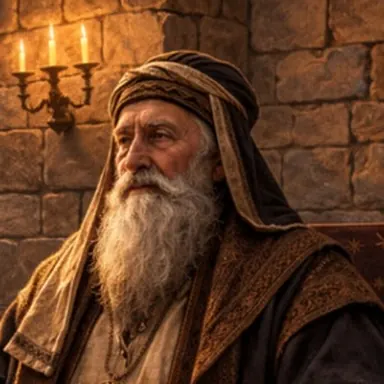
Rabbi Yitzchak Segan Leviah
11 min read2,164 words
Summary
The text surveys the multifaceted figure of Rabbi Yitzchak Segan Leviah, one of the pillars of the Torah world in Ashkenaz in the 11th century and the foremost teacher of Rashi. The article traces his life from the Lorraine region to the leadership of the yeshiva of Worms, emphasizing his role as a mediator between the early tradition of the Geonim and the flowering of the school of the Tosafists. The author highlights three central axes in his work: halakhic authority marked by concise and precise rulings, an extensive liturgical oeuvre that includes wedding and Kedushah piyyutim, and a spiritual model of piety and asceticism that earned him the title "our holy master." Ultimately, the source presents Rabbi Yitzchak as a spiritual architect who shaped the communal and scholarly infrastructure that enabled the growth of European Jewry through the generations.
An Architecture of Torah and Piety: The Torah Teaching and Public Work of Rabbi Yitzchak Segan Leviah
The 11th century in Ashkenaz marked the golden age of the spiritual centers along the Rhine, a period in which the halakhic, exegetical and liturgical identity of European Jewry took shape. At the heart of this flowering stands the monumental figure of Rabbi Yitzchak bar Elazar ha-Levi, known by his appellation Rabbi Yitzchak Segan Leviah.[1] As head of the yeshiva of Vermaisa (Worms) and one of Rashi's three principal teachers, Rabbi Yitzchak's work forms a critical link between the legacy of the Geonim of Babylonia and the early Torah of Mainz on the one hand, and the extensive literary output of the school of Rashi and the Tosafists on the other.[1, 2] His figure combines uncompromising halakhic authority, centralized communal leadership and an inclination toward piety and asceticism, which earned him from his students the rare title "our holy master."[2]
Geographical Roots and Spiritual Growth in the Lorraine Region
Understanding the figure of Rabbi Yitzchak Segan Leviah requires a look at the map of the Torah centers of the 11th century. Although his main activity is identified with the city of Worms, his roots lie in the French-German space between the Lorraine region (Lotar) and Vitry in France.[2, 3] Scholars point out that the common confusion in the writings of the Rishonim between "Vitry" and "Lotar" attests to the high mobility of the sages of the period and to the close connection between the Torah centers of France and Ashkenaz.[3] Rabbi Yitzchak was born around the year 4760 (1000 CE) and grew up in the spiritual atmosphere of the "sages of Lorraine," a group of scholars characterized by devotion to tradition and by a concise and precise style of ruling.[1, 3]
He received his main Torah training at the yeshiva of Mainz, which was at that time "the mother of the yeshivot" in Europe. He had the privilege of imbibing the Torah of the great figures of the previous generation, foremost among them Rabbenu Gershom, Light of the Exile, Rabbi Yehuda ha-Kohen (the "Leontin," author of Sefer ha-Dinim) and Rabbi Eliezer the Great (Rabbi Eliezer ben Yitzchak of Mainz).[1, 3] This combination of teachers gave him complete mastery both of the halakhic traditions that had come from Italy and Babylonia and of the local methods of analysis that had developed in Ashkenaz. After his period of study he moved to Worms, where he established his yeshiva and became the most dominant figure in the city until his death around the year 1070.[2, 3]
The Halakhic Methodology: The Art of Brevity and Tradition
The halakhic teaching of Rabbi Yitzchak Segan Leviah, as reflected in the many quotations in the "books of the school of Rashi," is characterized by two central axes: absolute loyalty to the tradition of his teachers and an exceptionally brief writing style.[2] At a time when Talmudic discussion in Ashkenaz was beginning to expand, Rabbi Yitzchak chose the path of "pesika pesuka" (clear-cut ruling)—giving concise responses that decide the law without entering into long dialectical arguments.
Authoritative Guidance in the "Books of the School of Rashi"
Rabbi Yitzchak's teaching was not preserved as an independent book, but was disseminated through the works of his students, especially Sefer ha-Pardes, Machzor Vitry, Sefer ha-Orah and Sefer Seder Rashi.[4] In these works one can find the "Piskei Berakhot of R. Yitzchak ha-Levi Segan Leviah" as well as many references to the customs he instituted in his study hall.[4] The fact that Rashi's students took the trouble to copy his rulings alongside those of their own teacher attests to the supreme authority they attributed to him. Frequently, when contradictions appear within these books of rulings, the source lies in the differences between the tradition of Mainz (represented at times by Rabbi Yitzchak ben Yehuda) and the tradition of Worms of Rabbi Yitzchak Segan Leviah.[4]
Key Issues in His Rulings
Rabbi Yitzchak's rulings touched on every area of life, but stood out especially in matters of daily conduct (Orach Chayyim) and of the forbidden and permitted. Among the central issues one may count:
- The laws of slaughter and treifot: stringency and meticulous examination of the animal's lung ("adhesions"), with a demand for re-examination even of meat purchased from outside parties, in order to ensure the standard of kashrut.[4]
- The laws of Shabbat and festivals: discussions concerning bathing on Shabbat and the use of specific oils for kindling lights. Rabbi Yitzchak dealt with the question of which oils are considered fit ("yitzhar") and what halakhic conditions allow their use in the Ashkenazi domestic setting.[4]
- Oaths and vows: A famous ruling of his forbids a Jew to swear by the Torah while physically holding the scroll. This ruling reflects an attitude of reverent awe toward holy objects and an attempt to prevent disrespect for the honor of the Torah.[4]
Teacher and Student: His Formative Influence on Rashi
The relationship between Rabbi Yitzchak Segan Leviah and Rashi is among the most fruitful in the history of Torah. Rashi, who came to Worms from Mainz, found in Rabbi Yitzchak a guide not only in the halakhic sphere but also in the shaping of his personality as a leader.[2] Rashi testifies of him that he was "the provider and leader of the generation" and that nothing significant was done in the community without his explicit approval.[2]
His Presence in Rashi's Commentary on the Talmud and on Scripture
Rashi quotes his teacher under various names: "Rabbi Yitzchak ha-Levi," "Leviah" or simply "my teachers." These mentions appear in central tractates such as Yoma (39a), Sukkah (35b) and Megillah (26a).[3] Rabbi Yitzchak's influence is evident not only in halakhic decisions but also in the verbal and substantive interpretation of the Talmudic discussions. Rashi adopted from his teacher the ability to distill the essence of the words of the Gemara and to explain them in clear language.
Exceptionally, Rabbi Yitzchak is also mentioned in Rashi's commentary on Scripture, a field in which Rashi is less inclined to cite his teachers by name. The citations appear in the book of I Samuel (1:24) and in the book of Proverbs (19:24).[3, 5] In the commentary on Proverbs, Rashi draws on Rabbi Yitzchak's explanation to elucidate verses dealing with laziness and morals, which shows that Rabbi Yitzchak also engaged in thought and biblical exegesis beyond the narrow halakhic framework.[5]
"Our Holy Master": The Figure of the Pietist in Ashkenaz
The appellation "our holy master" that Rashi gives Rabbi Yitzchak (as it appears in "Likkutei ha-Pardes") is not merely an expression of honor but a description of an ascetic and pietistic way of life.[2] In the 11th century the first buds of "Ashkenazi Pietism" began to develop in Ashkenaz, emphasizing personal stringency, asceticism and religious devotion beyond the letter of the law. Rabbi Yitzchak Segan Leviah embodied this figure in his personality, and thereby laid the foundations for the spiritual current that would flourish generations later.
The Liturgical Work: Piyyut as a Theological and Halakhic Expression
Rabbi Yitzchak Segan Leviah was not only a man of halakha but also a prolific paytan who composed liturgical works that entered the prayer books of Ashkenaz. His piyyutim are not merely aesthetic poetry; they serve as a means of conveying religious and halakhic content to the broad public.[1, 3] Avraham Grossman notes that Rabbi Yitzchak concentrated on writing piyyutim for the "wedding Shabbat," out of an understanding of the centrality of the institution of the family in preserving the community.[1]
The Structure of the Cycle of Piyyutim for the Bridegroom
Rabbi Yitzchak composed a complete cycle of piyyutim that includes all the components of the "Yotzer" (the blessings of the morning Shema):
- Yotzer: built on a double alphabet and signed with his name "Yitzchak be-Rabbi Elazar, chazak" (Yitzchak son of Rabbi Elazar, be strong).[3]
- Ofan: arranged according to a simple alphabet, and woven into the description of the song of the angels.[3]
- Zulat: a piyyut in tashrak order (reverse alphabet), dealing with the unity of God and the redemption of Israel.[3]
- Reshut for the bridegroom: a magnificent piyyut in which the paytan asks the congregation's permission to call the bridegroom up to the Torah. The piyyut contains a full acrostic: "Yitzchak ben R. Elazar ha-Levi."[3]
These piyyutim praise the Creator and the excellence of the Torah and those who study it, and bless the bridegroom with blessings of success and fruitfulness. In addition to original composition, Rabbi Yitzchak also engaged in the interpretation of ancient piyyutim, thereby contributing to the preservation of the liturgical tradition of the paytanim of the Land of Israel and Babylonia that had reached Europe.[1]
The Family Line and the Tragedy of Tatnu (1096)
Rabbi Yitzchak's importance is also reflected in his sons, who earned the honored appellation "our masters the Levites" from the sages of later generations.[2] His sons were sages in their own right and continued his path in leadership and teaching:
- Rabbi Yaakov (Yaavetz): the most famous of his sons, whose rulings are cited extensively in the writings of the Rishonim. He is remembered especially for the lament he composed on the Tatnu (1096) decrees, "Oy li al shivri" ("Woe is me for my hurt"), in which he mourned the destruction of the communities of Ashkenaz in the First Crusade.[2, 3]
- Rabbi Asher: the father of Rabbi Yitzchak ben Asher (the Riva), who was among the first of the Tosafists. In this way there is a genetic and spiritual continuity between the generation of Rabbenu Gershom (Rabbi Yitzchak's teacher) and the flowering of the world of the Tosafot.[3]
- Rabbi Eliezer and Rabbi Shmuel: two further sons who were involved in the halakhic discussions at the yeshiva of Worms and are mentioned in Sefer ha-Pardes.[3]
The connection between Rabbi Yitzchak's family and figures such as Rabbi Asher the Paytan (author of "Asher Heni") underscores the centrality of this Levite family in the leadership of Ashkenaz throughout the 11th and 12th centuries.[1] Although Rabbi Yitzchak himself died before the massacres of 1096, it was his legacy and his sons who bore the burden of rebuilding the Ashkenazi Torah world after the destruction.[2]
The Meaning of the Title "Segan Leviah" and His Public Standing
The title "Segan Leviah," which consistently accompanies Rabbi Yitzchak, is not an ordinary title. In scholarship and in tradition there are several interpretations of the meaning of the title: some see it as an honorific indicating that he was the foremost member of the tribe of Levi in his community, similar to the role of the segan (deputy) in the Temple.[2] Others hold that it is a civic leadership title that symbolized his standing as "the provider and leader of the generation," a man holding broad judicial and executive powers in the community.[1, 2] This title emphasizes the unique combination of greatness in Torah and political-communal power, a combination that was essential for the survival of the Jewish communities of medieval Europe.
Summary and Legacy: The Bridge between the Eras
Rabbi Yitzchak Segan Leviah stands at a historic crossroads. He was the student of the last of the Ashkenazi geonim and the teacher of Rashi, "the father of the Rishonim." His work shaped the character of the yeshiva of Worms and gave it the central standing it retained for hundreds of years.
In retrospect, the importance of Rabbi Yitzchak Segan Leviah goes beyond the dry details of his rulings. He was the architect who designed the spiritual structure in which Rashi could grow. Without his leadership authority, without his stirring piyyutim and without his devotion to the tradition of the sages of Lorraine, the character of Ashkenazi Judaism as we know it today would have been utterly different. He remains a figure of majesty and holiness, a "Segan Leviah" who served faithfully in the sanctuary of the Torah and handed it down to the generations to come with love and precision.[2, 3, 4]
Sources5
- 1.יצחק הלוי - ויקיפדיה, he.wikipedia.org/wiki/יצחק_הלוי
- 2.Isaac ben Eliezer | Encyclopedia.com, encyclopedia.com/religion/encyclopedias-almanacs-transcripts-and-maps/isaac-ben-eliezer
- 3.ISAAC BEN ELEAZAR HA-LEVI - JewishEncyclopedia.com, jewishencyclopedia.com/articles/8195-isaac-ha-levi-of-worms
- 4.ספר הפרדס - Beurei Hatefila Home, beureihatefila.com/files/HaPardes.pdf
- 5.במדבר - רש''י ושפתי חכמים - תצוגה משולבת - כל הספר - תורת אמת, toratemetfreeware.com/online/f_01869_all.html