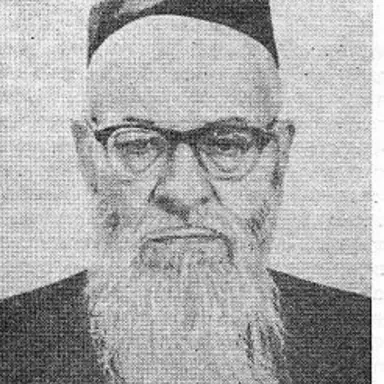
Rabbi Mordechai Atiya
13 min read2,678 words
Summary
This survey presents the life and teaching of Rabbi Mordechai Atiya, a key figure who bridged the tradition of the sages of Aleppo and an active kabbalistic Zionism in the twentieth century. The text details his journey from Jerusalem to Mexico and back, highlighting his contribution to preserving Jewish identity in the Diaspora and the founding of the kabbalists' yeshiva "HaChaim VeHaShalom" in the Land of Israel. The heart of the article deals with his work "Sod HaShevua" (The Secret of the Oath), in which he reinterpreted Torah sources in order to give theological justification to immigration to the Land and to the establishment of the State as part of the process of redemption. By analysing his public work and his extensive writing, the work illustrates how the rabbi combined the study of the secrets of the Torah with practical leadership responding to the events of the time.
Leadership, Thought and Kabbalah in the Twentieth Century: The Torah Teaching and Public Work of Rabbi Mordechai Atiya
The processes of transformation that the Jewish people underwent during the twentieth century, from the collapse of the old empires, through the terrible events of the Holocaust, to the establishment of the State of Israel, found deep and unique expression in the figure of Rabbi Mordechai Atiya. As a link in the golden chain of the sages of Aram Tzova (Aleppo), Rabbi Atiya succeeded in combining the deep-rooted Sephardi world of Kabbalah with active public involvement, while formulating a theological conception that gives meaning to the events of the time through the lens of the esoteric teaching and of redemption. His multidimensional work, which extended over three continents, Asia, America and Europe (in its cultural sense), made him one of the most significant spiritual leaders of Sephardi Jewry in the last century, a figure who bridged devotion to the Siddur of the Rashash and a fervent and practical religious Zionism.
Chapter One: The Aleppan Roots and the Spiritual Formation in Jerusalem
Rabbi Mordechai ben Yeshua Atiya was born on 28 Cheshvan 5656 (7 November 1895) in the city of Aleppo in Syria.[1] Aleppo, called "Aram Tzova", was for hundreds of years a Torah and spiritual centre of the first rank, known for its rich tradition of "pizmonim" (liturgical hymns), for its in-depth method of study and for a close-knit and conservative Jewish community. His birth in this environment instilled in him the foundations of communal leadership and an uncompromising commitment to halakha and to ancestral tradition. Yet while he was still a child his family moved to Jerusalem, a step that exposed him to the study atmosphere of the Sephardi "Old Yishuv" in the Holy City.
His days in the Jerusalem of the beginning of the twentieth century were no bed of roses. The Jewish community in Jerusalem was then experiencing abject poverty and severe deprivation, and Rabbi Atiya grew up within a challenging economic reality that shaped his social sensitivity.[1] The First World War, which brought with it decrees of forced conscription into the Ottoman army and severe famine in Jerusalem, compelled him to flee back to his native city, Aleppo. There, in the year 5680 (1920), he married his wife Allegra (Simcha).[1] His renewed stay in Aleppo enabled him to deepen his knowledge of Torah and to strengthen his ties with the sages of the community before he set out on his historic mission overseas.
A Chronology of the Period of Growth and Wandering
Chapter Two: The Leadership in Mexico: The Struggle against Alienation and the Preservation of Identity
In the year 5682 (1922) Rabbi Mordechai Atiya arrived in Mexico City, where he began to lead the large community of Jews originating from Aleppo.[1, 2] His arrival in Mexico was not merely a matter of economic migration, but a spiritual mission of the first order. The Jewish community in Mexico was at that time in a state of deep cultural alienation and growing assimilation, as a result of the encounter with secular society and the distance from the traditional spiritual centres.[3]
Rabbi Atiya recognised that in order to preserve Jewish identity in the Spanish-speaking sphere, preserving what existed was not enough. He worked resolutely to establish spiritual infrastructures: he founded Torah lessons for householders and for young people, set up charitable institutions and Talmud Torah schools, and was the driving force behind the building of the monumental "Rodfei Tzedek" synagogue and the ritual bath (mikveh) in the city.[1, 2] This activity of his was not merely technical; Rabbi Atiya "empowered" the members of the community, gave them Jewish pride and connected them back to their roots.[3] He did not see Mexico as a final station, but as an arena in which the people of Israel must be strengthened towards its return to its Land.
His leadership was characterised by a combination of human sensitivity and religious firmness. He understood that in a world of assimilation the rabbi must be a wondrous figure who exerts influence not only in the beit midrash but also in the Jewish street.[3] His influence was so great that it is claimed that he immigrated to the Land even before the establishment of the State together with large parts of the community who had been influenced by his Zionist vision.[3]
Chapter Three: Kabbalistic Zionism and the Controversy over Immigration
Unlike many of the sages of the East who inclined towards Zionism out of a simple traditional religious feeling, Rabbi Mordechai Atiya developed an orderly Zionist doctrine based on the sources of Kabbalah and the thought of the generations. He did not content himself with preaching immigration, but gave deep theological meaning to the Holocaust and to the establishment of the State as part of the process of redemption.[1]
His conception was set down in writing in his foundational work "Sod HaShevua", published in Jerusalem in the year 5725 (1964).[4] In this book Rabbi Atiya deals in detail with the question of the "Three Oaths" mentioned in tractate Ketubot, which served as a central argument in anti-Zionist Haredi circles against organised immigration to the Land of Israel. Rabbi Atiya sought to prove that "our immigration to the Land is a great and holy commandment", and that the oaths with which the Holy One, blessed be He, adjured Israel, not to go up as a wall and not to rebel against the nations, are not valid in the new historical reality.[4] He used the verse "I adjure you, O daughters of Jerusalem, by the gazelles or by the hinds of the field" to show that the circumstances had changed and that the Holy One, blessed be He, is calling His people to return home.[4]
A Comparative Analysis: "Sod HaShevua" against Other Approaches
Chapter Four: The Historic Debate with the Sanz-Klausenburg Rebbe
One of the most dramatic moments in Rabbi Atiya's life, which illustrates the strength of his personality and his commitment to the Land of Israel, took place in New York around the year 5712 (1952).[2] Rabbi Atiya, who served as a shadar (an emissary of the rabbis) for the institutions of Jerusalem and was on his way from Mexico to Israel, met with the Sanz-Klausenburg Rebbe, Rabbi Yekutiel Yehuda Halberstam of blessed memory.[2] The meeting, which came about on the initiative of Rabbi Nissim Mishan, turned into an intellectual and spiritual debate that lasted three consecutive days and three nights.[2]
The subject of the debate was emigration to the United States versus immigration to the Land of Israel. At that time the Sanz Rebbe, a Holocaust survivor who had lost his entire family, was engaged in rebuilding his community in the United States and expressed a reserved position regarding immigration to the Land of Israel in those days.[2] Rabbi Atiya, by contrast, argued fervently that the future of the people of Israel lies solely in the Holy Land. The debate was so emotionally and physically draining that Rabbi Mordechai testified that "his strength had run out".[2] Yet his efforts had a wondrous result: shortly afterwards the Rebbe had a significant dream that changed his mind, and within a few years he immigrated to the Land and founded Kiryat Sanz in Netanya, becoming one of the great builders of the Land within the Haredi public.[2] This meeting is evidence that Rabbi Atiya was not merely a "preacher", but a leader who succeeded in influencing the great men of the world by the power of his Torah and his faith.
Chapter Five: His Kabbalistic Teaching and the "HaChaim VeHaShalom" Yeshiva
In the year 5727 (1967), the year in which Jerusalem was reunited, Rabbi Mordechai Atiya founded the kabbalists' yeshiva "HaChaim VeHaShalom" in the Old City.[1] The founding of the yeshiva marked the return of the Sephardi kabbalistic tradition to the heart of Jerusalem. The yeshiva became a centre for the study of the teaching of the Rashash (Rabbi Shalom Sharabi), which forms the backbone of practical and theoretical Kabbalah in Oriental Jewry.[6]
Rabbi Atiya's kabbalistic teaching focused on the study of the "kavvanot of prayer" (mystical intentions) according to the Siddur of the Rashash. He saw prayer not only as a personal address to God, but as a cosmic mechanism for the repair of the worlds.[6] His study was characterised by "depth" and by going into the details of the "ascent of the worlds" (ABYA: Atzilut, Beriah, Yetzirah, Asiyah).[7] One of the central concepts in his lessons was "the building of the Yesod of Ze'ir Anpin by Imma", a complex spiritual process dealing with the development of the supernal partzufim (configurations).[8, 9]
Rabbi Atiya did not content himself with quoting writings, but analysed the differences between the methods of the kabbalists, for example comparing the method of the Rashash with that of Rabbi Salman Eliyahu (the Shadah), author of the book "Kerem Shlomo".[10, 11] He stressed that the study of Kabbalah must be done with fear of Heaven and with love, and that every movement in prayer has the value of a spiritual repair.[6]
The Structure of the Worlds of ABYA in the Teaching of the Rashash and Rabbi Atiya
Understanding this order is essential for understanding Rabbi Atiya's lessons on the Kaddish, in which he explains how every utterance of "Amen, yehei shemei rabba" (Amen, may His great name be blessed) raises the sparks of holiness from world to world.[7]
Chapter Six: His Literary Work, between Thought and Kabbalah
The works of Rabbi Mordechai Atiya cover a wide range of subjects, from philosophical-logical thought to recondite kabbalistic expositions. His books reflect his attempt to make the depths of the Torah accessible to a generation seeking rational answers alongside spiritual devotion.
- Machshevot Shalom (Thoughts of Peace) (1948): a book of thought written close to the establishment of the State, in which the rabbi formulates his conception of peace, redemption and the role of the people of Israel in the modern era.[12]
- Sod HaShevua (1964): his best-known work on the subject of the Land of Israel, which constitutes a Zionist-kabbalistic manifesto.[4]
- Ma'arkhot Elohim (The Orders of God): a book dealing with the foundations of faith and with explaining the essence of the Creator and His governance of the world.[13]
- Machaneh Yisrael (The Camp of Israel): deals with the conduct of the community and with the proper social arrangements according to the Torah.[14]
- Sefer HaHokhachot (The Book of Proofs): a work that uses logic and science in order to prove the truth of the Torah and the existence of the Creator, from an apologetic approach that seeks to strengthen faith in the modern era.[5]
- Ateret Mordechai (The Crown of Mordechai): a series of books and lessons (printed and recorded in part by his students and descendants) explaining the kavvanot of prayer and the Kaddish according to his method.[7, 8]
The use of sources such as the Ra'ava (Rabbi Abraham ibn Ezra) in his book "Yesod Mora" shows the breadth of the horizons of Rabbi Atiya, who sought to combine medieval philosophy with the esoteric teaching.[15]
Chapter Seven: The Family Legacy and Its Influence on the Contemporary World of Torah
Rabbi Mordechai Atiya not only raised up students but also established a Torah dynasty that faithfully continues his path. His sons and descendants became central figures in the world of the yeshivot and in the leadership of the communities in Jerusalem and in Safed. His son, Rabbi Eliyahu Atiya of blessed memory, continued his work in the "HaChaim VeHaShalom" yeshiva and was an exemplary figure of a Torah scholar who combined the plain meaning and the secret meaning.[3]
Rabbi Shmuel Eliyahu, the rabbi of Safed, stressed the strength of the family as one that is "full of Zionism" and raises generations of rabbis versed in all parts of the Torah.[3] The influence of Rabbi Mordechai Atiya is especially evident in the Torah institutions in Safed, where two of the heads of the yeshivot are among his direct students.[3] This fact attests that his teaching has not remained a thing of the past, but lives and thrives among the present generation of redemption.
Today Rabbi Atiya's enterprise continues to resonate through the "Ateret Mordechai" channel, which disseminates thousands of lessons on Kabbalah to the general public.[16] Making the "Siddur of the Rashash" accessible through online courses and detailed video lessons is a realisation of Rabbi Atiya's vision: to turn the esoteric teaching into a living working tool for every Jew who seeks to draw closer to his Creator.[6]
Summary and Conclusions
The figure of Rabbi Mordechai Atiya is a rare example of a spiritual leader who succeeded in navigating between poles: between the Diaspora (Mexico) and the Land of Israel, between Jerusalem poverty and communal wealth abroad, and between devotion to the customs of the past and a deep understanding of the needs of the future. His Torah teaching shows that Zionism is not a contradiction of religion, but the peak of a deep kabbalistic process that seeks to perfect the world under the kingdom of the Almighty.
Three central insights can be drawn from his work:
- The leader as community builder: the rabbi is not only a halakhic decisor but an architect of identity. In Mexico he built institutions that served as a protective wall against assimilation.[1, 3]
- The theology of action: the duty to immigrate to the Land of Israel is "a great and holy commandment" that cannot be deferred, and it is the true answer to the events of the Holocaust.[4]
- Kabbalah as a way of life: the study of the secret teaching is not merely an intellectual occupation with partzufim and sefirot, but a way of connecting to holiness through every movement and every word in prayer.[6, 7]
Rabbi Mordechai Atiya died on 14 Tammuz 5738 (1978) and was buried on the Mount of Olives, but his Torah continues to light the way of those who seek God and of the builders of the Land, as living testimony that "they shall still bring forth fruit in old age; they shall be full of sap and fresh".[2, 3]
Sources16
- 1.מרדכי עטיה – ויקיפדיה, he.wikipedia.org/wiki/מרדכי_עטיה
- 2.המקובל רבי מרדכי עטיה זצ"ל | אחרי שלושה ימים של וויכוח, "נגמרו לי הכוחות" | כיכר השבת, kikar.co.il/actualy/sz67ck
- 3.הרב שמואל אליהו: "הרב עטייה זכה למה שרבים לא זכו" | ערוץ 7, inn.co.il/news/396148
- 4.סוד השבועה - עטיה, מרדכי ישועה, 1895-1978 - הספרייה הלאומית, nli.org.il/he/books/NNL_ALEPH990017716750205171/NLI
- 5.החד משמעיות שיש אלוקים ותורת משה אמת. בהוכחות לוגיות, שכלתניות ומדעיות, dafyomi.co.il/general/info/torahau/gen/img/hochachot1.pdf
- 6.שער התפילה: דף הבית - קורס מקיף ללימוד כוונות תפילה עם סידור הרש"ש מוקלט מראש, shaartefila.co.il/
- 7.הקדמה בעניין הקדיש, storage101.lon3.clouddrive.com/v1/MossoCloudFS_359702fa-5130-4cf4-9e74-778f0ddc61ed/ateretMordecay/RMA/Kadish/Shiur 79 BisKadish 18-10-11.pdf?temp_url_sig=60ceff80470f76c143fc384bed1accdc0ef457b2&temp_url_expires=1786744098
- 8.הרב מרדכי עטייה - כללי - סידור חדש של הרה"ג סלמן אליהו זצוק"ל - YouTube, m.youtube.com/watch?v=0Vwl5oQzQUo
- 9.הרב מרדכי עטייה - תשפ"ו - שאר תפילה - קונה הכל - שיעור 019 - סידור ח"ב עמ' סו - YouTube, youtube.com/watch?v=DnIdw0RLFgo
- 10.הרב מרדכי עטייה - ישיבת החיים והשלום עטרת מרדכי - אודות הישיבה - YouTube, youtube.com/watch?v=ulGKKRG98iU
- 11.הרב מרדכי עטייה - תשפ"ד - ראש השנה - שיעור 005 - מיתוקים - דף צד/ב - YouTube, youtube.com/watch?v=9HqcwbqV7PM
- 12.מחשבות שלום -- עטיה, מרדכי, 1898-1978 - HebrewBooks.org Sefer Detail, hebrewbooks.org/33302
- 13.Untitled, nli.org.il/he/books/NNL_ALEPH990013324680205171/NLI
- 14.Untitled, nli.org.il/he/books/NNL_ALEPH990011504540205171/NLI
- 15.שלחן ערוך המדות - ג, toratemetfreeware.com/online/f_02558.html
- 16.כוונות הקדיש חלק 3 | סידור הרש"ש למתחילים | הרב מרדכי עטיה - YouTube, youtube.com/watch?v=fknrvlc30g4