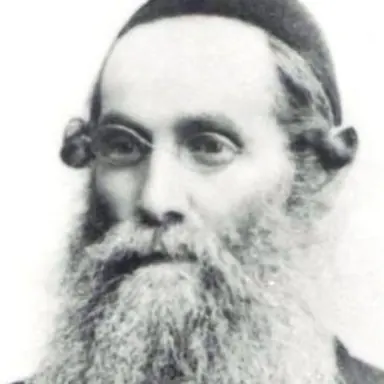
The Gaon the Aderet: Rabbi of Ponevezh, Mir and Jerusalem
16 min read3,179 words
Summary
The text surveys the life and the great spiritual legacy of the Gaon the Aderet, who was one of the prominent luminaries of Torah in Lithuania and Jerusalem in the 19th century and at the beginning of the 20th century. The article traces the course of his life from a young prodigy to extensive communal leadership, emphasizing his extraordinary moral integrity and his choice of a life of poverty and self-sacrifice for the sake of the public. The author goes deeply into the description of his public work in Jerusalem, which included social and halakhic reforms in the areas of the eruv, the weights and charity, alongside a prolific Torah writing of more than a hundred books that combine phenomenal erudition with profound humility. Finally, the source clarifies the unique bond with his son-in-law, Rav Kook (the Ra'ayah), who saw in the figure of the Aderet a living bridge between the world of practical halakha and the spiritual world of faith, a bond immortalized in the fundamental work "Eder HaYakar."
The Work, Torah Teaching and Leadership of the Gaon the Aderet: Rabbi of Ponevezh, Mir and Jerusalem
Biography and Stations of Life: The Path of Growth of a Halakhic Giant
The Gaon Rabbi Eliyahu David Rabinowitz-Teomim, known by his literary and public epithet the Aderet, was born on 6 Sivan 5603 (4 June 1843) in the town of Pikeln (Pikelin) in the Kovno district of Lithuania, which was at that time under the rule of the Russian Empire.[1] He was born to his father, the Gaon Rabbi Binyamin Rabinowitz, author of the fundamental work "Mishnat Rabbi Binyamin," who served as the local rabbi.[2] His birth took place together with the birth of his twin brother, Rabbi Zvi Yehuda, and from this derives the family dynasty's surname "Teomim" (twins).[2] Both brothers revealed themselves from a very young age as extraordinary Torah prodigies; already at the age of thirteen or fourteen the two jointly composed a comprehensive scholarly book on the rules of the Talmud called "Shevet Achim."[2, 3] At only sixteen the Aderet testified of himself that he had completed the study and memorization of all the tractates of the Babylonian Talmud with enormous speed, and that his memory had absorbed all the details and the general rules down to the finest particulars.[2, 3]
In 5621 (1861) the Aderet married the daughter of the wealthy R. Aryeh Leib Chazan of Ponevezh, and moved to live in his father-in-law's house, where he applied himself to his studies with supreme diligence in the local study hall called "the Kloyz."[2] During those years he was stricken with a severe and painful eye disease that prevented him from reading and studying regularly, and in its wake he was forced to move for a time to the house of his father, who was serving at that time as the rabbi of the town of Vilkomir.[2] The Aderet's moral sensitivity was already expressed in his youth, when he refused many rabbinic offers made to him, foremost among them the offer to serve as rabbi in his native town of Pikeln; the refusal stemmed from the fact that the town's previous rabbi, who had been stricken with severe paralysis, was still alive, and the Aderet feared that accepting the post would hurt the feelings and the public standing of the elderly rabbi.[2]
In 5632 (1872), when he was only twenty-nine years old, the Aderet was appointed to serve as the rabbi of Ponevezh – one of the important and large communities of Lithuania – in place of Rabbi Hillel Milikowsky, the foremost disciple of Rabbi Israel Salanter.[1, 3] The Aderet led the community of Ponevezh for eighteen years.[1, 2, 3] This period was characterized by extensive and extraordinary charitable activity; he cared for the needs of the poor and the needy and even traveled himself to raise donations for them.[1, 2] Nevertheless, his official rabbinic salary was meager and limited, and his family lived in conditions of shameful poverty.[1, 2, 4] Because of the poverty and the lack of elementary medical means, the Aderet experienced unbearably severe family tragedies, as seven to nine of his twelve children died of various illnesses while still young.[2, 4]
In 5646 (1886) the Aderet's daughter, Alte Batsheva, married Rabbi Abraham Isaac HaKohen Kook (the Ra'ayah).[1] The heavy poverty prevented the Aderet from meeting his dowry obligations, and he was forced to give up his own bed for the young couple.[2] Three years later Alte Batsheva died in the prime of her life.[1] Out of a strong desire to preserve the unique Torah and family bond that had been formed with Rav Kook, the Aderet proposed that he marry his orphaned niece, Reiza Rivka (the daughter of his twin brother, Rabbi Zvi Yehuda), whom the Aderet had raised in his home as a daughter.[1, 2] Rav Kook accepted the proposal, and thus the close family bond was preserved.[1, 2]
In 5653 (1893) the Aderet acceded to the request of the members of the Mir community to serve as their rabbi.[1, 2] The move to Mir, which was a smaller and poorer community than Ponevezh, stemmed mainly from his aspiration to serve in a town in which the famous Mir yeshiva operated and in which the influences of the Haskalah (Enlightenment) movement were less widespread.[2] When the leaders of Ponevezh discovered his intention to leave, they offered to double his salary, and prominent rabbis (among them the author of the "Sdei Chemed") ruled for him that he was halakhically permitted to retract his commitment to Mir.[2] The Aderet was inclined to remain in Ponevezh because of his family's difficulties, but his final decision to move took shape when he learned of a local craftsman who had cancelled a contract with his worker with a socially destructive argument: "If the rabbi is permitted to cancel a commitment, so am I."[2] The Aderet's understanding that the personal example of the leader stands above any formal halakhic permission led him to keep his word and move to Mir in order to prevent a desecration of God's name and moral laxity among the public.[2, 4]
In 5661 (1901), following the recommendation of Rabbi Chaim Ozer Grodzinski and the invitation of the elderly rabbi of Jerusalem, Rabbi Shmuel Salant, the Aderet immigrated to the Land of Israel to serve as his assistant and his future successor in the leadership of the Ashkenazi community in Jerusalem.[2, 3] Despite a certain chronological confusion found in some of the later sources, which give the year of his immigration as 5666 (1906), the immigration in fact took place on 26 Adar 5661 (1901), and the Aderet served in Jerusalem until his passing in the year 5665.[1, 2, 3] Upon his arrival in Jerusalem, the elderly Rabbi Shmuel Salant awaited him near the Shaare Zedek hospital and announced the transfer of the crown of the rabbinate to him.[2, 3] Out of extraordinary humility, the Aderet refused to sit on Rabbi Salant's official chair and insisted on sitting only beside him.[2, 3]
His Public Work and Religious Reforms in Jerusalem
The arrival of the Aderet in Jerusalem breathed a new spirit of life into the public and religious institutions of the Old Yishuv.[2, 5] The courtyard of the Old Yishuv in the Old City was a focus of traditional and simple Jewish life, saturated with difficulties of livelihood and internal tensions.[5] Immediately upon his arrival the Aderet identified the need to strengthen the halakhic and social infrastructure of the city, and took a series of practical and corrective steps:
The repair of the city eruv was one of the Aderet's central and most complex initiatives in Jerusalem.[1, 2] He initiated and established a comprehensive halakhic eruv that connected the Old City with the new neighborhoods that had begun to develop outside the walls.[1, 2] Because of principled halakhic and political objections on the part of certain zealous elements in the city, the Aderet chose to finance the expenses of establishing and maintaining the eruv secretly from his own meager private funds, in order to prevent unnecessary disputes and to allow the residents of the city to carry on the Sabbath without concern.[1, 2]
The reform of measures and weights was a public-economic step with deep moral significance.[2] As part of his struggle against commercial corruption and with the aim of protecting the poorest consumers in the markets of Jerusalem, the Aderet ordered the replacement of the inaccurate wooden and stone weights that were common among the merchants with standard and accurate weights made of iron and copper.[2] This reform reflected his conception that the role of the rabbi is not confined to the doors of the study hall, but requires active involvement in repairing social and economic distortions in the free market.[2]
At the same time, the Aderet worked to strengthen the walls of kashrut and of the Sabbath in the city; he appointed new God-fearing ritual slaughterers, closely supervised the closing of the shops before the onset of the Sabbath and regulated the level of kashrut in the local bakeries.[2] Likewise, out of an understanding that there was a need for uniformity and halakhic clarity regarding the times of the day in the Land of Israel, he instructed the scholar and rabbi Yechiel Michel Tucazinsky to arrange and publish an updated and precise calendar of the times of the day according to the horizon of Jerusalem, which became a fundamental layer in the time-dependent laws throughout the Land of Israel.[2]
The Aderet invested enormous efforts in making peace and creating social solidarity among the various factions and communities in Jerusalem, and especially between the communities of the Hasidim and the Perushim (Mitnagdim), between whom a deep historical tension prevailed.[2] At the same time, he was required to answer intricate halakhic questions that came from the new agricultural colonies (moshavot) in the Land of Israel, and he dealt extensively with the commandments dependent on the Land from a statesmanlike and responsible view of the building of the Yishuv in the Land.[2] A deep and tragic spiritual aspect of his personality was his direct connection to the destruction of the Temple; his apartment in Jerusalem was located directly opposite the Temple Mount, and the Aderet said with pain that his living opposite the site of the Temple had shortened the years of his life, for every time he looked out of his window and saw the destruction of the Temple and the spiritual desolation prevailing there, he was seized with a deep anguish of the soul that irreversibly damaged his frail health.[1]
His Torah Teaching and Works: A Combination of Erudition, Analysis and Method
The Aderet was an extraordinarily prolific writer; he composed more than one hundred and twenty works covering all branches of the Torah: Scripture, halakha, Talmud, prayer, interpretation of Maimonides (Rambam), and spiritual autobiography.[2, 6] His Torah creativity is characterized by phenomenal erudition alongside sharpness and depth intended mainly for outstanding scholars.[4] His love for his manuscripts was enormous; he even discussed a principled and harrowing halakhic question: in the event of a fire in the house, must a person first save a kosher Torah scroll or rather his own handwritten Torah novellae, out of an understanding that the latter represent the unique spiritual toil of the learner, which may be lost forever.[4]
Among his personal works, "Seder Eliyahu" and "Nefesh David" stand out.[2, 7] The work "Seder Eliyahu" is a personal autobiographical diary written in the Aderet's own original handwriting in Jerusalem between the years 5662-5664 (1902-1904).[3] This unique work records his life story and his family history, and is filled with daily practices, personal stories and a constant striving for elevation of the soul and moral perfection.[3] The book was first printed in 5744, and another edition of it was published in 5770.[1] The printed edition of 5770 was partially censored; the editors omitted several passages that were not intended for a stranger's eye but only for the Aderet's descendants, and marked these omissions with three lines.[3] The original manuscript, consisting of 103 pages measuring 21x17 cm, contains the full text without these omissions.[3] The work has special ideological importance, since it continues the tradition of the practices and customs of the Vilna Gaon (the Gra).[3]
His additional book of memoirs and practices, "Nefesh David," which was published by Rabbi Moshe Zvi Neria, presents a deep moral and intellectual analysis of the human soul.[1, 2] The Aderet explains in this work that the spiritual structure of the human being is divided into three levels: nefesh, ruach and neshamah.[8] The lowest level is the "nefesh," in which dwell the impulses and the cravings for bodily and material matters, as one sees in the period of childhood and youth, which strives for the immediate satisfaction of desires.[8] The middle level is the "ruach," on which depend the feelings of honor, jealousy and pride, which are influenced by the vanities of this world, as it is said in Proverbs, "but a broken spirit (ruach) dries the bones."[8] Understanding this structure of the soul served the Aderet in formulating his moral guidance for his descendants.[2]
Another fascinating Torah work is "Shema Eliyahu," which is a Torah diary documenting halakhic deliberations with the great Torah sages whom the Aderet met in the course of his life.[2] Recently, photographs of his original manuscripts, among them the diary "Shema Eliyahu," reached the National Library.[9] On page 279 of the manuscript a fascinating historical passage was revealed that attests to the sharpness of the Torah debates in his generation; the Aderet there speaks sharply against an affront to the honor of the author of the "Chatam Sofer," and writes that the Gaon R. Yosef Rosen (the Rogatchover) of Dvinsk said that the words of the "Chatam Sofer" are "words of nonsense."[9] The disclosure of this passage, which in some of the printed editions was omitted and replaced with several dots in order to protect the honor of the rabbis, teaches about the high historical sensitivity and the scholarly tensions that prevailed among the giants of the generation.[9]
The Aderet's method of study combined phenomenal speed of comprehension with methodical depth and a complete aversion to the artificial and barren pilpul that was common in certain yeshivot in his generation.[4, 10] He strove to understand the fundamental principles of the Talmudic topic and of the halakhic ruling, with complete fidelity to the method of the Gra of Vilna, based on broad erudition and the comparison of sources.[3, 10] The Aderet's extraordinary humility prevented him from taking credit for himself; he used to honor every person, showed a generous eye and always sought out the spiritual virtues of those around him.[11]
The Encounter with Rav Kook and the Book "Eder HaYakar"
The close family bond between the Aderet and his son-in-law, Rabbi Abraham Isaac HaKohen Kook, became one of the most significant spiritual encounters in the history of Jewish thought in the modern era.[1, 2, 12] Rav Kook saw his father-in-law as an exemplary figure embodying the religious perfection that seeks to connect "the spiritual Torah" (the world of faith, Kabbalah and thought) with "the practical Torah" (the world of halakha, its rules and practical details).[13] In Rav Kook's view, these two Torahs were completely united in the period of the prophets and the Tannaim, and the course of the Jerusalem Talmud reflects this harmonious union.[13] The figure of the Aderet, who lived entirely within the world of practical halakha and yet was imbued with a natural love of God, fear of Heaven and profound humility, symbolized for Rav Kook the real possibility of reviving this union in the present generation.[11]
Toward the end of the year of mourning for the Aderet, at the beginning of the year 5666 (1906), Rav Kook published the monumental work "Eder HaYakar" in memory of his father-in-law.[12, 14, 15] The name of the book is derived from the initials of the name of the deceased – Eliyahu David Rabinowitz – and its source is in the verse from the book of Zechariah: "Cast it to the potter, the goodly price (eder ha-yakar) at which I was valued by them."[14] Although the book extensively sketches the features of the Aderet's character and incorporates autobiographical passages from his writings, most of it is devoted to the clarification of deep intellectual, faith-related and theological questions of its author.[12, 14] Rav Kook used the figure and practices of his father-in-law as a basis for developing his original teaching on faith, as detailed in the structure of the book's chapters.[12]
Although the book deals mainly with matters of faith and thought, Rav Kook incorporates in it several principled halakhic discussions.[12] A particularly prominent discussion concerns the source of the obligation to observe customs in Israel.[12] Although the Talmud in Tractate Pesachim relies on the verse "Hear, my son, the instruction of your father, and do not forsake the teaching of your mother" as the source of the obligation to observe customs, Rav Kook presents a position according to which there is no formal obligation whatsoever from the Torah, from the Prophets or from the words of the Sages to observe these customs.[12] In his view, the true and deep source of the validity of custom stems from the shared "love of the nation" and from the vital need of Knesset Israel (the Congregation of Israel) to preserve its identity and solidarity throughout the generations.[12]
In 5727 (1967) the son of Rav Kook, Rabbi Zvi Yehuda HaKohen Kook (the Ratzyah), published a new edition of the book "Eder HaYakar" in one volume together with the work "Ikvei HaTzon" (which includes the well-known essays "Ma'amar HaDor," "HaPachad" and "HaOneg VeHaSimchah").[12, 14] To this edition the Ratzyah appended twenty valuable halakhic and personal letters written by the Aderet, which illuminate the depth of his ties with the great figures of his generation.[12] A further edition of the book, which includes a detailed commentary by Rabbi Shlomo Aviner, was published in the year 5773 (2013), a fact attesting to the continuing vitality of the teaching and memory of the Aderet among students of Torah and of Jewish thought in the Land of Israel.[14]
Sources15
- 1.אליהו דוד רבינוביץ' תאומים - ויקיפדיה, he.wikipedia.org/wiki/אליהו_דוד_רבינוביץ'_תאומים
- 2.הרב אליהו דוד רבינוביץ' תאומים – ויקישיבה, yeshiva.org.il/wiki/index.php/הרב_אליהו_דוד_רבינוביץ'_תאומים
- 3.כת"י ספר סדר אליהו - חיבור ייחודי של האדר"ת - ווינרס מכירות פומביות, winners-auctions.com/items/כתי-ספר-סדר-אליהו-חיבור-ייחודי-של-האדר/
- 4.האדר"ת והאמונה - ישיבת הר ברכה, yhb.org.il/shiurim/revivim-1225/
- 5.חצר הישוב הישן - העיר העתיקה ירושלים, oldcity-map.co.il/page/חצר-הישוב-הישן
- 6.ג' אדר א': רבי אליהו דוד רבינוביץ' - האדר"ת - הרב יורם אברג'ל ובנו הרב ישראל | המאיר לארץ, hameir-laarets.org.il/hilulots/ג-אדר-א-רבי-אליהו-דוד-רבינוביץ-האדרת/
- 7.סדר אליהו נפש דוד – הגאון האדר”ת, breslev.co.il/product/סדר-אליהו-נפש-דוד-הגאון-האדרת/
- 8.באורי אגדות ברכות - מכון הלכה ברורה, halachabrura.org/agada/brachot.htm
- 9.לצנזר או לא לצנזר? זאת השאלה - הספרנים - הספרייה הלאומית, blog.nli.org.il/sodot-censored/
- 10.לימוד עיון או בקיאות - הרב מיכאל אברהם, mikyab.net/שות/לימוד-עיון-או-בקיאות/
- 11.אדר היקר ד – ויקיטקסט, he.wikisource.org/wiki/אדר_היקר_ד
- 12.אדר היקר – ויקישיבה, yeshiva.org.il/wiki/index.php/אדר_היקר
- 13.הרב אברהם יצחק הכהן קוק - האיש שבקש לחבר | Voices on Sefaria, sefaria.org/sheets/216550
- 14.אדר היקר - ויקיפדיה, he.wikipedia.org/wiki/אדר_היקר
- 15.הגאון האדר"ת - הרב אליהו דוד רבינוביץ תאומים זצ"ל - ערוץ מאיר - אתר היהדות הגדול בעולם, meirtv.com/alon-1326/