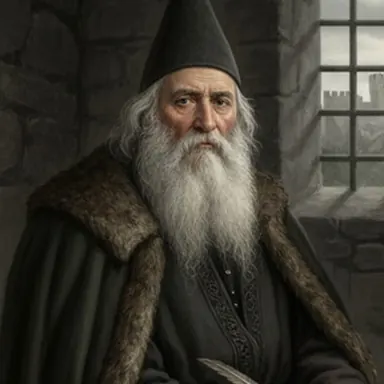
The Work and Torah Teaching of the Maharam of Rothenburg: A Central Axis in Shaping the World of Halakha and the Community in Ashkenaz
14 min read2,868 words
Summary
The text surveys the figure of the Maharam of Rothenburg as a central axis in shaping the world of halakha and the Jewish community in 13th-century Ashkenaz. It describes the stations of his life, from the burning of the Talmud in Paris to his lengthy imprisonment, the combination of leadership and comprehensive scholarship, and the thousands of responsa and rulings that he produced, which serve to this day as a foundation for the "Shulchan Arukh." The article places particular emphasis on his moral decision not to be ransomed from captivity in order to protect the community from extortion, and at the same time analyzes the innovative communal enactments that he instituted to fortify Jewish autonomy. In sum, the source presents how the Maharam's teaching was perpetuated by his distinguished students and became an eternal model of leaders in times of distress and of legal integrity.
Introduction: The Maharam as a Formative Figure in the History of European Jewry
Rabbi Meir ben Baruch of Rothenburg, known to all as the Maharam, stands as one of the most influential and central figures in the history of Ashkenazi and French Jewry in the 13th century. He was active in the 13th century, as halakha was coalescing toward a more orderly halakhic structure, while coping with external persecutions and internal pressures.[1, 2] The Maharam is regarded as the last of the Tosafists in Germany, and his figure is the bridge connecting the dialectical method of the Tosafists with the world of halakhic ruling and the later codification, which found expression in the "Tur" and the Shulchan Arukh.[3, 4]
The Maharam's influence extended far beyond the boundaries of Rothenburg or Germany. His rulings and responsa reached as far as Spain, and the great sages of Spain, such as the Rashba, turned to him with questions and treated him with open admiration.[1] His leadership was characterized by a rare combination of exceptional scholarship, popular touch, social sensitivity, and public courage, which reached its peak in his lengthy detention and in his refusal to be ransomed from prison, on grounds of fundamental halakhic principle.[5, 6] The figure of the Maharam is not only that of a halakhic decisor but of a leader of a nation, who shaped the character of the Jewish community in Ashkenaz as an autonomous body with internal laws and orders, capable of facing the storms of the hour.[7]
The table below gathers the basic details of the life of the Maharam of Rothenburg as they emerge from the historical and Torah sources:
Chapter 1: Historical Background and the Development of His Torah Personality
The 13th century in Ashkenaz was a period of spiritual flourishing on the one hand, and of exacting political persecutions on the other. The Jewish communities in Germany lived under the protection of the emperors as "servants of the treasury" (Servi Camerae), a status that granted them a certain physical protection but made them an inexhaustible source of financial extortion.[5] Within this reality the Maharam was born in Worms, a city with an ancient Torah tradition, to a family of distinguished Torah scholars. [5] His father, Rabbi Baruch, was an important rabbi who was greatly esteemed, and the Maharam himself so admired his father that in his adulthood he avoided meeting him, so as not to be caught in a halakhic complication in which each would have to show deference to the other—the father to his son who had become his teacher, and the son to his father by the commandment of honoring a father.[4]
The Maharam's education reflected the union between the Torah centers of France and Germany. He traveled to the yeshivot of the Tosafists in France, where he studied under Rabbi Yechiel of Paris, Rabbi Moshe of Coucy (author of the Semag), and Rabbi Shmuel of Évreux.[1, 8] There he was exposed to the French method of pilpul, which aspires to harmony among the various Talmudic topics. By contrast, his most distinguished teacher in Germany was Rabbi Yitzchak of Vienna, author of the "Or Zarua," who imparted to him the Ashkenazi tradition that emphasizes the force of custom and the simplicity of the topics.[1] This synthesis makes the Maharam a decisor able to combine theoretical sharpness with practical and conservative ruling anchored in the tradition of the generations.
The Burning of the Talmud in Paris (1242)
A formative moment in the life of the Maharam was his presence at the burning of the Talmud. Following the denunciation by the apostate Nicholas Donin, who challenged the legitimacy of the Talmud before the Church, the "Disputation of Paris" was held, in which the sages of Israel, among them the Maharam's teacher Rabbi Yechiel of Paris, were compelled to defend the sacred writings.[8] The campaign ended in a harsh decree, and on the eve of Parashat Chukat in 1242 about twenty-four wagonloads full of precious manuscripts of the Talmud were set on fire in the municipal square in Paris.[8]
The Maharam, who was an eyewitness to the tragedy, expressed his pain in the famous lament "Sha'ali Serufah" ("Ask, O You Who Are Burned").[4, 8] This lament is not only a literary work but a theological document expressing the rupture in which the laws of the Torah are consigned to the flames by one who claims to present the will of God. The lament was written in the style of the "Zionides," imitating the structure of the lament of Rabbi Yehuda HaLevi, "Zion, Will You Not Ask," and its lines all end with the resonant rhyme "layikh."[8, 9] The lament has become an integral part of the order of the Tisha B'Av laments in Ashkenaz, and it recalls the heavy price that the Jews paid for their devotion to the Oral Torah.[8, 10]
Chapter 2: Leadership in Rothenburg and the Founding of the Great Yeshiva
After returning from France, the Maharam settled in the city of Rothenburg ob der Tauber, which under his leadership became the most important Torah center of that time.[5] His yeshiva drew students from throughout the continent, and became the place where the character of Ashkenazi halakha was shaped for the generations to come. The Maharam was not content with teaching Torah, but served as the central address for halakhic, public, and personal questions that flowed to him from every direction.[5, 11]
The Maharam's body of responsa is among the most extensive and varied in the literature of the Rishonim. His responsa are estimated in the thousands, and they reflect a coping with all aspects of medieval Jewish life: from monetary law and taxation, through questions of the community and the family, to matters of prayer and custom.[1, 11, 12] The Maharam insisted on short and concise responsa, emphasizing the bottom line for halakha in practice, while relying on the traditions of the Geonim and the rulings of the sages of France and Ashkenaz who preceded him.[4, 5]
His Distinguished Students and the Dissemination of His Teaching
The Maharam's strength as a leader stemmed from his ability to raise a generation of students who became the great decisors of the next generation. These students not only learned from him, but documented his every movement, custom, and ruling, and thereby ensured the survival of his teaching even after his death in prison.[4]
The mechanism by which his students worked was unique; they saw in him a "living model" of halakha. The book "Tashbetz Katan," for example, is not only a book of rulings but a diary of conduct, describing how the Maharam prayed, how he ate, and how he coped with the hardships of imprisonment.[3, 4] This documentation made the Maharam a figure who shapes the "micro-halakha" of Ashkenazi Jewry—the smallest customs of the home and the community.[2]
Chapter 3: Imprisonment in the Ensisheim Fortress—A Test of Leadership and Sacrifice
In 1286, against the background of the intensification of persecutions and the heavy taxes imposed by Emperor Rudolf I, the Maharam sought to leave Germany together with his household and a large group of Jews with the aim of immigrating to the Land of Israel.[5] This journey was dramatically cut short in Lombardy, where the Maharam was betrayed by an apostate who recognized him.[5] The emperor saw the Maharam's flight as the loss of a highly valuable economic and political asset, and ordered him imprisoned in the fortress of Ensisheim in Alsace.[5]
The authorities demanded an enormous sum of 20,000 marks as ransom for the release of the Maharam.[3] The Jewish communities in Germany, who admired their rabbi, were prepared to raise the required sum at any price. But here the Maharam's moral and halakhic greatness was revealed; he forbade the communities to redeem him, relying on the Mishnah in tractate Gittin: "Captives are not redeemed for more than their value, for the betterment of the world."[3, 5, 6]
An In-Depth Analysis of the Ruling on Ransom
The Maharam's ruling was not merely an act of personal righteousness, but a strategic ruling intended to protect the entire community in the long term. The Maharam analyzed reality and understood the following:
- Encouraging kidnappings: If the emperor sees that Jews are willing to pay an enormous fortune for their rabbi, he will turn the kidnapping of rabbis into a standing method of extorting money from the community.[3, 6]
- Impoverishing the public: Such a payment would empty the charity coffers of the communities and leave them helpless in the face of other needs of the poor and orphans.[6]
Distinction between a sage and an ordinary person: Although the Tosafists discussed the possibility that an exceptional Torah scholar may be redeemed for more than his value, the Maharam chose to be stringent upon himself and to rule in accordance with the opinion of Maimonides and the Rif, who do not make a distinction in this matter, so as not to create a breach that would be exploited by the authorities.[3]
The Maharshal (Rabbi Shlomo Luria) elaborates further that this act of the Maharam indeed stopped the wave of kidnappings of the sages of the Diaspora, since the authorities understood that the Jews would not yield to these extortions.[6] The Maharam remained in detention for about seven years, until his death in 1293.[5] Even after his death, his body was not released for burial for a further fourteen years, until a wealthy Jew named R. Alexander Susskind Wimpfen paid a very large sum for bringing him to burial in Worms, and asked to be buried beside him.[5]
Chapter 4: His Halakhic Teaching—Ruling, Commentary, and Communal Enactments
The Maharam's Torah teaching is characterized by a constructive approach to Hebrew law. He saw halakha as a tool for a just and organized society, capable of governing even in the absence of sovereign Jewish rule.
Communal Enactments and the Authority of the Public
One of the areas in which the Maharam left his deepest mark is the "communal enactments" (takkanot ha-kahal). He developed a legal theory that grants the community broad legislative powers, while balancing the individual and the needs of the public.[7]
- Authority of the majority versus the minority: The Maharam bridged between the approach of Rabbenu Tam (who demanded unanimous consent for every new enactment) and the needs of the hour, which are the determining considerations. He ruled that in matters of "migdar milta" (reforming the generation and strengthening religion), the majority may impose its opinion on the minority.[15, 16, 17]
- Criminal and public punishment: The Maharam validated the authority of the community to impose fines and corporal punishments in cases of violence or public offenses, even in cases where the Torah did not establish an explicit punishment.[7] An example of this is his responsum concerning a man who threatened his fellow with a knife, in which he emphasized that the community must "make a fence" in order to prevent social deterioration.[7]
- Taxation and proper administration: The Maharam equated the status of the public representative with that of judges in the court. He ruled that a public representative who has a personal stake in the decision (such as the assessment of his own tax) is disqualified from participating in it, and demanded absolute integrity from the leaders of the community.[17]
His Principal Halakhic Works
The Maharam left behind a rich literary corpus covering all areas of halakha:
During his time in prison, the Maharam not only answered questions but devoted time to the elaboration of complex topics in the laws of ritual purity, such as the "tower flying in the air" in tractate Ohalot.[3] He notes in his writings the place where the things were written—"the Tower of Ensisheim"—and thereby turned the place of his imprisonment into a spiritual study hall that continued to illuminate the Jewish world.[3, 5]
Chapter 5: Advocacy for the Generations—from the Maharam to the Shulchan Arukh and to Hebrew Law
It is hard to find an Ashkenazi decisor whose contribution to the final halakhic code was as great as that of the Maharam. Although the Shulchan Arukh was written by the Sephardi Rabbi Yosef Karo, the Maharam's teaching permeated it through several central channels.[3]
The Mechanism of Transmission of the Tradition
- Through the Rosh: Rabbeinu Asher ben Yechiel, the greatest of his students, was compelled to flee from Germany to Spain after his teacher's imprisonment. There he integrated the Maharam's teaching and the custom of Ashkenaz into his rulings, which became one of the three "pillars of instruction" on which the Shulchan Arukh is based.[3, 4]
- Through the Tur: Rabbi Yaakov ben Asher, son of the Rosh and author of the book "Tur," built his work on the basis of his father's rulings, and thereby the Maharam's teaching became the structural skeleton of the European halakhic code.[3]
- Through the Rema: Rabbi Moshe Isserles, in his glosses on the Shulchan Arukh, relied heavily on the book "Mordechai" and on the "Haggahot Maimoniyot"—two works written by students of the Maharam that reflect his rulings.[3]
The Maharam and Modern Law
Even today, in the rabbinical courts and in legal scholarship, the Maharam's rulings serve as a basis for discussion of current issues. A prominent example is the issue of child support; the Maharam's ruling obligating the father to support his children even when they have means of their own was adopted by the Shulchan Arukh and serves as a binding legal precedent in the courts in the State of Israel.[18] In addition, his discussion of "custom overrides halakha" in the context of accepting testimony from relatives in public matters provides the foundation for the legal recognition of communal and municipal enactments to this day.[7]
Summary: The Maharam as a Model of Leadership in Times of Distress
The work and teaching of the Maharam of Rothenburg paint the portrait of a spiritual giant who lived in an age of book burnings and the imprisonment of rabbis, yet did not allow the darkness to take over the world of Torah. He was the "last of the Tosafists" in the deepest sense—he summarized the mighty enterprise and turned it into a system of laws and customs that can accompany the Jewish people through generations of exile.[2, 4]
His firm stand on the matter of the ransom of captives, his concern for integrity in the community, his enormous writing activity within the prison, and his shattering lament over the loss of the Talmud—all these make him not only a halakhic decisor but a symbol of leadership that prefers the good of the public over its own personal comfort.[5, 6] His legacy continues to live in every "Tosafot" studied in the yeshiva, in every ruling of the Shulchan Arukh based on the Rosh, and in every Jewish community that conducts its life with integrity, justice, and according to the tradition of the fathers.[3, 4] The Maharam proved that even when the Torah is "burned in fire," it continues to shine from the "lights out of gloom" that his splendor caused to dawn over all of Jewish history.[3, 4]
----- ...
Sources18
- 1.רבי מאיר מרוטנבורג – ויקישיבה, yeshiva.org.il/wiki/index.php/%D7%A8%D7%91%D7%99_%D7%9E%D7%90%D7%99%D7%A8_%D7%9E%D7%A8%D7%95%D7%98%D7%A0%D7%D%9D%8%D7%D%D%9
- 2.מהר"ם מרוטנבורג | טקסטים ודפי מקורות מן התורה, התלמוד וספריית המקורות ..., sefaria.org.il/topics/maharam-of-rothenburg
- 3.מהר"ם מרוטנבורג – ויקיפדיה, he.wikipedia.org/wiki/%D7%9E%D7%94%D7%A8%22%D7%9D_%D7%9E%D7%A8%D7%95%D7%98%D7%A0%D7%91%D7%98%D7
- 4.המהר"ם מרוטנבורג: מנהיג יהודי אשכנז שבחר להישאר בכלא - בית חב"ד ..., he.chabad.org/library/article_cdo/aid/3313772
- 5.אנציקלופדיה יהודית דעת - מהר"מ מרוטנבורג ;, daat.ac.il/encyclopedia/value.asp?id1=835
- 6.ז - מצוות פדיון שבויים: המהר"ם מרוטנברג | ספריא, sefaria.org.il/sheets/521552
- 7.תקנות הקהילה - ויקיפדיה, he.wikipedia.org/wiki/תקנות_הקהילה
- 8.שאלי שרופה באש – ויקיפדיה, he.wikipedia.org/wiki/שאלי_שרופה_באש
- 9.קינת אימהות על חורבות ירושלים: מחוות ביצוע במגילת איכה ובמדרשים עליה, library.osu.edu/projects/hebrew-lexicon/99995-files/99995095/99995095-019/99995095-019-359-019-359
- 10."שאלי שרופה באש" | גזירת שריפת התלמוד באיטליה - פרק בהיסטוריה יהודית | ידע הוא כוח - YouTube, youtube.com/watch?v=2aFT0uvh5TA
- 11.תשובות מהר"ם - ספריא, sefaria.org.il/Teshuvot_Maharam
- 12.תשובות מהר"ם מרוטנברג וחבריו : שני כרכים : 978-965-7418-01-7 ... - מאגנס, magnespress.co.il/book/%D7%AA%D7%A9%D7%95%D7%91%D7%95%D7%AA_%D7%9E%D7%94%D7%A8_%D7 %9D_%D7%9E%D7%A8%D7%95%D7%98%D7%A0%D7%91%D7%A8%D7%92_%D7%95%D7%97%D7%91%D7%A8%D7%99%D7%95-3730
- 13.מאיר מרוטנבורג - ויקיפדיה, en.wikipedia.org/wiki/Meir_of_Rothenburg
- 14.מאיר הכהן מרוטנבורג - ויקיפדיה, he.wikipedia.org/wiki/%D7%9E%D7%90%D7%99%D7%A8_%D7%94%D7%9B%D7%94%D7%9F_%D7%9E%D7%A8%D7%95%D7%98%D7%A0%D7%9D%1%D7%9
- 15.סמכות רוב הציבור לכוף מיעוט לקיום תקנות: שיטת הרב קוק - מכון התורה והארץ, toraland.org.il/%D7%9E%D7%90%D7%9E%D7%A8%D7%99%D7%9D/%D7%9B%D7%9C%D7%9B%D7%9C%D7%94-%D7%95%D7%9E%D7%A9%D7%A4%D7%98/%D7%9E%D7%A9%D7%A4%D7%98-%D7%94%D7%AA%D7%95%D7%A8%D7%94/%D7%A1%D7%9E%D7%9B%D7%95%D7%AA-%D7%A8%D7%9 5%D7%91-%D7%94%D7%A6%D7%99%D7%91%D7%95%D7%A8-%D7%9C%D7%9B%D7%95%D7%A3-%D7%9E%D7%99%D7%A2%D7%%95%D7%D7%D7%D7%D7 %D7%99%D7%95%D7%9D-%D7%AA%D7%A7%D7%A0%D7%95%D7%AA-%D7%A9%D7%99%D7%98%D7%AA-%D7%94%D7%A8%D7%91-%D7%A7%A7
- 16.סמכות הקהל לתקן תקנות כסמכות בית דין - מכון משפטי ארץ, dintora.org/Show_article/1066
- 17.סמכות הקהל לתקן תקנות כסמכות בית דין - מכון משפטי ארץ, dintora.org/Show_article/1066
- 18.מזונות ילדים - תקנת אושא ותקנת הרבנות תש''''ד, daat.ac.il/daat/psk/psk.asp?id=1775