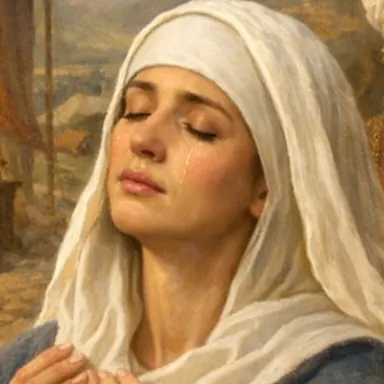
The Architecture of Prayer and Prophecy: The Figure, Work and Torah Teaching of Hannah the Prophetess
14 min read2,778 words
Summary
The text surveys the foundational figure of Hannah the Prophetess as a spiritual and national junction that shapes the transition from institutional sacrificial worship to the intimate service of the heart. Through an analysis of her life story, her confrontation with her barrenness and her complex relationship with Peninnah and Elkanah, the article emphasizes how Hannah laid down the foundations of Jewish halakha and prayer, with an emphasis on the intention of the heart, silent speech and audacity before God. The "Song of Hannah" is presented not only as a personal thanksgiving, but as a broad political prophecy heralding the idea of the monarchy and of messianism, while stressing the divine sovereignty that humbles the proud and raises up the poor. Ultimately, the source seeks to show how Hannah's female subjectivity and religious initiative brought about a theological revolution that made her an eternal model of spiritual leadership and active faith.
Hannah the Prophetess stands at one of the most decisive junctions in the history of the people of Israel, in the twilight period between the days of the Judges and the establishment of the monarchy. Her figure, as reflected in the Book of Samuel and in the words of the Sages, is not merely an exemplary figure of motherhood longing for fruit of the womb, but a foundational theological and legal figure, who brought about a revolution in the structure of the relationship between man and his God.[1, 2] Hannah's work goes beyond the bounds of a personal story; she shaped the Jewish pattern of prayer for all generations, laid the conceptual foundations for the monarchy in Israel, and became a source of halakhic inspiration for the Sages of the Talmud.[3, 4, 5] Through an analysis of her figure one can discern the transition from institutional sacrificial worship to the intimate worship of the heart, and the dynamics between private despair and a broad national vision.[6, 7]
The Family Structure and Social Background: A Duality of Love and Distress
Hannah was the wife of Elkanah, a righteous man of the tribe of Levi who lived in Ramathaim-Zophim in the hill country of Ephraim.[3, 8] Elkanah is described in the sources as a leading figure who acted to revive the tradition of pilgrimage to the Tabernacle at Shiloh in a period of spiritual slackness. Each year Elkanah would choose a different route for his pilgrimage, in order to draw additional people after him and to spread the service of the Lord among the people.[9, 10] Within this reality, Hannah filled a complex role. She was Elkanah's first and beloved wife, but her prolonged barrenness led to a polygamous family structure, as Elkanah took Peninnah as a second wife.[3, 11]
The relationship between Hannah and Peninnah is described as fraught with tensions that received profound interpretation by the Sages. Peninnah, who was blessed with ten sons and daughters, used to taunt Hannah over her barrenness.[3] The Midrash notes that it was Hannah who initiated Elkanah's marriage to Peninnah, out of a wish to resemble Sarah our matriarch and in the hope that this renunciation of her exclusivity would arouse the mercies of Heaven.[3, 10] However, Peninnah became her "rival wife" (tzarah, which also means "distress") in the deepest sense of the word. The Sages offer a complex view of Peninnah's conduct: on the one hand, she behaved cruelly when she reminded Hannah of her loneliness at the various hours of the day; on the other, the Midrash argues that her intention was "for the sake of Heaven" — to press Hannah until she would cry out and pray with all her heart, as indeed finally happened.[3, 8, 10]
Elkanah's attempts at reconciliation with Hannah highlight the gap between human love and a spiritual-existential need. Elkanah gave Hannah "one portion, a double one" from the sacrifices, an honorable portion meant to show her importance in his eyes.[9, 11] His rhetorical question, "Am I not better to you than ten sons?", reflects his inability to understand that Hannah's pain does not stem merely from a desire for standing in society or for status, but from a deep religious calling: the desire to bring forth a continuity that would be dedicated entirely to the service of the Lord.[7, 9]
The Revolution at Shiloh: Prayer as an Expression of Subjectivity and Authority
The foundational event at the Tabernacle at Shiloh represents the revolutionary transition from a religion of sacrifices and rigid religious structures to a religion of subjectivity and service of the heart.[6, 12] Hannah, in the bitterness of her soul, rose after the eating and drinking and turned to the sanctuary of the Lord. Whereas the service of the Lord accepted at that time was public and bound up with the sacrificial rites led by the priests, Hannah chose a direct and private channel of communication.[12, 13]
The expression "And Hannah spoke in her heart" forms the basis for the entire later Jewish conception of prayer.[1, 2] Her prayer was silent, without voice, something so exceptional in the religious landscape of Shiloh that Eli the priest, who watched her from the side, thought she was drunk.[2, 3] Eli, as a representative of the old religious establishment, interpreted the trembling of the lips as an expression of physical drunkenness, not as spiritual elevation.[1, 6] Hannah's response to Eli, "No, my lord... and I pour out my soul before the Lord", constitutes an act of self-definition and of female religious authority.[1, 14] She made clear to the High Priest that a person's inner space may be as sacred and as powerful as the public space of the Tabernacle.[12]
The dialogue between Hannah and Eli is not merely a confrontation between an individual and the establishment, but a moment of learning and development.[6] Eli, after realizing his mistake, not only apologized but became a blesser: "And the God of Israel grant your petition."[1] Hannah's transition from despair ("and her face was no longer sad") after receiving the blessing teaches about the power of faith in words of prophecy and about the deep psychological change that prayer and blessing can bring about.[9]
Her Halakhic Teaching: The Foundations of the Amidah Prayer (Berakhot 31a)
The Sages of the Talmud saw in Hannah the supreme source of the laws of prayer. Tractate Berakhot gathers a series of rulings learned from Hannah's conduct at Shiloh, rulings that to this day define the way in which Jews pray the Amidah prayer (the Shemoneh Esreh).[4, 10, 15]
Hannah also introduced the concept of "multiplying in prayer." The Sages expound from the verse "And it came to pass, as she prayed much" that whoever prays at length is answered.[8, 16] However, there is also an opinion that warns that the multiplication of prayer and Hannah's insistence led to the shortening of the days of Samuel's life, since she asked for him "forever," and fifty years (the span of a Levite's life) were regarded as "forever."[8]
The Theology of Audacity: "Hurling Words Upward"
One of the fascinating aspects of Hannah's teaching is her theological audacity. Hannah is the first figure in the Bible to address God as "the Lord of Hosts."[2] The Sages explain that Hannah argued before the Creator: "Master of the Universe, of all the hosts upon hosts that You created in Your world, is it hard in Your eyes to give me one son?"[17] She used a parable of a king who made a great feast, and a poor man came and asked for a small slice — it is no trouble for the king to grant it to him.[10, 17]
Hannah not only asked for kindness, but "hurled words upward" in the sense of a demand for biological and spiritual justice.[2, 10] She pointed to her body and asked: "Why did You create these breasts in me if not to nurse with them?"[10, 17] This argument represents a conception in which nature itself is testimony to the Creator's will, and if the Creator made instruments (the woman's body), He must enable them to fulfill their function. Hannah's teaching shows that prayer is not only submission, but at times insistence and demand grounded in an understanding of the divine system.[2]
Another important distinction in her teaching is between "blessing" (berakhah) and "prayer" (tefillah).[18] Whereas a blessing is the drawing down of an existing abundance (like a "pool," berekhah), prayer seeks to create a new will in reality on the part of the Creator.[18] Hannah asked for an actual change of nature — that a barren woman bear a child, and not just any child, but "seed of men," a righteous person dedicated to the Lord.[18, 19]
The Song of Hannah: The Manifesto of the Divine Revolution and of the Monarchy
After Samuel's birth and the fulfillment of her vow to bring him to the Tabernacle, Hannah recites the "Song of Hannah" (1 Samuel, chapter 2).[20] This song is not merely a personal song of thanksgiving for the birth of a son; it is a cosmic and national prophecy that lays the foundations for the whole Book of Samuel and for the conception of the monarchy in Israel.[5, 21]
The Principle of Reversal (Reversal of Fortune)
At the heart of the song is the recognition of the absolute sovereignty of God, who leads the world by means of changes and reversals.[5, 7, 21] Hannah describes a world in which human power is an illusion: "The bows of the mighty are broken, and they that stumbled are girded with strength."[20] She speaks of the divine justice that raises up the weakened and brings down the haughty:
- Hunger and satiety: "They that were full have hired themselves out for bread, and the hungry have ceased."[20]
- Life and death: "The Lord kills and gives life; He brings down to Sheol and raises up."[20]
- Wealth and poverty: "The Lord makes poor and makes rich; He brings low, He also lifts up."[20, 22]
Hannah's prophecy warns the holders of power ("Talk no more so very proudly") and offers hope to those who are in the "ash heaps."[20, 21] She teaches that history is not determined by military or economic might, but by the "God of knowledge, the Lord," who weighs the deeds of human beings.[5, 20]
The Messianic Tidings and the Monarchy
Hannah is the first to prophesy about the concept of messianism and monarchy in their national sense.[5, 23] The song ends with the words: "And He shall give strength to His king, and exalt the horn of His anointed."[20, 22] In a period when there was no king in Israel, Hannah foresaw the need for a centralized leadership that would be subject to the divine law.[5] The Sages see in this song an explicit prophecy about Saul and David. Hannah distinguished between the anointing of Saul and Jehu, performed with a "flask" (a fragile vessel, symbolizing a temporary kingship), and the anointing of David and Solomon, performed with a "horn" (a strong and eternal vessel).[24]
Samuel the Prophet: The "Lent" Son and the Little Robe
Hannah gave her son the name Samuel, which she expounds from the phrase "sha'ul me-El" ("asked of God").[9] This is a fundamental concept in her educational teaching: the child is not the property of his parents, but a deposit given to them so that they may prepare him for his public mission.[14, 25] Hannah fulfilled her vow and handed Samuel over to the Tabernacle at Shiloh immediately upon his weaning (at the age of two or two and a half).[8, 9]
Hannah's work after handing over her son is expressed in the "little robe" that she would prepare for him every year.[1, 9] The robe is not merely a physical garment; it is a symbol of the continuing spiritual bond between the mother and her son and of Samuel's unique identity.[14] The robe represents Samuel's growth — each year the robe grew, and each year Samuel grew in the degrees of prophecy.[14] The Sages note that this robe accompanied Samuel all his life, and even after his death, when his figure was raised in the séance of the medium for Saul, he was identified by his robe.[9]
Hannah's devotion to her son's mission was total. She gave up "the pleasure of raising [him]" for the sake of the national calling.[13, 14] The Malbim explains that Hannah asked that Samuel differ from the other Levites in three respects: that he be a nazirite, that he be dedicated to the Lord from his earliest youth, and that he be a prophet who serves the Lord directly.[8]
Hannah's Liturgical and Spiritual Legacy
Hannah is regarded as the "mother of prayers," and her place in the prayer book and in the major festivals is unassailable.[22]
- Rosh Hashanah: Hannah was "remembered" on Rosh Hashanah, and therefore her story is the haftarah of the first day of the festival.[2, 9] The nine blessings of the Musaf prayer of Rosh Hashanah were instituted to correspond to the nine mentions of the Name of the Lord that Hannah uttered in her prayer.[26] Hannah represents the idea of "remembrance" (zikaron) and "being remembered" (pekidah) — the Holy One, blessed be He, remembers the individual within the collective.[2]
- The Morning Prayer (Shacharit): In Sephardic communities it is customary to recite "Hannah's Prayer" every morning before Shacharit.[22] The reason for this, according to Kabbalah, is that in the verses of Hannah's song lies the power "to cut off the external forces" — to remove the spiritual barriers that prevent prayer from being accepted.[22] The words "The adversaries of the Lord shall be broken to pieces" are regarded as a remedy (segulah) against spiritual accusers.
- A model of female leadership: Hannah is perceived as a figure who acted proactively (Agency) to change her fate and the fate of her people.[14] She did not wait for a passive miracle, but initiated a process of prayer, vow and sacrifice.[12] Her teaching shows that precisely from the "marginal" and "weakened" place (a barren woman, a rival wife, a woman in a patriarchal system), the greatest changes in history can be brought about.[7, 27]
Summary and Conclusions
The work and teaching of Hannah the Prophetess reshaped the face of Judaism. She gave the people of Israel the language of silent prayer, the understanding that the intention of the heart is the center of religious service, and the messianic vision of a monarchy founded on justice and the reversal of fortune.[4, 5] Samuel the Prophet, her son, was the physical realization of her prayer, but the spiritual legacy she left — the ability to stand before the Creator with honesty, with pain and with faith — belongs to every person in every generation.[6, 23] Hannah taught that no situation is lost, that "the Lord kills and gives life," and that the inner cry of the individual can become the national psalm of an entire nation.[12, 20]
Sources27
- 1.חנה – ויקיפדיה, he.wikipedia.org/wiki/חנה
- 2.Hannah | Texts from the Sefaria Library, sefaria.org/topics/hannah
- 3.15 עובדות על חנה - אימו של שמואל הנביא - BeitChabad.com - בית חבד, he.chabad.org/library/article_cdo/aid/6090747
- 4.9 הֲלָכוֹת שֶׁהַתַּלְמוּד לוֹמֵד מֵחַנָה – אֵם שְׁמוּאֵל הַנָּבִיא - בית הספר לתלמוד, thetalmud.wordpress.com/2017/07/13/9-הֲלָכוֹת-שֶׁהַתַּלְמוּד-לוֹמֵד-מֵחַ/
- 5.The Theology of 1&2 Samuel - Bible Study With Randy, biblestudywithrandy.com/2019/08/the-theology-of-12-samuel/
- 6.The story of Hannah - Christian Today, christiantoday.com/news/the-story-of-hannah
- 7.Commentary on 1 Samuel 1:9-11, 19-20; 2:1-10 - Working Preacher from Luther Seminary, workingpreacher.org/commentaries/narrative-lectionary/samuel/commentary-on-1-samuel-19-11-19-20-21-10-2
- 8.שמואל א פרק א | אוצר התורה - לגלות את האוצר שבתורה, otzar.org.il/בית-מדרש/אוצר-המקרא-על-התנך/אוצר-המקרא-לספרי-הנביאים/שמואל-א/פרקים-א-ט/שמואל-א-פרק-א
- 9.סיפור חייה של חנה אם שמואל | חב"ד - אור אין סוף, abc770.org/article_node_5115/
- 10.Hannah: Midrash and Aggadah | Jewish Women's Archive, jwa.org/encyclopedia/article/hannah-midrash-and-aggadah
- 11.שמואל א – פרק א - טעמו וראו | הרב בועז שלום, taamu.co.il/שמואל-א-פרק-א/
- 12.שופטים כ-כא - שמואל א' א-ג: תפילת חנה | חיבורים בספריא, sefaria.org.il/sheets/216891
- 13.Hannah | My Jewish Learning, myjewishlearning.com/article/hannah/
- 14.“Sewing” Leadership, Kingdom and Agency - icjw.org, icjw.org/online-learning/meditations/hannah/
- 15.ביאור שטיינזלץ על ברכות ל״א א:יז עם הלכה | ספריית ספריא, sefaria.org.il/Steinsaltz_on_Berakhot.31a.17?with=Halakhah
- 16.ברכות לא א - ויקיטקסט, he.wikisource.org/wiki/ברכות_לא_א
- 17.תפילת חנה | חיבורים בספריא, sefaria.org.il/sheets/428767
- 18.שיחת השבוע 1603 | ההישג הגדול של תפילת חנה - חב"ד, chabad.org.il/Magazines/Article.asp?ArticleID=13642&CategoryID=2207
- 19.ד - תפילת חנה - הרחבות לפניני הלכה, ph.yhb.org.il/plus/14-08-04/
- 20.תפילת חנה - ויקיפדיה, he.wikipedia.org/wiki/תפילת_חנה
- 21.Scripture on Sunday – 1 Samuel 2:1-11 | Theology and Church, theologyandchurch.com/2017/09/03/scripture-on-sunday-1-samuel-21-11/
- 22.תפילת חנה • מקוה.נט, mikve.net/content/194/
- 23.Sermon: Hannah sings a new song | Rev Doc Geek, revdocgeek.com/2018/11/17/sermon-hannah-sings-a-new-song/
- 24.מגילה יד א - ויקיטקסט, he.wikisource.org/wiki/מגילה_יד_א
- 25.Tag Archives: Hannah - Theology and Church, theologyandchurch.com/tag/hannah/
- 26.שמואל א ב׳:ו עם פרשנות מצטטת | ספריית ספריא, sefaria.org.il/I_Samuel.2.6?with=Quoting Commentary
- 27.The Story of Hannah (1 Sam 1:1–2:11) from a perspective of Han, bibleandcriticaltheory.com/wp-content/uploads/2018/05/vol4-no2-2008-the-story-of-hannah-kim-199-780-1-PB-1zl5dz1.pdf