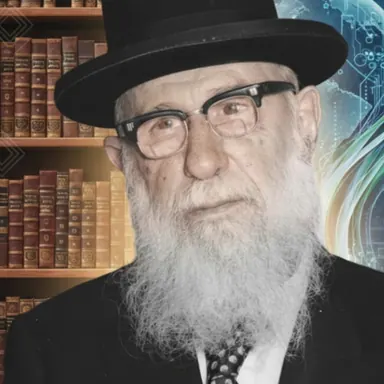
Rabbi Chaim David HaLevi: A Historical-Halakhic Analysis
17 min read3,456 words
Summary
This text offers an in-depth historical-legal analysis of the life and legacy of Rabbi Chaim David HaLevi, one of the most significant figures in the religious life of Israel in the twentieth century. The author lays out the structure of his worldview, based on a "Zionism of redemption," in which the establishment of the state is regarded not merely as a political refuge but as an irreversible stage of the divine plan. The main idea of the text is that HaLevi perceived Jewish law not as a frozen set of rules but as a living and dynamic system able to respond to the challenges of modernity, medicine and technology. As key examples of his innovative approach, the text cites the religious prohibition of smoking, the adaptation of prayer texts after the reunification of Jerusalem, and the effort to ease conversion (giyur) procedures for the sake of preserving the unity of the people. The text serves not only as a biographical sketch but also as a philosophical grounding of the image of the "new Jew," who combines fidelity to the Sephardi tradition with active civic responsibility and deep humanism.
The Work, Halakhic Teaching and Public Thought of Rabbi Chaim David HaLevi: A Historical-Halakhic Analysis
Introduction: Portrait of a Halakhic Decisor in the Era of National Revival
Rabbi Chaim David HaLevi (5684–5758) is counted among the most influential and distinctive halakhic decisors and thinkers in the State of Israel in the second half of the twentieth century.[1, 2] His public work and Torah teaching were characterized by a close integration of deep fidelity to the rooted Sephardi tradition of halakhic ruling with an activist Zionist-messianic outlook that sees renewed Jewish sovereignty as a critical stage in the process of Redemption.[1, 3] Rabbi HaLevi did not regard halakha as a frozen and detached code of laws, but as a living, dynamic and purposeful moral system that charts the path of the individual and of the community alike in the face of the challenges of modernity and technology.[1, 4, 5]
His teaching spans dozens of Torah works and rulings of principle, in which he dealt with complex social, national and medical questions.[6, 7] His thought combined an unceasing striving to draw hearts closer and to make the Torah accessible to all sectors of the public with firm halakhic rulings anchored in historical realism and deep national responsibility.[5, 8]
His Life, His Teachers and Key Stations in His Public Work
Rabbi Chaim David HaLevi was born in Jerusalem on 18 Shevat 5684 (24 January 1924) to a family of immigrants from Turkey.[2, 7] His birth came after seventeen years of marriage in which his parents had not been blessed with children, and it followed a blessing they received from the head of the rabbinic court of the Sephardi community and head of the "Beit El" yeshiva of kabbalists, Rabbi Shalom Hadaya.[7] As a child he grew up in the "Ohel Moshe" neighborhood, where he was exposed to the teaching of prominent Jerusalem sages, among them Rabbi Ben-Zion Cuenca and Rabbi Ben-Zion Pardes.[7]
At the age of nine, on the advice of Rabbi Cuenca, he was sent to study at the "Porat Yosef" yeshiva, where he acquired his Torah over more than fifteen years.[7] At the yeshiva he was counted among a select group of students that included Rabbi Ovadia Yosef and Rabbi David Chaim Shloush, and he was ordained for the rabbinate and for serving as a rabbinic judge by the head of the yeshiva, Rabbi Ezra Attia.[2, 7] Alongside his sacred studies, he showed great openness to general education and the sciences, studied English and broadened his horizons at the "Mizrachi Seminary."[2, 7]
His public and Zionist involvement began already in his youth. From 5702 (1942), when he was about eighteen, he was active in the Mizrachi youth movement in Jerusalem, trained for a short period in the ranks of the Irgun (Etzel), and during the War of Independence served in the "Tuvia" battalion, a military unit that combined guard duty and fortification work at night with Torah study by day.[2, 7]
In 5709 (1949) he married Miriam, granddaughter of Rabbi Waknin of Tiberias.[7] During the seven days of his wedding feast he was appointed rabbi of the Mei Neftoach and Romema neighborhoods in Jerusalem.[7] At the same time he began to serve as personal secretary to the Rishon LeZion and Chief Rabbi of Israel, Rabbi Ben-Zion Meir Chai Uziel, a period he described as "the beautiful years of his life."[7] Under the patronage of Rabbi Uziel he worked on copying and editing the books "Mishpetei Uziel" and "Mikhmanei Uziel," and adopted his teacher's noble, humble and welcoming manner toward every person.[7]
In 5711 Rabbi HaLevi was elected rabbi of the Sephardi community in Rishon LeZion, and he was later appointed chief rabbi of the whole city, a position he held for twenty-two years.[2, 7] His commitment to the local community found clear expression in his decision to keep his daughter, Nitzchiya, at the local religious high school although it was weak, in order to prevent its closure and to strengthen the city's educational institutions.[7] In 5733 he was appointed Chief Rabbi of Tel Aviv-Jaffa, a position he held for about half a jubilee until his death.[2, 7] In Tel Aviv he worked from the "Ohel Moed" synagogue and instituted a regular schedule of Shabbat visits to all the Sephardi synagogues in the city, from Jaffa in the south to the north of the city.[7]
His figure as a rabbinic judge earned immense esteem from his colleagues. Rabbi Zimbalist testified that he was endowed with sharpness of mind, quick comprehension and exceptional clarity of formulation, and that he wrote his rulings "with the first pen," without erasures or repeated revisions, ready at once for print.[7] In 5753 he ran for the position of Rishon LeZion and Chief Rabbi of Israel, but lost the election to Rabbi Eliyahu Bakshi-Doron.[2] His literary and public work received broad national recognition, which included the Rabbi Toledano Prize (5742), the Rav Kook Prize (5744), an honorary doctorate from Bar-Ilan University, and the Israel Prize for Torah literature for 5757 (1997).[2] Rabbi HaLevi died on 12 Adar 5758 (10 March 1998) and was buried on Har HaMenuchot in Jerusalem.[2] In 5774 he was chosen as the exemplary figure of State Religious Education (Chemed).[2]
In January 2026 a comprehensive biography by Efrat Kraus was published under the title "Rabbi Chaim David HaLevi: A Life Story."[1, 9] The book, which runs to 392 pages, presents in-depth research that lasted about ten years and reveals the modest and leaderly character of the Rabbi.[1, 8, 9] Kraus, who came from an Ashkenazi religious-Zionist background, noted that researching the Rabbi's life revealed to her the spiritual wealth of the Sephardi tradition of halakhic ruling, which had at times been pushed to the margins of the establishment education system of the national-religious public.[8]
His Zionist Thought: "A Zionism of Redemption" and the Shaping of the "New Jew"
Rabbi Chaim David HaLevi's Zionist thought set out a profound ideological alternative both to the anti-Zionist Haredi conceptions and to secular political Zionism.[3, 7, 8] Whereas the head of the "Porat Yosef" yeshiva, Rabbi Ezra Attia, leaned toward the approach of "Agudat Israel" and kept away from the political debates surrounding Zionism, Rabbi HaLevi followed in the path of Rav Kook (the Raayah) and Rabbi Uziel, and supported the Zionist enterprise and the State of Israel with all his heart.[3, 7]
Rabbi HaLevi distinguished between two opposing approaches within the Zionist movement: "a Zionism of refuge" and "a Zionism of redemption."[3] Whereas the Zionism of refuge sought to solve the question of antisemitism and the distress of the Jews in exile by establishing a physical state, Rabbi HaLevi saw Zionism as a theological and metaphysical instrument in the hands of divine Providence, intended to advance the people of Israel toward its complete Redemption.[3] Accordingly, he understood the State of Israel as "the first flowering of our Redemption" and believed absolutely that the historical reality following the Holocaust and the establishment of the State is the beginning of an irreversible divine process.[1, 7, 8]
This conception did not remain on the theoretical plane alone, but was translated into the shaping of a new religious and national identity. Rabbi HaLevi held that Zionism and the State of Israel had brought about an existential revolution and shaped a "new Jew": a Jew of redemption, different from the Jew of the exile.[3] This Jew is characterized by an upright bearing, by the Hebrew language and by a creative Israeli culture, and he is an active partner in the defense of the Land and its settlement.[3, 7] In his view, the cultural influence of the State is so profound that it permeates even circles that do not formally define themselves as Zionist, making them, in practice, part of the new Israeli fabric.[3]
The Yom Kippur War, despite the national rupture and the deep pain it caused, did not shake Rabbi HaLevi's messianic-realist faith.[3] He determined that the crisis had not cut down the stature of the Jew of redemption, but constituted a stage of maturation and deepening of faith within the complex course of Redemption, which demands that a person act out of historical awareness and lofty moral responsibility.[3]
His Halakhic Teaching: The Dynamism of the Torah and Making It Accessible to the Public
The pillar of Rabbi HaLevi's Torah teaching was the belief that halakha is not a fossilized system of laws but a teaching of life characterized by a built-in inner flexibility that enables it to cope with the changes of the times.[4, 8] He firmly rejected attempts to present him as a "liberal" decisor in the modern sense of the word, and emphasized that halakha is an entirely normative and binding framework.[8] At the same time, he held that halakha grants the decisor the tools and the authority to make adjustments to the new reality out of fidelity to the moral principles of the Torah.[7, 8]
His life's mission was to connect the people of Israel, in all its shades, to the Holy One, blessed be He, through halakha.[8] He understood, long before the era of digital media, the crucial importance of making the language of halakha accessible to the broad public and to secular society.[8] A clear expression of this was his participation in the popular radio program "Aseh Lekha Rav" ("Make for Yourself a Teacher").[8] The program received hundreds of inquiries in every broadcast, and Rabbi HaLevi made a point of taking home all the questions that had not been answered on the live broadcast in order to answer them in his own handwriting, out of immense respect for those who turned to him and out of the conception that the rabbinate is an institution of service that draws people near, not an alienated instrument of coercion.[8]
Rabbi HaLevi left behind an extensive written legacy covering many fundamental issues, presented in the following table:
Rabbi HaLevi's books of responsa were recently published in a new and corrected edition by "Machon Har Bracha," at the initiative of his daughter, Rabbanit Gila Amitai (wife of Rabbi Achiya Shlomo Sde Eliyahu), and edited by Rabbi Maor Kayam.[7] The edition gathers all the parts of "Aseh Lekha Rav" and "Mayim Chayim," supplementing source references and cross-references to parallel responsa, and thereby ensures the continued study of his teaching among future generations.[6, 7] Rabbi HaLevi's teaching continues to shape the world of his students, foremost among them his son-in-law, Rabbi Shlomo Levi, who serves as president of the hesder yeshiva in Kiryat Gat and transmits the legacy of his father-in-law.[2]
Groundbreaking Halakhic Rulings on Key Issues
The rulings of Rabbi Chaim David HaLevi excelled in public courage, human sensitivity and a sharp capacity for scientific and legal analysis.[4, 5, 7] Three central issues illustrate well his halakhic power and his originality:
The Prohibition of Cigarette Smoking in the Light of Halakha
Rabbi HaLevi was among the pioneering decisors who determined firmly and uncompromisingly that cigarette smoking is entirely forbidden by Torah law.[10] His halakhic opinion was first published in Kislev 5737 (1976) under the title "The Prohibition of Smoking by Force of Halakha" and made waves throughout the Jewish world.[10] The ruling, which appeared in his book "Aseh Lekha Rav" (Part 2, Section 1, and Part 9, Sections 28–29), rests on the explicit warnings in the Torah to guard one's life: "Only take heed to yourself, and guard your soul diligently" and "Take therefore good heed unto yourselves."[10]
The Rabbi linked the duty of caution to the halakhic ruling of Maimonides (Rambam) in Hilkhot De'ot (Chapter 4, Halakha 1), according to which preserving the health of the body is an inseparable part of the service of God, since a sick person cannot understand or know his Creator with a clear mind.[10] He emphasized that Maimonides included these health instructions in his guiding halakhic work, "HaYad HaChazakah," and not as mere moral advice, thereby making the preservation of health a grave and sacred halakhic prohibition equal in severity to the prohibition of eating forbidden fat or blood.[10] Rabbi HaLevi determined that the rule "chamira sakanta me-issura" (danger is graver than a prohibition) should be applied to smoking, and that one must therefore be stricter in a case of doubtful danger even than in a case of an ordinary doubtful Torah prohibition.[10]
Further on, Rabbi HaLevi dealt with the halakhic argument of decisors who were lenient on the matter (such as Rabbi Moshe Feinstein in the responsa "Igrot Moshe"), who relied on the Talmudic rule "the multitude have trodden upon it, and the Lord preserves the simple."[10] The Rabbi made clear that he did not intend to wage a personal polemic against Rabbi Feinstein, but to answer another rabbi who had publicly disagreed with him.[10] Rabbi HaLevi proposed a brilliant conceptual and scientific distinction between two kinds of danger in halakha:
Occult danger (sakana segulit): a danger that is not understood according to the known physical and medical laws of nature, but falls within the category of a spiritual or mystical concern (such as the danger attributed to bloodletting on the eve of Shabbat or to circumcision on a day of south wind).[10] In dangers of this kind, in which there is no causal connection visible to the eye, the Sages permitted reliance on the rule "the Lord preserves the simple."[10]
Natural and proven danger: a tangible, physical and medical danger that can be demonstrated empirically and by clear scientific observation.[10] Since medical research has proven beyond any doubt the direct connection between smoking and severe diseases such as cancer and heart attacks, this is a clear natural danger.[10] In such a situation, Rabbi HaLevi determined, there is an absolute prohibition on relying on miraculous protection or on the rule "the Lord preserves the simple," and whoever endangers himself transgresses a grave Torah prohibition.[10] This ruling of his led many yeshiva students to stop smoking and aroused positive echoes among scientists and physicians in Israel and around the world.[10]
Adapting the Text of the "Nachem" Prayer on Tisha B'Av
After the Six-Day War and the liberation of the Old City and the Temple Mount, many worshippers found themselves in religious embarrassment when reciting the "Nachem" blessing in the Amidah of the afternoon (Mincha) prayer on Tisha B'Av.[11, 12] The traditional text describes Jerusalem as the city "that mourns, that is ruined, that is despised and desolate without her children."[11, 13, 14] Rabbi HaLevi was the first of the decisors to address with courage the need to change the text.[11]
He rejected abolishing the prayer altogether, since the anticipation of the building of spiritual Jerusalem and of the Temple has not yet been fulfilled, but on the other hand he feared that our prayer would turn into "the chirping of the starling," a "commandment of men learned by rote," based on uttering outright falsehoods before the Holy One, blessed be He, in a reality in which Jerusalem is built up and teeming with life.[12] His solution was at once simple and sophisticated: adding the word "she-hayetah" ("that was") before the descriptions "ruined and desolate."[11, 12] This minor change presented the destruction as a real historical event that took place in the past, while preserving the continuity of the prayer and the speaking of truth before God.[11, 12] Rabbi HaLevi preferred this solution to the new and radical text proposed by Rabbi Shlomo Goren, thereby demonstrating his distinctive combination of innovation and textual conservatism.[12]
Conversion Policy and the Acceptance of the Commandments in the Generation of Redemption
On the issue of conversion, which is a bitterly contested bone of contention in Israeli society, Rabbi Chaim David HaLevi adopted the "zera Yisrael" (seed of Israel) approach and the relative leniency of his teacher, Rabbi Uziel.[15, 16] He held that in an era in which civil intermarriage is an existing reality in the Diaspora and in the Land as well, there is a commandment and a national duty of the first order to convert the non-Jewish spouses of Jews, and above all their children, in order to prevent their complete loss to the Jewish people.[15, 17]
Rabbi HaLevi based himself on the understanding that the acceptance of the commandments (which is a necessary condition for conversion) should be interpreted as accepting the yoke of the Torah and a commitment in principle to join the Jewish religion, including recognition of reward and punishment.[16, 17] He determined, relying on the responsa "Achiezer" (Part 3, Section 26), that even if the rabbinic court knows that the convert intends to live a secular way of life and does not intend to observe all the details of the commandments in practice because of weakness of the inclination or the conditions of the environment, this does not prevent the conversion and does not invalidate it after the fact, so long as he did not express a principled denial of one of the commandments at the time of conversion.[16, 17, 18] This approach placed the value of the integrity of the people and national rescue from assimilation at the top of the halakhic order of priorities of our generation.[15, 16]
Summary and Conclusions
The Torah teaching and public work of Rabbi Chaim David HaLevi set out an exceptional model of halakhic leadership that combines two seemingly contradictory tendencies: deep and uncompromising halakhic conservatism on the one hand, and a welcoming moral sensitivity and applied innovation on the other.[1, 5, 8] His rulings on issues such as the prohibition of smoking, the change in the text of the prayer and the easing of conversion procedures show that Rabbi HaLevi regarded halakha as a dynamic instrument intended to serve life and to connect the people to the Holy One, blessed be He, and not the reverse.[4, 8, 10, 16]
His Zionist thought, which saw in the State of Israel the beginning of the metaphysical process of Redemption, shaped an existential conception of the "Jew of redemption": a person who takes responsibility for his destiny, his health and the moral character of his society.[3, 10] His extensive literary legacy, which is enjoying a renewed flourishing in our day, continues to serve as a halakhic beacon offering an open, welcoming and responsible religious language suited to the life of a sovereign people in its land.[5, 6, 7]
Sources18
- 1.הרב חיים דוד הלוי - סיפור חיים | אפרת קראוס | ביוגרפיה יהודית - ידיעות ספרים שאוהבים, ybook.co.il/products/3627244
- 2.חיים דוד הלוי – ויקיפדיה, he.wikipedia.org/wiki/חיים_דוד_הלוי
- 3.מלחמת יום הכיפורים בתודעה הציונית הדתית - מכון הרטמן, heb.hartman.org.il/yom-kippur-war-in-the-religious-zionism/
- 4.פרק 471 – חיים דוד הלוי (1): גמישותה של ההלכה - YouTube, youtube.com/watch?v=-7LVgdLBRj0
- 5.הרב חיים דוד הלוי – שערים, shearim.org.il/leaders/הרב-חיים-דוד-הלוי/
- 6.שו"ת עשה לך רב + שו"ת מים חיים (4 כר') / הרב חיים דוד הלוי - מכון הר ברכה, shop.yhb.org.il/product/ase-lecha-rav/
- 7.הרב חיים דוד הלוי – 26 שנה לפטירתו | רביבים - הרב אליעזר מלמד - ישיבת הר ברכה, yhb.org.il/shiurim/revivim1094/
- 8.אדם, רב וציוני גדול: סיפורו של הרב חיים דוד הלוי - ראיונות - משב - מה שיהודי ..., mashav.tv/interviews/hayim-david-halevi/
- 9.הרב חיים דוד הלוי - סיפור חיים - אפרת קראוס | עברית - חנות ספרים, e-vrit.co.il/Product/38403/הרב_חיים_דוד_הלוי_סיפור_חיים
- 10.עישון סיגריות בראי ההלכה - הבינה היהודית Jewish intelligence - הרב חיים ..., hamachon.org.il/עישון-סיגריות-בראי-ההלכה/
- 11.הרב רא"ם הכהן: יש לעדכן את נוסח תפילת 'נחם' - סרוגים, srugim.co.il/85730-הרב-ראם-הכהן-יש-לעדכן-את-נוסח-תפילת-נחם
- 12.האם לצום בתשעה באב? - זרמים ביהדות וזהות יהודית ישראלית | חיבורים בספריא, sefaria.org.il/sheets/216076
- 13.תפילת נחם - חב"דפדיה, chabadpedia.co.il/index.php/תפילת_נחם
- 14.תפילת נחם – ויקישיבה, yeshiva.org.il/wiki/index.php/תפילת_נחם
- 15.דעת הרב עוזיאל בעניין קבלת מצוות בגיור - ישיבת הר ברכה, yhb.org.il/shiurim/דעת-הרב-עוזיאל-בעניין-קבלת-מצוות-בגיור/
- 16.כיצד הבינו הפוסקים ודייני הגיור את דברי הרב עוזיאל? - ישיבת הר ברכה, yhb.org.il/shiurim/כיצד-הבינו-הפוסקים-ודייני-הגיור-את-דבר/
- 17.מסורת הגיור | פרק כח | מדינת ישראל - ישיבת הר ברכה, yhb.org.il/shiurim/giyur-28/
- 18.הסוברים כדעת האחיעזר והחולקים עליו - ישיבת הר ברכה, yhb.org.il/shiurim/הסוברים-כדעת-האחיעזר-והחולקים-עליו/