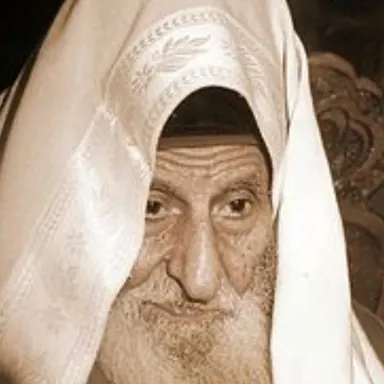
The Divine Kabbalist Rabbi Yitzchak Kaduri
15 min read3,084 words
Summary
This survey presents the figure of Rabbi Yitzchak Kaduri as a unique connecting link between the ancient mystical tradition of Babylonian Jewry and modern Israeli reality. The text outlines his spiritual development, beginning with his roots in Baghdad and under the influence of the "Ben Ish Chai," through his immigration to Jerusalem, where he combined extreme modesty and manual labor with unprecedented depth in the esoteric teaching. The author of the article stresses that the Rabbi's power stemmed not only from performing "miracles," but from an ordered teaching that sanctifies restraint of speech and silence as a tool for attaining spiritual power and hastening the redemption. Alongside an analysis of his public work and the founding of the "Nachalat Yitzchak" institution, the source surveys the Rabbi's written legacy and practical Kabbalah, and thereby seeks to assess his decisive influence on religious, social and political identity in the State of Israel.
The Divine Kabbalist Rabbi Yitzchak Kaduri: A Historiographical, Theological and Sociological Examination of His Work and Teaching
The figure of Rabbi Yitzchak Kaduri (5659–5766) constitutes one of the most fascinating religious and social phenomena of the last hundred years in the history of the Jewish people. As one who earned the title "the elder of the kabbalists," Rabbi Kaduri stood at a unique crossroads between the ancient mystical tradition of Babylonian Jewry and modern Israeli reality, saturated with political and social tensions. His work is not confined only to the narrow field of writing amulets or giving blessings, but reflects a broad system of Torah teaching, spiritual leadership and the preservation of kabbalistic traditions that were in danger of extinction with the destruction of the Torah centers in the lands of the East. Understanding his figure requires an in-depth analysis of his roots in Baghdad, his development in the yeshivot of Jerusalem, and his unique worldview concerning redemption, the holiness of speech and practical Kabbalah.[1, 2, 3, 4]
The Roots in Baghdad: The Shaping of Spiritual Identity in the Sphere of the "Ben Ish Chai"
The roots of Rabbi Yitzchak Kaduri lie deep in the spiritual soil of Baghdad Jewry at the end of the 19th century. He was born on the second day of the Sukkot festival, 16 Tishrei, the day of the ushpizin (supernal guest) of Isaac our forefather, and was therefore given this name.[2, 3, 4] His father, Rabbi Yechezkel Ze'ev Diba, was a merchant of perfumes and spices who supported Torah scholars and gave charity in secret, a fact that contributed to the spiritual atmosphere in which his son grew up.[2, 4] At that time, Baghdad was a vibrant Torah center under the leadership of Rabbi Yosef Chaim, author of the "Ben Ish Chai," whose influence on the young Rabbi Kaduri was decisive.
The meeting between the child Yitzchak and the "Ben Ish Chai" is described in many traditions as a formative moment in which a "spark" of blessing and long life was transmitted. The "Ben Ish Chai" blessed the child that he would not need doctors throughout his life, a blessing that was indeed fulfilled, as the history of his long life, which reached 107 years, attests.[2, 3] The bond with the family of the "Ben Ish Chai" continued even after the Rabbi's death, when members of his family gave Rabbi Kaduri his teacher's personal sash as a gift, an object that symbolized the continuity of the spiritual line.[2]
Rabbi Kaduri's early studies took place at "Midrash Beit Zilkha," the elite yeshiva of Baghdad Jewry.[2, 3, 4] Already in his youth he displayed exceptional expertise in the Talmud and the decisors, and at the age of seventeen he was already delivering profound sermons before the Torah giants of the city.[3, 4, 5] Nevertheless, a central characteristic that would accompany him throughout his life – the concealment of his greatness – began already then. His teachers asked him to limit his public sermons for fear of the evil eye, an instruction that became second nature to him in modesty and silence.[3, 4, 6] In parallel with the study of the revealed Torah, the Rabbi began to engage secretly in the esoteric teaching, drawing on the kabbalistic traditions of the sages of Babylonia, which were characterized by a combination of abstract speculation with practices of practical Kabbalah.[2]
Milestones of the Baghdad Period and the Beginning of the Immigration
Immigration and Settling in Jerusalem: The "Porat Yosef" and "Beit El" Yeshivot
In 5682 (1922) Rabbi Kaduri immigrated to the Land of Israel, a step that marked the beginning of the second and longest chapter of his life.[3, 4, 7] He integrated into the leading Sephardi yeshivot of that time, foremost among them the "Porat Yosef" yeshiva in the Old City. In Jerusalem he won great esteem from the local sages, who called him "a lion who came up from Babylonia" because of the depth of his knowledge.[4, 5] His main teacher at the Porat Yosef yeshiva was Rabbi Efraim Cohen, with whom he deepened his study of the teaching of the Ari and the Rashash.[7]
The War of Independence and the capture of the Old City in 1948 were a turning point in the Rabbi's life. With the fall of the Jewish Quarter, Rabbi Kaduri moved to study at the kabbalists' yeshiva "Beit El" in the west of the city.[3, 4, 5] In this period he continued his modest conduct, combining intensive study with simple physical work for his livelihood.
The Ethos of Bookbinding as a Spiritual Act
One of the aspects that distinguish the figure of Rabbi Kaduri in these decades was his occupation as a bookbinder.[3, 4, 5] This work was not only an economic means to avoid relying on charity money, but served as a tool for self-study. By virtue of his role as a binder, rare manuscripts and ancient books in the revealed and the hidden Torah came into his hands. The Rabbi used to read and memorize the content of the books before binding them, and thus accumulated immense and unconventional knowledge that is not found in the common printed books.[3, 4]
This approach of "Torah with a craft" allowed him to remain in the shadows for many years. His teacher, Rabbi Amram Aburbia, described him with the expression "his heart is like the heart of a lion, yet he appears as a fox," which expresses the contrast between his inner spiritual strength and his simple and self-effacing outward appearance.[6] The ability to conceal his greatness allowed him to develop without outside interference, until he became the supreme kabbalistic authority of his generation.
His Torah Teaching: The Holiness of Speech and Hastening the Redemption
The teaching of Rabbi Yitzchak Kaduri is not formulated in ordinary speculative philosophical literature, but is embodied in his conduct, his blessings and the conciseness of his words. Two central principles stand at the basis of his worldview: the holiness of speech (silence) and the importance of studying Kabbalah as a tool for hastening the redemption.
The Rabbi constantly stressed the need to guard one's speech and to minimize idle talk. He saw speech as a powerful spiritual instrument that could be squandered or contaminated by improper use. His personal conduct in silence and in the use of short and precise sentences stemmed from a deep kabbalistic understanding that the holiness of speech is a necessary condition for the ability to "bring about salvations."[1, 2] His regular blessings, such as the verse "And thus shall you say: To life! Peace be to you, and peace be to your house," were carefully chosen as tools for transmitting spiritual abundance while preserving conciseness.[4, 5]
In addition, the Rabbi believed that the study of the esoteric teaching is not only a privilege for individuals, but a need of the generation for hastening the redemption. He saw the distress of the people and the natural disasters in the world as signs of the "birth pangs of the Messiah" and urged the public to immigrate to the Land of Israel and to prepare for the revelation of the Messiah, who, according to him, had already begun to act in the world.[2, 8]
The "Nachalat Yitzchak" Institution: The Center for Spreading the Esoteric Teaching
Toward the end of his life, and with the help of his son Rabbi David Kaduri, the Rabbi established the kabbalists' yeshiva "Nachalat Yitzchak" in Jerusalem.[2, 3, 4] This yeshiva became a world center for the study of Kabbalah according to the way of the Arizal and the system of the "Rashash" (Rabbi Shalom Sharabi), also called "Or ha-Shemesh."[4, 5, 9]
The yeshiva has several study tracks that combine the revealed and the hidden:
- Kollels for Kabbalah: five kollels intended for avrekhim (married scholars) who study in depth the writings of the Ari and the kavanot of the Rashash.[9]
- Kollels for plain meaning: two kollels engaged in the study of Gemara and halakha, out of the understanding that the hidden must rest on a stable foundation of the revealed.[7, 9]
- Communal and spiritual activity: performing "tikkunim" (rectifications), redemptions of the soul (pidyonot nefesh) and special prayers for the benefit of the individual and the community.[9]
The founding of the yeshiva marked the Rabbi's transformation from a hidden kabbalist into a public leader influencing thousands of students and seekers of salvation. Prominent students were also trained at this yeshiva, among them Rabbi Yaakov Adas, who helped make the Rabbi's writings accessible to the broad public.[4, 5, 10]
The World of Practical Kabbalah: Amulets, Segulot and Incantations
Rabbi Yitzchak Kaduri was known as the greatest expert of recent generations in the field of practical Kabbalah. This field, which deals with the use of holy names and mystical formulas to influence reality, was considered dangerous and required extreme caution. The Rabbi used to say that he did not engage in adjuring angels, but only in prayer and in asking mercy of the Creator through those holy names.[6]
The Methodology of Writing Amulets
Rabbi Kaduri's amulets were written according to a strict tradition that came down to him from the sages of Babylonia, and in particular from the kabbalist Rabbi Yehuda Fatiya. Out of holy awe, he took care not to add to or subtract from the accepted formulas.[6] His writing was characterized by a "late Eastern" style, a combination of square script and cursive, as can be seen in his diaries and in the manuscripts that have been revealed.[11]
The uniqueness of his amulets lay in the principle of "itmachi gavra ve-itmachi kamea" (the man is proven and the amulet is proven) – that is, the power stemmed both from the holy formula and from the personal holiness of the writer.[12] There were cases in which the Rabbi gave "amulets for swallowing" – notes written in special ink that were meant to be dipped in water for healing, an ancient practice permitted by the decisors in cases of danger to life.[12]
Analysis of the Treatment Diaries (1964–1965)
The disclosure of the Rabbi's personal diaries from the years 1964–1965 provides a rare glimpse into the nature of the requests made to him and his methods of treatment. The diaries document more than 450 cases of people who sought relief for their troubles.[11]
The use of the term "IZD" (izeh davar, "some thing") in the diaries testifies to a fixed and secret formula that the Rabbi used for common cases, which indicates an ordered and organized system of mystical work.[11]
The Literary Legacy: "Pitchei Olam" and "Kedushat Yitzchak"
Although Rabbi Kaduri was known mainly as a man of action, he left behind him a written Torah legacy that serves as a basis for the study of practical Kabbalah and the intentions of prayer.
The "Pitchei Olam" Series
This work, consisting of five volumes, is the most comprehensive the Rabbi wrote in his lifetime.[12, 13] The book deals in detail with matters of amulets, segulot, incantations and prayers. In it the Rabbi gathers all the knowledge he accumulated over decades of work with the public, explaining the spiritual meaning of each and every action.[12] The book is considered today a foundational text for those engaged in this field within the world of the kabbalists' yeshivot.
The "Kedushat Yitzchak" Series
After his death, a six-volume series called "Kedushat Yitzchak" was published, edited by Rabbi Yaakov Adas.[7, 10] This series is unique in that it presents photographs of the Rabbi's original manuscripts, without change, together with commentaries explaining the concepts that are hard to read and understand.[10] Among the segulot that appear there:
- Revealing one's match in a dream: a special prayer text for unmarried people.[10]
- Healing by means of an egg: writing holy names on the egg of a black hen and burying it in ashes.[10]
- Seeing and invisibility: the use of Psalms combined with kavanot for protection from enemies.[10]
Rabbi Adas stressed that the use of these books requires spiritual preparation and a high level of fear of Heaven, since this is a "holy fire" that may harm one who is unworthy.[10]
Political and Social Influence: Rabbi Kaduri and the Rise of Shas
Rabbi Kaduri's standing as "the elder of the kabbalists" made him a focus of social and political power, especially among voters of the Shas movement. His blessings and amulets became an inseparable part of the election campaigns of the 1990s.
In the 1996 election campaign, Rabbi Kaduri's amulets were widely used to encourage voting for Shas. This activity aroused a wide legal controversy, which led to an amendment of the elections law (known as the "amulets law"), which forbids giving amulets or blessings as part of election propaganda.[14] The rulings of the High Court of Justice at that time tried to balance between freedom of worship and belief and the preservation of the purity of elections in a democratic state.[15, 16]
Despite the controversy, the Rabbi's influence remained enormous. Politicians from all parties came up to his house to receive his blessing, out of recognition of his public power and the quiet charisma he radiated. The meeting with the Lubavitcher Rebbe in 1990 added to his international standing, when the Rebbe foresaw that his name "Kaduri" (kadur, a globe) indicated an influence that would embrace the whole world and all that fills it.[2, 4]
The "Messiah Note" Storm and the Expectations of Redemption
In his last years the Rabbi dealt much with matters of redemption. He claimed that the Messiah was already among us and acting "behind the curtain."[8] Shortly before his death in 2006 (29 Tevet 5766), the Rabbi left a sealed note in which it was written that he was revealing the name of the Messiah.[17]
The note, which was opened a year after his death, contained the sentence: "Concerning the initials of the Messiah, he will lift up the people and prove that his word and his Torah stand."[17] The initials of the words "yarim ha-am ve-yokhiach" (he will lift up the people and prove) form the name Yehoshua (spelled יהושוע or יהושע).[17, 18] This revelation aroused a great storm and contradictory interpretations:
- Denials by the family and rabbis: many in the rabbinic establishment and among his family members claimed that it was a forgery or a distorted interpretation by interested parties.[17, 19] His son, Rabbi David Kaduri, noted that his father always said that the Messiah would be revealed only after the coming of Elijah the prophet, and that one must not rely on rumors of this kind.[19]
- Kabbalistic interpretation: other rabbis, such as Rabbi Uri Sherki, noted that the name "Yehoshua" is connected to the Messiah son of Joseph according to the teaching of the Gra and the Ramchal, and that there is no hint of Christianity in it, as was claimed on some websites.[18]
The controversy around the note only intensified the myth around the Rabbi's figure as a man of mystery whose connection to the upper worlds continued even after his death.
Summary and Conclusions on the Figure of "the Elder of the Kabbalists"
Rabbi Yitzchak Kaduri was a one-time figure in modern Jewish history. He succeeded in combining worlds that seem opposed: scholarly genius with simple manual labor; extreme silence with broad political influence; and abstract Kabbalah with practical practices of amulets and segulot.[1, 2, 3, 4]
His main achievement lies not only in the "miracles" attributed to him, but in the preservation and revival of the tradition of the sages of Babylonia and Jerusalem. His books, "Pitchei Olam" and "Kedushat Yitzchak," serve today as the most professional anchor for the study of the practical esoteric teaching, while emphasizing the need for holiness of speech and fear of Heaven as a condition for any spiritual action.[10, 12]
The "Nachalat Yitzchak" yeshiva continues to be a Torah center that trains the next generation of kabbalists, thereby ensuring that Rabbi Kaduri's legacy will not remain only a historical memory, but a living and active force in the world of Torah and Kabbalah.[9] His figure has remained a symbol of the unity of the people, as hundreds of thousands from all communities and sectors took part in his funeral, united in their esteem for the righteous man who saw himself as only a simple "bookbinder," yet bore on his shoulders the secrets of the redemption of the Jewish people.[5, 12, 20]
Sources20
- 1.הרב יצחק כדורי: הנהגות וסיפורים מופלאים מחייו לרגל יום פטירתו - מוקד ..., tehillim-center.co.il/article/3119
- 2.הרב יצחק כדורי זצ"ל: סיפור חייו המופלא של "זקן המקובלים" - הידברות, hidabroot.org/article/1205896
- 3.יום ההילולה: עובדות שלא ידעתם על הרב יצחק כדורי זצ"ל - ערוץ 2000, tv2000.co.il/article/20286
- 4.יצחק כדורי - חב"דפדיה, chabadpedia.co.il/index.php?title=יצחק_כדורי&mobileaction=toggle_view_desktop
- 5.יצחק כדורי - חב"דפדיה, chabadpedia.co.il/index.php/יצחק_כדורי
- 6.הרב יצחק כדורי כל המידע - יום פטירת רבי יצחק כדורי כ"ט טבת - המאיר לארץ, hameir-laarets.org.il/hilulots/כט-בטבת-רבי-יצחק-כדורי/
- 7.יצחק כדורי – ויקיפדיה, he.wikipedia.org/wiki/יצחק_כדורי
- 8.הרב כדורי : יש משיח והוא יתגלה - ערוץ 7, inn.co.il/news/127196
- 9.ישיבת נחלת יצחק (כדורי) – ויקישיבה, yeshiva.org.il/wiki/index.php/ישיבת_נחלת_יצחק_(כדורי)
- 10.קדושת יצחק ו' כרכים | כתבי הקבלה של הרב יצחק כדורי זצוק"ל זיע"א, divreishir.co.il/חנות-ספרי-קודש-אונליין/ספרי-קבלה-כללי-n/קדושת-יצחק-ו-כרכים-כתבי-הקבלה-של-הרב-יצחק-כדורי-זצוקל-זיעא
- 11.פנקס הסגולות: נחשף ספר המטופלים הסודי של הרב כדורי - ynet, ynet.co.il/articles/0,7340,L-4751998,00.html
- 12.פלא פלאים: קמיע עוצמתי במיוחד שניתן מידיו הקדושות של הרב כדורי - ווינרס ..., winners-auctions.com/items/פלא-פלאים-קמיע-עוצמתי-במיוחד-שניתן-מיד/
- 13.מהי העצה שנתן הרב כדורי להינצל ממחלת הסרטן? - מוקד תהילים ארצי, tehillim-center.co.il/article/709
- 14.התשנ"ו1996* חוק הבחירות לכנסת (תיקון מס' 29), fs.knesset.gov.il/13/law/13_lsr_211271.PDF
- 15.5658-23 פסק דין.docx - Gov.il, gov.il/BlobFolder/dynamiccollectorresultitem/decision5658-23/he/5658-23 פסק דין.docx
- 16.פסק-דין בתיק בג"ץ 3166/14, supremedecisions.court.gov.il/Home/Download?path=HebrewVerdicts/14/660/031/s13&fileName=14031660_s13.txt&type=2
- 17.שם המשיח ופתק מזעזע של רבי יצחק כדורי | ספריא, sefaria.org.il/sheets/564701
- 18.הפתק של הרב כדורי - שמו של המשיח, ravsherki.org/index.php/2013-02-13-14-25-06/85-85/812-812812-812
- 19.משיח | שאל את הרב - כיפה, kipa.co.il/שאל-את-הרב/משיח-62/
- 20.קודש קדשים: כתבי יד קמיעות וגורלות של מקובלים שונים מביתו של הרב כדורי זצ"ל בחלקם היו בשימושו האישי | מורשת מכירות פומביות, moreshet-auctions.com/auction/154-מכירת-פרימיום-מיוחדת-he/lot-072-קודש-קדשים/