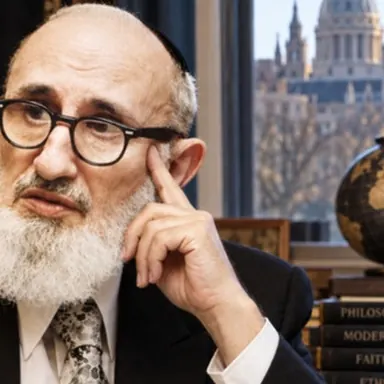
אין הכרח לפתור את כל המתח שבין מסורת למודרנה. האדם המאמין יכול לחיות במלוא העוצמה בתוך שני העולמות - לפעול, ליצור ולשלוט במציאות, ובו בזמן לעמוד בענווה, ברית ואחריות לפני האלוהים.
ביוגרפיה
ממשיך שיטת בריסק, פילוסוף וראש ישיבה שהפך לדמות מרכזית באורתודוקסיה המודרנית בארצות הברית. שילב למדנות הלכתית אנליטית עם פילוסופיה מודרנית ועסק במתח שבין יצירה אנושית, מדע וחברה לבין ברית, תפילה ואמונה.
כתבים בספריא
הכתבים של הרב יוסף דוב הלוי סולובייצ׳יק פתוחים לקריאה בספריא, ספרייה חופשית של מקורות היהדות. לחיצה על כותרת פותחת את הטקסט עצמו.
המחשבה ההלכתית והפילוסופית של הרב יוסף דוב הלוי סולובייצ'יק: סינתזה בין למדנות בריסק, קבלת וולוז'ין והגות מודרנית
17 דק׳ קריאה·3,341 מילים
תקציר
המקור הנסקר מציג את דמותו הרב-ממדית של הרב יוסף דוב סולובייצ'יק, הוגה שחולל סינתזה מרשימה בין עולם הלמדנות הבריסקאי האנליטי לבין הפילוסופיה המערבית המודרנית. הטקסט משרטט את משנתו כפלורליזם אפיסטמולוגי, שבו ההלכה פועלת כמערכת מושגית מופשטת הדומה למתמטיקה, המעניקה סדר ומשמעות נורמטיבית למציאות הפיזית. דרך ניתוח חיבוריו המרכזיים, מוסברים המופעים הדיאלקטיים של הקיום הדתי, הנע בין שליטה יצירתית בעולם לבין הכנעה מוחלטת ובדידות מול האל. בסופו של דבר, המאמר מדגיש כיצד תפיסתו ההומניסטית והפרגמטית הנחתה את פסיקותיו בנושאי ציונות, דיאלוג בין-דתי ואתיקה, תוך מתן עליונות לערך של פיקוח נפש על פני קדושת האדמה.
מבוא: עולמו ההגותי וההלכתי של הגרי"ד
הרב יוסף דוב הלוי סולובייצ'יק (הגרי"ד; 1903–1993) נחשב לאחד האבות הרוחניים, הפילוסופיים וההלכתיים המרכזיים של האורתודוקסיה המודרנית במאה העשרים [cite: 1, 2]. בדמותו הציבורית והתורנית התגשם מיזוג יחיד במינו בין פסגת הלמדנות התלמודית של מזרח אירופה לבין הכלים החריפים ביותר של הפילוסופיה המערבית [cite: 1, 3]. כחוטר מגזע שושלת בריסק המפוארת וכנכדו של הרב חיים סולובייצ'יק, נשא עמו הגרי"ד את שיטת הניתוח המושגי המופשט שהפכה את הלימוד התלמודי לבחירה אנליטית שקולה [cite: 2]. לצד זאת, פיתח תפיסה פילוסופית עמוקה וענפה בדיאלוג מתמיד עם הפילוסופיה הנאו-קאנטיינית, האקזיסטנציאליזם והפנומנולוגיה [cite: 1, 3, 4].
אף שהציג את עצמו בראש ובראשונה כ"איש הלכה" שכל עולמו נתון להגיון המשפטי התורני, מחקריו וכתביו מעידים על הפנמה עמוקה של התפיסה הקבלית-אונטולוגית של אסכולת וולוז'ין, ובפרט של חיבור היסוד "נפש החיים" לרבי חיים מוולוז'ין [cite: 5, 6]. מעבר לכך, עבודת הדוקטורט שלו באוניברסיטת ברלין והשכלתו הרחבה הדגימו שליטה מעמיקה במתמטיקה ובפיזיקה התיאורטית, אותן הפך לאנלוגיה מרכזית להבנת הקוגניציה ההלכתית והמבנה של התודעה הדתית [cite: 3, 7]. הגרי"ד לא ראה בספירות הידע הללו עולמות זרים או מנוכרים, אלא מנגנונים משלימים הפועלים בתוך המציאות האנושית והמטפיזית וחושפים פנים שונות של הגילוי האלוהי [cite: 7, 8].
היסודות הפילוסופיים: מעבודת הדוקטורט בברלין לפלורליזם אפיסטמולוגי
ביקורת האידיאליזם המדעי של הרמן כהן
בשנת 1932 הגיש הרב יוסף דוב סולובייצ'יק את עבודת הדוקטורט שלו באוניברסיטת ברלין, שעסקה בתורת ההכרה והמטפיזיקה של הפילוסוף היהודי הנאו-קאנטייני הרמן כהן, תחת הכותרת "החשיבה הטהורה וכינון היש אצל הרמן כהן" [cite: 3, 9]. במרכז הניתוח המחקרי שלו עמדה הביקורת על "האידיאליזם המדעי" של כהן, אשר טען כי כל אובייקט במציאות אינו נתון כשלעצמו מראש, אלא מכונן באופן טהור על ידי החשיבה האנושית, ובפרט על ידי החשיבה המתמטית-מדעית [cite: 1, 3]. כהן נסמך על תפיסת "עובדת המדע" ובקש לבסס את הלוגיקה על יסודות הפיזיקה המתמטית [cite: 1].
הגרי"ד זיהה את המגבלות המובנות של המודל הכהניאני, בציינו כי צמצום כל היש למבנים מדעיים כמותיים מותיר מחוץ למערכת הפילוסופית את ההוויה האינדיווידואלית, את התחושה החושית הבלתי-אמצעית ואת התודעה הסובייקטיבית [cite: 3, 8]. ביקורת זו הובילה אותו לנסח את עמדתו העצמאית, המוגדרת כ"פלורליזם אפיסטמולוגי", אשר שימשה מסד לכל מחשבתו הדתית המאוחרת [cite: 8].
פלורליזם אפיסטמולוגי והיחס למדעים המדויקים
לפי עמדת הפלורליזם האפיסטמולוגי שפיתח הגרי"ד, קיימת מציאות אונטולוגית אחת מוחלטת, אך מציאות זו אינה ניתנת ללכידה מלאה באמצעות מתודה הכרתית יחידה [cite: 8]. המושא הנדון נחשף לסובייקט בדרכים מגוונות, כאשר לכל אופן גילוי הכרתי מתאים תלוס (תכלית) משלו, והפילוסוף או המדען רשאי לבחור בהיבט מסוים של המציאות בהתאם למטרותיו [cite: 8]. המדע, על אף חשיבותו המכרעת בהבנת העולם, מסוגל לטפל אך ורק בהיבטים של המציאות הניתנים לכימות, למדידה ולאטומיזציה [cite: 8]. האיכויות החווייתיות והרוחניות חומקות מהרשת המדעית [cite: 8].
כדוגמה לכך, הגרי"ד הציג את מושג המרחב: הפיזיקאי אינו מבין את המרחב כפי שמתפיס אותו המתמטיקאי, והאדם מן השורה חווה את המרחב באופן שונה לחלוטין משניהם [cite: 8]. אף על פי שהגדרות אלו שונות מן הקצה אל הקצה, אף אחת מהן אינה מוטעית, שכן כל מתודה חשפה פן אמת מוגדר במציאות [cite: 8]. עמדה זו הובילה אותו לצאת נגד הפוזיטיביזם המדעי, הגורס כי השיטה המדעית האמפירית היא הדרך הבלעדית להבנת היש, ולהציע במקומה ריבוי מפתחות להכרה האונטולוגית [cite: 7, 8].
הפילוסופיה, המתמטיקה והפיזיקה החדשה
בחיבוריו הפילוסופיים, ובמיוחד ב"איש ההלכה" וב"מחשבת ההלכה", עמד הגרי"ד על המשבר העמוק שאליו נקלעה הפילוסופיה המערבית בתחילת המאה העשרים [cite: 7]. משבר זה נבע מכך שהפילוסופיה לא הדביקה את קצב ההתפתחויות והתגלויות המהפכניות במתמטיקה ובפיזיקה המודרנית, כגון תורת היחסות ומכניקת הקוונטים [cite: 7]. קאנט יצר מערכת פילוסופית שהיוותה אפולוגטיקה ושילוב של הפיזיקה הניוטונית והחשבון האינפיניטסימלי של ניוטון ולייבניץ, אך הפיזיקה המודרנית של המאה העשרים עודנה ממתינה להוגה הפילוסופי שינסח את תפיסת עולמה המטפיזית [cite: 7].
בניגוד לפילוסופיה שנאבקה להתאים את עצמה לגילויים החדשים, המתמטיקה נתפסה בעיני הגרי"ד כחקירה יוצרת ובלתי מוגבלת של מעשה בראשית, המתחילה בעולם אידיאלי אפריורי ומסתיימת בהחלת יחסים בינו לבין המציאות הממשית [cite: 7]. המודל המתמטי שימש עבורו כאנלוגיה המרכזית להבנת תודעת איש ההלכה, הפועל אף הוא מתוך מערכת מופשטת אפריורית הנכפת על המציאות [cite: 7].
קוגניציה מודדת וממפה המארגנת את המציאות לפי הדין [cite: 1, 7]
יחס לעולם המוחשי
כימות, הגדרה מדויקת וסידור הנתונים בנוסחאות [cite: 7, 8]
קביעת גבולות, שיעורים, תחומים וסיווגי איסור והיתר [cite: 1, 7]
המתודולוגיה הבריסקאית וזיקתה לתורת הסוד של וולוז'ין
הניתוח המושגי: ההבחנה בין גברא לחפצא
המתודולוגיה התלמודית של הגרי"ד ינקה במישרין מבית המדרש הבריסקאי, שנוסד על ידי זקנו, הרב חיים סולובייצ'יק [cite: 2]. השיטה הבריסקאית מחליפה את הניסיון למצוא הסברים סיבתיים, פסיכולוגיים, הסטוריים או טעמים מוסריים למצוות, בניתוח מושגי מופשט ומדויק של המבנה המשפטי התלמודי [cite: 2]. הדין ההלכתי מפורק לרכיביו היסודיים, תוך הגדרה מדוקדקת של הקטגוריות המשפטיות הפועלות בו [cite: 2].
אחד הכלים המרכזיים והמשפיעים ביותר בשיטה זו הוא ההבחנה החמורה בין קטגוריית ה"חפצא" (האובייקט ההלכתי) לבין קטגוריית ה"גברא" (הסובייקט הפועל) [cite: 2]. ניתוח מושגי זה מאפשר להכריע האם חלות הלכתית מסוימת – כגון איסור, קדושה, חובת קיום או פטור – מוטלת על העצם הפיזי והחפצי, או שמא היא מהווה חובה האישית שרבצה על אישיותו של האדם הפועל [cite: 2]. הגרי"ד הרחיב שיטה זו והפך אותה לשפה פילוסופית שלמה, שבה הדיון התלמודי המקומי הופך למבנה אונטולוגי קשיח ומופשט [cite: 2].
הקבלה האונטולוגית של נפש החיים ותורת הלימוד
על אף תדמיתו הציבורית כאיש אקדמיה ואיש הלכה אנליטי, שורשיו הרוחניים של הגרי"ד יונקים עמוקות מתורת הסוד של רבי חיים מוולוז'ין, כפי שנוסחה בספר "נפש החיים" [cite: 5, 6]. תפיסת "תורה לשמה" של אסכולת וולוז'ין אינה נתפסת כחוויה רגשית או כפרגמטיזם מעשי, אלא כמעשה אונטולוגי עליון שבו הלומד מתקשר בחכמה האלוהית ומאחה את העולמות [cite: 5, 6].
הגרי"ד השתמש במושגים קבליים כדי לפתור פרדוקסים פילוסופיים ואפיסטמולוגיים [cite: 7]. מושג ה"צמצום" הלוריאני, למשל, שורטט על ידו כמנגנון הפותר את בעיית הריבוי והאי-אינסופיות שהעסיקה את הפילוסופיה מזה דורות [cite: 7]. בניגוד לחסידות, שתרגמה את הקבלה למונחים פסיכולוגיים של חוויה פנימית ואמוציונלית, אסכולת וולוז'ין והגרי"ד תרגמו את הסוד הקבלי למנגנון קוגניטיבי-הלכתי [cite: 5, 6]. לפי תפיסה זו, החשיבה הלמדנית והעיון המופשט בדין התורה הם הם הצינור המיסטי והאונטולוגי העליון ליצירת מגע עם האינסוף [cite: 5, 7].
פנומנולוגיה ואקזיסטנציאליזם דתי: ניתוח כתבי היסוד
איש ההלכה: האוטונומיה של היצירה הנורמטיבית
בחיבורו המכונן "איש ההלכה", העמיד הגרי"ד טיפוס אנושי דק וייחודי, המנוגד הן ל"איש הדת" הקלאסי והן ל"איש המדע" המודרני [cite: 7]. איש הדת הקלאסי משתוקק לחוויה מיסטית, לשחרור מכבלי המציאות הפיזית ולעריקה אל עולמות עליונים טרנסצנדנטיים [cite: 1, 7]. לעומתו, איש המדע שקוע בתוך המציאות האמפירית ומבקש לפענח את חוקיה [cite: 7].
איש ההלכה מציג סינתזה כפולה: הוא ניגש לעולם האמפירי כשהוא מצויד במערכת חוקים ומשפטים אפריורית הנתונה מראש [cite: 7]. בניגוד לאיש הדת, איש ההלכה אינו מחפש את האלוהות בשמים, אלא מוריד את השכינה לתוך המציאות הארצית [cite: 1, 7]. הוא עושה זאת על ידי קביעת גבולות, מדידה, תיחום ופסיקת הדין בתוך המציאות הפיזית [cite: 1, 7]. היצירה ההלכתית היא אקט קוגניטיבי המעניק משמעות נורמטיבית לעולם החומרי ופודה אותו מן הארעיות והכאוס [cite: 1, 7].
איש האמונה הבודד: אדם הראשון הראשון ואדם הראשון השני
בחיבורו "איש האמונה הבודד", מציע הגרי"ד ניתוח פנומנולוגי ואקזיסטנציאליסטי של קיומו של האדם המודרני, המבוסס על הניתוח הכפול של סיפורי בריאת האדם בספר בראשית [cite: 1, 10, 11]. החיבור משרטט שני טיפוסים אנתרופולוגיים דרכם פועל האדם בעולם [cite: 10, 11]:
אדם הראשון הראשון הוא אדם ההוד, ההדר והיצירה [cite: 10, 11]. הוא נברא בצלם אלוהים ונצטווה "מלאו את הארץ וכבשוה" [cite: 10, 11]. אדם זה עושה שימוש בתבונה המדעית והטכנולוגית כדי לשלוט בטבע, לרפאות מחלות, ליצור תרבות ולשפר את הווייתו החומרית [cite: 10, 11]. הוא פועל ביחס של סובייקט מול אובייקט, ושואל את השאלה המעשית "כיצד פועל העולם?" [cite: 10, 11].
אדם הראשון השני הוא אדם הברית, ההכנעה וההקרבה [cite: 10, 11]. הוא נוצר מן העפר, הוצב בגן עדן "לעבדה ולשמרה", ומחפש גאולה לקיומו הבודד [cite: 10, 11]. אדם זה אינו מבקש לשלוט בטבע אלא להכניע את עצמו לפני האל, מתוך חוויה של תלות, ענווה וקשר בריתי אישי [cite: 10, 11]. הוא פועל ביחס של סובייקט מול סובייקט, ושואל את השאלה המהותית "מה משמעות הקיום?" [cite: 10, 11].
הגרי"ד טוען כי האדם הדתי המודרני אינו יכול להצטמצם באחת משתי הזהויות הללו בלבד, אלא נדון לנוע כוולקנו בדיאלקטיקה בלתי פוסקת ביניהן [cite: 1, 11]. תנועה זו בין הרצון לכיבוש תרבותי לבין חובת ההכנעה הדתית מולידה בודדות קיומית ועמוקה, שכן החברה המודרנית המקדשת את ההוד והטכנולוגיה מתקשה להבין את שפת ההכנעה והברית של איש האמונה [cite: 1, 10, 11].
קול דודי דופק: מגורל לייעוד וששת הדופקים
בחיבורו "קול דודי דופק", עוסק הגרי"ד בסוגיית הסבל, השואה והמשמעות התיאולוגית של הקמת מדינת ישראל [cite: 12, 13]. החיבור מציע הבחנה יסודית בין שני מצבי קיום אנושיים ולאומיים [cite: 12, 14]:
קיום של גורל מייצג קיום פסיבי וסביל, שבו האדם או העם נתפס כחפץ וכקרבן של כוחות הטבע, ההיסטוריה והסביבה [cite: 12, 14]. במצב זה, השאלה הנשאלת מול הסבל והרע היא שאלה מטאפיזית עקרה: "למה קרה הסבל?" – שאלה שאין לאדם יכולת או רשות לפענחה [cite: 12, 14].
קיום של ייעוד מייצג קיום אקטיבי ופעיל, שבו האדם הופך לסובייקט המעצב את גורלו ומממש מחויבות מוסרית ורוחנית [cite: 12, 14]. במצב זה, הסבל מעתיק את מוקדו אל השאלה ההלכתית-מעשית: "מה מוטל עליי לעשות בעקבות הסבל?" [cite: 12, 14]. הגרי"ד מנה שמונה ששה "דופקים" (התדפקויות) של ההשגחה האלוהית בהיסטוריה המודרנית – ובהם המאבק המדיני, הניחום הלאומי, המענה הקיבוצי והרתעת האויבים – אשר קוראים לעם היהודי להפוך את ברית הגורל המשותפת (הסבל והרדיפות) לברית ייעוד רוחנית ולאומית פעילה [cite: 12, 14].
התמרת הגורל המשותף לייעוד רוחני ומחויבות הלכתית [cite: 12, 14]
יחסו לדיאלוג בין-דתי: המאמר עימות ומורכבות היחס למודרניות
שלבי הקיום והפרטיות של חווית האמונה
בשנת 1964 פרסם הגרי"ד את המאמר "עימות" (Confrontation) בכתב העת Tradition, כתגובה ישירה לדיונים בועידת הוותיקן השנייה שהובילו לפרסום הצהרת Nostra Aetate [cite: 10, 15, 16]. המאמר מציג אנתרופולוגיה פילוסופית המנסחת שלושה שלבים בהתפתחות הקיום האנושי [cite: 10, 11, 17]:
השלב הראשון הוא הקיום הבלתי-מעומת, שבו האדם חי כחלק בלתי נפרד מהטבע, ללא תודעה נורמטיבית מובחנת [cite: 10, 11, 17]. השלב השני הוא הקיום המעומת, שבו האדם מתנתק מהטבע, מגלה את עצמו כסובייקט עצמאי, ומכופף את הסביבה הפיזית באמצעות תבונו ויצירתו [cite: 10, 11, 17]. השלב השלישי הוא הקיום המעומת-כפול, שבו מתרחש מפגש בין שני סובייקטים השווים במעמדם, המכירים בייחודיותם, בבודדותם ובאי-הניתנות לתרגום של הווייתם [cite: 10, 11, 17].
ברמה זו, האדם מתייצב לא רק מול רעהו אלא גם מול אלוהים בתוך קהילת ברית [cite: 10, 11]. הגרי"ד קובע כי היהודי נדרש לחיות בקיום של עימות כפול: מצד אחד, כבן אנוש השותף לגורל הכללי של האנושות במאבקה בטבע; ומאידך, כחבר בקהילת ברית ייחודית בעלת זיקה בלעדית ובלתי מתורגמת עם האל [cite: 10, 11].
ההבחנה בין שיתוף פעולה אזרחי לדיאלוג תיאולוגי
השלכותיו המעשיות של המאמר "עימות" עוסקות בתיחום הגבולות של המפגש בין הקהילה היהודית לקהילות דתיות אחרות, ובפרט מול הכנסייה הקתולית [cite: 10, 15, 16]. הגרי"ד ביצע הבחנה חמורה בין שני מישורי מפגש [cite: 10, 11, 15, 16]:
במישור האוניברסלי והאזרחי, מוטלת חובה על היהודים לשתף פעולה עם בני כל הדתות למען תיקון עולם, שמירה על המוסר, לחימה בעוני, במחלות ובאי-צדק חברתי, והגנה על זכויות האדם והחירות [cite: 10, 11, 15, 16]. שיתוף פעולה זה מבוסס על אדם הראשון הראשון ועל העימות האנושי הכללי מול סכנות הטבע והחברה [cite: 10, 11].
לעומת זאת, במישור התיאולוגי והאמוני, הגרי"ד שלל באופן מוחלט כל דיאלוג, סימפוזיון או ויכוח ציבורי הדן בעיקרי אמונה, פולחן, דוגמות או פירוש כתבי הקודש [cite: 15, 16]. נימוקו הפילוסופי קובע כי שפת האמונה של קהילת ברית היא פרטית, ייחודית ובלתי ניתנת לתרגום למונחים חיצוניים [cite: 15, 16, 17]. ניסיון למצוא "מכנה משותף תיאולוגי" מוביל בהכרח לעיוות הזהות הדתית, ללחץ פסיכולוגי ולטשטוש תחומי האמת של הקהילה המוצלת [cite: 15, 16, 18]. עמדה זו התקבלה כמדיניות הרשמית של הסתדרות הרבנים באמריקה (RCA) והנחתה את המנהיגות האורתודוקסית [cite: 11, 16, 17].
ציונות, מדינת ישראל וסוגיית השטחים: הפסיקה הבריסקאית-הומניסטית
המעבר מאגודת ישראל למזרחי והציונות הפרגמטית
בצעירותו היה הגרי"ד מזוהה עם הזרם החרדי הלא-ציוני של אגודת ישראל, בהמשך ישיר למסורת מזרח אירופה ולבית בריסק [cite: 19]. אולם עם חורבן יהדות אירופה והקמת מדינת ישראל, חל מפנה מרכזי בעמדתו, והוא הפך למנהיגה הרוחני והרעיוני של תנועת "המזרחי" והציונות הדתית בארצות הברית [cite: 12, 14, 20].
תפיסתו הציונית הייתה שונה מהותית מהזרם המשיחי-מיסטי שצמח בישיבת מרכז הרב בהנהגת הרב צבי יהודה הכהן קוק [cite: 14, 19, 21]. הגרי"ד אימץ גישה ציונית-רציונלית, הומניסטית ופרגמטית [cite: 14, 21]. הוא לא ראה במדינה פלא משיחי אוטומטי שאין לבקרו, אלא מקלט לאומי חיוני, הזדמנות היסטורית כבירה וכלי מעשי למימוש ערכי התורה, הצדק והברית [cite: 12, 14].
סוגיית הויתור הטריטוריאלי: עליונות פיקוח נפש
הבדל קוטבי נוסף בין עמדתו של הגרי"ד לבין הציונות הדתית המשיחית התבטא בסוגיית תפיסת ארץ ישראל השלמה ומשא ומתן על שטחים ("שטחים תמורת שלום") [cite: 14, 21, 22]. הגרי"ד פסק כי סוגיית ההחזקה בשטחי ארץ ישראל כפופה באופן מוחלט לעקרון ההלכתי של פיקוח נפש [cite: 14, 21, 22].
לפי פסיקתו, שמירת חיי אדם קודמת לקדושת האדמה ודוחה את מצוותיישוב הארץ [cite: 14, 22, 23]. אם החזקה בטריטוריה מסוימת מעמידה בסכנה ממשית את חייהם של חיילים ואזרחים, מותר ואף חובה להגיע לפשרה טריטוריאלית כדי למנוע שפיכות דמים [cite: 14, 22]. מעבר לכך, הגרי"ד עמד על כך שהשאלה האם פינוי שטחים מגביר או מפחית את הסכנה אינה שאלה הלכתית שמסורה לרבנים, אלא שאלה מקצועית-ביטחונית [cite: 14, 22]. לפיכך, מומחי הביטחון, המדינאים והמפקדים הצבאיים הם המוסמכים לקבוע איזה צעד ימנע סכנת נפשות, וההלכה מקבלת את הערכתם המקצועית כנתון עובדתי מכריע [cite: 14, 22].
אתיקה רפואית והלכה מודרנית: פולמוס המוות המוחי
אחד האתגרים הרפואיים וההלכתיים המורכבים ביותר שבהם עסק עולם הפסיקה במחצית השנייה של המאה העשרים היה הגדרת רגע המוות לצורך תרומת איברים להצלת חיים [cite: 24, 25]. הסוגיה נסובה סביב השאלה האם הפסקה מוחלטת ובלתי הפיכה של תפקוד המוח וגזע המוח (מוות מוחי-גזעי) נחשבת כרגע המוות ההלכתי, אף כשהלב ממשיך לפעום באמצעות מכשירי החייאה מלאכותיים [cite: 24, 25].
בשנת 1991 פרסמה הסתדרות הרבנים באמריקה (RCA) טופס הנחיות רפואיות שאישר תרומת איברים על בסיס קריטריון המוות המוחי [cite: 25]. ראשי הארגון הסתמכו על עדותו של הרב בנימין ואלפיש, אשר העיד כי הגרי"ד קבע בשיחה פרטית בשנות השמונים כי מוות מוחי-גזעי מהווה מוות הלכתי לכל דבר [cite: 25].
פרסום זה עורר סערה תורנית עזה [cite: 25, 26]. שבועיים לאחר מכן, שיגרו אחיו של הגרי"ד (הרב אהרן סולובייצ'יק) וחתנו (הרב יצחק טברסקי) מכתב רשמי מפורש לנשיא ה-RCA [cite: 25, 27]. במכתבם הכחישו נחרצות את הטענה והבהירו כי הגרי"ד מעולם לא הוציא פסק הלכה רשמי או פומבי המאשר את קריטריון המוות המוחי [cite: 25, 26]. הם טענו כי הגרי"ד נמנע במכוון מלהכריע בסוגיה סבוכה זו בשל חמורת ספק נפשות [cite: 25]. בעקבות המכתב, נסוגה הסתדרות הרבנים מהסתמכות על שמו של הגרי"ד והסירה את האזכור מטפסי ההנחיות הרשמיים [cite: 25].
הכחשת קיומו של פסק הלכה מוסמך מהגרי"ד [cite: 25, 26]
מנעות מחושבת של הגרי"ד מהכרעה פומבית בשל חומרת איסור שפיכות דמים [cite: 25]
מסקנות
הגותו, פסיקתו ומפעל חייו של הרב יוסף דוב הלוי סולובייצ'יק מהווים את אחד הניסיונות המעמיקים והמקיפים ביותר בתולדות המחשבה היהודית ליצור סינתזה אורגנית בין למדנות תלמודית קלאסית לבין המודרניות הפילוסופית והמדעית [cite: 1, 3, 28]. ניתוח מקיף של משנתו מעלה מספר מסקנות יסוד:
ההלכה נתפסת בעיני הגרי"ד כמערכת קוגניטיבית אוטונומית ואפריורית [cite: 7]. היא אינה נזקקת לאפולוגטיקה חיצונית, אלא פועלת בדומה למתמטיקה הטהורה: היא בונה עולם אידיאלי מופשט של דינים, גדרים ושיעורים, ומחילה אותו על המציאות האמפירית כדי לפדותה מן הכאוס [cite: 1, 7].
למרות השפה הפילוסופית הנאו-קאנטיינית והאקזיסטנציאליסטית, עולמו הדתי של הגרי"ד מעוגן עמוקות באונטולוגיה הקבלית של אסכולת וולוז'ין וספר "נפש החיים" [cite: 5, 6, 7]. לימוד התורה האנליטי והניתוח הבריסקאי של גברא וחפצא אינם רק תרגיל לוגי, אלא המנגנון האונטולוגי הגבוה ביותר ליצירת מגע ישיר עם האינסוף [cite: 2, 5, 6].
הקיום הדתי המודרני מוגדר על ידו כחוויה דיאלקטית ובלתי פתורה [cite: 1, 11]. איש האמונה אינו מגיע אל מנוחה הרמונית, אלא נע באופן מתמיד בין קומה אנושית יוצרת ושולטת בטבע (אדם הראשון) לבין קומה בריתית הנכנעת לפני האל מתוך ענווה ובדידות קיומית (אדם השני) [cite: 10, 11].
במישור הציבורי והמדיני, הגרי"ד הציג עמדה הלכתית-הומניסטית ופרגמטית [cite: 10, 14]. ניתוחו את הדיאלוג הבין-דתי, את הציונות הדתית ואת סוגיית השטחים נשען על פירוק מושגי קפדני, הכרת מגבלות השפה הדתית, ועדיפות עליונה לשמירת חיי אדם ולעקרון פיקוח נפש [cite: 14, 16, 22]. מורשתו מעניקה לאורתודוקסיה המודרנית מסד תיאורטי המאפשר מעורבות מלאה בעולם המדעי והתרבותי תוך נאמנות מחייבת לפרטי הפרטים של ההלכה [cite: 1, 3, 28].
The Soloveitchik Legacy: A Comprehensive Analysis of the Life, Thought, and Institutional Influence of Rabbi Yosef Dov HaLevi Soloveitchik
18 דק׳ קריאה·3,670 מילים
תקציר
הטקסט סוקר את פועלה של שושלת סולובייצ'יק, משפחת רבנים דומיננטית שעיצבה מחדש את עולם הלימוד התורני באמצעות "שיטת בריסק" האנליטית, המבוססת על סיווג הגדרות משפטיות ודיוק לוגי. הסקירה מתמקדת בשלוש דמויות מפתח: ה"בית הלוי", שהניח את היסודות המושגיים לשיטה; נכדו המכונה "הגרי"ד" מבוסטון, ששילב בין המסורת הליטאית לפילוסופיה המערבית והנהיג את האורתודוקסיה המודרנית בארצות הברית; וצאצאו "רבי ברל" מירושלים, ששימר את המורשת באדיקות שמרנית ובהתבדלות מוחלטת מהמדינה. מטרת החיבור היא להציג את השפעתה המכרעת של המשפחה על עולם הישיבות העכשווי, תוך השוואה בין מודלים של סינתזה אינטלקטואלית אל מול הסתגרות טהרנית אל מול המודרנה. במוקד הדברים עומדת התובנה כי התורה בראייתם היא מערכת לוגית אוטונומית המאפשרת ניתוח מעמיק של המציאות דרך קטגוריות הלכתיות צרופות.
The name Yosef Dov HaLevi Soloveitchik represents a transformative force in modern Jewish history, signifying a multi-generational shift in the methodology of Talmudic analysis, the structural organization of the Lithuanian yeshiva, and the philosophical articulation of Jewish identity in the face of modernity.[1] Within the annals of the "Brisk" dynasty, the name is primarily shared by three pivotal figures, each of whom served as a cornerstone for the tradition in their respective eras and locations. The first was the progenitor of the analytical school, the author of the Beis HaLevi; the second was the philosophical giant of the twentieth century in the United States, often referred to as "The Rav"; and the third was the uncompromising guardian of the tradition in Jerusalem, known colloquially as "Rabbi Berl".[1, 2] To understand the work and teachings of "Rabbi Yosef Dov Soloveitchik" is to engage with a lineage that moved the center of Jewish intellectual life from the expansive erudition of the nineteenth-century Lithuanian rabbinate to a sophisticated, conceptual system of logic that continues to dominate the contemporary yeshiva world.[3]
The Foundation of the Analytical School: Rabbi Yosef Dov HaLevi Soloveitchik (The Beis HaLevi)
The historical and intellectual trajectory of the Soloveitchik family begins in earnest with Rabbi Yosef Dov HaLevi Soloveitchik (1820–1892), famously known by the title of his primary halakhic work, Beis HaLevi.[1, 4] Born into the highest strata of the Lithuanian rabbinic elite, he was the great-grandson of Rabbi Chaim of Volozhin, the primary disciple of the Vilna Gaon and the founder of the Volozhin Yeshiva, which served as the "mother of all yeshivas".[3, 5] The Beis HaLevi’s early career as a Rosh Yeshiva in Volozhin was marked by a growing tension between his innovative analytical approach and the more traditional modes of study favored by his colleagues, leading to a pivotal transition when he accepted the rabbinate of the city of Brisk (Brest-Litovsk).[1, 3]
The Conceptual Shift in Talmudic Analysis
The Beis HaLevi is credited with planting the seeds of what would eventually become the "Brisk Method," a system characterized by the categorization of legal concepts rather than the mere resolution of local contradictions.[3, 4] Prior to this period, Talmudic study often focused on bekiyut (broad knowledge) and the use of pilpul (dialectical reasoning) to harmonize disparate texts. The Beis HaLevi introduced a more rigorous, quasi-scientific approach to the law, seeking to isolate the underlying legal essence of a commandment.[3]
A classic example of this nascent Brisk methodology can be found in his treatment of the commandment of Torah study.[4] In his responsa, he famously distinguishes between two distinct legal dimensions of the obligation. The first is Torah study as an "independent commandment," a constant duty for men to engage with the sacred text. The second is Torah study as a "preparatory act" (hekhsher mitzvah) for the proper fulfillment of other commandments.[4] This distinction carries significant practical implications: while women are exempt from the formal, constant commandment of Torah study, they remain obligated in the second category—learning the specific laws and regulations that they are required to fulfill.[4] By bifurcating the law into these conceptual components, the Beis HaLevi provided a logical framework that could explain complex halakhic exemptions and obligations without resorting to external social or historical explanations.[3]
The Development of the Brisk Rabbinate
When the Beis HaLevi moved to Brisk, he established a model of rabbinic leadership that was as socially uncompromising as it was intellectually rigorous.[5] He viewed the role of the rabbi as the supreme arbiter of communal standards and the defender of the Torah’s autonomy against the rising tide of secularism and political modernization.[5] This period saw the solidification of the "Brisk identity"—a persona defined by extreme precision in religious practice, a skepticism of "soft" or "homiletical" reasoning, and a fierce independence from external institutional control.[6] This legacy would be inherited and refined by his son, Rabbi Chaim Soloveitchik, and subsequently by the various Yosef Dovs who would carry the family name into the twentieth century.[3, 7]
The Philosophical Synthesis: Rabbi Yosef Dov HaLevi Soloveitchik of Boston
Perhaps the most internationally renowned figure to bear the name was Rabbi Yosef Dov HaLevi Soloveitchik (1903–1993), the grandson of Rabbi Chaim Soloveitchik and the son of Rabbi Moshe Soloveitchik.[1, 5] Known throughout the Jewish world as "The Rav," he served as the spiritual and intellectual architect of Modern Orthodoxy in the United States for over four decades.[5, 8] His life work represented a unique and high-level synthesis of the rigorous Lithuanian analytical tradition and the categories of Western existentialist and Neo-Kantian philosophy.[5, 9, 10]
Intellectual Formation and the Berlin University Period
Born in Pruzhan and raised in the town of Khaslavichi, the young Yosef Dov was a product of the internal Brisk world.[5] His primary teacher was his father, Rabbi Moshe, who delivered intense, private lectures to his son, instilling in him the precise logical habits of his grandfather Rabbi Chaim.[5, 8] However, the Rav’s upbringing also included a significant exposure to Chabad Hasidism, which predominated in Khaslavichi.[5] He spent years studying the Tanya, the foundational work of Habad philosophy, which introduced him to the psychological and emotive dimensions of the religious life—a "heart" to match the "mind" of Brisk.[5, 9]
In an unprecedented move for a scion of the Soloveitchik dynasty, he pursued secular academic studies.[5] After acquiring a high school education in his late teens, he enrolled in the University of Berlin at the age of 22.[5, 8] There, he focused on philosophy, mathematics, and physics, eventually earning a doctorate in 1932.[5] His dissertation focused on the thought of Hermann Cohen, the founder of the Marburg school of Neo-Kantianism.[5, 10] This academic training was not a departure from his Torah studies but rather a refinement of his analytical tools. He saw in the mathematical precision of Neo-Kantianism a parallel to the rigorous conceptual categorization of the Brisk method.[10]
Immigration to America and the Leadership of Yeshiva University
In 1931, the Rav married Tonya Lewit, herself a PhD from the University of Jena, and in 1932, the couple immigrated to the United States.[5, 8] Settling in Boston, the Rav immediately began modernizing Jewish education, founding the Maimonides School (Yashivat Rambam), the first Jewish day school in New England.[5, 8] He insisted that the school offer a top-tier secular and religious education to both boys and girls, reflecting his belief that the Torah could flourish in a modern, democratic society.[8]
Upon the death of his father in 1941, he assumed the position of Rosh Yeshiva at Rabbi Isaac Elchanan Theological Seminary (RIETS) at Yeshiva University in New York.[5, 8] For the next 42 years, he commuted weekly from Boston to New York, delivering lectures that were attended by hundreds of students.[5] In 1960, signaling his deep integration into the American Jewish experience, he began delivering his public lectures in English rather than Yiddish, a move that allowed his thought to reach a broader audience.[5, 8]
The Existentialist Philosophy of Halakha
The Rav’s primary intellectual contribution was his ability to articulate the internal logic of the Halakha (Jewish law) as an autonomous and self-contained cognitive system.[9, 10] In his seminal work, Halakhic Man (1944), he argued that the religious Jew does not look at the world through the lens of mystical ecstasy or simple faith, but through the lens of legal categories.[10] Just as a physicist looks at a rainbow and sees mathematical frequencies, the "Halakhic Man" looks at a sunrise and sees the parameters for the morning prayer.[10]
His later works, such as The Lonely Man of Faith and U-Vikashtem Mi-Sham (And You Shall Seek From There), shifted toward a more existentialist tone.[10, 11] He explored the profound loneliness of the modern believer, who must navigate the tension between "Adam I" (the majestic, creative man who seeks to conquer nature) and "Adam II" (the covenantal man who seeks a submissive, sacrificial relationship with God).[10] This duality reflected the Rav's own life, caught between the rigorous intellectualism of Brisk and the deep spiritual yearnings he encountered in Hasidic and Western thought.[5, 9]
Zionist Thought and the "Six Knocks" of Providence
The Rav’s relationship with Zionism was a significant departure from the anti-Zionist stance of his grandfather and father.[5, 12, 13] He became a staunch supporter of the State of Israel, serving as the honorary president of the Mizrachi (Religious Zionists of America).[5, 8] In his famous 1956 address, Kol Dodi Dofek (The Voice of My Beloved Knocks), he articulated a theology of the State of Israel based on "six knocks" of divine providence that occurred during and after the Holocaust.[12, 13]
He distinguished between two types of covenants: the "Covenant of Fate" (Berit Goral), which binds all Jews together through shared suffering and historical necessity, and the "Covenant of Destiny" (Berit Ye'ud), which binds the Jewish people to the Torah.[13] He argued that the State of Israel was a manifestation of the Covenant of Fate, providing a physical refuge and historical dignity for the Jewish people.[12, 13] However, his Zionism was not messianic; he deliberately avoided terms like "the beginning of the redemption" (Atchalta de-Geulah), preferring a realistic appraisal of the state's role in Jewish survival.[12, 13]
The Guardian of the Fortress: Rabbi Yosef Dov (Berl) Soloveitchik of Jerusalem
While his cousin in Boston was building intellectual bridges, Rabbi Yosef Dov Soloveitchik (1916–1981), known as "Rabbi Berl," was dedicated to the uncompromising preservation of the Brisk tradition in Jerusalem.[1, 2, 14] As the eldest son of Rabbi Yitzchak Zeev Soloveitchik (the "Griz" or "Brisker Rov"), Rabbi Berl became the primary institutional and methodological heir to his father’s legacy in the Holy Land.[2, 15, 16]
Early Life, the Holocaust, and the Flight to Mandatory Palestine
Rabbi Berl was born in the city of Brisk and grew up in the intense, insular shadow of his father’s rabbinate.[2, 14] He was a recognized child prodigy; he claimed that by the time of his Bar Mitzvah, he had already mastered his grandfather Rabbi Chaim’s complex Chidushim on Maimonides by heart.[2, 14] His relationship with his father was exceptionally close, and he served as the Griz's "right hand" in both communal affairs and in the transmission of the family’s Torah.[2, 6, 16]
The outbreak of World War II shattered their world. Following the Nazi invasion of Poland, Rabbi Berl fled with his father and several brothers from Warsaw to Vilna and eventually to Mandatory Palestine in 1941.[2, 14] His mother and younger siblings remained in Brisk and were murdered by the Nazis, a trauma that would further solidify the family’s commitment to reconstructing the "lost world" of Lithuanian Jewry in Jerusalem.[14]
The Rebuilding of the Brisk Yeshiva in Jerusalem
After the Griz settled in Jerusalem, he began delivering lectures in his home to a select group of advanced students.[7] Upon his father’s death in 1959, Rabbi Berl assumed the leadership of the family’s students, eventually formalizing the institution known as the "Brisk Yeshiva" on Peres Street in the Zikhron Moshe neighborhood.[2, 16]
Unlike many contemporary yeshivas that grew into mass institutions with hundreds of younger students, Rabbi Berl maintained the Brisk Yeshiva as an elite "Kibbutz"—a gathering of senior students who had already completed their primary education in other major yeshivas.[7, 17, 18] The curriculum was famously focused on Seder Kodashim (the laws of the Temple service), a subject often neglected in other yeshivas but central to the Brisk desire to study "pure Torah" devoid of immediate practical application.[3, 7]
The Methodology of "Living Witness"
Rabbi Berl’s pedagogical approach was defined by his role as a "living witness" to his father’s and grandfather’s logic.[6] He resisted the tendency of other yeshivas to "modernize" the Brisk method or to turn it into a form of intellectual gymnastics.[6] For Rabbi Berl, the goal of a lecture was not to offer a "clever" solution (teretz) but to reach a "precise definition" (hashdarah) of the law.[6]
He was famously resistant to publishing his teachings in book form, a stance rooted in the Brisk belief that the true analytical method could only be transmitted from mouth to ear.[2, 6] He feared that the "cold" logic of Brisk would be misunderstood if it were available to those who had not spent years immersed in the physical presence of a master.[6] Consequently, his primary legacy was transmitted through the notebooks of his students and his Saturday night "Chumash and Rashi" lectures, where he would weave together the weekly Torah portion with the family’s ideological and political worldview.[16, 18, 19]
Ideological Conflicts and Communal Leadership
In Jerusalem, Rabbi Berl served as a pillar of the anti-Zionist Haredi world.[2, 6] He was closely associated with the Edah HaChareidis and refused to accept any financial support from the Israeli government for his yeshiva, relying entirely on private donations.[7, 16] His uncompromising nature led to a high-profile rift with Rabbi Elazar Shach, the leader of the Ponevezh Yeshiva and the broader Lithuanian Haredi world.[2, 6, 20]
Following the 1977 Israeli elections, when Haredi political parties began joining the government coalition, Rabbi Berl issued fierce condemnations.[2] He viewed any level of cooperation with the secular state as a fundamental betrayal of the anti-Zionist principles established by his father.[2, 6] This conflict emphasized the Brisk commitment to an "absolute truth" that refuses to bend for political pragmatism, even when that pragmatism is advocated by other major rabbinic leaders.[2]
The Brisk Method: Analytical Mechanics and Theoretical Innovations
Across all branches of the family, the "Brisk Method" (Derekh Brisk) serves as the common denominator.[3] It is a system that treats the Talmudic text as a collection of mathematical-like laws that can be understood through rigorous conceptualization.[3]
The Chakira and the Bifurcation of Legal Reality
The hallmark of the Brisk method is the Chakira (inquiry), which typically seeks to divide a single legal concept into two distinct possibilities.[3] The most famous of these is the distinction between Cheftza (object) and Gavra (person).[3]
Cheftza (The Object): This refers to a law that changes the essential status of a physical item. For example, in the laws of forbidden foods, is the food itself "imbued with a status of forbiddenness," or is it simply that the person is forbidden to eat it?.[3]
Gavra (The Person): This refers to an obligation that rests upon the individual. Using the same example, if the prohibition is on the Gavra, it means the food is neutral, but the person has a personal duty to refrain from eating it.[3]
This analytical tool allowed the Soloveitchiks to resolve centuries-old contradictions in the writings of Maimonides and the Rishonim (medieval commentators).[3, 21] By identifying whether a particular rule applied to the person or the object, they could explain why the law functioned differently in various contexts.[3]
The Rejection of Pilpul and the Search for "The Simple Truth"
The Brisk method was a reaction against the expansive, often convoluted reasoning of the 18th-century pilpul.[3] Rabbi Chaim and his descendants sought to return to the "simple truth" (p'shuto shel mikra/gemara) by stripping away extraneous arguments.[3, 6] They focused almost exclusively on the text of the Gemara, Rashi, Tosafot, and the Mishneh Torah of Maimonides, viewing these as the pure data from which legal axioms could be derived.[3, 7, 18]
The Primacy of Maimonides (Rambam)
The study of Maimonides is central to the Brisk world.[3, 21] While other yeshivas use Maimonides as a source for practical law, Brisk treats his Mishneh Torah as a conceptual map of the Talmud.[3] A "Brisk lecture" often begins with a contradiction between two passages in Maimonides and resolves it by introducing a new conceptual definition that redefines the entire subject matter.[2, 5, 10] This approach transformed Maimonides from a codifier of laws into the ultimate philosopher of Talmudic logic.[3]
Institutional Expansion and the Contemporary Brisk World
Since the passing of Rabbi Berl in 1981, the Brisk world in Jerusalem has undergone significant institutional proliferation.[7, 15, 16] While his eldest son, Rabbi Avraham Yehoshua Soloveitchik, is the primary successor at the central yeshiva on Peres Street, several other branches have emerged, each led by different members of the family.[7, 17]
The Central Yeshiva and its Global Influence
The yeshiva led by Rabbi Avraham Yehoshua currently hosts approximately 1,200 students, a significant portion of whom come from the United States and Europe.[7, 16, 18] These students are often the "best and brightest" of other Lithuanian yeshivas, seeking a "polishing" in the Brisk method before entering the rabbinate or communal leadership.[6, 7]
The yeshiva maintains its strict standards: entry to the main lectures requires personal permission from the Rosh Yeshiva, and students are expected to follow a rigorous schedule that includes learning every word of the tractate in order, without skipping any sections.[6, 7, 16, 18]
The Proliferation of Sub-Yeshivas
Over the last few decades, the Soloveitchik family has expanded its institutional reach through various sub-yeshivas and specialized schools.[7]
The "Brisk Identity" as a Social Class
The proliferation of these institutions has turned "Brisk" into more than just a place of study; it is a social class within the Haredi world.[6] A "Brisker" is expected to be more than just a scholar; they are expected to be precise in their speech, meticulous in their religious practice (chumrot), and fiercely independent in their thinking.[6, 16] This social identity has allowed the Brisk method to remain influential even among those who do not officially study in a Soloveitchik-led yeshiva.[7]
The Comparative Legacy: Two Models of Modernity
When viewing the two main Yosef Dov Soloveitchiks of the 20th century—the Rav in Boston and Rabbi Berl in Jerusalem—one sees the two paths that Lithuanian Jewry took in the wake of the Holocaust and the rise of the State of Israel.
The Model of Engagement and Synthesis (Boston)
The Boston Rav argued that the Brisk method was robust enough to engage with the modern world.[9, 10] For him, a PhD from Berlin was not a contradiction to being a master of the Talmud; rather, it was a way of refining the intellect to better understand the Torah’s depth.[5, 9] He believed that the Halakhic system was a universal language that could speak to the existential condition of all human beings, regardless of their location or time.[10] His legacy is found in the thousands of students who serve as rabbis and educators in Modern Orthodox and Religious Zionist communities, living a life of synthesis.[5, 8]
The Model of Separation and Purity (Jerusalem)
Rabbi Berl argued that the only way to save the Brisk method was to isolate it.[2, 6] For him, any engagement with modern philosophy or secular politics was a dilution of the Torah’s absolute truth.[2, 6] He believed that the yeshiva must be a "holy fortress," a place where time stands still and where the logic of 19th-century Brisk remains as vibrant and relevant as ever.[6, 18] His legacy is found in the expansion of the Haredi yeshiva world, which looks to Brisk as the ultimate standard of intellectual purity and religious uncompromisingness.[7]
Concluding Synthesis: The Enduring Impact of the Soloveitchik Name
The work and teachings of Rabbi Yosef Dov Soloveitchik, in all his incarnations, represent the pinnacle of the Lithuanian intellectual tradition.[1, 3] Whether through the conceptual responsa of the Beis HaLevi, the philosophical existentialism of the Boston Rav, or the institutional traditionalism of Rabbi Berl, the family has ensured that the "Brisk Method" remains the primary engine of Talmudic study in the Jewish world.[3, 7, 10]
The Soloveitchik legacy teaches that the Torah is not a static set of rules, but a dynamic, logical system that can be used to categorize reality and define the human experience.[3, 9, 10] By moving the focus from "what" to "how," and from expansive knowledge to conceptual depth, the Soloveitchiks provided the tools for the Jewish people to maintain their intellectual autonomy in an ever-changing world.[3, 6] Whether in the libraries of Boston or the study halls of Jerusalem, the name Yosef Dov Soloveitchik continues to serve as a beacon for those who seek the "Truth of the Torah" through the clear, cold light of analytical reason.[3, 6, 9, 10, 16]