דלג לתוכןלרשימת כל החכמים
אוצר חכמים
  1. /
  2. אחרונים
  3. /
  4. רבי יהודה מוסקאטו
עבENРУ
אחרונים1530–1593מנטובה, איטליה

רבי יהודה מוסקאטו

דרשנות ופילוסופיה

  • רנסנס איטלקי
  • דרשנות
  • נפוצות יהודה
  • קול יהודה
  • הכוזרי
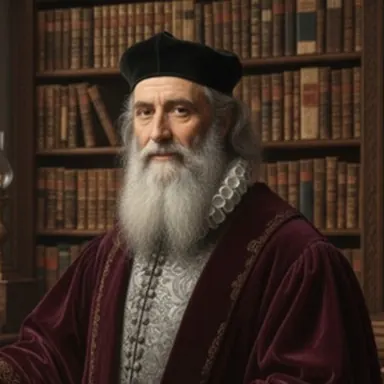
איור: רבי יהודה מוסקאטו
איור מתוך פרק הפודקאסט
לקריאת המחקר
· 34 דק׳
האזנה לפרק
צפייה בסרטון
⬡הצגה ברשת הקשרים
🌌הצגה במגדל הדורות
🔗המסלול אל חכם אחר

האזינו לפרק

פרק בפודקאסט · רבי יהודה מוסקאטו

פתיחה ב־Spotify
הנגן נטען מ־Spotify רק לאחר לחיצה.
פתיחה ב־Spotify

צפו בסרטון

רבי יהודה מוסקאטו

פתיחה ב־YouTube (נפתח בלשונית חדשה)

יהודה מוסקאטו: דרשן הרנסנס ומשנתו

הסרטון נטען מ־YouTube רק לאחר לחיצה.
פתיחה ב־YouTube (נפתח בלשונית חדשה)

רעיון מרכזי

מיזוג חכמת הרנסנס עם מסורת ישראל — רטוריקה, מוזיקה ופילוסופיה בשירות הדרשה.

ביוגרפיה

מגדולי הדרשנים של יהדות איטליה ברנסנס. חיבר את קובץ הדרשות "נפוצות יהודה" ואת "קול יהודה" — הפירוש הקלאסי לספר הכוזרי.

חכמים קשורים1

הושפע מהם1

  • רבי יהודה הלוי (ריה"ל)ראשונים

הדרך לסיני

49 תחנות בדרך
  1. משה רבנודור 1
  2. ועוד 43 דורות
  3. רב האי גאוןאיגרת רב שרירא גאון
  4. ועוד 2 חכמים
  5. רבי יהודה הלוי1075–1141
  6. רבי יהודה מוסקאטו1530–1593

כולל 3 קשרי השראהשלשלת הדורות לפי הקדמת הרמב״ם למשנה תורה. קו מקווקו הוא השראה ולא קבלה ישירה.

✦המסע במגדל הדורותלדרך המלאה

מחקר מלא

2 מסמכים·6,944 מילים· 34 דק׳ קריאה

תוכן עניינים34 דק׳ קריאה

  1. The Architecture of Renaissance Jewish Thought: The Life, Works, and Philosophical System of Rabbi Judah Moscato
    • Biographical Foundations and the Mantuan Context
    • The Role of Moses Provençal and Academic Training
    • The Theoretical Framework of Jewish Humanism and Prisca Theologia
    • The Reclamation of Secular Wisdom
    • Neoplatonism and Intellectual Perfection
    • Nefutzot Yehudah: The Homiletic Revolution
    • The Aesthetic and Dialectic Methodology
    • Structural Innovation and the Art of the Eulogy
    • Higgayon be-Khinnor: The Philosophy of Music and Cosmic Harmony
    • The Mystical-Rationalist Synthesis: The Role of Kabbalah
    • Socio-Political Leadership and Interreligious Dynamics
    • Literary and Poetic Contributions
    • The Mantuan Intellectual Environment: Printing and Music
    • Influence and Legacy: The School of Mantua
    • Conclusion: The Integrated Vision of Rabbi Judah Moscato
    • מקורות
  2. הארכיטקטורה של המחשבה היהודית בתקופת הרנסנס: חייו, כתביו ושיטתו הפילוסופית של רבי יהודה מוסקאטו
    • The Architecture of Renaissance Jewish Thought: The Life, Works, and Philosophical System of Rabbi Judah Moscato
    • Biographical Foundations and the Mantuan Context
    • The Role of Moses Provençal and Academic Training
    • The Theoretical Framework of Jewish Humanism and Prisca Theologia
    • The Reclamation of Secular Wisdom
    • Neoplatonism and Intellectual Perfection
    • Nefutzot Yehudah: The Homiletic Revolution
    • The Aesthetic and Dialectic Methodology
    • Structural Innovation and the Art of the Eulogy
    • Higgayon be-Khinnor: The Philosophy of Music and Cosmic Harmony
    • The Mystical-Rationalist Synthesis: The Role of Kabbalah
    • Socio-Political Leadership and Interreligious Dynamics
    • Literary and Poetic Contributions
    • The Mantuan Intellectual Environment: Printing and Music
    • Influence and Legacy: The School of Mantua
    • Conclusion: The Integrated Vision of Rabbi Judah Moscato
    • מקורות
תוכן עניינים· 63 סעיפים
  1. The Architecture of Renaissance Jewish Thought: The Life, Works, and Philosophical System of Rabbi Judah Moscato
    • Biographical Foundations and the Mantuan Context
    • The Role of Moses Provençal and Academic Training
    • The Theoretical Framework of Jewish Humanism and Prisca Theologia
    • The Reclamation of Secular Wisdom
    • Neoplatonism and Intellectual Perfection
    • Nefutzot Yehudah: The Homiletic Revolution
    • The Aesthetic and Dialectic Methodology
    • Structural Innovation and the Art of the Eulogy
    • Higgayon be-Khinnor: The Philosophy of Music and Cosmic Harmony
    • The Hebrew Origin of Music
    • Harmony as a Cosmic and Theological Principle
    • The Evolution of Music and Eschatology
    • Kol Yehuda: The Rehabilitation of the Kuzari
    • Reorienting Jewish Philosophy
    • Exegetical Methodology and Philology
    • Kabbalah and the Kuzari
    • The Mystical-Rationalist Synthesis: The Role of Kabbalah
    • Subtle Integration of the Zohar
    • Ethical and Liturgical Mysticism
    • Socio-Political Leadership and Interreligious Dynamics
    • The Threat of Forced Conversion
    • Intercultural Mediation
    • Literary and Poetic Contributions
    • Elegies and Personal Tributes
    • The Mantuan Intellectual Environment: Printing and Music
    • The Influence of Printing Houses
    • The Musical Community
    • Influence and Legacy: The School of Mantua
    • Successors in the 17th Century
    • Conclusion: The Integrated Vision of Rabbi Judah Moscato
    • מקורות
  2. הארכיטקטורה של המחשבה היהודית בתקופת הרנסנס: חייו, כתביו ושיטתו הפילוסופית של רבי יהודה מוסקאטו
    • The Architecture of Renaissance Jewish Thought: The Life, Works, and Philosophical System of Rabbi Judah Moscato
    • Biographical Foundations and the Mantuan Context
    • The Role of Moses Provençal and Academic Training
    • The Theoretical Framework of Jewish Humanism and Prisca Theologia
    • The Reclamation of Secular Wisdom
    • Neoplatonism and Intellectual Perfection
    • Nefutzot Yehudah: The Homiletic Revolution
    • The Aesthetic and Dialectic Methodology
    • Structural Innovation and the Art of the Eulogy
    • Higgayon be-Khinnor: The Philosophy of Music and Cosmic Harmony
    • The Hebrew Origin of Music
    • Harmony as a Cosmic and Theological Principle
    • The Evolution of Music and Eschatology
    • Kol Yehuda: The Rehabilitation of the Kuzari
    • Reorienting Jewish Philosophy
    • Exegetical Methodology and Philology
    • Kabbalah and the Kuzari
    • The Mystical-Rationalist Synthesis: The Role of Kabbalah
    • Subtle Integration of the Zohar
    • Ethical and Liturgical Mysticism
    • Socio-Political Leadership and Interreligious Dynamics
    • The Threat of Forced Conversion
    • Intercultural Mediation
    • Literary and Poetic Contributions
    • Elegies and Personal Tributes
    • The Mantuan Intellectual Environment: Printing and Music
    • The Influence of Printing Houses
    • The Musical Community
    • Influence and Legacy: The School of Mantua
    • Successors in the 17th Century
    • Conclusion: The Integrated Vision of Rabbi Judah Moscato
    • מקורות

מסמך 1/2

The Architecture of Renaissance Jewish Thought: The Life, Works, and Philosophical System of Rabbi Judah Moscato

17 דק׳ קריאה·3,473 מילים

תקציר

טקסט זה סוקר את פועלו האינטלקטואלי של רבי יהודה מוסקאטו, דמות מפתח ביהדות איטליה בתקופת הרנסאנס, אשר פעל לביסוס סינתזה תרבותית בין המסורת הרבנית לבין מדעי הרוח והפילוסופיה האירופית. מוסקאטו קידם את רעיון החוכמה הקדומה, לפיו ידיעות חילוניות במדע ובמוזיקה הן למעשה קניין יהודי מקורי שאבד בגלות, ובכך העניק לגיטימציה לשילובן בלימודי הקודש. באמצעות יצירותיו המכוננות, "נפוצות יהודה" ו"קול יהודה", הוא חולל מהפכה בתחום הדרשנות האסתטית והחיה את ספר הכוזרי תוך שילוב תורת הקבלה עם רציונליזם קלאסי. מטרת החיבור היא להציג את מוסקאטו כהומניסט יהודי ששאף לשלמות אינטלקטואלית, תוך שהוא מגדיר מחדש את זהות הקהילה היהודית כחלק בלתי נפרד מהמרחב התרבותי הנאור של זמנו.

The intellectual history of the sixteenth-century Italian Jewish community is characterized by a profound and deliberate attempt to synthesize the traditional components of rabbinic erudition with the burgeoning cultural and philosophical movements of the European Renaissance. At the epicenter of this cultural convergence stands Rabbi Judah ben Joseph Moscato (c. 1530–1593), an individual whose multifaceted career as a communal leader, philosopher, poet, and master of homiletics represents the pinnacle of Jewish Humanism. Moscato’s legacy is defined by a rigorous commitment to the idea that the "secular" wisdom of antiquity—ranging from Neoplatonic philosophy to the mathematical ratios of music—was not an external imposition upon Judaism, but rather a long-lost inheritance originally revealed to the prophets and kings of Israel. Through his two monumental works, the sermon collection Nefutzot Yehudah and the comprehensive Kuzari commentary Kol Yehuda, Moscato fundamentally reshaped the internal discourse of Italian Jewry, providing a framework for intellectual perfection that harmonized the mystical depth of the Kabbalah with the rationalist rigor of classical rhetoric and the aesthetic sensibilities of the Renaissance elite.

Biographical Foundations and the Mantuan Context

The life of Judah Moscato was forged in a period of significant demographic and political upheaval for the Jewish populations of the Italian peninsula. Born in Osimo, a town near Ancona in the Papal States, Moscato’s early years were spent in an environment that was becoming increasingly hostile under the Counter-Reformation policies of the Catholic Church.[1, 2] The election of Pope Paul IV in 1555 and the subsequent publication of the papal bull Cum nimis absurdum signaled an era of restricted rights and forced ghettoization. The turning point for Moscato occurred in 1569, when Pope Pius V issued a decree of expulsion for Jews from the smaller towns of the Papal States, prompting a mass migration of scholars and families toward the northern Italian centers.[3]

Moscato’s relocation to Mantua was a transformative event that placed him in one of the most vibrant centers of Jewish scholarship and general culture in Europe. Under the relatively stable rule of the Gonzaga dynasty, Mantua flourished as a hub for music, theater, and Hebrew printing.[4, 5] In this stimulating environment, Moscato found himself surrounded by a constellation of Jewish luminaries, including the historian Azariah dei Rossi and the brothers Moses, David, and Judah Provençal.[1, 2]

The Role of Moses Provençal and Academic Training

The most significant influence on Moscato’s early Mantuan career was his relationship with Rabbi Moses Provençal, a formidable rabbinic authority who was also deeply immersed in secular disciplines such as mathematics and physics. Provençal recognized Moscato’s intellectual potential and provided the essential stimulus for him to complement his traditional Torah studies with the "external sciences".[6] Moscato’s education was remarkably expansive, encompassing a mastery of classical and contemporary languages, as well as a deep engagement with the scientific and philosophical canons of the time.

In 1587, Moscato reached the zenith of his communal career when he was appointed Chief Rabbi of Mantua.[1, 3] His leadership was not merely administrative; he served as the community's primary intellectual mediator, defending the Jewish faith against external pressures while simultaneously pushing his congregation toward a more sophisticated and inclusive understanding of their own heritage. His stature was such that his cultural and moral leadership was recognized even by his opponents within the Church, who viewed him as a figure capable of sustaining the entire intellectual edifice of the synagogue.[5]

The Theoretical Framework of Jewish Humanism and Prisca Theologia

Moscato’s thought is rooted in the Renaissance concept of prisca theologia (ancient theology), which posited that a single, original truth had been revealed to the ancients and subsequently fragmented across various world traditions.[7] For Moscato, this concept was reclaimed through a Jewish lens: he argued that the fundamental truths found in Greek and Roman philosophy were actually derivatives of the wisdom originally possessed by the ancient Israelites.[3]

The Reclamation of Secular Wisdom

A core objective of Moscato’s work was the rehabilitation of secular knowledge for the Jewish community. He maintained that philosophy, music, and the sciences were "Jewish sciences" that had been lost during the long centuries of exile and persecution.[3] To support this claim, Moscato cited precursors such as Abraham Bibago and Ibn Rushd, asserting that the ultimate source of all human knowledge was King Solomon.[1] He believed it was the solemn duty of the Jewish people to re-acquire these branches of knowledge, as they were the original masters of these disciplines.[1, 2]

This ideological stance served several critical functions:

  • Apologetics: It provided a defense against Christian claims that Judaism was intellectually stagnant or inferior to the "modern" Renaissance cultures.
  • Pedagogy: It justified the inclusion of secular works in the curriculum of Jewish students, as they were merely reclaiming their own heritage.
  • Synthesis: It allowed for the seamless integration of Jewish texts with the works of Plato, Aristotle, and the Neoplatonists.

Neoplatonism and Intellectual Perfection

Moscato’s philosophical orientation was heavily influenced by the Neoplatonism of Marsilio Ficino and the Florentine Academy. He viewed the physical world and the text of the Torah as a series of images or "mythologies" that concealed deeper, elusive Platonic ideas.[7] He saw himself primarily as a philosopher whose goal was "intellectual perfection"—a state achieved by uncovering these hidden intellectual meanings through rigorous study and contemplation.[7]

His writing style reflected this Neoplatonic method, moving "seamlessly" between classical Greek, Latin, Italian, and Jewish sources.[7, 8] This "meandering" approach was not a sign of lack of focus, but rather a deliberate demonstration of the "unity of knowledge" that Moscato believed existed between the Jewish tradition and the broader intellectual world. By showing how a passage in the Talmud echoed a concept in Plato or a discovery in medicine, Moscato reinforced the idea that all truth originated from a single, Divine source.

Nefutzot Yehudah: The Homiletic Revolution

Moscato’s most enduring influence on the Jewish community came through his work as a preacher. His collection of fifty-two sermons, Nefutzot Yehudah ("The Dispersed of Judah"), published in Venice in 1588, transformed the Jewish pulpit into a theater of aesthetic and intellectual refinement.[1] Before Moscato, the Jewish sermon was often a simple didactic exercise; Moscato turned it into a sophisticated literary genre that adhered to the rules of classical rhetoric.[3, 6]

The Aesthetic and Dialectic Methodology

The sermons in Nefutzot Yehudah were delivered to a sophisticated Mantuan audience that included both Jewish congregants and interested non-Jewish scholars.[3] Moscato’s primary aim was not merely to teach or educate in the traditional sense, but to provide aesthetic pleasure to his listeners—a goal that reflected the Renaissance emphasis on the beauty of expression.[3]

Despite this focus on aesthetics, Moscato’s sermons were deeply instructive. He applied a dialectic method that utilized his vast knowledge of philosophy and Kabbalah to interpret ethical ideas in ways that were acceptable to the contemporary Renaissance culture.[3] He moved away from "forced exegesis," preferring a natural and thematic treatment of his subjects that allowed for a fluid transition between sacred and secular concepts.[1]

Structural Innovation and the Art of the Eulogy

Moscato was a pioneer in the systematic organization of homiletic literature. Nefutzot Yehudah was published with elaborate and innovative indices, ensuring that the work could serve as a reference tool for subsequent generations of preachers.[8] He also refined the art of the eulogy, turning the memorialization of the dead into a philosophical reflection on the nature of the soul and the human condition.[4, 9] His elegies for figures such as Joseph Caro and Duchess Margherita of Savoy demonstrated his ability to bridge the religious divide through shared humanistic values.[1]

Higgayon be-Khinnor: The Philosophy of Music and Cosmic Harmony

Perhaps the most famous individual sermon within Nefutzot Yehudah is "Higgayon be-Khinnor" ("Sounds for Contemplation on a Lyre"). In this discourse, Moscato presents a comprehensive "eulogy to music," conceiving it not just as an art form but as the fundamental principle of cosmic structure.[10]

The Hebrew Origin of Music

Consistency with his broader worldview, Moscato argued that the Hebrews were the true inventors of the science of music, centered on its "spiritual value" rather than mere practical application.[10] He identified King David as the supreme musical practitioner, whose lyre played at midnight when moved by the "spiritual wind" of the Divine spirit.[10] Moscato posited that the study of Torah and the achievement of an upright life allowed a person to play on a "spiritual kinnor" (lyre), reaching a superior mental level where the secrets of the universe were revealed as a "song in the night".[10]

Harmony as a Cosmic and Theological Principle

Moscato’s sermon on music is deeply rooted in the concept of universal harmony. He believed that God, in His essence, is the embodiment of music and its "root and principle".[10] He went so far as to analyze the Tetragrammaton (YHWH) as a musical structure containing the primary consonances of the universe.[10]

Moscato extended this harmonic theory to the macrocosm and microcosm:

  • Macrocosm: The nine celestial spheres rotate with their own songs in "perfect harmonic relations," a view Moscato attributed to both Plato and Abraham ibn Ezra.[10] He described the world as a four-stringed instrument consisting of the heavens/earth, the lights, the sea, and the abyss.[10]
  • Microcosm: The human soul is "arranged and ordered in ratios of music".[10] A righteous person is one who preserves the "equilibrium" between their matter and form, effectively serving as the foundation of the world by maintaining this divine order.[10]

The Evolution of Music and Eschatology

Moscato’s musical philosophy included an eschatological dimension. He described the development of the lyre across different cosmic eras:

  • The Current World: The kinnor has seven strings.
  • The Messianic Era: The instrument will gain an eighth string.
  • The World to Come: The kinnor will have ten strings, corresponding to the ten Sefirot (divine emanations) and representing absolute integrality and perfection.[10]

Kol Yehuda: The Rehabilitation of the Kuzari

Moscato’s second major contribution to Jewish thought was his comprehensive commentary on Judah Halevi’s Sefer ha-Kuzari, titled Kol Yehuda ("The Voice of Judah"), published in 1594.[1, 5] While the Kuzari had been a significant text in the Middle Ages, it was Moscato’s exegesis that propelled it to the forefront of Jewish learning for hundreds of years to come.[7]

Reorienting Jewish Philosophy

Moscato recognized that the Kuzari, with its focus on historical revelation, the uniqueness of the Jewish people, and its implicit Platonic structure, was an ideal text for the Renaissance intellectual environment.[7] In Kol Yehuda, Moscato sought to bridge the gap between Halevi’s medieval defense of Judaism and the contemporary philosophical concerns of his time. He was particularly interested in demonstrating that the Kuzari was compatible with both the Kabbalah and the Neoplatonic ideas of figures like Marsilio Ficino.[7, 11]

Exegetical Methodology and Philology

Moscato’s commentary was not merely an interpretive exercise but also a philological one. He engaged deeply with the history of the Hebrew translation of the Kuzari, which had been produced by Judah ibn Tibbon in the twelfth century.[12] Moscato utilized systematic and extensive corrections to the Tibbon translation, often incorporating original suggestions from his friend and contemporary Azariah dei Rossi.[12]

A significant feature of Kol Yehuda was Moscato’s use of sources that were little read or studied at the time. For instance, he was one of the first Renaissance rabbis to make extensive use of Philo of Alexandria, whose work provided a crucial bridge between Jewish scripture and Hellenistic philosophy.[3] This "meandering" style of commentary, which moved between Jewish and classical sources, reinforced his belief in the openness of the Jewish tradition to receiving truth from diverse origins.[7]

Kabbalah and the Kuzari

One of the most innovative aspects of Kol Yehuda was Moscato’s documentation of the parallels between Halevi’s thought and the medieval Kabbalistic literature.[11] While scholars such as Gershom Scholem have debated the extent of Halevi’s influence on the Kabbalah, Moscato was convinced that the Kuzari was a foundational text for the theosophical tradition.[11] He used paradigms such as astral magic and Neoplatonic psychology to interpret Halevi’s arguments, particularly regarding the sacrificial rite and the nature of the Godhead.[11] By doing so, he integrated the Kuzari into the mystical-philosophical synthesis that defined his own worldview.

The Mystical-Rationalist Synthesis: The Role of Kabbalah

Although Moscato was a student of classical rhetoric and philosophy, he was also an enthusiastic and knowledgeable practitioner of the Kabbalah.[1, 2] His approach to the mystical tradition, however, was distinctly "philosophical" and "integrated" rather than isolated.

Subtle Integration of the Zohar

Moscato’s familiarity with the Zohar and the works of Moses Cordovero (especially Pardes Rimmonim) is evident throughout his writings.[3] Interestingly, Moscato often used Kabbalistic ideas without explicitly naming his sources, weaving mystical concepts into his ethical and liturgical discussions.[3] This subtle integration allowed him to present the Kabbalah not as a radical or separate doctrine, but as the "inner meaning" of the traditional rabbinic culture.

Ethical and Liturgical Mysticism

Moscato’s interest in Kabbalah was particularly focused on prayer and ethics.[3] He viewed prayer as a mystical act that required the proper "tuning" of the soul, much like a musical instrument. His sermons frequently utilized Kabbalistic imagery to describe the interaction between the human spirit and the Divine emanations, further reinforcing his goal of "intellectual perfection" through a multifaceted approach to wisdom.[3, 7]

Socio-Political Leadership and Interreligious Dynamics

The role of a Chief Rabbi in Renaissance Mantua was as much political as it was intellectual. Moscato lived and worked during a period of intense pressure from the Catholic Church, which was actively seeking the conversion of high-profile Jewish leaders.[5]

The Threat of Forced Conversion

Moscato’s prominence made him a target for the ecclesiastical authorities. Historical records indicate that because of the forced conversion of some Mantuan Jews, Moscato himself was imprisoned and subjected to "intense psychological pressure" in an attempt to obtain his conversion.[5] The Church recognized that Moscato was a singular figure; it was believed that he alone could "sustain the whole Synagogue" and that his conversion would significantly disturb the Jewish community’s resolve.[5] Moscato’s steadfastness in the face of this pressure became a vital component of his legacy as a moral and cultural leader.

Intercultural Mediation

Despite the pressures from the Church, Moscato acted as a mediator between religious cultures. His sermons were attended by Christian scholars, and his writing style—which incorporated Latin and Italian literary norms—made Jewish thought accessible and even attractive to the broader intellectual world of the Renaissance.[3] This role as a guide to "humanist scholarship" was recognized by Jewish and Christian intellectuals alike, establishing Moscato as a unique figure in the pantheon of Renaissance polymaths.[13]

Literary and Poetic Contributions

Beyond his major theological and homiletical works, Moscato was a prolific poet and a correspondent of his time’s great scholars. His literary output included liturgical poems, sonnets, and responsa, many of which remain in manuscript form.[5]

Elegies and Personal Tributes

Moscato’s poetry often took the form of elegies for friends and distinguished scholars. Notable examples include:

  • Elegy for Joseph Caro: A tribute to the great author of the Shulchan Aruch.[1, 3]
  • Elegies for Duchess Margherita of Savoy: Three known elegies composed upon her death in 1574, demonstrating his connections to the ruling classes of Italy.[1]
  • Prayer for Rain: A liturgical poem that reflected his concern for the practical and spiritual needs of his community.[3]

Moscato’s poetry was not merely a side pursuit; it was a further application of his belief that the literary arts were an essential component of a perfected Jewish intellect. His work in this field placed him in the lineage of David ben Judah Messer Leon, who had published a humanistic work defending the literary arts a century earlier.[14]

The Mantuan Intellectual Environment: Printing and Music

The success of Moscato’s work was intrinsically linked to the technological and cultural context of Mantua. The city was a preeminent center for Hebrew printing, second only to Venice.[5]

The Influence of Printing Houses

The Mantuan printing house of Abraham Conat produced the first edition of the Zohar (1558–1560) and other seminal works like the Nofet Zufim by Judah Messer Leon.[5] This proximity to the primary texts of both philosophy and Kabbalah allowed Moscato to engage with the most accurate and up-to-date versions of the Jewish canon. The meticulous nature of his own publications—with their elaborate corrigenda and indices—reflects the high standards of the Mantuan printing tradition.[8]

The Musical Community

Mantua's status as a musical hub also deeply informed Moscato’s thought. The presence of the Levi dynasty—three generations of Jewish musicians active in the sixteenth century—provided a living laboratory for Moscato’s theories on harmony and the "spiritual kinnor".[4] The community’s engagement with the arts was not seen as a secular distraction, but as a cultural performance that intersected with religious text, as seen in Judah Sommo’s Italian translation of the Psalms.[4]

Influence and Legacy: The School of Mantua

The "Moscato School" of homiletics and thought left a permanent mark on Italian Jewry. His methods and ideas were taken up by subsequent generations of preachers, creating a new standard for the Jewish pulpit.

Successors in the 17th Century

The most significant heirs to Moscato’s legacy were:

  • Azariah Figo (Picho): Whose sermon collection Binah La-Ittim utilized Moscato’s methods, particularly the integration of the language of science into the sermon.[6, 9]
  • Leone Modena: A prolific and controversial figure in the Venetian Ghetto who applied Moscato’s rhetorical rules to his own famous sermons.[6, 9]
  • Simha Luzzatto: Who, like Moscato, explored the boundaries of Jewish skeptical thought and handled the relationship between Judaism and the secular state.[4, 6]

Moscato transformed the sermon from a tool of simple instruction into a "methodical system of ideas" that remains a guide for the modern Jewish preacher.[6] By elevating the aesthetic and intellectual quality of the homily, he ensured that the Jewish community could participate fully in the cultural life of the modern era without sacrificing their religious identity.

Conclusion: The Integrated Vision of Rabbi Judah Moscato

Rabbi Judah Moscato remains the definitive figure of the Italian-Jewish Renaissance because he did not merely exist between two worlds; he fundamentally denied that they were separate. His life’s work was a testament to the belief that the "universal circle" of beauty, truth, and knowledge had its origins in the Torah and reached its completion in a Jewish context.[8, 15]

Through his revolution in homiletics, he provided the Jewish community with an aesthetic and rhetorical voice that could stand proudly alongside the masters of the Renaissance. Through his commentary on the Kuzari, he rescued medieval philosophy from obscurity and made it relevant to a new age of inquiry. And through his spiritualization of music and science, he offered a path to "intellectual perfection" that saw every discovery of the human mind as an echo of the Divine song.[7, 10] Moscato’s legacy is the vision of a Judaism that is an evolving civilization—one that is "guided by reason, inspired by compassion, and informed by experience," yet rooted eternally in the sacred tradition of Sinai.[16, 17] He was, in the truest sense, a homo universalis, who proved that the voice of Judah could resonate in harmony with the melodies of the spheres and the wisdom of the ages.

מקורות17

  1. 1.Judah Moscato - Wikipedia, en.wikipedia.org/wiki/Judah_Moscato
  2. 2.Moscato, Judah ben Joseph, approximately 1530-approximately 1593 | The Online Books Page, onlinebooks.library.upenn.edu/webbin/who/Moscato%2C Judah ben Joseph%2C approximately 1530-approximately 1593
  3. 3.Moscato, Judah ben Joseph | Encyclopedia.com, encyclopedia.com/religion/encyclopedias-almanacs-transcripts-and-maps/moscato-judah-ben-joseph
  4. 4.Rabbi Judah Moscato and the Jewish Intellectual World of Mantua in ..., brill.com/abstract/title/21180
  5. 5.Rabbi Judah Moscato and the Jewish Intellectual World of Mantua in the 16th–17th Centuries - Brill, brill.com/display/book/edcoll/9789004222465/B9789004222465-s001.pdf
  6. 6.יהודה מוסקאטו - ויקיפדיה, he.wikipedia.org/wiki/יהודה_מוסקאטו
  7. 7.Judah Moscato - Bar-Ilan University, cris.biu.ac.il/en/publications/judah-moscato
  8. 8.(PDF) Moscato, Judah - Academia.edu, academia.edu/38565728/Moscato_Judah
  9. 9.Preachers of the Italian Ghetto - UC Press E-Books Collection, publishing.cdlib.org/ucpressebooks/view?docId=ft829008np&chunk.id=ch5&toc.id=ch5&brand=eschol
  10. 10.Judah Moscato on the Spirituality of Music - Brill, brill.com/display/book/9789004283640/B9789004283640_003.pdf
  11. 11.(PDF) The Kuzari and Early Kabbalah: Between Integration and Interpretation regarding the Secrets of the Sacrificial Rite - ResearchGate, researchgate.net/publication/370380924_The_Kuzari_and_Early_Kabbalah_Between_Integration_and_Interpretation_regarding_the_Secrets_of_the_Sacrificial_Rite
  12. 12.Azariah de' Rossi's Annotations on Sefer ha-Kuzari: Identification and Preliminary Analysis, seforimblog.com/2025/03/azariah-de-rossis-annotations-on-sefer-ha-kuzari-identification-and-preliminary-analysis/
  13. 13.Renaissance Philosophy in Jewish Garb - Brill, brill.com/display/book/9789047425281/9789047425281_webready_content_text.pdf
  14. 14.Modern Jewish historiography - Wikipedia, en.wikipedia.org/wiki/Modern_Jewish_historiography
  15. 15.Transforming the Maimonidean Imagination: Aesthetics in the Renaissance Thought of Judah Abravanel | Harvard Theological Review - Cambridge University Press, cambridge.org/core/journals/harvard-theological-review/article/transforming-the-maimonidean-imagination-aesthetics-in-the-renaissance-thought-of-judah-abravanel/B6D41D4B8E1ACD3D64F1B44B9AD48411
  16. 16.THE LIBRARY OF SECULAR HUMANISTIC JUDAISM, iishj.org/wp-content/uploads/2025/02/IISHJ-Pub-Cat-2024-all-pages-single.pdf
  17. 17.Humanist Common Ground: Judaism, americanhumanist.org/paths/judaism/

מסמך 2/2

הארכיטקטורה של המחשבה היהודית בתקופת הרנסנס: חייו, כתביו ושיטתו הפילוסופית של רבי יהודה מוסקאטו

17 דק׳ קריאה·3,471 מילים

תקציר

טקסט זה סוקר את פועלו האינטלקטואלי של רבי יהודה מוסקאטו, דמות מפתח ביהדות איטליה בתקופת הרנסאנס, אשר פעל לביסוס סינתזה תרבותית בין המסורת הרבנית לבין מדעי הרוח והפילוסופיה האירופית. מוסקאטו קידם את רעיון החוכמה הקדומה, לפיו ידיעות חילוניות במדע ובמוזיקה הן למעשה קניין יהודי מקורי שאבד בגלות, ובכך העניק לגיטימציה לשילובן בלימודי הקודש. באמצעות יצירותיו המכוננות, "נפוצות יהודה" ו"קול יהודה", הוא חולל מהפכה בתחום הדרשנות האסתטית והחיה את ספר הכוזרי תוך שילוב תורת הקבלה עם רציונליזם קלאסי. מטרת החיבור היא להציג את מוסקאטו כהומניסט יהודי ששאף לשלמות אינטלקטואלית, תוך שהוא מגדיר מחדש את זהות הקהילה היהודית כחלק בלתי נפרד מהמרחב התרבותי הנאור של זמנו.

The Architecture of Renaissance Jewish Thought: The Life, Works, and Philosophical System of Rabbi Judah Moscato

The intellectual history of the sixteenth-century Italian Jewish community is characterized by a profound and deliberate attempt to synthesize the traditional components of rabbinic erudition with the burgeoning cultural and philosophical movements of the European Renaissance. At the epicenter of this cultural convergence stands Rabbi Judah ben Joseph Moscato (c. 1530–1593), an individual whose multifaceted career as a communal leader, philosopher, poet, and master of homiletics represents the pinnacle of Jewish Humanism. Moscato’s legacy is defined by a rigorous commitment to the idea that the "secular" wisdom of antiquity—ranging from Neoplatonic philosophy to the mathematical ratios of music—was not an external imposition upon Judaism, but rather a long-lost inheritance originally revealed to the prophets and kings of Israel. Through his two monumental works, the sermon collection Nefutzot Yehudah and the comprehensive Kuzari commentary Kol Yehuda, Moscato fundamentally reshaped the internal discourse of Italian Jewry, providing a framework for intellectual perfection that harmonized the mystical depth of the Kabbalah with the rationalist rigor of classical rhetoric and the aesthetic sensibilities of the Renaissance elite.

Biographical Foundations and the Mantuan Context

The life of Judah Moscato was forged in a period of significant demographic and political upheaval for the Jewish populations of the Italian peninsula. Born in Osimo, a town near Ancona in the Papal States, Moscato’s early years were spent in an environment that was becoming increasingly hostile under the Counter-Reformation policies of the Catholic Church.[1, 2] The election of Pope Paul IV in 1555 and the subsequent publication of the papal bull Cum nimis absurdum signaled an era of restricted rights and forced ghettoization. The turning point for Moscato occurred in 1569, when Pope Pius V issued a decree of expulsion for Jews from the smaller towns of the Papal States, prompting a mass migration of scholars and families toward the northern Italian centers.[3]

Moscato’s relocation to Mantua was a transformative event that placed him in one of the most vibrant centers of Jewish scholarship and general culture in Europe. Under the relatively stable rule of the Gonzaga dynasty, Mantua flourished as a hub for music, theater, and Hebrew printing.[4, 5] In this stimulating environment, Moscato found himself surrounded by a constellation of Jewish luminaries, including the historian Azariah dei Rossi and the brothers Moses, David, and Judah Provençal.[1, 2]

The Role of Moses Provençal and Academic Training

The most significant influence on Moscato’s early Mantuan career was his relationship with Rabbi Moses Provençal, a formidable rabbinic authority who was also deeply immersed in secular disciplines such as mathematics and physics. Provençal recognized Moscato’s intellectual potential and provided the essential stimulus for him to complement his traditional Torah studies with the "external sciences".[6] Moscato’s education was remarkably expansive, encompassing a mastery of classical and contemporary languages, as well as a deep engagement with the scientific and philosophical canons of the time.

In 1587, Moscato reached the zenith of his communal career when he was appointed Chief Rabbi of Mantua.[1, 3] His leadership was not merely administrative; he served as the community's primary intellectual mediator, defending the Jewish faith against external pressures while simultaneously pushing his congregation toward a more sophisticated and inclusive understanding of their own heritage. His stature was such that his cultural and moral leadership was recognized even by his opponents within the Church, who viewed him as a figure capable of sustaining the entire intellectual edifice of the synagogue.[5]

The Theoretical Framework of Jewish Humanism and Prisca Theologia

Moscato’s thought is rooted in the Renaissance concept of prisca theologia (ancient theology), which posited that a single, original truth had been revealed to the ancients and subsequently fragmented across various world traditions.[7] For Moscato, this concept was reclaimed through a Jewish lens: he argued that the fundamental truths found in Greek and Roman philosophy were actually derivatives of the wisdom originally possessed by the ancient Israelites.[3]

The Reclamation of Secular Wisdom

A core objective of Moscato’s work was the rehabilitation of secular knowledge for the Jewish community. He maintained that philosophy, music, and the sciences were "Jewish sciences" that had been lost during the long centuries of exile and persecution.[3] To support this claim, Moscato cited precursors such as Abraham Bibago and Ibn Rushd, asserting that the ultimate source of all human knowledge was King Solomon.[1] He believed it was the solemn duty of the Jewish people to re-acquire these branches of knowledge, as they were the original masters of these disciplines.[1, 2]

This ideological stance served several critical functions:

  • Apologetics: It provided a defense against Christian claims that Judaism was intellectually stagnant or inferior to the "modern" Renaissance cultures.
  • Pedagogy: It justified the inclusion of secular works in the curriculum of Jewish students, as they were merely reclaiming their own heritage.
  • Synthesis: It allowed for the seamless integration of Jewish texts with the works of Plato, Aristotle, and the Neoplatonists.

Neoplatonism and Intellectual Perfection

Moscato’s philosophical orientation was heavily influenced by the Neoplatonism of Marsilio Ficino and the Florentine Academy. He viewed the physical world and the text of the Torah as a series of images or "mythologies" that concealed deeper, elusive Platonic ideas.[7] He saw himself primarily as a philosopher whose goal was "intellectual perfection"—a state achieved by uncovering these hidden intellectual meanings through rigorous study and contemplation.[7]

His writing style reflected this Neoplatonic method, moving "seamlessly" between classical Greek, Latin, Italian, and Jewish sources.[7, 8] This "meandering" approach was not a sign of lack of focus, but rather a deliberate demonstration of the "unity of knowledge" that Moscato believed existed between the Jewish tradition and the broader intellectual world. By showing how a passage in the Talmud echoed a concept in Plato or a discovery in medicine, Moscato reinforced the idea that all truth originated from a single, Divine source.

Nefutzot Yehudah: The Homiletic Revolution

Moscato’s most enduring influence on the Jewish community came through his work as a preacher. His collection of fifty-two sermons, Nefutzot Yehudah ("The Dispersed of Judah"), published in Venice in 1588, transformed the Jewish pulpit into a theater of aesthetic and intellectual refinement.[1] Before Moscato, the Jewish sermon was often a simple didactic exercise; Moscato turned it into a sophisticated literary genre that adhered to the rules of classical rhetoric.[3, 6]

The Aesthetic and Dialectic Methodology

The sermons in Nefutzot Yehudah were delivered to a sophisticated Mantuan audience that included both Jewish congregants and interested non-Jewish scholars.[3] Moscato’s primary aim was not merely to teach or educate in the traditional sense, but to provide aesthetic pleasure to his listeners—a goal that reflected the Renaissance emphasis on the beauty of expression.[3]

Despite this focus on aesthetics, Moscato’s sermons were deeply instructive. He applied a dialectic method that utilized his vast knowledge of philosophy and Kabbalah to interpret ethical ideas in ways that were acceptable to the contemporary Renaissance culture.[3] He moved away from "forced exegesis," preferring a natural and thematic treatment of his subjects that allowed for a fluid transition between sacred and secular concepts.[1]

Structural Innovation and the Art of the Eulogy

Moscato was a pioneer in the systematic organization of homiletic literature. Nefutzot Yehudah was published with elaborate and innovative indices, ensuring that the work could serve as a reference tool for subsequent generations of preachers.[8] He also refined the art of the eulogy, turning the memorialization of the dead into a philosophical reflection on the nature of the soul and the human condition.[4, 9] His elegies for figures such as Joseph Caro and Duchess Margherita of Savoy demonstrated his ability to bridge the religious divide through shared humanistic values.[1]

Higgayon be-Khinnor: The Philosophy of Music and Cosmic Harmony

Perhaps the most famous individual sermon within Nefutzot Yehudah is "Higgayon be-Khinnor" ("Sounds for Contemplation on a Lyre"). In this discourse, Moscato presents a comprehensive "eulogy to music," conceiving it not just as an art form but as the fundamental principle of cosmic structure.[10]

The Hebrew Origin of Music

Consistency with his broader worldview, Moscato argued that the Hebrews were the true inventors of the science of music, centered on its "spiritual value" rather than mere practical application.[10] He identified King David as the supreme musical practitioner, whose lyre played at midnight when moved by the "spiritual wind" of the Divine spirit.[10] Moscato posited that the study of Torah and the achievement of an upright life allowed a person to play on a "spiritual kinnor" (lyre), reaching a superior mental level where the secrets of the universe were revealed as a "song in the night".[10]

Harmony as a Cosmic and Theological Principle

Moscato’s sermon on music is deeply rooted in the concept of universal harmony. He believed that God, in His essence, is the embodiment of music and its "root and principle".[10] He went so far as to analyze the Tetragrammaton (YHWH) as a musical structure containing the primary consonances of the universe.[10]

Moscato extended this harmonic theory to the macrocosm and microcosm:

  • Macrocosm: The nine celestial spheres rotate with their own songs in "perfect harmonic relations," a view Moscato attributed to both Plato and Abraham ibn Ezra.[10] He described the world as a four-stringed instrument consisting of the heavens/earth, the lights, the sea, and the abyss.[10]
  • Microcosm: The human soul is "arranged and ordered in ratios of music".[10] A righteous person is one who preserves the "equilibrium" between their matter and form, effectively serving as the foundation of the world by maintaining this divine order.[10]

The Evolution of Music and Eschatology

Moscato’s musical philosophy included an eschatological dimension. He described the development of the lyre across different cosmic eras:

  • The Current World: The kinnor has seven strings.
  • The Messianic Era: The instrument will gain an eighth string.
  • The World to Come: The kinnor will have ten strings, corresponding to the ten Sefirot (divine emanations) and representing absolute integrality and perfection.[10]

Kol Yehuda: The Rehabilitation of the Kuzari

Moscato’s second major contribution to Jewish thought was his comprehensive commentary on Judah Halevi’s Sefer ha-Kuzari, titled Kol Yehuda ("The Voice of Judah"), published in 1594.[1, 5] While the Kuzari had been a significant text in the Middle Ages, it was Moscato’s exegesis that propelled it to the forefront of Jewish learning for hundreds of years to come.[7]

Reorienting Jewish Philosophy

Moscato recognized that the Kuzari, with its focus on historical revelation, the uniqueness of the Jewish people, and its implicit Platonic structure, was an ideal text for the Renaissance intellectual environment.[7] In Kol Yehuda, Moscato sought to bridge the gap between Halevi’s medieval defense of Judaism and the contemporary philosophical concerns of his time. He was particularly interested in demonstrating that the Kuzari was compatible with both the Kabbalah and the Neoplatonic ideas of figures like Marsilio Ficino.[7, 11]

Exegetical Methodology and Philology

Moscato’s commentary was not merely an interpretive exercise but also a philological one. He engaged deeply with the history of the Hebrew translation of the Kuzari, which had been produced by Judah ibn Tibbon in the twelfth century.[12] Moscato utilized systematic and extensive corrections to the Tibbon translation, often incorporating original suggestions from his friend and contemporary Azariah dei Rossi.[12]

A significant feature of Kol Yehuda was Moscato’s use of sources that were little read or studied at the time. For instance, he was one of the first Renaissance rabbis to make extensive use of Philo of Alexandria, whose work provided a crucial bridge between Jewish scripture and Hellenistic philosophy.[3] This "meandering" style of commentary, which moved between Jewish and classical sources, reinforced his belief in the openness of the Jewish tradition to receiving truth from diverse origins.[7]

Kabbalah and the Kuzari

One of the most innovative aspects of Kol Yehuda was Moscato’s documentation of the parallels between Halevi’s thought and the medieval Kabbalistic literature.[11] While scholars such as Gershom Scholem have debated the extent of Halevi’s influence on the Kabbalah, Moscato was convinced that the Kuzari was a foundational text for the theosophical tradition.[11] He used paradigms such as astral magic and Neoplatonic psychology to interpret Halevi’s arguments, particularly regarding the sacrificial rite and the nature of the Godhead.[11] By doing so, he integrated the Kuzari into the mystical-philosophical synthesis that defined his own worldview.

The Mystical-Rationalist Synthesis: The Role of Kabbalah

Although Moscato was a student of classical rhetoric and philosophy, he was also an enthusiastic and knowledgeable practitioner of the Kabbalah.[1, 2] His approach to the mystical tradition, however, was distinctly "philosophical" and "integrated" rather than isolated.

Subtle Integration of the Zohar

Moscato’s familiarity with the Zohar and the works of Moses Cordovero (especially Pardes Rimmonim) is evident throughout his writings.[3] Interestingly, Moscato often used Kabbalistic ideas without explicitly naming his sources, weaving mystical concepts into his ethical and liturgical discussions.[3] This subtle integration allowed him to present the Kabbalah not as a radical or separate doctrine, but as the "inner meaning" of the traditional rabbinic culture.

Ethical and Liturgical Mysticism

Moscato’s interest in Kabbalah was particularly focused on prayer and ethics.[3] He viewed prayer as a mystical act that required the proper "tuning" of the soul, much like a musical instrument. His sermons frequently utilized Kabbalistic imagery to describe the interaction between the human spirit and the Divine emanations, further reinforcing his goal of "intellectual perfection" through a multifaceted approach to wisdom.[3, 7]

Socio-Political Leadership and Interreligious Dynamics

The role of a Chief Rabbi in Renaissance Mantua was as much political as it was intellectual. Moscato lived and worked during a period of intense pressure from the Catholic Church, which was actively seeking the conversion of high-profile Jewish leaders.[5]

The Threat of Forced Conversion

Moscato’s prominence made him a target for the ecclesiastical authorities. Historical records indicate that because of the forced conversion of some Mantuan Jews, Moscato himself was imprisoned and subjected to "intense psychological pressure" in an attempt to obtain his conversion.[5] The Church recognized that Moscato was a singular figure; it was believed that he alone could "sustain the whole Synagogue" and that his conversion would significantly disturb the Jewish community’s resolve.[5] Moscato’s steadfastness in the face of this pressure became a vital component of his legacy as a moral and cultural leader.

Intercultural Mediation

Despite the pressures from the Church, Moscato acted as a mediator between religious cultures. His sermons were attended by Christian scholars, and his writing style—which incorporated Latin and Italian literary norms—made Jewish thought accessible and even attractive to the broader intellectual world of the Renaissance.[3] This role as a guide to "humanist scholarship" was recognized by Jewish and Christian intellectuals alike, establishing Moscato as a unique figure in the pantheon of Renaissance polymaths.[13]

Literary and Poetic Contributions

Beyond his major theological and homiletical works, Moscato was a prolific poet and a correspondent of his time’s great scholars. His literary output included liturgical poems, sonnets, and responsa, many of which remain in manuscript form.[5]

Elegies and Personal Tributes

Moscato’s poetry often took the form of elegies for friends and distinguished scholars. Notable examples include:

  • Elegy for Joseph Caro: A tribute to the great author of the Shulchan Aruch.[1, 3]
  • Elegies for Duchess Margherita of Savoy: Three known elegies composed upon her death in 1574, demonstrating his connections to the ruling classes of Italy.[1]
  • Prayer for Rain: A liturgical poem that reflected his concern for the practical and spiritual needs of his community.[3]

Moscato’s poetry was not merely a side pursuit; it was a further application of his belief that the literary arts were an essential component of a perfected Jewish intellect. His work in this field placed him in the lineage of David ben Judah Messer Leon, who had published a humanistic work defending the literary arts a century earlier.[14]

The Mantuan Intellectual Environment: Printing and Music

The success of Moscato’s work was intrinsically linked to the technological and cultural context of Mantua. The city was a preeminent center for Hebrew printing, second only to Venice.[5]

The Influence of Printing Houses

The Mantuan printing house of Abraham Conat produced the first edition of the Zohar (1558–1560) and other seminal works like the Nofet Zufim by Judah Messer Leon.[5] This proximity to the primary texts of both philosophy and Kabbalah allowed Moscato to engage with the most accurate and up-to-date versions of the Jewish canon. The meticulous nature of his own publications—with their elaborate corrigenda and indices—reflects the high standards of the Mantuan printing tradition.[8]

The Musical Community

Mantua's status as a musical hub also deeply informed Moscato’s thought. The presence of the Levi dynasty—three generations of Jewish musicians active in the sixteenth century—provided a living laboratory for Moscato’s theories on harmony and the "spiritual kinnor".[4] The community’s engagement with the arts was not seen as a secular distraction, but as a cultural performance that intersected with religious text, as seen in Judah Sommo’s Italian translation of the Psalms.[4]

Influence and Legacy: The School of Mantua

The "Moscato School" of homiletics and thought left a permanent mark on Italian Jewry. His methods and ideas were taken up by subsequent generations of preachers, creating a new standard for the Jewish pulpit.

Successors in the 17th Century

The most significant heirs to Moscato’s legacy were:

  • Azariah Figo (Picho): Whose sermon collection Binah La-Ittim utilized Moscato’s methods, particularly the integration of the language of science into the sermon.[6, 9]
  • Leone Modena: A prolific and controversial figure in the Venetian Ghetto who applied Moscato’s rhetorical rules to his own famous sermons.[6, 9]
  • Simha Luzzatto: Who, like Moscato, explored the boundaries of Jewish skeptical thought and handled the relationship between Judaism and the secular state.[4, 6]

Moscato transformed the sermon from a tool of simple instruction into a "methodical system of ideas" that remains a guide for the modern Jewish preacher.[6] By elevating the aesthetic and intellectual quality of the homily, he ensured that the Jewish community could participate fully in the cultural life of the modern era without sacrificing their religious identity.

Conclusion: The Integrated Vision of Rabbi Judah Moscato

Rabbi Judah Moscato remains the definitive figure of the Italian-Jewish Renaissance because he did not merely exist between two worlds; he fundamentally denied that they were separate. His life’s work was a testament to the belief that the "universal circle" of beauty, truth, and knowledge had its origins in the Torah and reached its completion in a Jewish context.[8, 15]

Through his revolution in homiletics, he provided the Jewish community with an aesthetic and rhetorical voice that could stand proudly alongside the masters of the Renaissance. Through his commentary on the Kuzari, he rescued medieval philosophy from obscurity and made it relevant to a new age of inquiry. And through his spiritualization of music and science, he offered a path to "intellectual perfection" that saw every discovery of the human mind as an echo of the Divine song.[7, 10] Moscato’s legacy is the vision of a Judaism that is an evolving civilization—one that is "guided by reason, inspired by compassion, and informed by experience," yet rooted eternally in the sacred tradition of Sinai.[16, 17] He was, in the truest sense, a homo universalis, who proved that the voice of Judah could resonate in harmony with the melodies of the spheres and the wisdom of the ages.

מקורות17

  1. 1.Judah Moscato - Wikipedia, en.wikipedia.org/wiki/Judah_Moscato
  2. 2.Moscato, Judah ben Joseph, approximately 1530-approximately 1593 | The Online Books Page, onlinebooks.library.upenn.edu/webbin/who/Moscato%2C Judah ben Joseph%2C approximately 1530-approximately 1593
  3. 3.Moscato, Judah ben Joseph | Encyclopedia.com, encyclopedia.com/religion/encyclopedias-almanacs-transcripts-and-maps/moscato-judah-ben-joseph
  4. 4.Rabbi Judah Moscato and the Jewish Intellectual World of Mantua in ..., brill.com/abstract/title/21180
  5. 5.Rabbi Judah Moscato and the Jewish Intellectual World of Mantua in the 16th–17th Centuries - Brill, brill.com/display/book/edcoll/9789004222465/B9789004222465-s001.pdf
  6. 6.יהודה מוסקאטו - ויקיפדיה, he.wikipedia.org/wiki/יהודה_מוסקאטו
  7. 7.Judah Moscato - Bar-Ilan University, cris.biu.ac.il/en/publications/judah-moscato
  8. 8.(PDF) Moscato, Judah - Academia.edu, academia.edu/38565728/Moscato_Judah
  9. 9.Preachers of the Italian Ghetto - UC Press E-Books Collection, publishing.cdlib.org/ucpressebooks/view?docId=ft829008np&chunk.id=ch5&toc.id=ch5&brand=eschol
  10. 10.Judah Moscato on the Spirituality of Music - Brill, brill.com/display/book/9789004283640/B9789004283640_003.pdf
  11. 11.(PDF) The Kuzari and Early Kabbalah: Between Integration and Interpretation regarding the Secrets of the Sacrificial Rite - ResearchGate, researchgate.net/publication/370380924_The_Kuzari_and_Early_Kabbalah_Between_Integration_and_Interpretation_regarding_the_Secrets_of_the_Sacrificial_Rite
  12. 12.Azariah de' Rossi's Annotations on Sefer ha-Kuzari: Identification and Preliminary Analysis, seforimblog.com/2025/03/azariah-de-rossis-annotations-on-sefer-ha-kuzari-identification-and-preliminary-analysis/
  13. 13.Renaissance Philosophy in Jewish Garb - Brill, brill.com/display/book/9789047425281/9789047425281_webready_content_text.pdf
  14. 14.Modern Jewish historiography - Wikipedia, en.wikipedia.org/wiki/Modern_Jewish_historiography
  15. 15.Transforming the Maimonidean Imagination: Aesthetics in the Renaissance Thought of Judah Abravanel | Harvard Theological Review - Cambridge University Press, cambridge.org/core/journals/harvard-theological-review/article/transforming-the-maimonidean-imagination-aesthetics-in-the-renaissance-thought-of-judah-abravanel/B6D41D4B8E1ACD3D64F1B44B9AD48411
  16. 16.THE LIBRARY OF SECULAR HUMANISTIC JUDAISM, iishj.org/wp-content/uploads/2025/02/IISHJ-Pub-Cat-2024-all-pages-single.pdf
  17. 17.Humanist Common Ground: Judaism, americanhumanist.org/paths/judaism/

קישורים חיצוניים

📜 Sefaria📖 ויקיפדיה🌐 ויקיפדיה (אנגלית)🏛 הספרייה הלאומית

מקור הנתונים

אוצר חכמים — בסיס הנתונים של חכמי ישראל

ID 481