Document 1/2
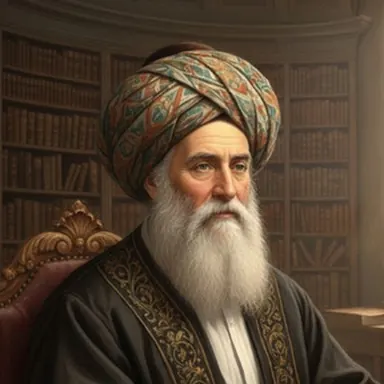
The Life Journey of the Rishon LeZion: Rabbi Yisrael Yaakov Algazi, of Blessed Memory
21 min read4,220 words
Summary
The life of Rabbi Yisrael Yaakov Algazi is not merely the story of an immense Torah scholar, but the fascinating journey of a leader whose life was a continuous sequence of action, wandering and self-sacrifice for the sake of the community and of the individual. His figure combines halakhic and kabbalistic depth with exceptional social sensitivity, turning personal crises and historical upheavals into a lever for spiritual growth. At every station of his life, Rabbi Algazi built a further storey of his personality, until he became one of the most influential leaders in the history of Sephardic Jewry and of the Jewish community in Jerusalem.
1. The Dawn of His Life: The Roots in Izmir (5440–5495 / 1680–1735)
Rabbi Yisrael Yaakov was born in Izmir, Turkey, to an illustrious family of sages. His family lineage, which includes his father R. Yom Tov and his grandfather R. Nissim Shlomo (author of "Shema Shlomo"), laid the spiritual foundation for his diligence. He had the privilege of studying with the pillars of the community: Rabbi Chaim ben Yaakov Abulafia (the grandfather of the founder of Tiberias) and Rabbi Yitzchak HaKohen Rapoport.
The Lesson for the Learner: How Is Greatness Built?
- Lineage as an obligation, not a privilege: The rabbi saw his family lineage as a call to personal toil. The combination of his lineage with his unceasing diligence in childhood is what laid the foundations of his famous humility.
- Responsibility for the heritage of the generations: The rabbi understood that preserving the Torah requires active work of collecting forgotten knowledge and making it accessible.
- Key event: While serving as head of the "Keter Torah" study hall in Izmir, he set out on a journey to the north of the Land of Israel. In Meron he acquired a rare manuscript from a passer-by. For two years he labored over correcting it and adding notes, and in the year 5491 he breathed life into the famous work "Chemdat Yamim." This act revealed his passion for rescuing pearls of Torah and making them accessible to the broad public.
- Transitional sentence: Despite his success in Turkey and his position at the center of the Torah world in Izmir, his heart was always drawn to the Holy Land, a longing that led him to leave the familiar and set out into the unknown.
2. Immigration and Acclimatization in the Land of Israel: A Leadership in the Making
Rabbi Algazi's arrival in the Land of Israel marked the beginning of the chapter of his official public leadership, through a series of key educational and spiritual positions.
| Year and Station | Main Activity |
|---|---|
| 5495 (1735): Safed | Immigration to the Land of Israel and initial settlement in the city of the kabbalists. |
| 5496 (1736): Jerusalem | Move to Jerusalem and joining the kabbalists' yeshiva "Beit El." |
| 5497 (1737): Medical crisis | A dangerous illness that led to a fundamental change in his name and in the course of his life. |
| 5509–5511 (1751): Leadership | Service as head of the "Neveh Shalom Brit Avraham" yeshiva and head of the "Beit El" yeshiva. |
- Coping and growth: In the year 5497 the rabbi fell gravely ill with an illness that endangered his life. In those moments he made a vow: if he recovered, he would compose a book of halakhic rules for the benefit of the public. Upon his recovery, the name "Yisrael" was added to his name as a protective remedy (segulah). The rabbi fulfilled his vow and published the book "Ar'a de-Rabbanan," which to this day constitutes an enduring treasure in the world of halakha.
- From his introduction to "Ar'a de-Rabbanan": "But since I vowed a great vow to the God of Israel when I fell ill here in Jerusalem... and I reached the gates of death in the year 5497, and the Lord chastened me sore, but He hath not given me over unto death. Then I said: wherewith shall I come before the Lord for all the goodness, and I set it in my heart to compose one work to bring merit to the many..."
- Insight for the learner: The illness was not perceived as a personal matter, but as an opportunity for a rebirth of public responsibility. The addition of the name "Yisrael" expresses the rabbi's transformation into a leader whose entire life is devoted to the whole of the people of Israel.
- Transitional sentence: The personal vow to disseminate Torah soon became a public duty, when the rabbi was called to sit on the seat of judgment and to lead all of Jerusalem.
3. The Rungs of Leadership in Jerusalem: Rabbinic Judgeship and Public Enactments
Rabbi Algazi served as a judge (dayan) in the leading rabbinic courts of the great men of the generation: Rabbi Eliezer Nachum, Rabbi Nissim Chaim Moshe Mizrachi and Rabbi Yitzchak Rapoport. He became known as the author of social enactments (takkanot) that constituted a veritable "repair of the world" (tikkun olam).
Main social enactments:
- 1.The bachelors' enactment: a prohibition on bachelors aged 20-60 living in the city. The aim was to preserve holiness and to encourage the building of families in the community.
- 2.Curbing luxury expenditure: In times of poverty and severe drought, the rabbi signed a restriction on luxuries. The need was to prevent envy and social competition, which harmed the weaker strata and widened the economic gaps.
- 3.Modesty enactments in time of drought: a spiritual and moral response to the climatic crisis, based on the conception that the community's conduct affects the abundance that descends upon the world.
- The Deed of Association (5514): The rabbi was part of the wondrous "fellowship" of the "Ahavat Shalom" yeshiva, together with giants such as Rabbi Shalom Sharabi (the Rashash) and the Chida. They secretly signed a deed in which they undertook to be "as one body" – a spiritual mutual responsibility in which each member helps the other in refining his character traits, out of the belief that the union of hearts would hasten the redemption.
- Transitional sentence: His sensitivity to social justice and mutual responsibility led him to the summit of the spiritual leadership of the Jewish community in the Land of Israel.
4. The Summit of Holiness: His Tenure as Rishon LeZion (5515–5516)
In the year 5515, after the passing of his teacher Rabbi Yitzchak Rapoport, Rabbi Yisrael Yaakov Algazi was chosen as head of the rabbinic court (av beit din) and crowned Rishon LeZion.
- His figure as a preacher – "Derush le-Albasha": The rabbi was known for his special sermons on behalf of orphans and the poor. He founded the "Derush le-Albasha" – sermons intended to raise funds for clothing needy children, a testimony to his deep social sensitivity.
- The connection with the audience: In eulogies for women, the rabbi used to employ the hymn "Eshet Chayil" (A Woman of Valor), linking each verse to a unique quality of the deceased, and thereby connecting halakha and Torah to the feelings of his listeners' hearts.
- Spiritual leadership: He combined deep study of Kabbalah in the "Beit El" yeshiva with daily concern for the security of the community, while praying constantly for the redemption of the Shekhinah (the Divine Presence).
Transitional sentence: Although his tenure lasted only about a year, his written legacy remained a pillar of fire for the generations to come.
5. The Legacy for the Generations: The Rabbi's "Library"
Rabbi Algazi's books are a comprehensive guide to all fields of Judaism – from halakha to homiletics (derash).
| Title of the Book | The Unique Contribution for the Learner |
|---|---|
| Ar'a de-Rabbanan | A foundational book defining rules for distinguishing between Torah laws and rabbinic laws. |
| Shalmei Tzibbur | The most comprehensive guide to the laws of prayer and the customs of the Land of Israel. |
| Emet le-Yaakov | A thorough clarification of the laws of writing a Torah scroll (which the Chida continued). |
| Kehillat Yaakov | A treasury of clarifications of methods and rules in the topics of the Talmud (the Shas). |
| Shema Yaakov / She'erit Yaakov | Deep and sweet sermons on the Torah that combine pilpul and mussar. |
Summary of his figure:
- Extreme humility: He always saw himself as a servant of the public, despite his immense greatness in the revealed and the hidden Torah.
- Practical leadership: A rare ability to enact ordinances that fitted precisely the needs of the time and place.
- A spiritual magnet: His personality drew to him the great men of the generation, who created around him a vibrant spiritual center.
6. The Close of the Journey: 10 Tammuz 5516
On 10 Tammuz 5516 (1756), Rabbi Yisrael Yaakov Algazi returned his soul to his Creator at the age of 76. He was buried on the Mount of Olives in the "Kahal Chasidim" plot, near his friend the Rashash. In later days his son and successor, the Maharit Algazi, who was also appointed Rishon LeZion and continued the glorious line of leadership, was buried beside him.
Concluding words: The story of Rabbi Algazi is a lesson for every learner: greatness is measured not only by knowledge, but by sensitivity to the orphan, by the repair of society and by breaking down the barriers between one person and another. Whoever studies his life draws inspiration from a combination of in-depth study, uncompromising social action and pure prayer for the sake of the community. May his memory be a blessing.
The Life Journey of the Rishon LeZion: Rabbi Yisrael Yaakov Algazi, of Blessed Memory
The life of Rabbi Yisrael Yaakov Algazi is not merely the story of an immense Torah scholar, but the fascinating journey of a leader whose life was a continuous sequence of action, wandering and self-sacrifice for the sake of the community and of the individual. His figure combines halakhic and kabbalistic depth with exceptional social sensitivity, turning personal crises and historical upheavals into a lever for spiritual growth. At every station of his life, Rabbi Algazi built a further storey of his personality, until he became one of the most influential leaders in the history of Sephardic Jewry and of the Jewish community in Jerusalem.
1. The Dawn of His Life: The Roots in Izmir (5440–5495 / 1680–1735)
Rabbi Yisrael Yaakov was born in Izmir, Turkey, to an illustrious family of sages. His family lineage, which includes his father R. Yom Tov and his grandfather R. Nissim Shlomo (author of "Shema Shlomo"), laid the spiritual foundation for his diligence. He had the privilege of studying with the pillars of the community: Rabbi Chaim ben Yaakov Abulafia (the grandfather of the founder of Tiberias) and Rabbi Yitzchak HaKohen Rapoport.
- The Lesson for the Learner: How Is Greatness Built?
- Lineage as an obligation, not a privilege: The rabbi saw his family lineage as a call to personal toil. The combination of his lineage with his unceasing diligence in childhood is what laid the foundations of his famous humility.
- Responsibility for the heritage of the generations: The rabbi understood that preserving the Torah requires active work of collecting forgotten knowledge and making it accessible.
- Key event: While serving as head of the "Keter Torah" study hall in Izmir, he set out on a journey to the north of the Land of Israel. In Meron he acquired a rare manuscript from a passer-by. For two years he labored over correcting it and adding notes, and in the year 5491 he breathed life into the famous work "Chemdat Yamim." This act revealed his passion for rescuing pearls of Torah and making them accessible to the broad public.
- Transitional sentence: Despite his success in Turkey and his position at the center of the Torah world in Izmir, his heart was always drawn to the Holy Land, a longing that led him to leave the familiar and set out into the unknown.
2. Immigration and Acclimatization in the Land of Israel: A Leadership in the Making
Rabbi Algazi's arrival in the Land of Israel marked the beginning of the chapter of his official public leadership, through a series of key educational and spiritual positions.
- Coping and growth: In the year 5497 the rabbi fell gravely ill with an illness that endangered his life. In those moments he made a vow: if he recovered, he would compose a book of halakhic rules for the benefit of the public. Upon his recovery, the name "Yisrael" was added to his name as a protective remedy (segulah). The rabbi fulfilled his vow and published the book "Ar'a de-Rabbanan," which to this day constitutes an enduring treasure in the world of halakha.
- From his introduction to "Ar'a de-Rabbanan": "But since I vowed a great vow to the God of Israel when I fell ill here in Jerusalem... and I reached the gates of death in the year 5497, and the Lord chastened me sore, but He hath not given me over unto death. Then I said: wherewith shall I come before the Lord for all the goodness, and I set it in my heart to compose one work to bring merit to the many..."
- Insight for the learner: The illness was not perceived as a personal matter, but as an opportunity for a rebirth of public responsibility. The addition of the name "Yisrael" expresses the rabbi's transformation into a leader whose entire life is devoted to the whole of the people of Israel.
- Transitional sentence: The personal vow to disseminate Torah soon became a public duty, when the rabbi was called to sit on the seat of judgment and to lead all of Jerusalem.
3. The Rungs of Leadership in Jerusalem: Rabbinic Judgeship and Public Enactments
Rabbi Algazi served as a judge (dayan) in the leading rabbinic courts of the great men of the generation: Rabbi Eliezer Nachum, Rabbi Nissim Chaim Moshe Mizrachi and Rabbi Yitzchak Rapoport. He became known as the author of social enactments (takkanot) that constituted a veritable "repair of the world" (tikkun olam).
Main social enactments:
- The bachelors' enactment: a prohibition on bachelors aged 20-60 living in the city. The aim was to preserve holiness and to encourage the building of families in the community.
- Curbing luxury expenditure: In times of poverty and severe drought, the rabbi signed a restriction on luxuries. The need was to prevent envy and social competition, which harmed the weaker strata and widened the economic gaps.
- Modesty enactments in time of drought: a spiritual and moral response to the climatic crisis, based on the conception that the community's conduct affects the abundance that descends upon the world.
- The Deed of Association (5514): The rabbi was part of the wondrous "fellowship" of the "Ahavat Shalom" yeshiva, together with giants such as Rabbi Shalom Sharabi (the Rashash) and the Chida. They secretly signed a deed in which they undertook to be "as one body" – a spiritual mutual responsibility in which each member helps the other in refining his character traits, out of the belief that the union of hearts would hasten the redemption.
- Transitional sentence: His sensitivity to social justice and mutual responsibility led him to the summit of the spiritual leadership of the Jewish community in the Land of Israel.
4. The Summit of Holiness: His Tenure as Rishon LeZion (5515–5516)
In the year 5515, after the passing of his teacher Rabbi Yitzchak Rapoport, Rabbi Yisrael Yaakov Algazi was chosen as head of the rabbinic court (av beit din) and crowned Rishon LeZion.
His figure as a preacher – "Derush le-Albasha": The rabbi was known for his special sermons on behalf of orphans and the poor. He founded the "Derush le-Albasha" – sermons intended to raise funds for clothing needy children, a testimony to his deep social sensitivity.
- The connection with the audience: In eulogies for women, the rabbi used to employ the hymn "Eshet Chayil" (A Woman of Valor), linking each verse to a unique quality of the deceased, and thereby connecting halakha and Torah to the feelings of his listeners' hearts.
- Spiritual leadership: He combined deep study of Kabbalah in the "Beit El" yeshiva with daily concern for the security of the community, while praying constantly for the redemption of the Shekhinah (the Divine Presence).
- Transitional sentence: Although his tenure lasted only about a year, his written legacy remained a pillar of fire for the generations to come.
5. The Legacy for the Generations: The Rabbi's "Library"
Rabbi Algazi's books are a comprehensive guide to all fields of Judaism – from halakha to homiletics (derash).
Summary of his figure:
- Extreme humility: He always saw himself as a servant of the public, despite his immense greatness in the revealed and the hidden Torah.
- Practical leadership: A rare ability to enact ordinances that fitted precisely the needs of the time and place.
- A spiritual magnet: His personality drew to him the great men of the generation, who created around him a vibrant spiritual center.
6. The Close of the Journey: 10 Tammuz 5516
On 10 Tammuz 5516 (1756), Rabbi Yisrael Yaakov Algazi returned his soul to his Creator at the age of 76. He was buried on the Mount of Olives in the "Kahal Chasidim" plot, near his friend the Rashash. In later days his son and successor, the Maharit Algazi, who was also appointed Rishon LeZion and continued the glorious line of leadership, was buried beside him.
Concluding words: The story of Rabbi Algazi is a lesson for every learner: greatness is measured not only by knowledge, but by sensitivity to the orphan, by the repair of society and by breaking down the barriers between one person and another. Whoever studies his life draws inspiration from a combination of in-depth study, uncompromising social action and pure prayer for the sake of the community. May his memory be a blessing.
Research Monograph: The Literary Enterprise and Public Leadership of Rabbi Yisrael Yaakov Algazi
1. Introduction: The Dynamics of the Torah World in the 18th Century
The 18th century in the Ottoman sphere was characterized by a deep structural transformation in the Sephardic centers of Torah. While Turkish Izmir established itself as a scholarly and bibliographic elite, Jerusalem began a process of renewed growth, aspiring to become a center combining settled halakha with a consolidated esoteric tradition. Between these focal points stands the figure of Maran HaChasid, Rabbi Yisrael Yaakov Algazi (5440, 1680 – 10 Tammuz 5516, 1756).
Rabbi Algazi served as a strategic connecting link; he imported the Turkish methodology and codificatory order into the consolidating dynamic of Jerusalem. His multidimensional figure united the worlds of the divine kabbalist, the systematic halakhic decisor and the resolute public leader. This study will analyze how this rare combination of personal biography and intellectual creativity laid the foundation of Sephardic halakhic authority for generations.
2. The Axis of Life and Spiritual Stations: From Izmir to Jerusalem
Rabbi Algazi grew up at the knees of the great men of the generation in Izmir, foremost among them Rabbi Chaim Abulafia (author of "Yosef Lekach") and Rabbi Yitzchak HaKohen Rapoport (author of "Batei Kehunah"). His immigration to the Land of Israel was not a one-time act but a process; although he immigrated in the year 5495 (1735) or thereabouts, certain sources point to a short stay in Safed before he established his final residence in Jerusalem in the year 5501 (1741). Immediately upon his arrival in the Holy City, he joined the rabbinic court of Rabbi Eliezer Nachum (author of "Chazon Nachum"), thereby strengthening the link between the traditions of Adrianople and Izmir and the local leadership.
Below are the main stations of his life set against his public roles:
Analysis of the methodology: Rabbi Algazi's geographical moves enabled him to import a "Turkish export" of order and conceptual organization into the Jerusalem sphere. While the local community struggled with drought and economic crises, the rabbi led a codificatory approach that brought a remedy to the "chaos" of local customs.
3. A Phenomenology of Editing: The Riddle of "Chemdat Yamim"
One of the complex bibliographic enterprises of his career is his bringing to print of the book "Chemdat Yamim" (Izmir, 5491). Maran HaChasid did not act merely as a technical editor; according to his own testimony, he acquired the manuscript from a passer-by during a visit to Meron and labored for two full years on its correction, its editing and the addition of his notes.
Critical assessment: The question of the author's identity (Rabbi Binyamin HaLevi versus the attribution of the book to Rabbi Algazi himself) remains disputed. Nevertheless, the rabbi's critical contribution lay in the "seal of approval" he gave the book. Despite the covert Sabbateanism and the worrying hints found in the text, it was Rabbi Algazi's spiritual authority that enabled the book to enter the pantheon of Sephardic mussar and Kabbalah. His complete mastery of the esoteric sources in "Chemdat Yamim" served as a spiritual foundation that also seeped into his rulings in "Shalmei Tzibbur," where he seeks to infuse inner intentions into the halakhic act.
4. Codification and Halakhic Systematization: "Shalmei Tzibbur" and "Ar'a de-Rabbanan"
Rabbi Algazi's halakhic work is characterized by exceptional systematization:
- Ar'a de-Rabbanan (Constantinople, 1745): This book of rules was written as the result of a vow the rabbi made when he fell mortally ill in the year 5497 (1737) in Jerusalem. Upon his recovery, he distilled the foundations of the laws (Torah law versus rabbinic law) in an analytical alphabetical order. The methodological innovation here is the move from case-by-case ruling to the analysis of halakhic "prototypes."
- Shalmei Tzibbur (Salonika, 1790): This monumental work deals with the laws of prayer and with customs. In contrast to the abstract approach of "Ar'a de-Rabbanan," here the rabbi acts as a practical decisor who shapes the Sephardic prayer book and the world of Jerusalem custom, integrating the dry law with the depth of Kabbalah.
The combination of the analytical approach and practical application made his works enduring treasures, which to this day constitute a foundation for every Sephardic decisor who seeks to understand the foundations of custom and of the rules.
5. The Rhetoric of the Preacher: "She'erit Yaakov" and Spiritual Leadership
Rabbi Algazi's rhetorical power found expression in his homiletical works, foremost among them "She'erit Yaakov" (Salonika, 1794). The rabbi developed the concept of "Derush le-Albasha" – sermons of mussar and pilpul intended to raise resources for clothing orphans and the poor, thereby harnessing scholarship for the benefit of public charity.
Case study: Sephardic pilpul. In the Torah portion of Bamidbar, in a discussion of the sin of the Golden Calf, Maran HaChasid presents a brilliant theological analysis that demonstrates the method of pilpul: Moses our teacher tried to defend Israel by arguing that they had sinned "a great sin," which alludes to sexual transgression (gilui arayot). The surprising argument is that the sin of sexual transgression removed from Israel the "image of God." Consequently, when they afterwards worshipped the calf, these were not "sons of God" rebelling against their Creator, but human beings who had lost their high spiritual rank, and thereby the gravity of the rebellion was reduced. This use of the concepts of the "image" and of "arayot" served the rabbi's aims in strengthening the modesty enactments in the community.
6. The Leader at the Gate: The Enactments of Jerusalem and the Office of Rishon LeZion
Rabbi Algazi's public leadership was put to the test in periods of personal and public hardship. In 1745 he suffered a severe personal tragedy when his daughter, Simcha, perished in a fire. Despite this, he continued to lead the community, and in the year 5515 he was appointed Rishon LeZion.
The enterprise of enactments and authority:
- Social enactments: He signed the "bachelors' enactment" (1749), which forbids bachelors aged 20-60 to live in Jerusalem, as well as strict modesty enactments and the curbing of luxury expenditure in time of drought.
- Deed of association (1754): The rabbi was a key figure in the "Ahavat Shalom" fellowship of kabbalists. The "deed" was not merely an administrative contract, but a spiritual covenant of a mystical elite aspiring to bring the redemption through mutual spiritual responsibility and cleaving together as "one body."
His authority as Rishon LeZion served him as a tool for stabilizing the Jerusalem community and shaping it as a holy and organized society.
7. Conclusion: Bibliographic Legacy and Long-Term Influence
The legacy of Rabbi Yisrael Yaakov Algazi took shape through his disciples and successors. The deepest bibliographic connection is recorded in the case of his disciple, the Chida, who named his work "Le-David Emet" as a homage to, and a direct continuation of, his teacher's work "Emet le-Yaakov." This is a clear expression of the continuity of the tradition of learning and of the disciple's admiration for his teacher.
His contribution can be distilled into three axes:
- Methodological organization: turning the rules of halakha into a systematic and analytical structure in "Ar'a de-Rabbanan."
- Establishing custom: casting fixed foundations for the world of Jerusalem custom in "Shalmei Tzibbur."
- Holistic integration: incorporating kabbalistic mussar (from "Chemdat Yamim") into halakhic and homiletical practice.
Maran HaChasid Rabbi Algazi remains in the pantheon of the sages of Israel as an architect of order, authority and holiness; a figure who succeeded in connecting scholarly Izmir with mystical Jerusalem, and in setting the Torah of Sepharad firmly in place for the generations to come.