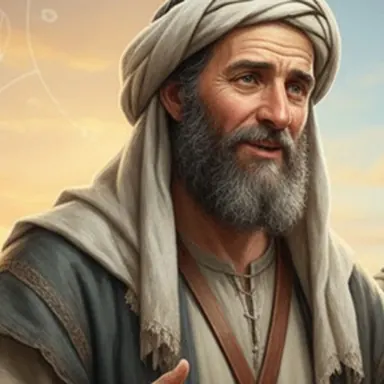
Rabbah bar bar Chana: A Comprehensive Study in Halakha, Aggadah and Jewish Thought
14 min read2,788 words
Summary
This survey presents the multidimensional figure of Rabbah bar bar Chana, one of the sages of the third generation of the Amoraim, who served as a cultural and methodological bridge between the Torah centers in Babylonia and in the Land of Israel. The text sketches his portrait not only as a halakhic decisor who insisted on precision and tradition, but also as a pious man who acted beyond the letter of the law and as a creator with a deep historical consciousness, reflected in his famous aggadot. The article stresses that his fantastic journeys at sea and in the desert are not mere exaggerations, but complex allegorical parables that seek to reveal spiritual secrets about the fate of the Jewish people in exile and the faith in its future redemption. Through a combination of academic research and traditional interpretation, it is made clear that his work represents a unique synthesis of geographical realism and mystical vision, which deeply influenced the world of thought and of Hasidism throughout the generations.
The Work and Torah Teaching of Rabbah bar bar Chana: A Comprehensive Study in Halakha, Aggadah and Jewish Thought
Rabbah bar bar Chana stands as one of the most fascinating and enigmatic figures in the history of the Amoraic period. His figure serves as a cultural and spiritual crossroads at which the world of Babylonia and the world of the Land of Israel meet, pure halakha with fantastic aggadah, and geographical realism with mystical visions. He was active in the third generation of the Amoraim, a period in which the great Torah centers took shape and the patterns of study that would guide the Jewish people for generations were formed.[1, 2, 3] His Torah work goes beyond the narrow context of transmitting traditions; it expresses a harmonious conception that seeks to reveal the secret hidden within manifest reality, whether in meticulous details of halakha or in descriptions of extraordinary journeys at sea and in the desert.[4, 5, 6]
His Life, Lineage and Growth in the Study Halls
The roots of Rabbah bar bar Chana lie deep in the Torah aristocracy of Babylonia. He was the son of Bar Chana, who was the brother of the famous Rabbi Chiya, and was thus a cousin of the Amora Rav, the founder of the yeshiva of Sura.[1, 3, 5] This lineage is not merely a biographical detail; it provides the context for his central standing in the Talmudic discourse and for his authority to transmit family and communal traditions.[3] His full name, Rabbah bar bar Chana, testifies to the Talmud's wish to distinguish between him and his father or grandfather, Chana, who was also one of the sages of the earlier generations.[1]
Rabbah bar bar Chana's Torah training was marked by great mobility, a trait that earned him the epithet "Nechuta": one of the sages who went down from Babylonia to the Land of Israel and returned to Babylonia, serving as emissaries of Torah who bridged the halakhic and methodological gaps between the centers.[4, 5] In his youth he went up from Babylonia to the Land of Israel and was accepted into the study hall of Rabbi Yochanan in Tiberias, the greatest of the sages of the Land of Israel at that time. There he became a principal disciple who was meticulous about the precise wording of his teacher.[4, 5] After the death of Rabbi Yochanan he continued his studies with Rabbi Elazar ben Pedat, and absorbed the Torah of the Land of Israel with its subtleties and its aggadic style.[2, 4]
The political pressure and persecutions on the part of the Sasanian Empire in Babylonia deeply affected the course of his life. The sources note that these persecutions moved him to consider a permanent return to the Land of Israel, a step that expresses the constant tension in which he lived between his love for the land of the forefathers and his responsibility for fortifying the Torah in Babylonia.[5, 7] In the end he returned to Babylonia and was active in the yeshivot of Pumbedita and Sura, where he brought with him the fragrance of the Land of Israel and the methods of study of Rabbi Yochanan.[5]
His Halakhic Work and Method of Study
Although the name of Rabbah bar bar Chana is often associated with the world of aggadah, an analysis of the sugyot of the Talmud reveals a figure of a systematic and profound man of halakha. His halakhic contribution falls into three main channels: the transmission of traditions from his teachers in the Land of Israel, testimony about concrete reality that affects halakhic ruling, and discussion of the values of study and of character traits.[3]
Transmitting the Torah of Rabbi Yochanan to Babylonia
Rabbah bar bar Chana served as a mouthpiece for the Torah of Rabbi Yochanan in Babylonia. He transmitted in his teacher's name fundamental rules in the interpretation of the Mishnah, such as the identification of an anonymous mishnah as the view of Rabbi Akiva.[3] His return to Babylonia did not pass without friction; his encounter with Rav Yehuda, the head of the yeshiva of Pumbedita, represents the clash between the different traditions. The Talmud relates that Rav Yehuda had to use his authority to bring Rabbah bar bar Chana to his lecture, but after the latter came and transmitted a lenient tradition in the name of Shmuel (through Rav Chana of Baghdad) concerning setting a broken bone on Shabbat, Rav Yehuda acknowledged the importance of the presence of a sage who brings with him unknown versions and traditions.[5]
Halakha from Sight and Identification
One of the unique characteristics of Rabbah bar bar Chana is his use of the expression "lediddi chazi li" ("I saw it with my own eyes") to decide questions of identification and reality.[5] He testified to the identification of biblical plants, such as the kikayon of Jonah the prophet, and supplied precise geographical data on the distance between Jerusalem and Jericho and on the effect of the scent of the Temple incense on the region.[3, 5] These testimonies are not merely descriptive; they serve as a basis for understanding the boundaries of the Land of Israel and the halakhic measures of distance.[3]
In the field of study, Rabbah bar bar Chana emphasized the importance of dialogue and shared study. His exposition of the verse "Is not My word like fire?" serves to this day as a foundation for the importance of the chavruta: he argued that just as fire needs more than one log in order to kindle, so the Torah does not endure in one who studies alone, since the intellectual friction between the learners is what creates the light of wisdom.[3, 5, 8]
Practices of Piety and Righteousness
Alongside his greatness in Torah, Rabbah bar bar Chana was described as a chasid, a man who demands of himself conduct beyond the letter of the law.[9] A prominent example of this appears in Tractate Bava Metzia, where porters were carrying a barrel of wine belonging to him and broke it. Rabbah bar bar Chana took their cloaks as a pledge, but Rav instructed him to return the cloaks and to pay them their wages, on the basis of the verse "That you may walk in the way of good men and keep the paths of the righteous." Rabbah bar bar Chana accepted the judgment with love, which illustrates the preference for the value of kindness and compassion toward the poor over the realization of a dry legal right.[4]
His personal integrity also found expression in his relations with his colleagues. When Rav bought land that Rabbah bar bar Chana had asked him to buy for him, because of local conditions that made Rav more respected in the eyes of the sellers, Rabbah bar bar Chana did regard this as "a swindler's practice," but did not refrain from continuing the halakhic discussion, examining the boundaries between agency and personal interest.[4]
The Aggadot of Rabbah bar bar Chana: A Journey into the Depths of the Soul and the Nation
The crowning glory of his written legacy is found in the chapter "HaMocher et HaSefinah" (The One Who Sells the Ship) in Tractate Bava Batra. There, in a rare literary sequence, fifteen aggadot are brought that describe his journeys.[10, 11] These aggadot, which usually open with the expression "lediddi chazi li" or "zimna chada hava ka azlinan" ("once we were traveling"), deal with giant creatures, menacing sea waves and encounters with historical figures.[2, 6, 7]
The attitude toward these aggadot over the generations has ranged between wonder and deep allegorical analysis. The sages of the Talmud themselves were aware of the "exaggerated" character of the stories, but stressed that "even the ordinary conversation of Torah scholars requires study," and that behind the physical descriptions great spiritual secrets are hidden.[12, 13]
Sea and Desert as Spaces of Spiritual Trial
The aggadot fall into two main arenas: the sea and the desert. The sea, according to the Maharsha and Rav Kook, represents the exile: a place of instability, storms and political upheavals.[11, 14] The desert, by contrast, represents the space before civilization, a place where one can encounter the most fundamental biblical truths.[6]
One of the formative stories is the story of the fish on whose back sand had accumulated and grass had grown (aggadah 7). The sailors, who thought it was dry land, went down to bake and cook, but the moment the fish grew hot it turned over.[3, 10, 14] The Maharsha sees in this a parable for the Jews of the exile who try to build themselves a "home" within foreign lands. The illusory prosperity of the exile is like the fish's back: the moment reality heats up, the "dry land" turns over and the Jews find themselves in danger of drowning.[14]
In the desert, Rabbah bar bar Chana is accompanied by the "Tayya'a," an Ishmaelite merchant with sharp senses who is able to smell the proximity of water or of holy places.[7, 14] This figure represents Israel's connection to the wisdom of nature and to raw reality, through which lofty spiritual attainments can be reached.[6] Through the Tayya'a, Rabbah bar bar Chana sees the dead of the wilderness: giants lying as if asleep, their faces shining and their knees raised like mountains.[10, 14] This vision comes to teach that the generation of the wilderness, the generation that received the Torah, did not truly perish; its vitality is preserved in the soul of the nation, and it is destined to awaken.[11]
A Synthesis of Forces: The Frog, the Serpent and the Raven
The fifth aggadah is considered one of the most complex to interpret. Rabbah bar bar Chana describes a frog the size of a town that was swallowed by a serpent, which in turn was swallowed by a raven that flew up and perched on a tree.[10, 13, 15] Rav Kook in "Ein Ayah" sees in this story a historical and spiritual process [16]:
- The frog: represents the pure power of song and prayer, the simple aspiration toward the good.[16]
- The serpent: represents the great forces of matter and wickedness that seek to suppress the spirit.[16]
- The raven: represents "cruel" but necessary forces in history, which are meant to subdue wickedness (the serpent) but may themselves be dangerous.[16]
- The tree: represents the "Tree of Life," the all-embracing essence of Israel, which is able to bear on its branches all these opposites and to rectify them.[16]
Rav Kook's central message is faith in the power of the tree: the capacity of the Torah and the nation to contain within them even the elements that seem to contradict them, and to lead them all toward a good and redemptive end.[16]
Academic Research: Rabbah bar bar Chana and the Sasanian Context
Modern research seeks to understand the aggadot of Rabbah bar bar Chana within the cultural context of Babylonia in the Sasanian period. According to scholars such as Reuven Kiperwasser, Rabbah bar bar Chana served as a cultural mediator not only between the Land of Israel and Babylonia, but also between the Jewish world and the surrounding Persian culture.[6, 17]
The descriptions of the giant creatures (such as the re'em that blocks the Jordan or the bird whose head is in the heavens) are very similar to motifs in the Iranian mythology of that time.[6] However, Rabbah bar bar Chana does not merely "copy" stories; he gives them a conceptual "conversion." In his hands the mythological monster becomes a vehicle for conveying a moral or religious message. For example, the fat geese dripping with fat (aggadah 10) are not merely a wonder of nature; Rabbi Elazar uses them to warn Israel that "Israel will in the future have to give account for them," a hint that material abundance in exile comes at the expense of spirituality and of the hope for redemption.[10, 14]
Influences on Hasidism and Jewish Thought
The legacy of Rabbah bar bar Chana seeped deep into the world of Hasidism, and especially into the teaching of Rabbi Nachman of Breslov. Rabbi Nachman saw these aggadot as sacred "tales" (sippurei ma'asiyot) containing the deepest secrets of the Torah.[3] In his commentary in "Likutei Moharan," he explains that Rabbah bar bar Chana saw the tzaddik hidden within the sand of reality. For Rabbi Nachman, Rabbah bar bar Chana's experience in the desert and the wilderness is the model for the search for the Divine in the most remote places of the soul.[19]
The Hasidic and national interpretation (such as that of Rav Kook) turned Rabbah bar bar Chana from an eccentric figure who tells "exaggerations" into a figure of a seer and prophet, who uses the language of imagination to bypass the limitations of the human intellect and to touch eternal truths.[11, 20]
Summary and Conclusions
The work of Rabbah bar bar Chana represents one of the creative peaks of the Amoraic period. He did not merely transmit halakhot, but shaped a new religious language that combines the halakhic precision of Rabbi Yochanan with the creative imagination of the sages of Babylonia.[4, 5, 6]
Several central insights emerge from this study:
- Aggadah as a pedagogical tool: Rabbah bar bar Chana used extravagant descriptions to shake the learner and to lead him to seek meaning beyond the plain sense.[4, 12]
- A bridge between centers: as a "Nechuta," he played a critical role in synchronizing the traditions of the Land of Israel and Babylonia, and thereby contributed to the uniformity of the Babylonian Talmud.[4, 5]
- Historical consciousness: through his encounters with the dead of the wilderness and the congregation of Korach, he reminded his generation (and the generations to come) of the continuity of the Jewish tradition and of the truth of the Torah, even in situations of exile and persecution.[10, 11]
- Practical piety: his personal practices, which combine extreme integrity with compassion and forbearance, are a display of a Torah scholar whose inner self matches his outer self, and they serve as an inspiration for the paths of ethics and piety to this day.[4, 9]
Rabbah bar bar Chana remains an exemplary figure of a Torah scholar who is not afraid to sail into the unknown, both at sea and in thought, out of a firm faith that in every wave and every desert one can find the traces of the Creator.[11, 14] His Torah teaching, which combines speculative depth with a wealth of images, continues to be fertile ground for interpretation, research and spiritual growth in each and every generation.
Sources20
- 1.רבה בר בר חנה – חב"דפדיה, chabadpedia.co.il/index.php/רבה_בר_בר_חנה
- 2.רבה בר בר חנה - ויקיפדיה, he.wikipedia.org/wiki/רבה_בר_בר_חנה
- 3.רבה בר בר חנה – ויקישיבה, yeshiva.org.il/wiki/index.php/רבה_בר_בר_חנה
- 4.רבה בר בר חנה | מקורות מתוך ספריית ספריא, sefaria.org.il/topics/rabbah-bar-bar-chanah
- 5.אנציקלופדיה יהודית דעת - רבה בר בר חנא ;, daat.ac.il/encyclopedia/value.asp?id1=1483
- 6.The Desert as an Inventarium in - Brill, brill.com/view/journals/dsd/31/3/article-p355_6.xml
- 7.Rabbah bar bar Hana - Wikipedia, en.wikipedia.org/wiki/Rabbah_bar_bar_Hana
- 8.אין התורה נקנית אלא בחבורה - לב לדעת, levladaat.org/article/אין-התורה-נקנית-אלא-בחבורה/
- 9.אנעים זמירות | ספריא, sefaria.org/sheets/217270
- 10.ביאור:אגדות רבה בר בר חנה - ויקיטקסט, he.wikisource.org/wiki/ביאור:אגדות_רבה_בר_בר_חנה
- 11.The Legends of Rabbah Bar Bar Hannah - Kodesh Press, kodeshpress.com/product/the-legends-of-rabbah-bar-bar-hannah/
- 12.בבא בתרא דף ע"ג, אגדות רבה בר בר חנה – מבוא וביאור, daf-yomi.com/Data/UploadedFiles/DY_Item/80177-sFile.pdf
- 13.אגדות רבה בר בר חנה / הסיפור החמישי, daat.ac.il/daat/toshba/rababach/story5.htm
- 14.מסע לסוף העולם; מבט חדש על אגדות רבה בר בר חנה, daf-yomi.com/data/Uploadedfiles/DY_Item/14560-sFile.pdf
- 15.ביאור שטיינזלץ על בבא בתרא ע״ג ב:ג | ספריית ספריא, sefaria.org.il/Steinsaltz_on_Bava_Batra.73b.3
- 16.צפרדע, תנין ועורב - אגדות רבה בר בר חנה ה' - ישיבת ההסדר בני-עקיבא מעלות, yesmalot.co.il/7007/
- 17.Rabba bar Bar Channa's Voyages - The Hebrew University of Jerusalem, cris.huji.ac.il/en/publications/מסעות-של-רבה-בר-בר-חנה/
- 18.הסיפור רבה בר בר חנה וחיות הענק - אגדה - בית סיפורי העם היהודי, agadah.org.il/story/רבה-בר-בר-חנה-וחיות-הענק/
- 19.Rabbah Bar Bar Chanah | Texts from the Sefaria Library, sefaria.org/topics/rabbah-bar-bar-chanah
- 20.וְנֶעֶלְמָה מֵעֵינֵי כָל חָי / אגדות רבה בר בר חנה, daat.ac.il/daat/toshba/rababach/1.htm