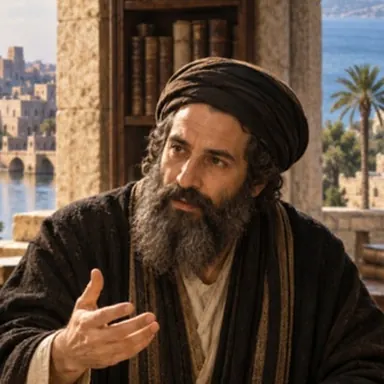
The Work and Torah Teaching of Rabbi Achai bar Pappa: A Biographical, Historical and Halakhic Study
16 min read3,289 words
Summary
This article surveys the figure of the Amora Rabbi Achai bar Pappa, grappling with the chronological difficulty of identifying him as the son of the famous Rav Pappa and setting out historical alternatives that assign him to an earlier period. The text describes the geographical mobility of the sage, who was active in Babylonia and later in the Land of Israel, where he maintained scholarly ties with the greatest sages of the generation and influenced the shaping of diverse halakhot in the areas of the Sabbath, the festivals and medicine. A central focus of the study is devoted to analyzing his legal approach, which emphasizes the integrity of the judicial process and the prevention of bias, alongside a clarification of his place within the liturgical tradition of the "sons of Rav Pappa" recited at the conclusion of tractates. In sum, the source seeks to present a comprehensive portrait of a sage who bridged the Torah centers and left a mark of family cohesion and halakhic precision on generations of learners.
Establishing the Historical and Chronological Identity of Rabbi Achai bar Pappa
Reconstructing the figure of the Amora Rabbi Achai bar Pappa (who appears in the sources of the Sages also as Rabbi Acha bar Pappa and Rabbi Acha bar Pappi, and in Babylonia as Rav Acha Arikha) poses a complex methodological challenge to scholars of the history of the Tannaim and Amoraim [cite: 1, 2, 3, 4]. The source of the difficulty lies in the duplication of names and in the chronological gaps reflected in the Talmudic literature and in the later liturgical traditions [cite: 5, 6, 7]. The best-known popular and liturgical tradition links Rabbi Achai to the group of ten "sons of Rav Pappa" mentioned in the text of the "Hadran" prayer at the conclusion of every tractate of the Babylonian Talmud [cite: 5, 7, 8]. This mention ostensibly makes him the biological son of Rav Pappa, the famous head of the yeshiva of Naresh of the fifth generation of Babylonian Amoraim, who died at the end of the fourth century CE [cite: 7].
However, cross-checking the chronological data reveals a clear historical contradiction [cite: 6]. Rabbi Achai bar Pappa is documented in the Babylonian Talmud and the Jerusalem Talmud as having been active, asking questions and debating directly with the greatest sages of the third generation of Amoraim, among them Rabbi Abbahu, Rabbi Zeira and Rabbi Ami [cite: 4, 9, 10, 11]. His belonging to this generation cannot be reconciled with his being the son of Rav Pappa of Naresh, since the generational gap between them spans decades [cite: 6].
To resolve this contradiction, two main interpretive approaches have taken shape in historical and Talmudic scholarship:
The first approach, based on the words of the author of "Sefer Yuchasin" and of "Seder HaDorot," attributes Rabbi Achai and his brothers not to Rav Pappa of Naresh but to an earlier Amora called "Rav Pappa Sava" (the Elder) [cite: 1, 6]. This sage was active in Babylonia in the second generation of Amoraim and was the foremost disciple of Rav [cite: 1]. This attribution fully solves the chronological problem and places Rabbi Achai in the third generation, as a contemporary of the sages of the Land of Israel mentioned with him [cite: 4, 6, 9].
The second approach, cited in the name of Rav Hai Gaon and in "Sefer HaEshkol," proposes a compilatory solution [cite: 1, 5]. In their view, the ten sons of Rav Pappa mentioned at the conclusion of a tractate are not biological brothers and are not the sons of the same father [cite: 1, 5]. It is a compilation of different sages from different periods, all of whom had a father named Pappa [cite: 1, 5]. These were grouped together in the later tradition because of the virtue of their shared name, which helps against forgetfulness [cite: 1, 5].
A further textual difficulty arising from the Talmudic discussions stems from the phonetic and graphic similarity between the names "Chiya" and "Acha" or "Achai" [cite: 2]. The Maharash Algazi and the Maharsha pointed out that in various places in the Talmud, such as Tractate Sanhedrin 34b, the written reading "Rabbi Chiya bar Pappa" is corrupt and should read "Rabbi Acha bar Pappa" [cite: 4, 12, 13, 14]. This identification is supported by the harmonious structure of the sugyot and by the traditional mnemonic signs given for Rabbi Achai's halakhot in that chapter [cite: 2, 4, 15].
Torah Geography and Movement between the Centers: From Babylonia to the Land of Israel
Rabbi Achai bar Pappa represents the figure of a sage who moved between the two principal Torah centers of his time, absorbing the study traditions of Babylonian Jewry and integrating them into the academies of the Land of Israel [cite: 4]. Rabbi Achai's early Torah education took place in Babylonia, where he studied under Rav Huna, head of the academy of Sura and leader of the second and third generations in Babylonia [cite: 4]. Under his Babylonian name, "Rav Acha Arikha," he is documented as transmitting traditions directly from Rav Huna, for example on the time of the blessing over tefillin in Tractate Menachot and in a discussion of the order of the blessings in Tractate Berakhot [cite: 4, 16].
At a later stage of his life Rabbi Achai emigrated to the Land of Israel and joined the local study houses, where he became a disputant and a disciple-colleague of the foremost disciples of Rabbi Yochanan [cite: 4]. This geographical move is reflected in a series of halakhic discussions that appear in the Jerusalem Talmud and in the Midrashim [cite: 4, 9, 17, 18]. His standing in the Land of Israel was so well established that a case is recorded in which Rabbi Achai went up specially in order to release the vow of the head of the academy of Tiberias, Rabbi Ami [cite: 4, 11].
To illustrate the scope of his geographical activity and his scholarly ties, the following map of Rabbi Achai bar Pappa's scholarly contacts in the two centers is presented:
| Interlocutor | Geographical center | Main topic of discussion | Talmudic source |
|---|---|---|---|
| Rav Huna | Babylonia (Sura) | Transmission of traditions and the custom of the blessing over tefillin [cite: 4, 16] | Menachot 35b, Berakhot 33a [cite: 4] |
| Rabbi Abbahu | Land of Israel (Caesarea) | Vinegar remedies on the Sabbath and reconciling contradictions in Scripture [cite: 4, 10, 19] | Shabbat 111a [cite: 4, 10, 19] |
| Rabbi Zeira (Ze'ora) | Land of Israel | The order of putting on tefillin, the blowing of the shofar, and the status of petzua dakka [cite: 4, 9, 18, 20, 21] | Yerushalmi Ma'aser Sheni 5:5, Rosh Hashanah 4:8, Yevamot 8:2 [cite: 4, 9, 18, 20, 21] |
| Rabbi Ami | Land of Israel (Tiberias) | Release of vows and personal halakhic practices [cite: 4, 11] | Yerushalmi Nedarim 10:10, Ketubot 6:3 [cite: 4, 11] |
| Rabbi Abba | Land of Israel | Laws of tying, distinguishing between kinds of ropes on the Sabbath [cite: 4, 22] | Shabbat 113b [cite: 4, 22] |
His Halakhic Teaching: An Analysis of Selected Sugyot
The halakhic teaching of Rabbi Achai bar Pappa is characterized by a meticulous approach that seeks to resolve contradictions between early Tannaitic sources (baraitot and mishnayot) by means of fine conceptual distinctions [cite: 10, 20, 22]. His rulings extend over diverse areas, from the laws of the forbidden and the permitted to the laws of the Sabbath and the festivals [cite: 10, 20, 21].
The Status of Petzua Dakka and Eligibility to Enter the Congregation
In a complex halakhic discussion that appears in the Yerushalmi and is cited by the decisors, Rabbi Achai was called upon to resolve a contradiction between two baraitot dealing with the laws of castration and petzua dakka (one whose organs are crushed) [cite: 20]. One baraita rules that a man whose organs were injured is permitted to enter the congregation, while the second baraita disqualifies him [cite: 20]. Rabbi Achai resolves the contradiction by creating a conceptual distinction between the mechanisms of injury:
The permitting baraita deals with a case of injury that is "entirely by the hand of Heaven," that is, a natural illness or a boil that developed on its own [cite: 20]. In this case, since the defect was not caused by deliberate human intervention, the man is not disqualified from entering the congregation according to all opinions [cite: 20].
The disqualifying baraita deals with a complex case in which the illness did begin "by the hand of Heaven," but later on a physician intervened and cut off the organ for medical purposes [cite: 20]. According to the first Tanna (tanna kamma) of that baraita, the physician's actual intervention transfers the status of the defect to "by the hand of man," and therefore the man is disqualified [cite: 20].
Rabbi Achai clarifies that in the view of Rabbi Yishmael son of Rabbi Yochanan ben Beroka, in this case too the man is fit, since the physician's action is not considered a deliberate injury but merely the removal of diseased flesh [cite: 20]. This distinction of Rabbi Achai displays a profound understanding of the boundaries between the power of nature ("by the hand of Heaven") and man's technological-medical action [cite: 20].
Laws of Tying on the Sabbath and the Distinction between Ropes
In Tractate Shabbat the Talmud discusses the law of a person who wishes to tie a cow to the feeding trough on the Sabbath [cite: 22]. Rabbi Abba transmitted in the name of Rav that it is permitted to bring a rope from the house and tie the cow with it [cite: 22]. Rabbi Achai bar Pappa (Rav Acha Arikha) challenges this ruling on the basis of an explicit baraita that forbids bringing a rope from the house for such tying, and distinguishes between two kinds of ropes:
"Chavla de-alma" (an ordinary rope), intended for permanent tying, is forbidden for use on the Sabbath, since tying it may be considered a "permanent knot," which is forbidden by Torah law or by rabbinic enactment [cite: 22].
"Chavla de-gardi" (a weavers' rope), which is a temporary and flexible rope intended to be untied frequently [cite: 22]. With this rope it was permitted to tie the cow to the trough, since its functional character prevents it from becoming a permanent knot [cite: 22].
This distinction was adopted by the great decisors, among them the Rif and Maimonides (Rambam), who incorporated Rabbi Achai's principles into the definition of the essence of the labor of tying on the Sabbath [cite: 22].
Laws of Healing on the Sabbath: The Use of Vinegar
In Tractate Shabbat Rabbi Achai raises a difficulty before Rabbi Abbahu concerning the contradiction between the Mishnah and the verse in the Book of Proverbs [cite: 4, 10, 19, 23]. The Mishnah rules that one who suffers from his teeth may not sip vinegar on the Sabbath, on the assumption that vinegar is an effective remedy for toothache, and it is forbidden to apply a remedy on the Sabbath [cite: 10, 19, 23]. On the other hand, the verse in Proverbs describes vinegar as harmful to the teeth: "As vinegar to the teeth, and as smoke to the eyes" [cite: 4, 10, 19, 23]. Rabbi Achai offers two distinctions to resolve the difficulty:
- The kind of liquid: the verse speaks of "kiyuha de-feiri" (sour fruit vinegar, or wine that has not fully fermented), which always harms the teeth [cite: 10, 19, 23]. The Mishnah, by contrast, deals with genuine wine vinegar, which has healing properties [cite: 10, 19, 23].
- The state of the wound: wine vinegar acts differentially; if there is a sore or a wound in the mouth, the vinegar heals it, and therefore it is forbidden to sip it on the Sabbath [cite: 10, 19, 23]. However, where there is no wound, the vinegar only weakens and loosens the teeth, and in such a case it is considered harmful and is not forbidden on account of healing [cite: 10, 19, 23].
Establishing the Order of the Shofar Blasts on Rosh Hashanah
The Jerusalem Talmud cites Rabbi Achai's testimony before Rabbi Zeira concerning the order of the blasts on Rosh Hashanah: "It is different, for the commandment of the day is in Musaf" [cite: 9, 21]. This ruling explains why the shofar is blown specifically during the Musaf prayer and not during Shacharit, despite the rule that "the zealous hasten to perform commandments" [cite: 21].
The historical background of this ruling lies in decrees of persecution and in situations of war that occurred in the Land of Israel [cite: 17]. When they used to blow the shofar during Shacharit, the authorities (the Romans, or Arab-Saracen forces that invaded the land) would suspect that the blast was a signal for the start of a military rebellion, and would attack the worshippers [cite: 17]. Moving the blasts to the Musaf prayer, after the congregation had already sat for many hours in the synagogue for the Torah reading and prayer, proved to the authorities that this was a peaceful religious activity and not a military mobilization [cite: 17, 21]. Rabbi Achai gave this ruling a firm halakhic basis, anchoring the obligation of the blowing in the midst of the day [cite: 21].
The Judicial System and Rules of Procedure: "Mishpat, Ma'aneh, Mattah"
In the fourth chapter of Tractate Sanhedrin there appears a cluster of three fundamental halakhot transmitted by Rabbi Achai bar Pappa, dealing with the rules of criminal and civil procedure [cite: 2, 4, 15]. These halakhot, grouped under the mnemonic sign "Mishpat, Ma'aneh, Mattah" ("judgment, answering, inclining"), reflect a legal conception that seeks to ensure the integrity of the judicial process and the prevention of miscarriages of justice [cite: 2, 4, 15].
To compare the various legal mechanisms that appear in these halakhot, the following analysis is presented:
| Legal sign | Scriptural source expounded | Procedural principle and psychological mechanism | Practical consequence in the judicial process |
|---|---|---|---|
| Mishpat (judgment) | "And let them judge the people at all times" [cite: 2, 5] | The obligation to hold hearings during daytime hours to ensure clarity of thought and the best examination of evidence [cite: 2, 5]. | Monetary cases are opened and concluded only by day, and are not heard at night [cite: 2, 5]. |
| Ma'aneh (answering) | "You shall not answer in a dispute (riv)" (expounded as if read "rav," the great one) [cite: 2, 5, 24] | Preventing cognitive biases, conformity and fear of causing distress to the senior judge [cite: 5, 24]. | In capital cases the round of the judges' votes begins with the junior and younger judges seated at the side [cite: 5, 24]. |
| Mattah (inclining) | "You shall not pervert the judgment of your poor in his cause" [cite: 2, 25] | A legal distinction between the status of a human being and that of animals in criminal proceedings [cite: 2, 25]. | An ox that is to be stoned is tried before twenty-three judges, but the lenient procedural rules of "you shall not pervert" do not fully apply to it [cite: 2, 25]. |
The halakha of "Ma'aneh" reflects a remarkably modern awareness of psychological biases within a panel of judges [cite: 24]. Rabbi Achai recognized that a declaration of the position of "the Rav" (the head of the court or the greatest sage on the panel) at the start of the deliberation could paralyze the independent judgment of the younger judges [cite: 24]. The mechanism of "beginning from the side" was intended to create a protected space in which every judge can express his true position without fear, a principle that is a cornerstone of the judicial search for truth [cite: 24].
Family and Literary Cohesion: The Tradition of the "Sons of Rav Pappa" and the Liturgy
The most distinctive aspect of the work of Rabbi Achai bar Pappa is his place within the shared network of transmission of the ten (or eleven) sons of Rav Pappa Sava [cite: 1]. In Tractate Bava Kamma a unique phenomenon is documented in which the brothers transmit halakhic traditions in each other's names, with their names interchanging in various structures of "and some say" (ve-amrei lah) [cite: 1, 26]. In order to remember the groups of traditions and the order of their transmitters, the sages of the Gemara established mnemonic signs, the most famous of which is "ChaBaD BeYaCh BaChaN" [cite: 1].
This sign served as a cognitive tool for preserving the integrity of the family traditions and preventing corruptions in the names of the transmitting brothers [cite: 1]. It underscores the conception that in the study hall of the sons of Rav Pappa there was no rigid hierarchy; all the brothers were equal in their Torah standing, and the interchange of their names in the chain of transmission attests to a deep unity of ideas and of study [cite: 1].
This family cohesion went beyond the bounds of the historical study hall and became a central liturgical element in the literature of the Geonim and the Rishonim [cite: 5, 7, 8]. Rav Hai Gaon was the first to record the custom of mentioning the names of the ten sons of Rav Pappa at the conclusion of a tractate [cite: 7]. The custom spread to all the communities of Israel and was adopted by the Rema in the Shulchan Arukh [cite: 1, 8]. Mentioning the names of the brothers (Chanina, Rami, Nachman, Achai, Abba Mari, Rafram, Rakhish, Surchav, Adda, Daru) is regarded in kabbalistic and customary literature as a segulah for retaining Torah in memory and preventing the forgetting of one's learning, out of the belief that the combined power of the brothers, who lived and toiled together in Torah, helps learners to follow in their path [cite: 1, 5].
Sources26
- 1.בני רב פפא - "סוד" (בבא קמא פ ע"ב) - פורטל הדף היומי, daf-yomi.com/DYItemDetails.aspx?itemId=34426
- 2.ףדה לע xtq - Portal Daf Yomi, files.daf-yomi.com/files/bookfiles/daf-al-hadaf-sanhedrin/daf-al-hadaf-sanhedrin.pdf
- 3.Seder HaDorot, Tanaim and Amoraim 303 | Sefaria Library, sefaria.org/Seder_HaDorot,_Tanaim_and_Amoraim.303
- 4.תולדות תנאים ואמוראים/א/רב אחא אריכא - ויקיטקסט, he.wikisource.org/wiki/תולדות_תנאים_ואמוראים/א/רב_אחא_אריכא
- 5.רב פפא - אהלי צדיקים, zadikim.com/places/רב-פפא/
- 6.רבי אבא בר פפא - ויקיפדיה, he.wikipedia.org/wiki/רבי_אבא_בר_פפא
- 7.רב פפא - ויקיפדיה, he.wikipedia.org/wiki/רב_פפא
- 8.סיום מסכת – ויקישיבה, yeshiva.org.il/wiki/index.php/סיום_מסכת
- 9.Rosh HaShanah 30 – ראש השנה ל – Yerushalmi Gadol – AlHaTorah, yerushalmi.alhatorah.org/Rosh HaShanah/30
- 10.Talmud (Rodkinson)/Book 1/Chapter 14 - Wikisource, the free online library, en.wikisource.org/wiki/Talmud_(Rodkinson)/Book_1/Chapter_14
- 11.תולדות תנאים ואמוראים/א/ר' אמי (בר נתן) - ויקיטקסט, he.wikisource.org/wiki/תולדות_תנאים_ואמוראים/א/ר'_אמי_(בר_נתן)
- 12.סדר הדורות, סדר תנאים ואמוראים א׳ר״מ | ספריית ספריא, sefaria.org.il/Seder_HaDorot,_Tanaim_and_Amoraim.1240
- 13.Seder HaDorot, Tanaim and Amoraim 1240 | The Sefaria Library, sefaria.org/Seder_HaDorot,_Tanaim_and_Amoraim.1240
- 14.תולדות תנאים ואמוראים/ח/ר' חייא בר פפא - ויקיטקסט, he.wikisource.org/wiki/תולדות_תנאים_ואמוראים/ח/ר'_חייא_בר_פפא
- 15.תולדות תנאים ואמוראים/סימני הש"ס - ויקיטקסט, he.wikisource.org/wiki/תולדות_תנאים_ואמוראים/סימני_הש"ס
- 16.חברותא - מנחות | בלי הערות - תורת אמת, toratemetfreeware.com/online/f_02436.html
- 17.Ohr LaYesharim on Jerusalem Talmud Rosh Hashanah 4:4:4 | The Sefaria Library, sefaria.org/Ohr_LaYesharim_on_Jerusalem_Talmud_Rosh_Hashanah.4.4.4
- 18.שולחן ערוך, אורח חיים כ״ו: דין מי שאין לו אלא תפלה אחת. ובו ב"ס: - עם 21 מפרשים | אשובה, ashoova.co.il/ask/שולחן-ערוך-אורח-חיים-כ״ו-דין-מי-שאין-לו/
- 19.חומץ לשיניים – תלמוד בבלי: שבת קיא ע״א, ד–ו | שטייגן, app.shtaygen.ai/gold/SHB_A04_O03_S14_M01
- 20.שו"ת חתם סופר, אבן העזר א׳:י״ט | האוסף של ספריא, sefaria.org.il/Responsa_Chatam_Sofer,_Even_HaEzer.1.19
- 21.בחינות חדשות לבעית מעמדו ומעשיו של רבן יוחנן בן זכאי לאחר החורבן - תולדוט - מטח, historynet.cet.ac.il/pages/item.asp?item=14311&items=1
- 22.פרק שביעי - מלאכת קושר - ישיבת ההסדר בני-עקיבא מעלות, yesmalot.co.il/6571/
- 23.ביאור שטיינזלץ על שבת קי״א א:ג | האוסף של ספריא, sefaria.org.il/Steinsaltz_on_Shabbat.111a.3
- 24.אחרי רבים להטות - מחלקי המים, mayim.org.il/?parasha=1116-2
- 25.מסכת סנהדרין - תצוגה משולבת - תורת אמת, toratemetfreeware.com/online/f_01006.html
- 26.ביאור שטיינזלץ על בבא קמא פ׳ ב:ח | האוסף של ספריא, sefaria.org.il/Steinsaltz_on_Bava_Kamma.80b.8