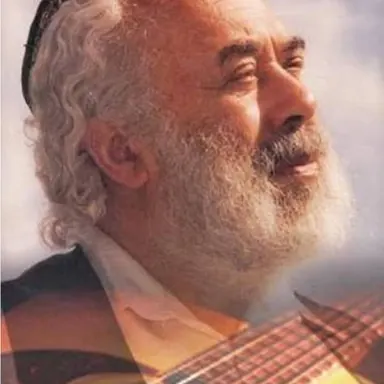
Rabbi Shlomo Carlebach: An In-Depth Monographic Analysis
13 min read2,635 words
Summary
This expert report analyzes the multidimensional figure of Rabbi Shlomo Carlebach, examining his transition from the conservative Lithuanian world to a revolutionary Hasidic approach focused on bringing the distant near (kiruv rechokim). The text highlights how Carlebach used music as a theological text and stories as a tool for connecting souls, and thereby became an architect of Jewish spiritual renewal in the 20th century. The article surveys his written Torah teaching, which anchors his teaching in authoritative rabbinic literature, alongside his decisive influence on the world of prayer and modern liturgy through the "Shul" community in New York. The aim of the survey is to present his work as a unique bridge between Orthodox halakha and emotional spontaneity, offering a path of unconditional love and joy as a means of inner and national redemption.
- Expert Report: The Work and Torah Teaching of Rabbi Shlomo Carlebach: An In-Depth Monographic Analysis
- Part A: Historical and Biographical Context: The Background to the Figure's Emergence
- A.1. Introduction: Rabbi Shlomo Carlebach, the Spiritual Architect of Modern Outreach
The figure of Rabbi Shlomo Carlebach (1925–1994) represents a unique crossroads in modern Jewish thought. He was not merely a gifted musician or a charismatic preacher, but a postmodern theologian who realized his teaching through melody and story, translating profound Hasidic principles into a language accessible to the disconnected Jewish public of the 20th century. An analysis of his figure therefore requires a two-directional treatment: of both his wide-ranging practical work and his Torah teaching, which gained recognition as authoritative rabbinic literature after it was institutionalized in writing.[1, 2]
The insistence of his followers and of those who cherish his memory on calling him "Rabbi Shlomo Carlebach" [3] is not merely a matter of personal honor; it asserts that his work was an integral part of the rabbinic-homiletic tradition, and not just a kind of entertainment or secular art. The central thesis that emerges from this analysis is that Carlebach used music as a theological text, and as a practical-messianic tool intended to hasten the reunification of the souls of Israel toward the Redemption.
A.2. Roots: Between the Lithuanian World and Revolutionary Hasidism
Rabbi Carlebach's roots lie deep in German Orthodox Judaism, known for its halakhic precision and its respect for the tradition of the "Yaavetz" (Jacob Emden). His early education steered him into the world of the Lithuanian yeshivot (such as the Lakewood yeshiva), which emphasized in-depth talmudic pilpul. However, this path did not fully answer his search for spiritual warmth and inner energy.
The dramatic turning point in his life was his encounter with Chabad Hasidism. This transition provided him with an ideological foundation for understanding the condition of the Jewish nation after the Holocaust, and anchored his activity in an urgent messianic conception. Joining the beit midrash of the Lubavitcher Rebbe gave Carlebach not only a subject (bringing the distant near) but a spiritual engine and a clear strategy: going down to the people. The move from institutional, "dry" Torah study to the fervor of Hasidic outreach became critical, since it enabled him to see the outside world, and above all disconnected Jews, not merely as fields of action but as potential partners in the Redemption.
A.3. The Decade of Change: Carlebach, the Rebbe and the Counterculture (the 1960s)
In the 1960s, Rabbi Carlebach became a key figure in the wave of outreach activity. His relationship with the Lubavitcher Rebbe was one of deep esteem and admiration.[3] For a certain period he acted as the Rebbe's emissary, adopting the Chabad method of outreach, based on affection and closeness to every Jew without preconditions. The Rebbe even sat with a young man whom Carlebach had brought to him in the middle of the night from a subway station, and the young man became a baal teshuva (returnee to observance), an example that illustrates the method of outreach based on exceptional personal effort.[3]
Over the years, however, Rabbi Carlebach chose a more independent path. Whereas Chabad focused on building institutions (Chabad Houses) and on strict halakhic conformity as the basis for outreach, Carlebach's path was more personal and emotional. He continued to visit the Rebbe's beit midrash and to take part in farbrengens (hitva'aduyot) [3], but chose to use music as his main tool, thereby allowing outreach "at the expense of" halakhic reservations or social conditions.[3] The choice to focus on personal and musical influence gave him immediate access to the Jewish soul, an access that at times went beyond the demands of institutional Orthodoxy. This can be seen as a methodological gap, with Carlebach placing absolute emphasis on emotion and the heart as a first and vital stage, out of the belief that the Jewish soul would complete the path by itself.
Part B: Rabbi Carlebach's Work: Music, Community and Outreach
B.1. The Niggun Revolution: Analyzing Music as a Theological Text
Rabbi Shlomo Carlebach's revolution is deeply rooted in his use of music. He coined the term "soul songs" (Soul songs) [4], a term that is not merely an artistic label but carries a deep theological meaning. According to the Hasidic doctrine of the soul, the soul contains different levels, the highest of which is the "yechidah of the soul," the inner and inextinguishable Jewish point. The Carlebach niggun (melody) was intended to address this point directly.
A stylistic analysis of his melodies reveals how music became the ultimate tool for carrying out the mission of outreach. His melodies are characterized by relative simplicity (minimalism), by repeated use of melodic motifs, and by an emphasis on a melody that is not harmonically complex. This style made broad and spontaneous audience participation possible. Beyond that, the niggun served as a tool for breaking down barriers: a wordless melody is universal, and even a melody with relatively simple words (such as "Oy Rebbe" [4]) allowed Carlebach to reach disconnected Jews who found it hard to cope with the barriers of rabbinic language, halakhic custom or complex Torah knowledge. Music, then, was not just art but a theological-messianic tool that allowed immediate emotional access to Jewish identity, bypassing the barriers of knowledge and halakha.
B.2. Bringing the Distant Near: A Philosophy of Seeing the Good
At the basis of his work stood a philosophy of unconditional love (Ahavat Yisrael) and of seeing the good in every person. Rabbi Carlebach was known for his tendency to emphasize the margins and the "simple Jew." A clear example of this is his use of extraordinary stories, such as the story of "the Rebbe of the thieves."[4] The use of these stories of marginal tzaddikim was intended to convey a message of hope and rehabilitation, stressing the fact that even in the most remote places and among the most distant people, the pure Jewish soul is to be found.
He worked systematically to bring diverse audiences near: hippies, students and Jews searching for spiritual meaning. Carlebach's path, as he drew it to a great extent from the path of the Lubavitcher Rebbe [3], found expression in an attitude of infinite affection and closeness. He granted legitimacy to personal and spontaneous spiritual searching, in contrast to other methods of outreach that stressed first of all the acceptance of the yoke of the commandments and of halakha. His love for every Jew, even if in the eyes of his critics it came "at the expense of" a certain halakhic conformity [3], was the practical application of his teaching.
B.3. The Community Laboratory: The Carlebach Shul
Alongside his activity as a "spiritual wanderer" and a worldwide preacher, Rabbi Carlebach held the spiritual leadership of an established community in New York, the Carlebach Shul.[5, 6] This permanent leadership provided an important and stable base, and made possible a mechanism of spiritual preservation and restraint. The community served as a laboratory and a platform for proving that the loose and energetic message of "hippie Hasidism" could be translated into an Orthodox reality that is halakhically sustainable, as the precise Shabbat times published by the synagogue attest.[5]
The Shul applied Carlebach's teaching liturgically: its prayers were usually long, with extensive use of music and melodies, and an emphasis on spontaneous communal interaction. This is a critical mechanism: for Rabbi Carlebach's influence not to remain a passing experience, an Orthodox institution was needed to serve as a halakhic rein on his wild outreach energies, and thereby to allow those who had returned to observance through him to integrate into a framework of traditional Jewish life. The synagogue on 79th Street [6] was thus the means of turning a teaching of sermons into a teaching for life.
Part C: His Torah Teaching: The Theological Principle in His Writings (Textual Analysis)
C.1. His Written Teaching: A Source of Torah Authority
Rabbi Carlebach was known chiefly for his spontaneous sermons, but the existence of written collections of his words of Torah is an essential layer for understanding his teaching.[1] The publication of books such as "Divrei Torah ve-Sippurim" (Words of Torah and Stories) and the series "Lev HaShamayim" (The Heart of Heaven) [1, 2] changed Carlebach's status: he turned from a performer (Performer) into a writer (Author) and an official source of Torah authority.
This is especially significant in light of the fact that the written publications, which are sometimes described as a "meticulous, high-quality edition" [2], attest to the need to legitimize homiletic Torah. Carlebach's sermons, which combine stories of the margins, folk humor and weeping, became through literature a legitimate and even central genre of Torah interpretation, in contrast to the Lithuanian emphasis on pilpul alone. This is an effort to make the (Hasidic) teaching of the hidden accessible and practical, so that the story becomes the center of Torah interpretation.
C.2. The Doctrine of the Soul and the Redemption: The Core of the Theological Teaching
The core of Rabbi Carlebach's theological teaching revolves around two main concepts: the soul and joy.
The emphasis on the soul: the soul (Soul) is the true, unmediated meeting point between the Jew and the Holy One, blessed be He. All of his teaching, and above all his "soul songs" [4], are intended to uncover the soul and restore it to its place. Carlebach saw disconnection from the soul as the root of all religious and social problems. His work therefore focused on removing the outer barriers so as to allow the soul to speak.
Joy as repair (tikkun) and redemption: the concept of joy in Carlebach is a spiritual tool for coping with exile and doubt. It is not passive joy but an active service of God intended to remove the husks (kelipot). Joy is, in effect, a prelude to the Redemption; only through the awakening of inner joy can the Redemption take place. The book series "Lev HaShamayim," which focuses on the festivals of Israel such as the festivals of Tishrei and Passover [1], analyzes these times as moments of spiritual peak that contain within them the secrets of redemption and repentance. For example, Passover is analyzed as a time of freedom (Geulah) that is not only political but an inner exodus from the slavery of the soul.[1]
C.3. The Carlebachian Interpretation of the Sources
Rabbi Carlebach's sermons are characterized by an approach entirely different from most classical rabbinic literature. His interpretation of the Written Torah always emphasizes the emotional and narrative aspect, with minimal use of formal halakhic discussion, creating instead broad thematic connections. The homiletic story becomes a tool for understanding difficult or complex verses.
When Carlebach tells a story about "the Rebbe of the thieves" [4], he is not merely presenting a Hasidic anecdote; he is illustrating in practice the theological principle of bringing the distant near, in which even a person regarded as marginal can have a high spiritual standing. In his method there is no difference between these stories and the formal sermons on the weekly Torah portion; all of them are intended to connect the listener or reader to basic, primary faith.
A content analysis of Rabbi Carlebach's books attests to the liturgical and thematic scope of his teaching:
- Content Analysis of Rabbi Carlebach's Books
- Part D: Summary and Legacy: Influence, Criticism and the Next Generation
- D.1. The Influence on the World of Jewish Prayer
Rabbi Carlebach's influence on Jewish liturgy is one of his most decisive contributions. "Nusach Carlebach" (the Carlebach style) became a familiar term in Modern Orthodox communities, Religious-Zionist communities and non-Orthodox communities around the world. This style changed the role of the cantor: from a skilled and distant performer of a text he became an emotional leader of the congregation, whose role is to stir hearts and to prevent prayer from becoming a lifeless text.
This change, clearly expressed in his synagogue in New York [5], brought about a dramatic change in the way prayer is perceived. Instead of standing statically before the written text, prayer became a dynamic and participatory experience. The communal legacy of the Carlebach Shul [6] continues to serve as a model for Carlebach minyanim around the world, which carry on the tradition of combining Hasidic fervor with Orthodox order.
D.2. Carlebach in the Mirror of Criticism and Radicalization
Rabbi Carlebach's unique path was not free of criticism. More conservative streams in Judaism, both Lithuanian and classical Hasidic, saw his path as an assault on the "wall of religion" and on the boundaries of tradition. The criticism focused on the lack of full halakhic conformity that he demanded of his diverse audiences, and on the unrestrained use of popular music influenced by the outside culture.
Academic discussion requires an examination of the complexity of the figure. Rabbi Carlebach's absolute focus on love and on the soul as the main means of outreach [3] created a charismatic figure of enormous attraction. Yet that same charisma also lay at the root of the controversies that surrounded him. The human charisma that served his work of bringing the distant near so wonderfully also broke through certain social boundaries. In-depth analysis shows that the tension between the (halakhic) institution and the (personal) charisma is a tension built into his method of outreach, and it accompanies his legacy to this day.
Despite the criticism, his legacy continues to expand. The further dissemination of his work is carried out today through modern media: video recordings of his sermons are presented "in HD quality" [4], and his books of words of Torah are sold online as a "meticulous, high-quality edition."[2] This preservation attests to the resilience of his teaching and to the desire to continue to recognize it as part of the spiritual assets of the people of Israel.
D.3. Conclusions: Rabbi Shlomo Carlebach, Artist of the Soul and Preacher of the Redemption
Rabbi Shlomo Carlebach acted as a bridge-builder: he bridged the classical Hasidic world and the modern counterculture, halakhic precision (from which he came) and emotional spontaneity. His decisive contribution is the reshaping of Jewish outreach in the 20th century and the creation of an emotional-musical platform for Orthodox religious expression.
He taught that melody is a way of understanding the Torah, and that it is possible to reach the Jewish heart by addressing the soul directly, without the need for many intermediaries. His written teaching, which was institutionalized and published [1], establishes him as the preacher of the Redemption, who uses story and melody to hasten the spiritual repair of the individual and of the community. Rabbi Carlebach shaped the face of outreach as we know it today: a path of love, joy and devotion that combines tradition with innovation.
Sources6
- 1.ספרי ר' שלמה קרליבך - זול ספר, zolsefer.co.il/171616/קרליבך
- 2.ספרי הרב קרליבך - תורה שלמה, tora-shlema.co.il/product-category/ספרי-הרב-קרליבך/
- 3.שיחה:שלמה קרליבך - ויקיפדיה, he.wikipedia.org/wiki/שיחה%3Aשלמה_קרליבך
- 4.The Krakow Nigun - Rabbi Shlomo Carlebach - ניגון קראקוב - רבי שלמה קרליבך - YouTube, youtube.com/watch?v=uPbNv4g-kRM
- 5.History – The Carlebach Shul, thecarlebachshul.org/history/
- 6.The Carlebach Shul - Manhattan Sideways, sideways.nyc/discover/2FYvO8aC4eKqqa63Qs0I9l/the-carlebach-shul