Skip to contentGo to the list of all sages
Ozar Chachamim
  1. /
  2. Rishonim
  3. /
  4. The Rivash (Rabbi Yitzchak bar Sheshet)
עבENРУ
Rishonim1326–1408Spain → Algiers

The Rivash (Rabbi Yitzchak bar Sheshet)

Halakha / leadership

  • The responsa of the Rivash
  • Conversos
  • Rebuilding a community
  • The riots of 1391
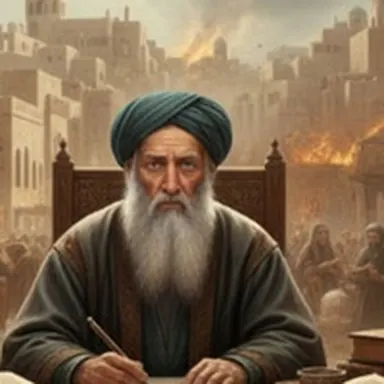
Illustration: The Rivash (Rabbi Yitzchak bar Sheshet)
Illustration from the podcast episode
Read the research
· 24 min
Listen
Watch the video
📜Sefaria
⬡Show in the network
🌌Show in the Tower of Generations
🔗The path to another sage

Listen to the episode

Podcast episode · The Rivash (Rabbi Yitzchak bar Sheshet)

Open in Spotify
The player loads from Spotify only when you click.
Open in Spotify

Watch the video

The Rivash (Rabbi Yitzchak bar Sheshet)

Open on YouTube (opens in a new tab)

Rivash: Torah, Philosophy, and Communal Authority

The video loads from YouTube only when you click.
Open on YouTube (opens in a new tab)

Core Concept

Rulings with compassion: the status of forced converts, women's rights, the power of the community; keeping the boundaries of faith against philosophy as a "danger".

Biography

Student of the Ran and supreme halakhic authority. He fled to Algiers as an elderly refugee and led thousands of refugees; his responsa are a "human diary" of a community's rebuilding.

Writings on Sefaria

The writings of Isaac ben Sheshet Perfet can be read on Sefaria, a free library of Jewish texts. A title opens the text itself.

  • 📖Teshuvot HaRivash(opens in a new tab)
📜All writings of Isaac ben Sheshet Perfet on Sefaria(opens in a new tab)

Content from Sefaria (sefaria.org) and Wikimedia projects, non-profit projects.

Migration

SpainAlgiers

Related sages3

Teachers1

  • The Ran (Rabbenu Nissim of Girona)Rishonim

Students1

  • The Rashbatz (Rabbi Shimon ben Tzemach Duran)Acharonim

Influenced1

The Road to Sinai

48 stations on the road
  1. MosesGeneration 1
  2. 43 more generations
  3. Rav Shmuel ben Chofni GaonThe Epistle of Rav Sherira Gaon
  4. 1 more sage
  5. The Ran14th century
  6. The Rivash1326–1408

includes 2 inspiration linksThe generations follow the Rambam’s introduction to the Mishneh Torah. A dashed line is inspiration, not direct transmission.

✦Fly it in the TowerOpen the full path

Full research

2 documents·4,750 words· 24 min read

Contents24 min read

  1. The Work, Teaching and Leadership of Rabbeinu Yitzchak bar Sheshet (the Rivash): A Comprehensive Study of His Figure as a Link Between Spain and North Africa
    • Historical and Geopolitical Background: The Decline of Spain and the Rise of the Maghreb
    • Geographical and Biographical Milestones in the Life of the Rivash
    • The Organizational Structure of the Court in Algiers under the Rivash
    • Comparison Table: Thought versus Halakha in the Teaching of the Rivash
    • Sources
  2. Rabbeinu Yitzchak bar Sheshet (the Rivash)
    • Historical and Geopolitical Background: The Decline of Spain and the Rise of the Maghreb
    • Geographical and Biographical Milestones in the Life of the Rivash
    • The Organizational Structure of the Court in Algiers under the Rivash
    • Comparison Table: Thought versus Halakha in the Teaching of the Rivash
    • Sources
Contents· 30 sections
  1. The Work, Teaching and Leadership of Rabbeinu Yitzchak bar Sheshet (the Rivash): A Comprehensive Study of His Figure as a Link Between Spain and North Africa
    • Historical and Geopolitical Background: The Decline of Spain and the Rise of the Maghreb
    • Geographical and Biographical Milestones in the Life of the Rivash
    • His Spiritual Growth in Barcelona: The School of the Ran
    • His Rabbinic Service in Spain: Saragossa and Valencia
    • The Crisis of 5151: Destruction and Revival
    • His Leadership in Algiers: Royal Authority and the Controversy over the Appointment
    • The Organizational Structure of the Court in Algiers under the Rivash
    • His Halakhic Teaching: "Responsa of the Rivash" as a Pillar of Instruction
    • Analysis of Central Topics in the Responsa of the Rivash
    • His Attitude to Philosophy and to External Wisdoms: Protective Conservatism
    • His Attitude to Kabbalah: Between Tradition and Caution
    • Comparison Table: Thought versus Halakha in the Teaching of the Rivash
    • Social Ethics and Love of Israel
    • His Death and His Legacy for the Generations
    • Sources
  2. Rabbeinu Yitzchak bar Sheshet (the Rivash)
    • Historical and Geopolitical Background: The Decline of Spain and the Rise of the Maghreb
    • Geographical and Biographical Milestones in the Life of the Rivash
    • His Spiritual Growth in Barcelona: The School of the Ran
    • His Rabbinic Service in Spain: Saragossa and Valencia
    • The Crisis of 5151: Destruction and Revival
    • His Leadership in Algiers: Royal Authority and the Controversy over the Appointment
    • The Organizational Structure of the Court in Algiers under the Rivash
    • His Halakhic Teaching: "Responsa of the Rivash" as a Pillar of Instruction
    • Analysis of Central Topics in the Responsa of the Rivash
    • His Attitude to Philosophy and to External Wisdoms: Protective Conservatism
    • His Attitude to Kabbalah: Between Tradition and Caution
    • Comparison Table: Thought versus Halakha in the Teaching of the Rivash
    • Social Ethics and Love of Israel
    • His Death and His Legacy for the Generations
    • Sources

Document 1/2

The Work, Teaching and Leadership of Rabbeinu Yitzchak bar Sheshet (the Rivash): A Comprehensive Study of His Figure as a Link Between Spain and North Africa

12 min read·2,385 words

Summary

The text surveys the influential figure of Rabbi Yitzchak bar Sheshet (the Rivash), presenting him as a decisive historical link that connected the Jewish center in Spain with the communities of North Africa. Throughout the article the stations of his life are examined, from his studies in the school of the Ran to his leadership of the Algiers community after the riots of 5151, with an emphasis on his absolute halakhic authority and his decisive contribution to the shaping of the "Shulchan Arukh." The author analyzes his complex worldview, which includes an intellectual conservatism wary of philosophy and free inquiry alongside a deep social and moral sensitivity toward the public and the anusim (forced converts). Ultimately, the source seeks to illuminate the work of the Rivash not only as a brilliant halakhic decisor, but as a spiritual and organizational leader who succeeded in rebuilding the world of Torah out of destruction and exile.

The figure of Rabbi Yitzchak bar Sheshet Berfet, known by the acronym Rivash, stands as one of the central and most significant milestones in the annals of the people of Israel in general, and in the history of halakha and rabbinic leadership in particular. He was active in a stormy and dramatic period, the 14th and 15th centuries, a period that marked the beginning of the decline of the splendid Jewish center in Spain and the shift of the spiritual center of gravity to North Africa.[1, 2] The Rivash was not only a gifted halakhic decisor whose responsa form a foundation for the Shulchan Arukh, but also a public leader who wisely steered his community through riots, migration and the rebuilding of social and legal institutions in a foreign land.[3, 4]

Historical and Geopolitical Background: The Decline of Spain and the Rise of the Maghreb

To understand the force of the Rivash's work, one must examine the historical ground on which he acted. The 14th century in Spain (mainly in the kingdoms of Aragon and Castile) was marked by growing tension between the Christian and the Jewish populations. The Golden Age, in which the Jews had enjoyed a relative cultural and economic flowering, gave way to religious hostility and economic decrees. The Rivash was born in the year 5086 (1326) in Valencia, in the midst of this process.[1]

The geopolitical space of those days was complex. Spain was divided into Christian kingdoms struggling against the last Muslim enclaves, while across the Mediterranean, in North Africa, Muslim dynasties ruled (such as the Zayyanid dynasty in Algiers), which at times offered refuge to Jews fleeing the persecutions in Europe. The Rivash, in the journey of his life, embodied this transition: from the old centers of Barcelona and Saragossa to the renewed community in Algiers.[3, 4]

Geographical and Biographical Milestones in the Life of the Rivash

His Spiritual Growth in Barcelona: The School of the Ran

The Rivash was privileged to be educated in one of the most important Torah centers of that time, Barcelona. His principal teacher was Rabbeinu Nissim Gerondi (the Ran), who was regarded as the greatest of the generation and the most influential commentator on the Rif and the Talmud in that period.[1] The influence of the Ran on the Rivash was total; it was not limited to the transmission of knowledge, but instilled in him a method of study that combines sharp logical analysis with close adherence to the text and to the tradition of Spanish halakhic decision-making.

Besides the Ran, the Rivash studied with Rabbi Peretz ha-Kohen and Rabbi Chasdai Crescas (the Elder). This combination created in the Rivash a broad Torah foundation that combined classical yeshiva scholarship with philosophical understanding (although he later distanced himself from it) and skill in communal leadership.[1] Already in his youth his name became known far and wide, and halakhic questions began to stream to his door from distant communities, a testimony to his early authority.[1, 4]

His Rabbinic Service in Spain: Saragossa and Valencia

Before his emigration to North Africa, the Rivash served as rabbi in central communities in Spain. In Saragossa and Valencia he had to deal not only with purely halakhic questions, but with managing communal life under political and economic pressures. In Valencia, where he served from 1385, the Rivash experienced six years of fruitful activity in which his influence spread "to a far-off land."[4]

This period was marked by a flowering of his halakhic writing. The Rivash became the central address for questions on matters of marriage, monetary law and communal arrangements. In his responsa from that period his social sensitivity is evident alongside a firm stand on the principles of halakha. He saw the rabbi not only as a decisor, but as a "guardian of truth" who stands in the breach to put up fences in a changing world.[5]

The Crisis of 5151: Destruction and Revival

The year 5151 (1391) is engraved in the Jewish national memory as a year of destruction. Waves of riots swept over Spain, and many communities were destroyed or forced to convert. The Rivash, who witnessed the terrible sights, was forced to flee. His flight to North Africa was not only the saving of a personal life, but an act of rescue of the entire "Torah of Spain."

On arriving in Algiers at the age of 65, the Rivash found a dismal communal reality. The local Jews (the "Musta'arabim") lived under a heavy burden of taxes and had almost given up their legal autonomy in favor of Muslim courts.[4] The arrival of the Rivash, together with other refugees such as the Rashbatz, changed the face of the community completely. They brought with them halakhic knowledge, organizational order and Jewish pride, which enabled the Algiers community to become the leading Torah center in the Maghreb.[4]

His Leadership in Algiers: Royal Authority and the Controversy over the Appointment

One of the fascinating and unique aspects of the Rivash's work in Algiers was the official appointment he received from the royal authorities. The king of Algeria recognized his authority and determined that without the Rivash no person would have permission to judge in the city.[1] This appointment gave the Rivash governmental power that enabled him to enforce the laws of the Torah and to establish Jewish legal autonomy.

However, the appointment did not pass without internal opposition. Rabbi Shimon ben Tzemach Duran (the Rashbatz), who was a dayan (judge) in the Rivash's court, raised a controversy around the question of the legitimacy of a rabbinic appointment on behalf of the foreign government. The controversy touched on fundamental questions of independence versus governmental patronage. Despite the differences of opinion, the Rashbatz held the Rivash in enormous esteem, and many times deferred to him and accepted his opinion as "the greatest of the generation."[6]

The Organizational Structure of the Court in Algiers under the Rivash

His Halakhic Teaching: "Responsa of the Rivash" as a Pillar of Instruction

The very heart of the Rivash's Torah work lies in his book of responsa. The Responsa of the Rivash is not merely a collection of incidental answers, but a systematic work covering every area of life. Hundreds of his rulings became direct sources for the Shulchan Arukh of Rabbi Yosef Karo.[3, 7] Maran the Beit Yosef testifies that his teacher, Rabbi Yaakov Berab, relied on the Rivash more than on all the other decisors, which shows his enormous specific weight in the world of halakhic decision-making.[1, 7]

The Rivash's method of decision-making is characterized by clarity and profound reasoning. He did not content himself with writing "dry laws," but took care to bring the source of the law from the Gemara, to trace its development in the words of the Rishonim, and finally to decide in a brief and comprehensive manner.[8] This approach made his book an essential aid for dayanim and rabbis throughout the generations.

Analysis of Central Topics in the Responsa of the Rivash

  • Vows and oaths (responsum 432): The Rivash discusses with gravity a man who swore not to play at dice. He analyzes the concept of an "oath made with the consent of the many" and determines that it can be annulled only for the sake of a commandment.[5] This responsum illustrates his dealing with improper social phenomena (gambling) by means of stringent legal tools.
  • Laws of marriage and purity: His rulings on these subjects (such as the prohibition of relations with an unmarried woman and the laws of niddah) form the basis for the laws that appear in "Even HaEzer" and "Yoreh De'ah."[9, 10] The Rivash approached these questions with a combination of halakhic stringency and human sensitivity.
  • The status of excommunication and the ban: The Rivash saw the ban as an essential tool for preserving the social order. He determined that a court (and even a person regarding himself) may impose on the excommunicated person stringencies beyond the original law in order to create deterrence, especially in matters concerning religious breaches.[5]

His Attitude to Philosophy and to External Wisdoms: Protective Conservatism

One of the prominent and controversial chapters in the teaching of the Rivash is his attitude to philosophical inquiry. The Rivash lived in a period in which Aristotelian philosophy had seeped deep into the world of Jewish thought, at times at the expense of simple faith. In responsum 45 of his responsa, the Rivash expresses resolute opposition to engaging in philosophy and external wisdoms.[2, 3]

His criticism did not spare even spiritual giants such as the Rambam and the Ralbag. Despite his enormous admiration for the Rambam as a decisor (the "Enactments of Algiers" were based on the rulings of the Rambam), the Rivash distanced himself from his philosophical path in the Guide of the Perplexed. He feared that rational inquiry could lead to an allegorical interpretation of the commandments and to the undermining of faith in miracles and in individual providence.[2, 3] For the Rivash, the Torah is above limited human reason, and the attempt to adapt the Torah to the concepts of Greek philosophy is tantamount to "bringing an idol into the Sanctuary."

His Attitude to Kabbalah: Between Tradition and Caution

The Rivash's position toward the esoteric teaching was complex and full of reverence mixed with great caution. As one who was a disciple of the disciples of the Ramban, one of the greatest Kabbalists, he did not reject the very existence of the wisdom of Kabbalah.[1, 2] At the same time, he saw it as a "consuming fire" not intended for every person.

In responsum 157 the Rivash comes out against phenomena of studying Kabbalah without authorized rabbinic guidance. He firmly opposed those who interpret the Sefirot and the Kabbalistic concepts according to the inclination of their hearts or by analogy from philosophical reasonings.[1, 2] In his view, Kabbalah must be transmitted through personal tradition ("from the mouth of a Kabbalist") in order to prevent grave errors of faith that could amount to corporealization and idolatry. He preferred simple and wholehearted faith over engagement in hidden matters by one who is not worthy of it.

Comparison Table: Thought versus Halakha in the Teaching of the Rivash

Social Ethics and Love of Israel

The teaching of the Rivash was not only intellectual, but imbued with morality and compassion. He delved deeply into the explanation of the commandment "Love your neighbor as yourself" and saw in it an obligation that is both active and emotional.[11] In his view, love for one's fellow must be expressed in speaking his praise, in caring for his money and in desiring his honor.[11]

The Rivash stressed that the commandment to love one's fellow "as oneself" is not mere rhetoric, but a practical instruction to act with the utmost sensitivity in every social contact. This approach also guided him in dealing with the question of the anusim, those Jews who remained in Spain under a Christian guise. The Rivash sought ways to ease things for them and to draw them back to the bosom of Judaism, out of understanding for their pain and distress, without compromising on the principles of halakha.

His Death and His Legacy for the Generations

Rabbi Yitzchak bar Sheshet died in Algiers in the year 5168 (1408), at the age of 82.[1, 4] The day of his death is marked on 2 Elul, and his grave became a focus of pilgrimage for the Jews of North Africa.[1] Although his original tombstone was destroyed at the end of the 19th century owing to the expansion of the city of Algiers, his memory has remained alive and present through his books and rulings.

The legacy of the Rivash is evident on every page of the Shulchan Arukh and in every halakhic ruling of the rabbis of Eastern Jewry. He succeeded in preserving the classical Torah of Spain, refining it through the crucible of suffering and migration, and handing it down to the coming generations as an orderly, clear and binding teaching. His work stands as testimony to the power of the Jewish spirit to rebuild a spiritual world out of ruins and to build bridges of Torah between continents and culture.

The Rivash will be remembered forever as "the pillar of instruction," the leader who led his people through the valley of the shadow of death of the riots of 5151 and set them on the firm ground of halakha and community on the shores of Africa. His Torah teaching, which combines theoretical depth with public responsibility, remains relevant and inspiring in our days as well.

Sources11

  1. 1.רבי יצחק בר ששת 'הריב"ש' - ב' אלול - ברסלב סיטי, breslevcity.co.il/הילולת-הצדיקים-ב-אלול-הריבש-רבי-יצחק-בר/
  2. 2.ריב"ש - ויקיפדיה, he.wikipedia.org/wiki/ריב"ש
  3. 3.רבי יצחק בר ששת – ויקישיבה, yeshiva.org.il/wiki/index.php/רבי_יצחק_בר_ששת
  4. 4.מברצלונה ועד אלג'יר – רבי יצחק בר ששת (ריב"ש) - BeitChabad.com - בית חב"ד, he.chabad.org/library/article_cdo/aid/3371409
  5. 5.תשובות ריב"ש/תלב - ויקיטקסט, he.wikisource.org/wiki/תשובות_ריב"ש/תלב
  6. 6.שמעון בן צמח דוראן - ויקיפדיה, he.wikipedia.org/wiki/שמעון_בן_צמח_דוראן
  7. 7.תשובות הריב"ש | ספריית ספריא, sefaria.org.il/Teshuvot_HaRivash
  8. 8.בין הרמ"א ללבוש: הוויכוח על שיטת הפסיקה של רבי יוסף קארו / הרב שמחה פלדמן - מכון שלמה אומן, machonso.org/hamaayan/?gilayon=56&id=1679
  9. 9.תשובות הריב"ש תכ״ה | ספריית ספריא, sefaria.org.il/Teshuvot_HaRivash.425
  10. 10.שולחן ערוך - הלכה - ספריא, sefaria.org.il/texts/Halakhah/Shulchan Arukh
  11. 11.שלחן ערוך המדות - ב, toratemetfreeware.com/online/f_02557.html

Document 2/2

Rabbeinu Yitzchak bar Sheshet (the Rivash)

12 min read·2,365 words

Summary

The text surveys the influential figure of Rabbi Yitzchak bar Sheshet (the Rivash), presenting him as a decisive historical link that connected the Jewish center in Spain with the communities of North Africa. Throughout the article the stations of his life are examined, from his studies in the school of the Ran to his leadership of the Algiers community after the riots of 5151, with an emphasis on his absolute halakhic authority and his decisive contribution to the shaping of the "Shulchan Arukh." The author analyzes his complex worldview, which includes an intellectual conservatism wary of philosophy and free inquiry alongside a deep social and moral sensitivity toward the public and the anusim (forced converts). Ultimately, the source seeks to illuminate the work of the Rivash not only as a brilliant halakhic decisor, but as a spiritual and organizational leader who succeeded in rebuilding the world of Torah out of destruction and exile.

The Work, Teaching and Leadership of Rabbeinu Yitzchak bar Sheshet (the Rivash): A Comprehensive Study of His Figure as a Link Between Spain and North Africa

The figure of Rabbi Yitzchak bar Sheshet Berfet, known by the acronym Rivash, stands as one of the central and most significant milestones in the annals of the people of Israel in general, and in the history of halakha and rabbinic leadership in particular. He was active in a stormy and dramatic period, the 14th and 15th centuries, a period that marked the beginning of the decline of the splendid Jewish center in Spain and the shift of the spiritual center of gravity to North Africa.[1, 2] The Rivash was not only a gifted halakhic decisor whose responsa form a foundation for the Shulchan Arukh, but also a public leader who wisely steered his community through riots, migration and the rebuilding of social and legal institutions in a foreign land.[3, 4]

Historical and Geopolitical Background: The Decline of Spain and the Rise of the Maghreb

To understand the force of the Rivash's work, one must examine the historical ground on which he acted. The 14th century in Spain (mainly in the kingdoms of Aragon and Castile) was marked by growing tension between the Christian and the Jewish populations. The Golden Age, in which the Jews had enjoyed a relative cultural and economic flowering, gave way to religious hostility and economic decrees. The Rivash was born in the year 5086 (1326) in Valencia, in the midst of this process.[1]

The geopolitical space of those days was complex. Spain was divided into Christian kingdoms struggling against the last Muslim enclaves, while across the Mediterranean, in North Africa, Muslim dynasties ruled (such as the Zayyanid dynasty in Algiers), which at times offered refuge to Jews fleeing the persecutions in Europe. The Rivash, in the journey of his life, embodied this transition: from the old centers of Barcelona and Saragossa to the renewed community in Algiers.[3, 4]

Geographical and Biographical Milestones in the Life of the Rivash

His Spiritual Growth in Barcelona: The School of the Ran

The Rivash was privileged to be educated in one of the most important Torah centers of that time, Barcelona. His principal teacher was Rabbeinu Nissim Gerondi (the Ran), who was regarded as the greatest of the generation and the most influential commentator on the Rif and the Talmud in that period.[1] The influence of the Ran on the Rivash was total; it was not limited to the transmission of knowledge, but instilled in him a method of study that combines sharp logical analysis with close adherence to the text and to the tradition of Spanish halakhic decision-making.

Besides the Ran, the Rivash studied with Rabbi Peretz ha-Kohen and Rabbi Chasdai Crescas (the Elder). This combination created in the Rivash a broad Torah foundation that combined classical yeshiva scholarship with philosophical understanding (although he later distanced himself from it) and skill in communal leadership.[1] Already in his youth his name became known far and wide, and halakhic questions began to stream to his door from distant communities, a testimony to his early authority.[1, 4]

His Rabbinic Service in Spain: Saragossa and Valencia

Before his emigration to North Africa, the Rivash served as rabbi in central communities in Spain. In Saragossa and Valencia he had to deal not only with purely halakhic questions, but with managing communal life under political and economic pressures. In Valencia, where he served from 1385, the Rivash experienced six years of fruitful activity in which his influence spread "to a far-off land."[4]

This period was marked by a flowering of his halakhic writing. The Rivash became the central address for questions on matters of marriage, monetary law and communal arrangements. In his responsa from that period his social sensitivity is evident alongside a firm stand on the principles of halakha. He saw the rabbi not only as a decisor, but as a "guardian of truth" who stands in the breach to put up fences in a changing world.[5]

The Crisis of 5151: Destruction and Revival

The year 5151 (1391) is engraved in the Jewish national memory as a year of destruction. Waves of riots swept over Spain, and many communities were destroyed or forced to convert. The Rivash, who witnessed the terrible sights, was forced to flee. His flight to North Africa was not only the saving of a personal life, but an act of rescue of the entire "Torah of Spain."

On arriving in Algiers at the age of 65, the Rivash found a dismal communal reality. The local Jews (the "Musta'arabim") lived under a heavy burden of taxes and had almost given up their legal autonomy in favor of Muslim courts.[4] The arrival of the Rivash, together with other refugees such as the Rashbatz, changed the face of the community completely. They brought with them halakhic knowledge, organizational order and Jewish pride, which enabled the Algiers community to become the leading Torah center in the Maghreb.[4]

His Leadership in Algiers: Royal Authority and the Controversy over the Appointment

One of the fascinating and unique aspects of the Rivash's work in Algiers was the official appointment he received from the royal authorities. The king of Algeria recognized his authority and determined that without the Rivash no person would have permission to judge in the city.[1] This appointment gave the Rivash governmental power that enabled him to enforce the laws of the Torah and to establish Jewish legal autonomy.

However, the appointment did not pass without internal opposition. Rabbi Shimon ben Tzemach Duran (the Rashbatz), who was a dayan (judge) in the Rivash's court, raised a controversy around the question of the legitimacy of a rabbinic appointment on behalf of the foreign government. The controversy touched on fundamental questions of independence versus governmental patronage. Despite the differences of opinion, the Rashbatz held the Rivash in enormous esteem, and many times deferred to him and accepted his opinion as "the greatest of the generation."[6]

The Organizational Structure of the Court in Algiers under the Rivash

His Halakhic Teaching: "Responsa of the Rivash" as a Pillar of Instruction

The very heart of the Rivash's Torah work lies in his book of responsa. The Responsa of the Rivash is not merely a collection of incidental answers, but a systematic work covering every area of life. Hundreds of his rulings became direct sources for the Shulchan Arukh of Rabbi Yosef Karo.[3, 7] Maran the Beit Yosef testifies that his teacher, Rabbi Yaakov Berab, relied on the Rivash more than on all the other decisors, which shows his enormous specific weight in the world of halakhic decision-making.[1, 7]

The Rivash's method of decision-making is characterized by clarity and profound reasoning. He did not content himself with writing "dry laws," but took care to bring the source of the law from the Gemara, to trace its development in the words of the Rishonim, and finally to decide in a brief and comprehensive manner.[8] This approach made his book an essential aid for dayanim and rabbis throughout the generations.

Analysis of Central Topics in the Responsa of the Rivash

  • Vows and oaths (responsum 432): The Rivash discusses with gravity a man who swore not to play at dice. He analyzes the concept of an "oath made with the consent of the many" and determines that it can be annulled only for the sake of a commandment.[5] This responsum illustrates his dealing with improper social phenomena (gambling) by means of stringent legal tools.
  • Laws of marriage and purity: His rulings on these subjects (such as the prohibition of relations with an unmarried woman and the laws of niddah) form the basis for the laws that appear in "Even HaEzer" and "Yoreh De'ah."[9, 10] The Rivash approached these questions with a combination of halakhic stringency and human sensitivity.
  • The status of excommunication and the ban: The Rivash saw the ban as an essential tool for preserving the social order. He determined that a court (and even a person regarding himself) may impose on the excommunicated person stringencies beyond the original law in order to create deterrence, especially in matters concerning religious breaches.[5]

His Attitude to Philosophy and to External Wisdoms: Protective Conservatism

One of the prominent and controversial chapters in the teaching of the Rivash is his attitude to philosophical inquiry. The Rivash lived in a period in which Aristotelian philosophy had seeped deep into the world of Jewish thought, at times at the expense of simple faith. In responsum 45 of his responsa, the Rivash expresses resolute opposition to engaging in philosophy and external wisdoms.[2, 3]

His criticism did not spare even spiritual giants such as the Rambam and the Ralbag. Despite his enormous admiration for the Rambam as a decisor (the "Enactments of Algiers" were based on the rulings of the Rambam), the Rivash distanced himself from his philosophical path in the Guide of the Perplexed. He feared that rational inquiry could lead to an allegorical interpretation of the commandments and to the undermining of faith in miracles and in individual providence.[2, 3] For the Rivash, the Torah is above limited human reason, and the attempt to adapt the Torah to the concepts of Greek philosophy is tantamount to "bringing an idol into the Sanctuary."

His Attitude to Kabbalah: Between Tradition and Caution

The Rivash's position toward the esoteric teaching was complex and full of reverence mixed with great caution. As one who was a disciple of the disciples of the Ramban, one of the greatest Kabbalists, he did not reject the very existence of the wisdom of Kabbalah.[1, 2] At the same time, he saw it as a "consuming fire" not intended for every person.

In responsum 157 the Rivash comes out against phenomena of studying Kabbalah without authorized rabbinic guidance. He firmly opposed those who interpret the Sefirot and the Kabbalistic concepts according to the inclination of their hearts or by analogy from philosophical reasonings.[1, 2] In his view, Kabbalah must be transmitted through personal tradition ("from the mouth of a Kabbalist") in order to prevent grave errors of faith that could amount to corporealization and idolatry. He preferred simple and wholehearted faith over engagement in hidden matters by one who is not worthy of it.

Comparison Table: Thought versus Halakha in the Teaching of the Rivash

Social Ethics and Love of Israel

The teaching of the Rivash was not only intellectual, but imbued with morality and compassion. He delved deeply into the explanation of the commandment "Love your neighbor as yourself" and saw in it an obligation that is both active and emotional.[11] In his view, love for one's fellow must be expressed in speaking his praise, in caring for his money and in desiring his honor.[11]

The Rivash stressed that the commandment to love one's fellow "as oneself" is not mere rhetoric, but a practical instruction to act with the utmost sensitivity in every social contact. This approach also guided him in dealing with the question of the anusim, those Jews who remained in Spain under a Christian guise. The Rivash sought ways to ease things for them and to draw them back to the bosom of Judaism, out of understanding for their pain and distress, without compromising on the principles of halakha.

His Death and His Legacy for the Generations

Rabbi Yitzchak bar Sheshet died in Algiers in the year 5168 (1408), at the age of 82.[1, 4] The day of his death is marked on 2 Elul, and his grave became a focus of pilgrimage for the Jews of North Africa.[1] Although his original tombstone was destroyed at the end of the 19th century owing to the expansion of the city of Algiers, his memory has remained alive and present through his books and rulings.

The legacy of the Rivash is evident on every page of the Shulchan Arukh and in every halakhic ruling of the rabbis of Eastern Jewry. He succeeded in preserving the classical Torah of Spain, refining it through the crucible of suffering and migration, and handing it down to the coming generations as an orderly, clear and binding teaching. His work stands as testimony to the power of the Jewish spirit to rebuild a spiritual world out of ruins and to build bridges of Torah between continents and culture.

The Rivash will be remembered forever as "the pillar of instruction," the leader who led his people through the valley of the shadow of death of the riots of 5151 and set them on the firm ground of halakha and community on the shores of Africa. His Torah teaching, which combines theoretical depth with public responsibility, remains relevant and inspiring in our days as well.

Sources11

  1. 1.רבי יצחק בר ששת 'הריב"ש' - ב' אלול - ברסלב סיטי, breslevcity.co.il/הילולת-הצדיקים-ב-אלול-הריבש-רבי-יצחק-בר/
  2. 2.ריב"ש - ויקיפדיה, he.wikipedia.org/wiki/ריב"ש
  3. 3.רבי יצחק בר ששת – ויקישיבה, yeshiva.org.il/wiki/index.php/רבי_יצחק_בר_ששת
  4. 4.מברצלונה ועד אלג'יר – רבי יצחק בר ששת (ריב"ש) - BeitChabad.com - בית חב"ד, he.chabad.org/library/article_cdo/aid/3371409
  5. 5.תשובות ריב"ש/תלב - ויקיטקסט, he.wikisource.org/wiki/תשובות_ריב"ש/תלב
  6. 6.שמעון בן צמח דוראן - ויקיפדיה, he.wikipedia.org/wiki/שמעון_בן_צמח_דוראן
  7. 7.תשובות הריב"ש | ספריית ספריא, sefaria.org.il/Teshuvot_HaRivash
  8. 8.בין הרמ"א ללבוש: הוויכוח על שיטת הפסיקה של רבי יוסף קארו / הרב שמחה פלדמן - מכון שלמה אומן, machonso.org/hamaayan/?gilayon=56&id=1679
  9. 9.תשובות הריב"ש תכ״ה | ספריית ספריא, sefaria.org.il/Teshuvot_HaRivash.425
  10. 10.שולחן ערוך - הלכה - ספריא, sefaria.org.il/texts/Halakhah/Shulchan Arukh
  11. 11.שלחן ערוך המדות - ב, toratemetfreeware.com/online/f_02557.html

External Links

📜 Sefaria📖 Wikipedia (he)🌐 Wikipedia🏛 National Library of Israel

Data source

Ozar Chachamim — Jewish Sages Knowledge Base

ID 56

Rabbi Yosef KaroAcharonim