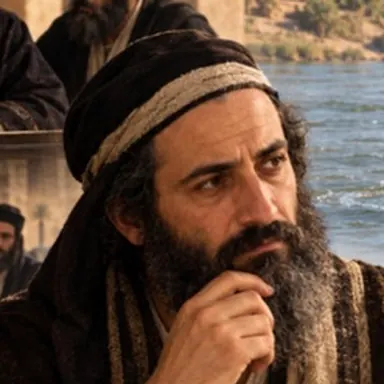
The Work, Halakhic Teaching and Standing of the Amora Rami bar Papa: A Historical Study and Scholarly Analysis
16 min read3,209 words
Summary
The text surveys the figure of the Amora Rami bar Papa, examining the tension between historiographical facts and later liturgical traditions. On the scholarly plane, the sage is portrayed as a figure active in Babylonia in the third and fourth centuries, who raises complex theoretical questions in the laws of ritual impurity and purity alongside practical questions about the limits of halakha on Yom Kippur. At the same time, the article analyses Rami bar Papa's appearance as one of the "ten sons of Rav Papa" in the Hadran ceremony at the conclusion of a tractate, and explains how a mnemonic charm for improving memory developed into a sanctified family list of names. In conclusion, the source stresses how the symbolic and educational structure of his figure in Jewish tradition sometimes prevails over chronological accuracy, turning him into a vital connecting link in the chain of the transmission of the Torah.
The Babylonian Amora Rami bar Papa is a fascinating figure in the historical-halakhic study of the Talmudic period [cite: 1, 2]. His work extends over two distinct realms of memory: on the one hand, he appears in the pages of the Talmud as an active halakhic sage who poses complex scholarly questions and conducts discussions with the great figures of the second and third generations of the Babylonian Amoraim [cite: 1, 3, 4]; on the other hand, his name was immortalised in the fixed liturgy of the yeshiva within the text of the "Hadran" recited upon the completion of a tractate, as one of the ten "sons of Rav Papa" [cite: 5, 6, 7]. The study of Rami bar Papa's figure requires a methodical separation and a comparative analysis between the testimony of the Talmudic sources about him and the later traditions that became attached to his name [cite: 1, 5, 8].
Chapter One: The Historical Figure, His Time and Family Connections
Determining Rami bar Papa's historical period is made possible by examining the sages with whom he came into direct halakhic contact [cite: 1, 3, 9]. The Talmud records his encounters and discussions with Rav Yehuda (died around 299 CE), Rav Shmuel bar Rav Yehuda, and Rav Yosef (died around 333 CE) [cite: 1, 3, 9]. These connections place his activity at the end of the third century and the beginning of the fourth century CE, a period corresponding to the second and third generations of the Babylonian Amoraim [cite: 1, 10].
This historical fact gives rise to a critical chronological observation: Rami bar Papa was active and lived at least one generation before the famous Amora Rav Papa, head of the yeshiva of Naresh (who belonged to the fifth generation and died around 370 or 376 CE) [cite: 11]. This time gap lies at the basis of the scholarly and Geonic discussion of the identity of the "ten sons of Rav Papa" mentioned at the conclusion of a tractate, and it reinforces the historical determination that Rami bar Papa was not the biological son of the head of the yeshiva of Naresh, who lived after him, but considerably earlier than him [cite: 5, 8, 11].
The Etymology of the Name and Its Origins
The research and commentary literature has discussed the character of the name "Rami" [cite: 2, 12]. Some suggest that the name "Rami" is nothing but a contraction or an Aramaic version of the name "Rav Ami", a fairly common phenomenon in the names of the Babylonian Amoraim [cite: 2]. On the other hand, there is a view that this is an entirely independent name deriving from the Hebrew-Aramaic root r.m.m, meaning "high" or "exalted" [cite: 12]. As for his father's name, "Papa", the modern halakhic decisor Rabbi Moshe Feinstein noted that the name is not of distinctly Jewish origin, and that it entered Jewish society in Babylonia through environmental influences and afterwards took root as part of the custom of naming children after the forefathers of the family [cite: 2].
The Family Connection and the Affair of His Sister's Death
The best-documented family connection of Rami bar Papa in the Babylonian Talmud is the marriage of his sister to the Amora Rav Avya [cite: 1, 9, 13]. Rav Avya was a prominent sage who was active in the Land of Israel and in Babylonia, and who studied under Rabbi Ami, Rabbi Yochanan and Rav Huna [cite: 13]. When Rami bar Papa's sister died, her husband Rav Avya performed the rite of "standing and sitting" (ma'amad u-moshav) customary at a funeral, in which those accompanying the dead would stop several times during the burial procession in order to sit and weep for the deceased [cite: 9].
This conduct of Rav Avya drew sharp halakhic criticism from Rav Yosef, who ruled that Rav Avya "erred in two things" (was mistaken on two matters) [cite: 1, 9]:
A first error, concerning the identity of the participants: the rite of standing and sitting was meant to be performed solely for first-degree relatives of the deceased, whereas Rav Avya applied the rite more broadly and performed it for more distant relatives [cite: 9].
A second error, concerning the timing of the rite: the custom of standing and sitting may be performed only on the first day of mourning, which is the day of burial, whereas Rav Avya performed the rite on the second day [cite: 9].
This interpretation by Rav Yosef highlights the institutional aspiration of the heads of the yeshivot in Babylonia to delimit public mourning customs precisely, and to prevent customs reserved for the mourning of close relatives from seeping into wider family and social circles or into later days of mourning [cite: 9].
Chapter Two: His Halakhic Teaching and His Principal Discussions in the Talmud
Rami bar Papa's halakhic teaching is characterised by engagement with questions of principle concerning the limits of halakha, both in the context of practical halakha on Yom Kippur and in the context of complex theoretical definitions in the laws of ritual impurity and purity [cite: 3, 4].
The Question of Crossing the River on Yom Kippur (Yoma 77b)
Rami bar Papa's best-known halakhic encounter takes place on the banks of a Babylonian river [cite: 3, 14]. In some sources the river is identified as the Euphrates [cite: 1], while in other versions it is called "the river Papa" [cite: 14, 15]. Rav Yehuda and Rav Shmuel bar Rav Yehuda stood at a crossing called "Ambra de-Hatzdad", and Rami bar Papa stood on the other side of the river [cite: 1, 3, 14]. Rami bar Papa raised his voice and called out to them with a halakhic question of immediate practical consequence:
"Mahu lemeiver lemeitei legabaikhu lemishal shemaata?" (Is it permitted to cross the water in order to come to you and ask about a matter of halakha?) [cite: 1, 3, 14].
This question poses a complex challenge to the laws of Yom Kippur, since the affliction of Yom Kippur includes a prohibition of bathing [cite: 16, 17]. The answer of Rav Yehuda (cited in the name of Rav and Shmuel) or of Rav Shmuel bar Rav Yehuda ("Tanina", "we have already learned it") permits the crossing on a clear condition: "He may cross, provided that he does not take his hand out from under the hem of his garment" [cite: 3, 14, 18].
Rashi explains the halakhic mechanism of this restriction: if the person crossing the river takes his hands out from under the edges of his garment in order to lift it above the water, the garment will not appear as clothing resting on the body in its normal manner of wearing, but as a burden carried on the shoulder [cite: 16, 19, 20]. Carrying such a burden is forbidden on Yom Kippur and on Shabbat in the public domain, and hence the permission to cross the river is conditional on preserving the standard character of the garment as worn clothing [cite: 15, 19, 20].
This discussion reveals deep insights into the Amoraic scale of values:
The supremacy of Torah study: the search for an exact halakhic tradition ("lemishal shemaata", "to ask about a tradition") overrides the prohibition of bathing on Yom Kippur (which was perceived for the most part, apart from eating and drinking, as a rabbinic prohibition or as a prohibition that does not carry the penalty of karet) [cite: 3, 16, 17].
The prohibition of carrying and the appearance of wrongdoing (mar'it ayin): the Talmud permits unusual physical actions for a study or religious purpose, but takes care not to breach the boundaries of halakha that distinguish between "clothing" and a "burden" [cite: 16, 19, 20].
The following is a concise comparison of the positions and halakhic mechanisms in this discussion:
A Philosophical-Scholarly Discussion of the Laws of the Impurity of Vessels (Menachot 69a)
Whereas the discussion of crossing the river deals with practical halakha, Rami bar Papa's queries in tractate Menachot represent abstract theoretical thinking characteristic of the greatest scholars [cite: 4]. Rami bar Papa presented the sages of the beit midrash with two extreme physiological problems concerning the definition of vessels and impurity [cite: 4]:
Saving a vessel from impurity by means of swallowing: Rami bar Papa asked: "An elephant that swallowed an Egyptian basket (a basket woven of palm branches or reeds) and excreted it through its anus, what is the law?" [cite: 4]. The question analyses the survival of a vessel: does passage through an animal's acidic and soiling digestive system cancel the halakhic status of the basket as a "vessel" (so that it is purified of its impurity or no longer becomes impure), or perhaps, since it came out whole and fit for use, its original definition is preserved [cite: 4]?
The creation of a vessel in an animal's intestines: an even more complex question that he posed is: "If it swallowed palm fibres (unprocessed raw palm-fibre material) and made them into an Egyptian basket (and inside the elephant's intestines, because of the pressure and the movement, the fibres were compressed into the shape of a woven basket), is this considered digestion or not?" [cite: 1, 4]. Here the creative mechanism is examined: can a mechanical process occurring naturally inside an animal's body be considered an "act of making" that establishes the status of a "vessel", or is every process occurring inside the body defined merely as nullification and physiological digestion [cite: 4]?
These questions, despite their hypothetical character, serve as conceptual working tools of the first order, enabling the sages to sharpen the legal definitions of the making of vessels, the destruction of vessels, and the boundaries of contact between the internal biological space and the external halakhic space [cite: 4].
Chapter Three: Rami bar Papa in the Liturgy of the Yeshiva: The Ten Sons of Rav Papa
Alongside his direct halakhic work, Rami bar Papa's name achieved eternal life in Jewish liturgy through its fixed inclusion in the "Hadran" prayer recited at the conclusion of each of the tractates of the Talmud [cite: 5, 6, 7]. The ten names mentioned in this prayer are presented as the sons of Rav Papa: "Hanina bar Papa, Rami bar Papa, Nachman bar Papa, Achai bar Papa, Abba Mari bar Papa, Rafram bar Papa, Rakhish bar Papa, Surhav bar Papa, Adda bar Papa, Daru bar Papa" [cite: 6, 7, 22].
The Historical Testimony of Rav Hai Gaon
The earliest historical source that documents and analyses this custom is a responsum of Rav Hai Gaon, cited in the work of Rabbi Avraham ben Yitzchak of Narbonne, "Sefer ha-Eshkol" [cite: 5, 8]. Rav Hai Gaon was asked directly by Torah scholars of his generation whether the ten sages mentioned at the conclusion were indeed biological brothers of a single father [cite: 5, 8].
In his responsum the Gaon presents a chronological analysis that refutes the simplistic assumption that this is a single nuclear family [cite: 5, 8]. He clarifies that the sages mentioned lived in entirely different periods:
- Some of them are very early, counted among the direct disciples of Rav (the first generation of the Babylonian Amoraim) or having heard traditions from Rav Chisda (the third generation) [cite: 5, 8].
- The famous Amora Rav Papa (head of the yeshiva of Naresh) lived in the fifth generation, and therefore he cannot have been the father of sages who preceded him in time [cite: 5, 8, 11].
- The famous biological son of Rav Papa of Naresh was Abba Mar (mentioned in tractates Ketubot and Bava Batra), who lived in the sixth generation [cite: 8, 10, 11].
Rav Hai Gaon concludes from this that these ten Amoraim represent the descendants of "two or three" different fathers whose name was Papa [cite: 5, 8]. The Gaon adds a valuable geographical-historical detail: some of the graves of these sages are located on the banks of the Euphrates, beyond Gishra de-Bavel (the bridge of Babylon) [cite: 8].
The Origin of the Charm and the Place of Rami bar Papa
According to the Gaon's testimony, the original custom in the yeshivot of Babylonia was not to read out the names of the brothers directly, but to recite a fixed Aramaic sentence that served as a segula charm for preserving the memory and preventing forgetfulness of one's learning [cite: 5, 8]:
"Hanana rama leih nahama la-achui abba de-va'ev de-afeih le-rikhsheih sarhaveih adda le-bei darei" [cite: 5, 8].
The literal translation of the sentence ("Hanana gave bread to his brother Abba who hates him, who tore his property and hurried them Adda to the house of the pen") lacks any continuous substantive meaning [cite: 5, 8]. Its function was to serve as a mnemonic aid (a segula for memory), in which each word alludes to one of the ten sons of Papa [cite: 5, 8]. The second word in this sentence, "rama", points directly to the name of Rami bar Papa [cite: 5, 8]. With the passing of the years the custom changed: the Aramaic charm was dropped from the prayer books, and in its place people began to read out the names of the Amoraim themselves directly, and thus the family of the sons of Papa became an inseparable part of the siyum ceremony [cite: 5, 8].
Chapter Four: A Comparative Analysis of the Historical Identity of the Sons of Papa
In order to understand the special standing accorded to Rami bar Papa and his brothers mentioned at the conclusion of a tractate, one must examine the various theories proposed over the generations by the sages of the generations, the halakhic decisors and the scholars, which attempt to explain the reasons for the commemoration of their names [cite: 5, 6].
The table below presents a comparative analysis of the four principal approaches to this matter, considering the historical strengths and weaknesses of each approach:
Geographical Discrepancies in the Burial Traditions
A further significant difference arising from the comparative analysis concerns the tradition of the burial place of Rami bar Papa and his brothers [cite: 8, 11]. Whereas Rav Hai Gaon (in the tenth century in Babylonia) testifies that the graves of some of the sons of Papa are located in Babylonia, on the Euphrates above Gishra de-Bavel [cite: 8], in popular tradition and according to later traditions of the Land of Israel from the medieval period the graves of Rav Papa and his ten sons lie in a burial cave with niches on Mount Shenan (on the Israel-Lebanon border), near the grave of Rav Ashi [cite: 11, 24]. This geographical discrepancy reflects the migration of traditions about holy men from Babylonia to the Land of Israel and the desire to attribute the resting place of the great Amoraim to the geographical space of the Galilee [cite: 11].
Chapter Five: Research Conclusions and Deeper Insights
A careful examination of the whole body of data about Rami bar Papa makes it possible to draw several historical and cultural conclusions that reshape the understanding of this sage's figure:
The importance of Rami bar Papa as a connecting link: Rami bar Papa was active in a critical period of transition, the transitional generation between the period of the formation of the earliest traditions in Babylonia (the days of Rav and Shmuel) and the later period of the Amoraim, that of the creation of the great yeshivot [cite: 1, 3, 11]. His questions illustrate the uncompromising commitment to obtaining an exact tradition from the mouth of his teachers, even at the price of crossing rivers, physical and halakhic, on Yom Kippur [cite: 3, 14].
The development of the myth of the ten brothers: the historical transition from Rami bar Papa's definition as an independent sage who was active in the third generation [cite: 1, 9] to his inclusion within a single family group of "the ten sons of Rav Papa" [cite: 6, 7] demonstrates a classic process of literary consolidation in Jewish liturgy [cite: 5, 8]. The mnemonic charm intended to preserve the memory became, over the generations, a sanctified genealogical list representing the completeness of the Oral Torah [cite: 5, 6, 8].
The resilience of historical memory against chronological accuracy: although commentators and Geonim such as Rav Hai Gaon pointed out the historical impossibility that Rami bar Papa was the son of Rav Papa of Naresh [cite: 5, 8], the power of the liturgical custom prevailed over the dry chronological truth [cite: 5]. The public continued, and continues, to mention Rami bar Papa as one of the ten sons of Papa, which teaches that in Jewish tradition the symbolic and educational structure of the complete scholarly family sometimes carries more weight than detailed biographical research [cite: 5, 6].
Sources25
- 1.תולדות תנאים ואמוראים/ר/רמי בר פפא - ויקיטקסט, he.wikisource.org/wiki/תולדות_תנאים_ואמוראים/ר/רמי_בר_פפא
- 2.Is the name Rami mentioned in the gemarah the full version? - Mi Yodeya - Stack Exchange, judaism.stackexchange.com/questions/57011/is-the-name-rami-mentioned-in-the-gemarah-the-full-version
- 3.מסכת יומא פרק ח - מאגר ספרות הקודש, kodesh.snunit.k12.il/b/l/l2508_077b.htm
- 4.מנחות - מכון הלכה ברורה, halachabrura.org/agada/30menachot-2.htm
- 5.עשרת בני רב פפא - פורטל הדף היומי, daf-yomi.com/content.aspx?pageid=218
- 6.סיום מסכת – ויקישיבה, yeshiva.org.il/wiki/index.php/סיום_מסכת
- 7.Hadran 1 with Talmud | The Sefaria Library, sefaria.org/Hadran.1-6?with=Talmud
- 8.Discuss the Daf - Ta'anis - Dafyomi Advancement Forum, dafyomi.co.il/discuss_daf.php?gid=10&sid=20&daf=20&n=9
- 9.Bava Batra 100b with Introductions to the Babylonian Talmud | The Sefaria Library, sefaria.org/Bava_Batra.100b?with=Introductions to the Babylonian Talmud
- 10.רבי אבא בר פפא - ויקיפדיה, he.wikipedia.org/wiki/רבי_אבא_בר_פפא
- 11.רב פפא - ויקיפדיה, he.wikipedia.org/wiki/רב_פפא
- 12.Does the name Rami (רמי) have a meaning based in Judaism? If so, what is it? - Mi Yodeya, judaism.stackexchange.com/questions/57623/does-the-name-rami-רמי-have-a-meaning-based-in-judaism-if-so-what-is-it
- 13.רב אויא - ויקיפדיה, he.wikipedia.org/wiki/רב_אויא
- 14.Yoma 77b:4 with Beur HaGra on Shulchan Arukh, Orach Chayim | Sefaria Library, sefaria.org/Yoma.77b.4?with=Beur HaGra on Shulchan Arukh, Orach Chayim
- 15.Yoma 77b:17 | The Sefaria Library, sefaria.org/Yoma.77b.17-78a.1
- 16.Yoma 73b with Halakhah | Sefaria Library, sefaria.org/Yoma.73b?with=Halakhah
- 17.Guided Learning: Are the Yom Kippur Afflictions (Apart from Eating and Drinking) - Prohibited by Torah Law? - 5771, torahmitzion.org/learn/guided-learning-yom-kippur-afflictions-apart-eating-drinking-prohibited-torah-law-5771/
- 18.בבלי יומא פרק ח - ויקיטקסט, he.wikisource.org/wiki/בבלי_יומא_פרק_ח
- 19.פרשני:בבלי:יומא עז ב – ויקישיבה, yeshiva.org.il/wiki/index.php/פרשני:בבלי:יומא_עז_ב
- 20.Hafla'ah ShebaArakhin on Sefer HeArukh, Letter Chet 55 | Sefaria Library, sefaria.org/Hafla'ah_ShebaArakhin_on_Sefer_HeArukh,_Letter_Chet.55
- 21.ביאור:בבלי יומא דף עז - ויקיטקסט, he.wikisource.org/wiki/ביאור:בבלי_יומא_דף_עז
- 22.Talmud Siyum on Masechet Pesachim 12 Nisan 5781 March 25, 2021 | Voices on Sefaria, sefaria.org/sheets/309687
- 23.רפרם בר פפא - ויקיפדיה, he.wikipedia.org/wiki/רפרם_בר_פפא
- 24.רב פפא - אהלי צדיקים, zadikim.com/places/רב-פפא/
- 25.על שירה, תורה וחסידות: אקורד הסיום (טור 113) - הרב מיכאל אברהם, mikyab.net/posts/5608/