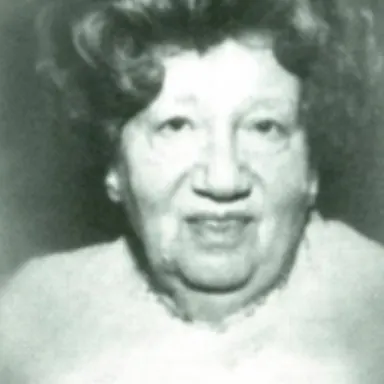
Architect of the Educational Revolution in America: The Work, Torah Teaching and Sociological Influence of Rebbetzin Vichna Kaplan
17 min read3,472 words
Summary
The text is a comprehensive biographical and historical survey of Rebbetzin Vichna Kaplan, who is regarded as the key figure in establishing Haredi girls' education in the United States. The article traces the course of her life, from her childhood in the shadow of the Mussar movement in Europe to the founding of the American "Beit Yaakov" network, with emphasis on transplanting Sarah Schenirer's educational model to the New World. Beyond the institutional aspect, the author stresses the sociological transformation that Kaplan brought about by implanting the ideal of the "kollel" and encouraging women to make material sacrifices for the sake of their husbands' Torah study. The text analyzes her distinctive pedagogical method, which advocates pleasant ways and positive reinforcement, and sums up her decisive influence on shaping the character of the modern Orthodox family.
Rebbetzin Vichna Kaplan (1913–1986) is regarded as one of the most central figures in shaping the Orthodox-Haredi sphere in the United States in the twentieth century.[1] As the foremost disciple of Sarah Schenirer, founder of the "Beit Yaakov" movement in Poland, she succeeded in transplanting the European educational model and rooting it in American soil.[1] Her work is not confined merely to establishing educational institutions; her work brought about a wide-ranging sociological transformation, which formed the infrastructure for the re-establishment of the world of Torah and the yeshivot after the destruction of European Jewry.[1, 2, 3] This research report analyzes in depth the path of her life, the development of the institutions she established, her educational and Torah teaching, and her long-term influence on Orthodox Jewish society in the United States and beyond.
Spiritual Roots and Early Orphanhood in the Shadow of the Tradition of Novardok and Baranovich
Vichna Eisen was born in the city of Slonim in Belarus (then under the Russian Empire) around 1913.[1] Her childhood was marked by loss and early orphanhood: she lost her mother, Mrs. Merach Gitel (née Lubchansky), when she was only five years old, and her father, Rabbi Ephraim Yehoshua Eisen, when she was eleven.[1, 4] Following the death of her parents, the young Vichna and her brother went to live in the home of her uncle, the gaon Rabbi Yisrael Yaakov Lubchansky, who served as the spiritual supervisor (mashgiach) of the renowned Baranovich yeshiva.[2, 5]
This family and spiritual environment shaped Vichna Kaplan's personality. Her aunt, Feiga Malka née Horowitz, was the daughter of "the Alter of Novardok," Rabbi Yosef Yozel Horowitz.[5] Although they were childless, the Lubchansky couple raised a number of orphans in their home, among them Vichna and her brother.[5] The home was conducted according to the strict and demanding Mussar tradition of the Novardok school, which advocates breaking one's character traits and total self-sacrifice in the service of the Creator.[5] In Baranovich Vichna met the great Torah figures of the generation, foremost among them the head of the yeshiva, the gaon Rabbi Elchanan Wasserman, who devoted his life to fortifying the Torah against the dangers of assimilation and modernity.[2, 5] These encounters instilled in her a lofty spirit and great spiritual aspirations, which were exceptional in the female landscape of that period.[2]
During a family visit on the festival of Sukkot in the city of Baranovich, Vichna met another girl who had come from America - Chava Leah Weinberg (later Rebbetzin Pincus).[2] This meeting laid the foundations for a spiritual partnership of many years.[2] Chava Leah, a scion of the dynasty of Slonim Hasidism and a daughter of a distinguished family of Torah disseminators (the sister of the yeshiva heads Rabbi Yaakov Weinberg and Rabbi Noach Weinberg), recognized in Vichna the spiritual power of Sarah Schenirer.[2] These meetings highlight the crossing of paths of the key figures who would in the future shape Haredi girls' education in America.[2]
The Struggle to Acquire an Education and the Support of Rabbi Elchanan Wasserman
When Vichna sought to enroll in the "Beit Yaakov" teachers' seminary in Kraków at the age of sixteen, she encountered significant bureaucratic and financial difficulties.[1] Her candidacy was initially rejected because she did not hold an official government matriculation certificate; her uncle, out of a strictly conservative approach that rejected studies in secular institutions, refused to allow her to study in a gymnasium.[1] In addition, the Lubchansky family could not finance the tuition or the travel costs.[1, 4]
At this turning point the support of Rabbi Elchanan Wasserman came to her aid.[4] Rabbi Elchanan recognized the inner flame and the potential hidden in the young girl, and encouraged her to fulfill her aspiration.[4] He intervened personally, gave her financial support and paid for private lessons through which she made up her educational gaps and obtained the required matriculation certificate.[1, 4] In addition, he helped her obtain a full scholarship from the seminary in Kraków.[1]
At the seminary in Kraków Vichna Eisen became one of the most outstanding and beloved students of the movement's founder, Sarah Schenirer.[1, 4] There she acquired knowledge and absorbed Schenirer's educational and pietistic ways.[1, 6] Her pedagogical talents and her exceptional personality made a powerful impression also on the Torah leaders in Poland. The gaon Rabbi Yitzchak Ze'ev Soloveitchik, the Brisker Rav, praised her ability to impart to her students deep Torah knowledge alongside tangible fear of Heaven.[1]
In 1936 Vichna met her future husband, Rabbi Baruch Kaplan, an American Torah scholar who had studied in the most esteemed yeshivot in Lithuania and the Land of Israel - among them the Hebron yeshiva (where he survived the terrible massacre of 5689), the Mir yeshiva, the Kamenetz yeshiva and the Brisk yeshiva.[1, 7] The connection between them was made through the mediation of the New York educator and man of kindness Rabbi Yaakov Yosef Herman.[1] After their first meeting Rabbi Kaplan returned to the United States, and the two continued to correspond by mail.[1]
Vichna's uncle, Rabbi Yisrael Yaakov Lubchansky, feared her emigration to America - then considered a spiritually "treife country" - and suggested that she decline the proposal.[1] Vichna turned for advice to the Brisker Rav, who calmed her fears, saying: "With Reb Baruch, you can go anywhere he wishes."[1] The two became engaged by means of letters, and Vichna emigrated to the United States in August 1937.[1, 4] She arrived at the port of New York on the same ship on which the gaon Rabbi Yaakov Kamenetsky sailed.[4] Only eleven days later the Kaplans were married, and they settled in a modest apartment on South 9th Street in the Williamsburg neighborhood of Brooklyn.[1]
The Founding of the Beit Yaakov Network in the United States and Its Institutional Development
Before Rebbetzin Kaplan's arrival in New York, all attempts to establish Torah educational institutions for girls in the United States ended in utter failure.[8] The Jewish community in America in the first half of the twentieth century was undergoing an accelerated process of secularization and cultural assimilation.[8] Most Jewish parents preferred to send their daughters to public schools, and regarded private religious education as an outdated institution without a future.[8] A lack of financial resources, the absence of authoritative educational leadership and a lack of public trust prevented any local initiative from taking root.[8]
Rebbetzin Kaplan identified the great spiritual void. Even before she left Europe, she received special authorization from Rabbi Yehuda Leib Orlean, director of the central office of "Beit Yaakov" in Poland, to open an educational institution in New York.[1] Although several religious elementary schools for girls operated in New York at that time, there was no high school or post-secondary institution offering comprehensive Torah education.[1]
In 1938 Rebbetzin Kaplan opened the first "Beit Yaakov" high school class around the dining table in her small apartment, with only seven students.[1, 8] Two of these first students were the daughters of the gaon Rabbi Shraga Feivel Mendlowitz, the spiritual leader of the "Torah Vodaath" yeshiva.[1] Rabbi Mendlowitz supported the initiative wholeheartedly and said to Rebbetzin Kaplan: "Take my daughters and build a seminary around them."[1] These pioneering students brought other friends with them, and so the educational enterprise began to take shape.[1, 8]
The development of the institution was accompanied by enormous material difficulties and frequent wanderings between apartments and temporary buildings in the Williamsburg neighborhood.[8] The spatial movement reflects the stages of the institution's institutionalization and its transformation from a small home-based initiative into an educational empire. The frequent moves illustrate the power of spiritual aspiration in the face of material hardship, as the students felt that they were partners in the creation of a new world.[8]
In parallel with the development of Rebbetzin Kaplan's high school and seminary, community activists worked to solve the educational distress of the younger age groups.[8] In 1937 a building at 255 Division Street (which had previously served as the "Beth Moses" hospital) was purchased and converted into an elementary school for girls.[8] The building, which earned the derogatory nickname "The Dump on Division" because of its dilapidated condition, symbolized the beginning of the road, and was later demolished to make way for the Brooklyn-Queens Expressway.[8] Over the years, with the flourishing of the seminary and the influx of qualified and idealistic teachers, the elementary schools too were upgraded and moved to splendid permanent buildings, reflecting the consolidation of the Orthodox community in America.[8]
Her Educational and Torah Teaching: The Model of Positive Pedagogy and the Establishment of the "Kollel" Ideal
Rebbetzin Vichna Kaplan's Torah and educational teaching rested on three central pillars: preserving the legacy of Sarah Schenirer, a pedagogy based on love and positive reinforcement, and a demand for deep spiritual commitment that does not compromise with materialistic modernity.[1, 4]
A Deep Attachment to Sarah Schenirer's Legacy and Its Preservation
Rebbetzin Kaplan saw herself as a direct emissary of Sarah Schenirer and as one whose task was to impart her way to her students in America.[1] In every educational or administrative decision she faced, she used to ask herself: "What would Sarah Schenirer say about this?"[1] She took care to mention Schenirer's figure and virtues at every Rosh Chodesh assembly, and thereby turned the historical figure into a living and relevant role model for the American girls.[1]
A clear expression of this commitment was the project of publishing Sarah Schenirer's writings.[6, 9, 10] Toward Schenirer's twentieth yahrzeit in 1955, Rebbetzin Kaplan, together with her students in New York, initiated the reprinting of the collection of Schenirer's writings in Yiddish, and added to it a profound personal introduction.[6, 9] In this introduction Rebbetzin Kaplan described Schenirer as "a living embodiment of 'Serve the Lord with joy'" and as an eternal source of inspiration for every Jewish girl in America.[6] Rebbetzin Kaplan stressed the personal and motherly bond that every student felt toward Schenirer, and saw these writings as "a treasure chest of deep Torah thoughts, lofty insights and wondrous moral teachings."[6]
A Pedagogy of Love and the Adoption of Advanced Psychological Methods
In contrast to the authoritarian and rigid approach that was common in many traditional educational institutions in Europe, Rebbetzin Kaplan developed a distinctive educational method based on positive reinforcement, empathy and self-esteem.[4] She understood that the American girl, exposed to Western and liberal culture, would not accept imposed authority or harsh disciplinary punishment.[1]
Living testimony to this method emerges from the memoirs of her student, Rebbetzin Danielle Leibowitz (wife of the head of the Chofetz Chaim yeshiva in Queens, the gaon Rabbi Henoch Leibowitz).[4] Leibowitz described how at the age of twelve she rebelled against her parents' wish to send her to "Beit Yaakov" (she preferred to study at the modern high school "Ramaz") and behaved in a wild and exaggerated manner in order to get herself expelled from the school.[4] Every time she was sent to Rebbetzin Kaplan's office, the Rebbetzin refused to raise her voice or to punish her.[4] Instead, she would say to her gently again and again: "You are so nice and so smart."[4] This focus on the points of light and the spiritual potential of the student, while pointedly ignoring the negative behavior, brought about a deep turn in the girl's soul and in time made her a distinguished educator herself.[4]
Rebbetzin Kaplan knew that complex concepts such as modesty (Tzeniut) and meticulousness in the commandments must be taught with great sensitivity and warmth, out of an understanding of the family background from which the girls came, which was often not religious or strictly observant.[1]
The Revolution of Values: Placing the Value of Torah Study at the Top of the Order of Priorities
One of Rebbetzin Kaplan's most significant contributions to Orthodox thought was instilling the awareness that the calling of the Jewish woman is not exhausted by running a proper religious home, but lies in active and full partnership in building the world of Torah.[1] She educated her students to aspire to establish homes based on the husband's full-time Torah study (kollel).[1]
In those days, the idea that a married man would devote all his time to Torah study without earning a livelihood was considered utterly absurd in the eyes of the American public, and even among broad sections of the Orthodox public.[1] Rebbetzin Kaplan instilled in her students the willingness to give up material comfort, a high standard of living and luxuries for the lofty goal of supporting their husbands' Torah study.[1] She made the concept of the "ben Torah" the ideal of the Orthodox girl's aspirations, and thereby brought about a deep revolution of consciousness.[1]
Partnership on the Way and the Recruitment of Graduates to Expand the Enterprise
To consolidate the educational enterprise and give it spiritual and pedagogical depth, Rebbetzin Kaplan recruited a network of distinguished educators, many of them refugees and graduates of the Kraków seminary, who shared her vision and ideological commitment.[1] The educational staff was a significant factor in imparting a sense of belonging and historical continuity to the American students.[1]
The central figures who worked alongside Rebbetzin Kaplan represented diverse spiritual traditions from Europe and the Land of Israel, which were fused together to create a unique educational melting pot in the United States.[1, 2, 11]
This staff acted out of a deep sense of mission. Rebbetzin Kaplan and her educational staff succeeded in neutralizing the alienating influences of the American street by creating an alternative social environment, in which values such as modesty, Torah study and contentment with little were perceived not as limitations but as a source of pride and spiritual purpose.[1]
Writing the Biography: "Ani Chomah" as Historical Testimony
Rebbetzin Kaplan's vision and educational practice were comprehensively documented in a biography published by her student, Rebbetzin Danielle Leibowitz (in collaboration with the former educator Devorah Glicksman).[12, 13, 14] The book was published in English under the title Rebbetzin Vichna Kaplan: The Founder of the Bais Yaakov Movement in America by Feldheim, and was translated into Hebrew under the title Ani Chomah (I Am a Wall): The Life and Work of Rebbetzin Vichna Kaplan.[12, 13, 15, 16]
The writing of the biography stemmed from several significant catalysts:
- The Sukkot conversation in Queens: during a social gathering, the guests were asked who was the person who had most influenced their lives.[4] At that moment Rebbetzin Leibowitz understood that it was the figure of Rebbetzin Kaplan that had shaped the entire course of her life and her worldview.[4]
- The meeting in Florida: Leibowitz met one of Rebbetzin Kaplan's daughters-in-law, who expressed deep regret that no official work had been written commemorating the wondrous self-sacrifice and the historical work of her mother-in-law for the Jewry of the United States.[4]
- The book "My Child, My Disciple": reading the book by Rabbi Noach Orlowek, which tells the story of a rebellious girl who found her path thanks to an embracing educational approach, awakened in Leibowitz her personal memory of herself as a twelve-year-old girl in Rebbetzin Kaplan's office, and spurred her to document this pedagogical method.[4]
After in-depth research that included dozens of interviews with family members, students and educators, Leibowitz began writing.[4] On the advice of the renowned mohel and author Rabbi Paysach Krohn, who read the first chapters and urged her to continue on her own, the first twenty pages were sent to the gaon Rabbi Nosson Scherman, editor of the "ArtScroll" publishing house, who immediately recognized the historical importance of the work and offered a publishing contract.[4] The book was an enormous success and became a foundational work enabling a deep understanding of the development of Haredi society in America.[12, 14]
Long-Term Influence and Conclusions
The influence of the "Beit Yaakov" enterprise under the leadership of Rebbetzin Kaplan extended far beyond the boundaries of the classrooms.[1] It was the sociological catalyst that set in motion the "kollel" revolution in the United States.[1]
The gaon Rabbi Aharon Kotler, head of the Lakewood yeshiva ("Beth Medrash Govoha") and leader of the Haredi public in America, testified to this unequivocally.[1] He determined that the impressive growth of the world of Torah on the soil of the United States is to the credit of the Kaplan couple and their "Beit Yaakov" institution.[1] In a famous talk Rabbi Aharon Kotler declared that were it not for the activity of the Kaplans, the understanding and willingness to sacrifice material comfort for the sake of Torah study would not have arisen among the young girls, and consequently there would have been no possibility of establishing "kollel" institutions in the United States.[1]
In addition, leaders of other communities recognized the enormous value of the institution's graduates.[1] The Satmar Rebbe, Rabbi Yoel Teitelbaum, thanked Rabbi Baruch Kaplan for the fact that the establishment of the institution made it easier for the young men of his yeshivot to find suitable and worthy matches, ready to establish a home of Torah and Hasidism without compromise.[1] He even hired Rebbetzin Kaplan's "Beit Yaakov" graduates to serve as the first teachers in his network of girls' institutions, "Beis Rochel," out of an understanding that only they possessed the pedagogical training and spirituality required to teach the young generation.[1]
Rebbetzin Kaplan's influence spread throughout the Orthodox world.[1] All the "Beit Yaakov" institutions opened in the following years in the United States and in the Land of Israel attribute their existence, directly or indirectly, to the original seminary she founded in Williamsburg.[1] The teachers and principals who completed their studies with her were sent to establish new institutions, and Rebbetzin Kaplan served as a permanent adviser and spiritual guide to these initiatives.[1]
Rebbetzin Vichna Kaplan died on 25 Av 5746 (20 August 1986), in the midst of her extensive activity as spiritual director and dean of the "Beit Yaakov" seminary.[1] After her death her daughter, Rebbetzin Frumi Kirzner, continued to run the institution and to preserve her educational and spiritual legacy.[1] Her husband, Rabbi Baruch Kaplan, died on 7 April 1996.[1]
From a historical perspective, Rebbetzin Vichna Kaplan was not merely a distinguished teacher but an educational strategist and a sociological theorist.[1] She understood that the survival of Orthodox Judaism in the New World depended on the ability to give women deep Torah education, spiritual esprit de corps and active partnership in shaping the face of the future.[1] Through a rare combination of determination in action, love of people and uncompromising attachment to the tradition of the generations, she succeeded in turning "Beit Yaakov" from a local initiative into a worldwide educational network, and thereby secured the existence of the world of Torah in the generations to come.[1, 2]
Sources16
- 1.Vichna Kaplan - Wikipedia, en.wikipedia.org/wiki/Vichna_Kaplan
- 2.Information & Insight - IN-DEPTH FEATURES - Dei'ah veDibur, chareidi.org/archives5762/TZV62features.htm
- 3.Bais Yaakov - Grokipedia, grokipedia.com/page/Bais_Yaakov
- 4.Rebbetzin Danielle Leibowitz, Wife Of Late Rosh HaYeshivah Rav Henoch Leibowitz, Speaks In KGH - Queens Jewish Link, queensjewishlink.com/index.php/local/21-community-corner/by-susie-garber/13722-rebbetzin-danielle-leibowitz-wife-of-late-rosh-hayeshivah-rav-henoch-leibowitz-speaks-in-kgh
- 5.Yisroel Yaakov Lubchansky - Wikipedia, en.wikipedia.org/wiki/Yisroel_Yaakov_Lubchansky
- 6.Introduction to the 1955 Edition - Sarah Schenirer and the Bais Yaakov Movement, cambridge.org/core/books/sarah-schenirer-and-the-bais-yaakov-movement/introduction-to-the-1955-edition/84F0B274762D67FC7FBC6AF8F5A6B4CA
- 7.American Victims of the 1929 Hebron Massacre,Dr. Yitzchok Levine - Stevens Institute of Technology, personal.stevens.edu/~llevine/jp/American Victims of the 1929 Hebron Massacre.pdf
- 8.StoryMapJS: The BIRTH of BAIS YAAKOV IN AMERICA - Knight Lab, uploads.knightlab.com/storymapjs/170eb1a2123241a4658cc22cc0f1983c/tour-of-the-early-bais-yakov-schools-in-new-york/index.html
- 9.The Collected Writings of Sarah Schenirer, Second Edition - The Bais Yaakov Project, thebaisyaakovproject.religion.utoronto.ca/document/the-collected-writings-of-sarah-schenirer/
- 10.Sarah Schenirer and the Bais Yaakov movement : a revolution in the name of tradition / Naomi Seidman | Book, nli.org.il/en/books/NNL_ALEPH997008884009805171/NLI
- 11.The Forgotten Pioneer of Chabad Women's Activism - Eidel Pappenheim-Dubin's tragically cut-short life of learning and leadership in Vienna, Krakow, and Riga, chabad.org/theJewishWoman/article_cdo/aid/7404392/jewish/The-Forgotten-Pioneer-of-Chabad-Womens-Activism.htm
- 12.Rebbetzin Vichna Kaplan - The Founder of the Bais Yaakov Movement in America, eichlers.com/rebbetzin-vichna-kaplan-the-founder-of-the-bais-yaakov-movement-in-america-hardcover.html
- 13.Rebbetzin Vichna Kaplan : the founder of the Bais Yaakov Movement in America - Brooklyn Public Library, discover.bklynlibrary.org/item?b=11984356
- 14.Rebbetzin Vichna Kaplan - 1800 Eichlers, 1800eichlers.com/products/rebbetzin-vichna-kaplan/926
- 15.Ani Choma: Rebbetzin Vichna Kaplan (Hebrew Only) / אני חומה: הרבנית וי - My Sefer, mysefer.com/products/ani-choma-rebbetzin-vichna-kaplan-אני-חומה-הרבנית-ויכנא-קפלן
- 16.אני חומה - חייה ופועלה של הרבנית ויכנא קפלן / פלדהיים - אוצר הספרים, sefer.org.il/items/6545513-אני-חומה-חייה-ופועלה-של-הרבנית-ויכנא-קפלן-פלדהיים-הוצאה-לאור-פלדהיים