Document 1/2
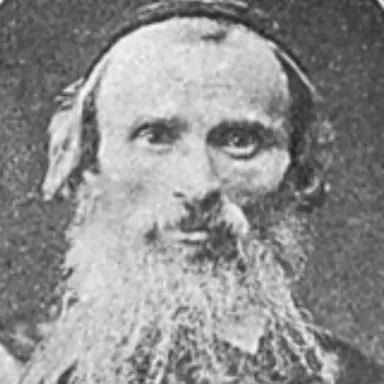
Tradition, Criticism and Revival: The Work and Torah Teaching of the Gaon Rabbi Shlomo HaKohen of Vilna
10 min read2,042 words
Summary
This survey analyzes the multidimensional figure of Rabbi Shlomo HaKohen of Vilna, known as the "Cheshek Shlomo", presenting him as a unique bridge between traditional Lithuanian scholarship and the transformations of the modern era. The text details his decisive contribution as the scholarly editor of the Vilna Shas (Talmud edition), his work as an innovative halakhic decisor who answered complex questions, and his in-depth linguistic research into the Hebrew language. Special emphasis is placed on his groundbreaking public leadership, expressed in his early support for the Zionist movement and in his symbolic meeting with Herzl. The article seeks to show how his personality, combining textual precision, halakhic boldness and extraordinary humility, left an indelible mark on the world of Torah and on the process of the national revival of the Jewish people.
The figure of Rabbi Shlomo HaKohen of Vilna (1828–1905), known by the name "Cheshek Shlomo", represents one of the most fascinating points in the encounter between the classical Lithuanian scholarly tradition and the transformations of the modern era. As one who served for decades as the "elder of the rabbis of Vilna", Rabbi Shlomo was not only a halakhic decisor and communal leader, but also a grammatical thinker, a scholarly editor of the text of the Talmud, and one of the pillars of Religious Zionism in its early days.[1, 2] This report will analyze in depth the layers of his activity, from his monumental enterprise of editing the Vilna Shas, through his halakhic rulings and his linguistic teaching, to his revolutionary public leadership.
Biographical Background: The Rise of a Prodigy in the "Jerusalem of Lithuania"
Rabbi Shlomo HaKohen was born in 5588 (1828) in Vilna, a city that was at that time the undisputed spiritual center of Lithuanian Jewry. He was a scion of a distinguished priestly family whose lineage reached back to the biblical Eli the Priest.[1, 3] His father, Rabbi Yisrael Moshe HaKohen, served as a judge (dayan) on the famous rabbinic court of Vilna, and imparted to his son the foundations of profound scholarship alongside pure fear of Heaven.[1, 3]
Rabbi Shlomo's development as a Torah prodigy was accompanied by personal drama and self-sacrifice that shaped his image in the eyes of his contemporaries. Already at the age of 12 he began corresponding on halakhic matters with the great sages of the generation, which attested to exceptional intellectual maturity.[3] However, his tremendous diligence exacted a heavy toll on his health; his doctors warned him that his heart was weak and his nervous system unsettled, and determined that continuing his strenuous study would bring about his death.[3] His famous reply, "Better to die from the Torah than to die from its absence", became a cherished classic in the yeshiva world, and the Chofetz Chaim, who was a friend of his youth, used to tell this story with great emotion to illustrate the value of diligence.[3]
The "Cheshek Shlomo" Enterprise and the Textual Revolution of the Vilna Shas
Rabbi Shlomo HaKohen's most enduring influence on the world of Torah is without doubt the editing of the Babylonian Talmud in the Vilna edition (the Romm press). As the chief editor of this mighty enterprise, Rabbi Shlomo was not content with writing commentaries, but acted as a textual scholar of the first rank.[1]
The Methodology of Establishing the Text
Rabbi Shlomo devoted many years to examining manuscripts and early printings with the aim of cleansing the Talmud of the corruptions that had crept into it over the generations.[1] His approach was a direct continuation of the tradition of the Vilna Gaon, but he applied it with extra caution and with the use of broader critical tools. His glosses, printed under the name "Cheshek Shlomo" at the end of each tractate, are a combination of establishing the reading, a brief plain explanation, and cross-references linking the Talmudic passage (sugya) to the halakhic ruling.[1, 4]
The implications of this enterprise were far-reaching. Thanks to Rabbi Shlomo's meticulousness, the Vilna edition became the binding standard in every beit midrash in the world, and to a great extent it is this edition that fixed the manner of modern Talmud study.[1] His ability to combine traditional scholarship with philological precision made the "Cheshek Shlomo" an essential aid for every student of the Gemara, from the beginner to the greatest sage of the generation.
Biblical and Grammatical Research
Rabbi Shlomo did not limit his research to the Talmud alone. He engaged in establishing the text of the books of the Writings on the basis of the notes of the Gra (the Vilna Gaon), and displayed a deep understanding of biblical structure.[1] His linguistic work, which culminated in the book "Yeriot Shlomo", reveals another facet of his teaching: the attempt to understand the Torah through the structure of the Hebrew language. He developed a grammatical theory around the letters "HaAMaNTIV" (the letters added to a root), and examined synonyms in the Bible using philosophical definitions.[5] This approach attests that Rabbi Shlomo saw language as a holy and precise instrument through which one can deepen one's understanding of the will of God.[5]
Halakhic Rulings and Writings: The Responsa "Binyan Shlomo"
Rabbi Shlomo's strength as a halakhic decisor finds expression in his books of questions and answers (responsa), "Binyan Shlomo" and "Atzei Beroshim".[1, 3] These responsa are regarded as highly authoritative sources in halakhic literature, and they are frequently cited by later decisors.[1]
Originality and Halakhic Boldness
Rabbi Shlomo's rulings were characterized by the ability to apply Talmudic principles to unusual theoretical and practical cases. An example of this is his position, cited to this day in discussions of cultured meat: Rabbi Shlomo discussed the question of whether meat created by means of "Sefer Yetzirah" (magical or non-biological means) is considered meat, and determined that such meat may be considered pareve.[7] This insight teaches of flexibility of thought and of a readiness to deal with definitions of matter and spirit within halakhic tools.
In addition, Rabbi Shlomo was in close contact with Rabbi Chaim Hezekiah Medini, author of the "Sdei Chemed", who regarded him as a supreme authority and cited him with great admiration.[1] This connection illustrates Rabbi Shlomo's international standing beyond the borders of Lithuania, as a decisor whose words were heard throughout the Jewish diaspora.[3]
His Attitude to the Zionist Movement and to "Hibbat Zion"
One of the most revolutionary aspects of the figure of Rabbi Shlomo HaKohen is his unreserved support for the movement of national revival. While many of the rabbis of Lithuania at that time held back from the Zionist movement, Rabbi Shlomo saw it as a positive spiritual development and a historical necessity.[2]
Laying the Foundations of "Hibbat Zion" in Vilna
As early as 5642 (1882), Rabbi Shlomo was among the founders of the "Hibbat Zion" movement in Vilna.[2] He did not hide his views and published public letters in which he called the settlement of the Land "a great and mighty commandment that has no equal".[2] In a famous letter he called on the movement's supporters not to be deterred by the attacks on them, and strengthened the hands of the farmers in the colonies, saying that this was "a holy matter".[2]
He took an active part in the founding conference of the Mizrachi movement in 5660 (1900), and blessed those assembled at the head of the movement's rabbis.[2] His position was that redemption must come as a result of an "itaruta de-letata" (an awakening from below) and of human activity to restore the Land.[2]
The Historic Meeting with Herzl
The peak of his public activity in this context was the famous reception of Binyamin Ze'ev Herzl in Vilna in 1903. Rabbi Shlomo, in his old age and in his exalted position, went out to greet the Zionist leader and blessed him with the priestly blessing.[2] A testimony from the period relates that he remarked that the meeting made him feel that he had seen "the king of Israel in his beauty".[2] Although some scholars cast doubt on some of the dramatic details (such as his holding a Torah scroll in his hands), the very public support of the "elder of the rabbis of Vilna" for Herzl was a tremendous political and religious statement.[1]
The Family Dynasty and the Continuation of the Enterprise
The family of Rabbi Shlomo HaKohen continued his path of combining Torah scholarship with Zionist activity, and was a driving force in the establishment of the institutions of Religious Zionism in Lithuania.
- Rabbi Avraham Yaakov HaKohen (the son): succeeded his father as rabbi and moreh tzedek (halakhic authority) in Vilna. He was a central figure in the Mizrachi, edited the movement's journal and was active in its administrative bodies.[2]
- Rabbi Nachum Grinhaus (the son-in-law): rabbi of Trakai and one of the important thinkers of early Religious Zionism. He published articles in defense of Zionism against Haredi criticism and was a candidate for the leadership of the Mizrachi.[2]
R. Reuven HaKohen (the grandson): one of the founders of "Tze'irei HaMizrachi" (Mizrachi Youth) in Vilna, who was active in the field of Zionist activity until he was murdered in the Holocaust.[2]
The family connection reaching as far as Rabbi Chaim Kanievsky, of blessed memory, underscores the depth of this dynasty's roots in the Lithuanian Torah world, and illustrates how the figure of Rabbi Shlomo remained a source of authority and inspiration across generations.[2]
Leadership and Character: The Human Portrait
Alongside his greatness in Torah, Rabbi Shlomo was known for his extraordinary humility and his pleasant personality. He was described as a man who fled from honor and lived an extremely modest life within "the four cubits of halakha".[3] When people rose in his honor in the synagogue, he sincerely believed that they did so only to fulfill the commandment of honoring the elderly, and it never occurred to him that they were paying tribute to his wisdom.[3]
His ability to receive every person with a cheerful countenance, whether a great Torah scholar or the simplest of the simple, made him a figure revered by all strata of the public in Vilna.[3] This trait was critical in a period of deep social and ideological rifts, since he served as a unifying and conciliating force.[2]
Summary and Conclusions: The Gaon as a Bridge between Worlds
An analysis of the work of Rabbi Shlomo HaKohen of Vilna reveals a multidimensional figure who succeeded in bridging gaps that seemed unbridgeable in the 19th century:
- Between text and reality: Rabbi Shlomo succeeded in taking the Talmud, the most ancient text of the Jewish people, and giving it a precise "final version" that served as the basis for modern study, while connecting the theoretical Talmudic discussion with practical ruling in "Binyan Shlomo".[1, 6]
- Between conservatism and innovation: as a halakhic decisor, he preserved the tradition of Lithuanian halakhic ruling but was not afraid to discuss futuristic technologies (such as meat from "Yetzirah") and to give them a halakhic framework.[7]
- Between exile and redemption: through his support for the Zionist movement, he turned the religious longing for the Land of Israel into a political and practical program of work, and thereby paved the way for generations of religious Zionists.[2]
Rabbi Shlomo HaKohen was not only the "Cheshek Shlomo" of the pages of the Gemara, but a courageous leader who recognized the beating wings of history and sought to lead his people securely into the modern era, with the Torah serving him as a precise compass. His passing in 1905 marked the end of a generation of giants in Vilna, but his legacy, printed on every page of the Vilna Shas and planted in every clod of earth of the Zionist enterprise, lives on to this day.
Sources7
- 1.Shlomo HaKohen (Vilna) - Wikipedia, en.wikipedia.org/wiki/Shlomo_HaKohen_(Vilna)
- 2.רבי שלמה הכהן בעל ה'חשק שלמה' ומשפחתו, מייסדי 'המזרחי' - הקיבוץ הקדוש, hakibbutz.org.il/3543
- 3.Rabbi Shlomo Hacohen of Vilna - Hevrat Pinto, hevratpinto.org/tzadikim_eng/130_rabbi_shlomo_hacohen_of_vilna.html
- 4.גיוס החברים לאיתור ספרים ומחבריהם, החסרים באוצר החכמה| דף 2 - פורום מורשת מרן, forum.moreshet-maran.com/threads/גיוס-החברים-לאיתור-ספרים-ומחבריהם-החסרים-באוצר-החכמה.4739/page-2
- 5.ספר חשק שלמה – שרשים, machonso.org/uploads/images/חשק שלמה לאתר -compressed.pdf
- 6.אוצר החכמה, tablet.otzar.org/he/book/book.php?book=160273
- 7.Trying to find a quote of the Cheshek Shlomo - Mi Yodeya - Stack Exchange, judaism.stackexchange.com/questions/80913/trying-to-find-a-quote-of-the-cheshek-shlomo