Skip to contentGo to the list of all sages
Ozar Chachamim
  1. /
  2. Rishonim
  3. /
  4. The Riaz (Rabbi Isaiah ben Elijah di Trani)
עבENРУ
Rishonim13th centuryItaly

The Riaz (Rabbi Isaiah ben Elijah di Trani)

Halakha, Bible and thought

  • Piskei HaRiaz
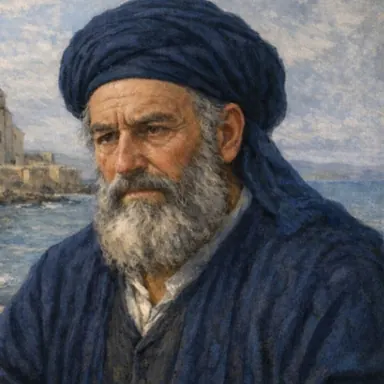
Illustration: The Riaz (Rabbi Isaiah ben Elijah di Trani)
Illustration from the podcast episode
Read the research· 33 minListen
Watch the video
⬡Show in the network
🌌Show in the Tower of Generations
🔗The path to another sage

Listen to the episode

Podcast episode · The Riaz (Rabbi Isaiah ben Elijah di Trani)

Open in Spotify
The player loads from Spotify only when you click.
Open in Spotify

Watch the video

The Riaz (Rabbi Isaiah ben Elijah di Trani)

Open on YouTube (opens in a new tab)

Riaz (Rabbi Isaiah di Trani the Younger) - The Struggle for the Soul of Faith

The video loads from YouTube only when you click.
Open on YouTube (opens in a new tab)

Core Concept

Loyalty to tradition alongside independence of thought.

Biography

Grandson of the Rid the Elder, an independent halakhic authority who opposed making faith depend on philosophy and stressed the power of tradition.

Related sages2

Family1

  • The Rid (Rabbi Isaiah di Trani the Elder)Rishonim

Influenced by1

  • Abraham ibn EzraRishonim

The Road to Sinai

50 stations on the road
  1. MosesGeneration 1
  2. 41 more generations
  3. Rav Saadia GaonThe Epistle of Rav Sherira Gaon
  4. 5 more sages
  5. The Rid13th century
  6. The Riaz13th century

includes 1 inspiration linkThe generations follow the Rambam’s introduction to the Mishneh Torah. A dashed line is inspiration, not direct transmission.

✦Fly it in the TowerOpen the full path

Full research

2 documents·6,685 words· 33 min read

Contents33 min read

  1. Rabbi Isaiah ben Elijah di Trani (Riaz)
    • The Halakhic and Philosophical Legacy of Rabbi Isaiah ben Elijah di Trani (Riaz)
    • The Socio-Historical Context of Thirteenth-Century Italy
    • The Lineage and Personal History of the Riaz
    • The Halakhic Methodology of the Riaz: Codification and Sources
    • The Primacy of the Mishnah and the Yerushalmi
    • Piskei Halakhot and Kunteres ha-Re'ayot
    • The Scope of Published Piskei ha-Riaz
    • Biblical Exegesis: Rationalism and the Peshat
    • Comparison: The RID versus the Riaz
    • The Transmission of Riaz’s Legacy: From Manuscript to Shulchan Aruch
    • Sources
  2. Rabbi Isaiah ben Elijah di Trani (the Riaz)
    • Chapter 1: The Geopolitical and Spiritual Background – The Flourishing and Decline of Trani
    • Chapter 2: The Family Dynasty – Between the RID and the Riaz
    • Chapter 3: The Halakhic Revolution – "Pirkei Halakhot" as a Systematic Code
    • Chapter 4: His Exegetical Teaching – The Rationalism of Peshat
    • Chapter 5: Defending the Tradition – The Polemic with Philosophy and Christianity
    • Chapter 6: Liturgical and Spiritual Creativity
    • Chapter 7: Historical Influence – Editions, Printings and Influence on the Shulchan Arukh
    • Chapter 8: Comparative Analysis – The Riaz versus the Schools of Ashkenaz and Provence
    • Summary and Conclusions – The Riaz's Place in History
    • Sources
Contents· 48 sections
  1. Rabbi Isaiah ben Elijah di Trani (Riaz)
    • The Halakhic and Philosophical Legacy of Rabbi Isaiah ben Elijah di Trani (Riaz)
    • The Socio-Historical Context of Thirteenth-Century Italy
    • The Lineage and Personal History of the Riaz
    • The Halakhic Methodology of the Riaz: Codification and Sources
    • The Primacy of the Mishnah and the Yerushalmi
    • Piskei Halakhot and Kunteres ha-Re'ayot
    • The Scope of Published Piskei ha-Riaz
    • Intellectual Independence and the Critique of Predecessors
    • Independent Rulings
    • The Philosophical Counter-Revolution: Anti-Aristotelianism
    • The Rejection of Creedal Judaism
    • The "Muktzeh" Argument for Divine Incorporeality
    • Secular Studies as Heresy
    • Biblical Exegesis: Rationalism and the Peshat
    • Independence from Allegory
    • Authorship and Style
    • Defensive Interpretation of Aggadah and Midrash
    • Inter-Religious Relations and Torah Study
    • Liturgy and Prayer
    • Comparison: The RID versus the Riaz
    • Dialectics versus Brevity
    • Tolerance versus Reaction
    • The Transmission of Riaz’s Legacy: From Manuscript to Shulchan Aruch
    • Joshua Boaz and the Shiltei ha-Gibborim
    • Impact on the Tur and Later Codifiers
    • The Modern Revival of Trani Studies
    • Nuanced Conclusions on the Riaz’s Contribution
    • Sources
  2. Rabbi Isaiah ben Elijah di Trani (the Riaz)
    • Chapter 1: The Geopolitical and Spiritual Background – The Flourishing and Decline of Trani
    • Chapter 2: The Family Dynasty – Between the RID and the Riaz
    • Chapter 3: The Halakhic Revolution – "Pirkei Halakhot" as a Systematic Code
    • The Methodology of Codification
    • Kunteres ha-Re'ayot: The Mechanism Behind the Ruling
    • The Status of the Jerusalem Talmud in the Riaz's Rulings
    • Chapter 4: His Exegetical Teaching – The Rationalism of Peshat
    • The Influence of Spanish Grammar
    • The Struggle Against Allegorical Exegesis
    • The Problem of Attributing the Works
    • Chapter 5: Defending the Tradition – The Polemic with Philosophy and Christianity
    • The Opposition to Aristotle and Greek Philosophy
    • The Interpretation of the Aggadot of the Sages as an Apologetic Tool
    • Chapter 6: Liturgical and Spiritual Creativity
    • Chapter 7: Historical Influence – Editions, Printings and Influence on the Shulchan Arukh
    • The Riaz and the "Shiltei ha-Gibborim"
    • The Revival of the Riaz's Writings in the Modern Era
    • Chapter 8: Comparative Analysis – The Riaz versus the Schools of Ashkenaz and Provence
    • Summary and Conclusions – The Riaz's Place in History
    • Sources

Document 1/2

Rabbi Isaiah ben Elijah di Trani (Riaz)

17 min read·3,453 words

Summary

This text surveys the work of Rabbi Isaiah ben Elijah di Trani (Riaz), an Italian sage of the 13th century, who continued the independent path of his grandfather while creating a distinctive halakhic and exegetical methodology. The author stresses that the Riaz revolutionized the structure of the halakhic code by separating the final, concise ruling from the clarification of the sources, while giving significant weight to the Jerusalem Talmud and to the Mishnaic layer. In the realm of thought, the article describes the Riaz's fierce opposition to Aristotelianism and to attempts to define Judaism as a set of abstract principles, advocating in their place simple faith and practical tradition. At the end it explains how the Riaz's influence reached the heart of the halakhic consensus through the "Shiltei ha-Gibborim," which ensured the presence of his rulings on the pages of the Shulchan Arukh and in halakha for generations.

The Halakhic and Philosophical Legacy of Rabbi Isaiah ben Elijah di Trani (Riaz)

The intellectual landscape of thirteenth-century Italian Jewry was fundamentally shaped by the scholarly dynasty of the Trani family, whose methodology bridged the rigorous dialectics of the Northern European academies with the systematic rationalism of the Mediterranean basin. At the center of the later development of this school stands Rabbi Isaiah ben Elijah di Trani, known by the acronym Riaz (Rabbi Isaiah Acharon, or the Younger). The Riaz represents a critical evolutionary stage in Italian rabbinic thought, functioning as both a faithful transmitter of his grandfather’s—Rabbi Isaiah ben Mali di Trani (the RID)—revolutionary independence and as a distinctive voice who recalibrated the relationship between law, philosophy, and tradition.[1, 2, 3]

His contribution to Jewish literature is multi-faceted, encompassing the first indigenous Italian halakhic code, a comprehensive series of biblical commentaries characterized by rationalist exegesis, and a staunchly conservative philosophical stance that sought to insulate Jewish traditionalism from the encroaching influence of Aristotelian metaphysics. While his works remained largely in manuscript for centuries, their impact was disseminated through the major halakhic channels of the early modern period, most notably through the Shiltei ha-Gibborim, eventually finding a permanent place in the footnotes of the Shulchan Aruch and the consciousness of the global rabbinic community.[1, 2]

The Socio-Historical Context of Thirteenth-Century Italy

To understand the Riaz, one must first locate him within the unique cultural geography of Italy during the 1200s. Italy served as a crossroad where the traditions of the Rhineland (Ashkenaz) met the scholarship of the Islamic world (Sepharad) and the remnants of the Byzantine intellectual heritage. The city of Trani, located on the Adriatic coast, was an ancient settlement of Jewish scholarship that maintained a bridge to the Land of Israel, which explains the family’s persistent interest in the Jerusalem Talmud.[4, 5]

The Trani school, inaugurated by the RID, was characterized by a radical spirit of intellectual freedom. The RID himself was a student of Simḥah of Speyer and maintained close ties with the leading Ashkenazi lights such as Isaac ben Moses of Vienna (the Or Zarua).[4, 5, 6] However, the Trani scholars did not merely adopt foreign methodologies; they synthesized them into an Italian framework that prioritized clarity, linguistic precision, and the authority of the local sugya (Talmudic unit) over external harmonizations. The Riaz, born into this environment as the grandson of the RID through his mother, inherited this mantle of independence, which he applied even to the teachings of his own illustrious grandfather.[2, 3]

The Lineage and Personal History of the Riaz

While the specific details of the Riaz's life are sparse, his death is generally placed around the year 1280. He represents the "Acharon" or the "Last" of the great Trani masters, a designation that distinguishes him from his grandfather, the "Zaken" or "Elder".[1, 2] Throughout his writings, the Riaz refers to his grandfather as Mori Zekeini ha-Rav (My Teacher, my Grandfather, the Rabbi), signaling a relationship that was both filial and academic.[2, 3]

The scholarly transition from the RID to the Riaz reflects a broader shift in European Jewish history from the creative, open-ended dialectics of the early 13th century toward the structured codification and defensive traditionalism of the late 13th and early 14th centuries. While the RID traveled extensively through Greece and the Land of Israel, exposing himself to diverse traditions, the Riaz appears to have focused his energies on the internal consolidation of Italian halakhic practice.[5, 6]

The Halakhic Methodology of the Riaz: Codification and Sources

The Riaz’s primary contribution to the world of halakha is his Pirkei Halakhot, also known as Piskei ha-Riaz. This work stands as the first comprehensive ritual code produced on Italian soil.[2, 3] In creating this code, the Riaz departed from the discursive, often rambling style of the Tosafot Rid. Where his grandfather sought to explore every possibility within a Talmudic discussion, the Riaz aimed for a concise, final decision that could be used for practical legal application.

The Primacy of the Mishnah and the Yerushalmi

A defining feature of the Riaz’s legal philosophy is his unique hierarchy of sources. In a departure from the normative medieval preference for the Babylonian Talmud as the sole arbiter of law, the Riaz derived his Halakhot primarily from the Mishnah itself.[2, 3, 8] He viewed the Gemara as an essential commentary, but believed the core legal structure was more clearly visible in the Mishnaic layer.

Furthermore, the Riaz attributed a much higher degree of authority to the Jerusalem Talmud (Yerushalmi) than did many of his contemporaries in Northern Europe. While the RID used the Yerushalmi primarily to illustrate contrasts with the Babylonian tradition, the Riaz often allowed the Yerushalmi to directly inform his final rulings.[2, 3, 7, 8] This "Palestinian" tilt is a hallmark of the Italian tradition, which preserved liturgical and legal echoes of the Land of Israel long after the Babylonian Talmud had achieved hegemony elsewhere.

Piskei Halakhot and Kunteres ha-Re'ayot

The Riaz organized his legal output into a two-tiered system. The Piskei Halakhot provided the "bottom line" rulings, structured according to the sequence of the Talmudic tractates.[2, 3] To complement this, he authored the Kunteres ha-Re'ayot (The Pamphlet of Proofs), a separate and extensive work in which he elaborated on the sources and logical deductions behind his brief decisions.[1, 2]

This methodological split between the "Decision" and the "Proof" was revolutionary. It allowed for a dual use of his work: as a practical guide for the layman or community rabbi, and as a scholarly resource for the advanced student. Much of the Kunteres ha-Re'ayot remains in manuscript, but its existence underscores the Riaz's commitment to transparency in the halakhic process. He did not ask for blind obedience to his code; he provided the map of his reasoning for all to see and, if necessary, challenge.

The Scope of Published Piskei ha-Riaz

For centuries, the Riaz was known only through the citations of others. However, modern scholarly efforts, particularly by the Institute for the Complete Talmud and Machon Yerushalayim, have brought much of his work to light.[1, 9]

Intellectual Independence and the Critique of Predecessors

The Trani school's hallmark was its refusal to be cowed by authority. The RID famously criticized the Geonim, Rashi, and Rabbeinu Tam, stating that one must follow the truth wherever it leads, regardless of the stature of the person who spoke it.[5, 6, 7] The Riaz took this principle to its logical conclusion, often disputing the rulings of his own grandfather.

Independent Rulings

In his Piskei Halakhot, the Riaz frequently analyzes a sugya and arrives at a conclusion that differs from the RID. He treats his grandfather as a premier authority but not an infallible one. This internal criticism is rare in medieval rabbinic families, where dynasties often sought to canonize the founder’s views. The Riaz's willingness to diverge highlights the "Trani ethos" of intellectual honesty. He viewed the halakhic process as an ongoing dialogue with the sources rather than a static inheritance.

This independence is also reflected in his treatment of the Babylonian Geonim. While he respected their tradition, he occasionally rejected their rulings, such as those of Hai Gaon or Samuel ben Hophni, if he felt they were not supported by a critical reading of the Talmudic text.[6] This critical spirit ensured that the Italian tradition remained dynamic and grounded in primary sources rather than becoming a repository of received traditions.

The Philosophical Counter-Revolution: Anti-Aristotelianism

Perhaps the most significant area where the Riaz diverged from the broader Mediterranean rabbinic consensus—and even from the more moderate stance of his grandfather—was in his attitude toward philosophy and the general sciences. While the RID was relatively tolerant of scientific inquiry, the Riaz emerged as one of the most vocal opponents of the Aristotelian influence that was then sweeping through the Jewish world via the works of Maimonides and his followers.[1, 3]

The Rejection of Creedal Judaism

The Riaz's opposition to philosophy was rooted in a fundamental disagreement about the nature of faith. Maimonides, in his Thirteen Principles of Faith, had sought to anchor Jewish identity in abstract metaphysical propositions. The Riaz rejected this entire project. He argued that Judaism should not be reduced to abstract creeds accessible only to philosophers, but must remain rooted in halakhic practice and lived tradition.[8]

For the Riaz, religious conceptions are a matter of Kabbalah (tradition) rather than individual meditation (iyun). He famously argued that the essence of Judaism was passed down through the path of simple faith. He posited that if Maimonides' philosophical requirements for "correct belief" were true, then many of the great Sages of the Talmud, who were not trained in Greek metaphysics, would have to be labeled as heretics—a conclusion the Riaz found absurd and offensive.[8]

The "Muktzeh" Argument for Divine Incorporeality

The Riaz offered a compelling logical challenge to the Maimonidean emphasis on divine incorporeality as a fundamental dogma. He noted that the Sages of the Talmud composed numerous and detailed laws regarding "light" prohibitions such as muktzeh (the prohibition against handling certain items on Shabbat). If the belief in God’s incorporeality were a matter upon which salvation and karet (spiritual excision) depended, why did the Sages not compose a single open ruling or a detailed set of laws regarding it?[8]

His conclusion was that the Sages "were not insistent about this matter." In his view, the Torah allowed for a range of intellectual understandings of God—from the sophisticated to the simple faith of women and children—as long as that faith was rooted in the received tradition. He argued that Moses gave the Torah through the path of tradition, and the Sages never required people to investigate the nature of divinity through the lens of philosophy.[8]

Secular Studies as Heresy

The Riaz’s critique extended beyond theology into the realm of education. He considered science and philosophy not as "handmaidens to the Torah," as Maimonides did, but as heretical distractions. He warned that the "wise men of the nations" were inclined to heresy, particularly the belief in the eternity of the world, which directly contradicted the Torah's account of creation.[8]

He asserted that the great saintly figures who served God from love did not do so through secular studies, but through their "continuous involvement in Torah and mitzvot." This stance represents a powerful internal Jewish critique of the 13th-century rationalist movement. The Riaz championed an experiential, practice-based Judaism that resisted the compartmentalization of life into "Torah" and "Science".[3, 8]

Biblical Exegesis: Rationalism and the Peshat

Paradoxically, while the Riaz was a reactionary in philosophy, he was a rationalist in biblical exegesis. His commentaries on the Prophets and Hagiographa (Joshua, Judges, Samuel, Kings, Job, Psalms, and the Five Megillot) are noted for their focus on "Peshat"—the simple, literal, and contextual meaning of the text.[2, 3]

Independence from Allegory

The Riaz’s commentaries were the first of their kind in Italy to be entirely free from allegorical and mystical interpretations. Prior to his time, many Italian exegetes had blended literal meanings with Midrashic or philosophical allegories. The Riaz, true to his Trani heritage, sought to strip away these layers to uncover the rational core of the biblical narrative.[2]

His method involved a deep engagement with the Spanish grammarians who had revolutionized biblical study. He frequently quotes Jonah ibn Janaḥ, Judah ibn Ḥayyuj, and Abraham ibn Ezra.[2] This demonstrates that his opposition to Spanish philosophy did not prevent him from adopting Spanish philology. He viewed linguistic precision as a tool for understanding the Torah's plain meaning, whereas he viewed metaphysics as a threat to the Torah's traditional authority.

Authorship and Style

For many years, the commentaries on the Prophets printed in the Mikra'ot Gedolot were attributed to the RID. However, modern scholarship, following the lead of Güdemann, has correctly ascribed them to the Riaz.[1, 3] The style of these works is concise, rational, and focuses on solving textual difficulties rather than exploring philosophical depths. This reattribution highlights the Riaz as a major figure in the history of Jewish biblical commentary, standing alongside figures like Radak in his commitment to the plain sense of the text.

Defensive Interpretation of Aggadah and Midrash

One of the most challenging aspects of the medieval Jewish-Christian polemic involved the use of Aggadic (non-legal) material. Christian theologians and Jewish converts to Christianity frequently cited "grotesque" or anthropomorphic Midrashim to mock Jewish tradition.

The Riaz took a unique approach to shielding these texts from derision. Rather than taking them literally or rejecting them, he interpreted them as symbolic or hyperbolic (exaggerated).[2, 3] He argued that the Sages used such language to convey deep truths in a way that was accessible to the imagination, but that they were never intended to be understood in a crude, literal sense. This allowed him to maintain the sanctity of the Midrash while depriving his opponents of their polemical ammunition.

Inter-Religious Relations and Torah Study

Related to this defensive posture was his advice regarding social interaction with Gentiles. The Riaz was wary of religious disputations, which he believed were more likely to lead to harm than to truth. He advised against teaching the Torah to Gentiles, a stance likely born of the experience of seeing Jewish texts being used as weapons against the community in the public debates and inquisitions of the 13th century.[2, 3] This insularity was a protective measure designed to preserve the integrity of the Jewish tradition in a hostile environment.

Liturgy and Prayer

The Riaz's influence also extended to the realm of prayer. He is known to have composed a Tachanun (supplicatory prayer) and possibly other liturgical poems.[2, 3] This aspect of his work connects him to the long tradition of Italian Paytanim (liturgical poets). While his grandfather was also a liturgical poet, the Riaz's contributions reflect the same linguistic precision found in his biblical commentaries. These prayers provided a personal, emotional outlet for the same traditionalist faith that he defended in his legal and philosophical writings.

Comparison: The RID versus the Riaz

The relationship between the RID and the Riaz provides a case study in the development of rabbinic methodology. While they share a common family name and a commitment to independent thought, their approaches differ in key areas.

Dialectics versus Brevity

The RID was influenced by the dialectical thinking of the Tosafists. He saw the Talmud as a grand puzzle where contradictions were meant to be resolved through sophisticated reasoning.[7] However, he was also a "local" thinker, focusing on the specific sugya at hand rather than trying to harmonize the entire Talmud into a single, perfectly consistent system.[7]

The Riaz, while using his grandfather's dialectic in the Kunteres ha-Re'ayot, prioritized the brief, final decision in the Piskei Halakhot. He moved away from the "process" of learning toward the "product" of law. This made his work more accessible for practical application and helped it survive through the centuries in the form of legal rulings.[2, 3]

Tolerance versus Reaction

As noted, the RID was part of a more tolerant intellectual era. He was comfortable with the scientific knowledge of his day and integrated it where appropriate. The Riaz, living a few decades later during a period of intense anti-rationalist sentiment in the Jewish world, took a much more defensive stance.[1, 8] He saw philosophy not as a potential ally but as a direct threat to the traditional way of life.

The Transmission of Riaz’s Legacy: From Manuscript to Shulchan Aruch

The path of the Riaz’s influence is one of the most interesting stories in Jewish bibliography. Because his works remained mostly in manuscript, they could have easily been lost to history. Their preservation and eventual impact on the Shulchan Aruch occurred through a few key intermediaries.

Joshua Boaz and the Shiltei ha-Gibborim

In the 16th century, Rabbi Joshua Boaz, an Italian scholar living in Sabbioneta, undertook the task of creating a massive commentary on the Halakhot of Rabbi Isaac Alfasi (the Rif). This work, titled Shiltei ha-Gibborim, consisted of glosses and citations from a vast array of earlier authorities. Boaz made the Piskei ha-Riaz one of his primary sources.[1, 2, 3]

When the Rif’s code was printed with the Shiltei ha-Gibborim, the Riaz’s rulings were suddenly available to every scholar in the Jewish world. Rabbi Yosef Karo used these printed glosses extensively when writing the Beit Yosef, his massive commentary on the Tur. Consequently, many of the Riaz’s unique Italian rulings were incorporated into the Shulchan Aruch, the definitive code of Jewish law.[2]

Impact on the Tur and Later Codifiers

The influence of the Riaz can be seen in specific rulings where he offers a middle path between the Ashkenazi and Sephardic traditions. For example, in the laws of Shabbat and prayer, his rulings—often transmitted via Boaz—provide the basis for certain Italian and broader European customs.[10, 11] His focus on the simple meaning of the Mishnah often led him to rulings that were more straightforward and less reliant on the complex dialectical "innovations" of the later Northern European schools.

The Modern Revival of Trani Studies

The late 19th and 20th centuries saw a dramatic increase in interest in the Riaz. Scholars such as Güdemann, Ta-Shma, and Wertheimer spent decades identifying his manuscripts and distinguishing them from those of his grandfather.[1] The publication of his Piskei Halakhot on nearly the entire Talmud has been a major event in modern rabbinic publishing, allowing today’s students to see the full scope of his legal brilliance.

Today, the Riaz is recognized not just as a "grandson of the RID," but as a towering figure in his own right. His work represents a unique Italian synthesis: a commitment to the plain sense of the Bible, a clear and concise approach to the law, and a passionate defense of the traditional Jewish worldview against the abstractions of foreign philosophy.

Nuanced Conclusions on the Riaz’s Contribution

Rabbi Isaiah ben Elijah di Trani stands as a testament to the vitality of the Italian rabbinic tradition. In a world that was increasingly being pulled between the poles of Ashkenazi dialectic and Sephardic systemization, the Riaz offered a third way. His work is characterized by:

  • Methodological Clarity: By separating his decisions (Piskei Halakhot) from his proofs (Kunteres ha-Re'ayot), he created a model for legal writing that was centuries ahead of its time.
  • Exegetical Purity: His commitment to the Peshat and his rejection of allegory provided a model for rationalist biblical study that remained grounded in traditional values.
  • Philosophical Authenticity: His critique of Maimonidean creeds offered an important corrective to the trend of over-intellectualizing faith. By emphasizing practice and tradition over metaphysics, he championed a Judaism that was accessible to all, not just the philosopher-kings.
  • Intellectual Integrity: His willingness to challenge even his own grandfather underscores the "Trani ethos" of searching for the truth within the primary sources of the tradition.

The Riaz’s legacy is ultimately one of balance. He was a rationalist who feared the excesses of reason, a codifier who respected the complexity of the Talmudic dialectic, and an independent thinker who remained deeply rooted in the ancient traditions of the Land of Israel. Through the Shiltei ha-Gibborim and the modern printing press, his voice continues to be heard in the halls of Jewish learning, providing a clear, rational, and traditional guide for the application of the Torah in every generation.

Sources11

  1. 1.Isaiah ben Elijah di Trani | Encyclopedia.com, encyclopedia.com/religion/encyclopedias-almanacs-transcripts-and-maps/isaiah-ben-elijah-di-trani
  2. 2.ISAIAH (BEN ELIJAH) DI TRANI (the Younger) - JewishEncyclopedia.com, jewishencyclopedia.com/articles/8242-isaiah-ben-elijah-di-trani-the-younger
  3. 3.Isaiah di Trani the Younger - Wikipedia, en.wikipedia.org/wiki/Isaiah_di_Trani_the_Younger
  4. 4.ISAIAH (BEN MALI) DI TRANI (the Elder; RID) - JewishEncyclopedia.com, jewishencyclopedia.com/articles/8243-isaiah-ben-mali-di-trani-the-elder-rid
  5. 5.Isaiah di Trani - Wikipedia, en.wikipedia.org/wiki/Isaiah_di_Trani
  6. 6.Isaiah ben Mall di Trani | Encyclopedia.com, encyclopedia.com/religion/encyclopedias-almanacs-transcripts-and-maps/isaiah-ben-mall-di-trani
  7. 7.פרשנות התלמוד של רבי ישעיה דיטרני הזקן, asif.co.il/wp-content/uploads/2021/04/39_2-3.pdf
  8. 8.Suspending Judaism between depth and accessibility: Maimonides and Yeshaya of Trani - Kotzk Blog, kotzkblog.com/2025/12/535-suspending-judaism-between-depth.html
  9. 9.רשימת ספרים וחיבורים על הלכות קרבן פסח - ספריית אסיף, asif.co.il/wpfb-file/רשימת-ספרים-וחיבורים-על-הלכות-קרבן-פסח/
  10. 10.ערוך השולחן, אורח חיים ש״ז | ספריית ספריא, sefaria.org.il/Arukh_HaShulchan,_Orach_Chaim.307
  11. 11.ערוך השולחן אורח חיים שז - ויקיטקסט, he.wikisource.org/wiki/ערוך_השולחן_אורח_חיים_שז

Document 2/2

Rabbi Isaiah ben Elijah di Trani (the Riaz)

16 min read·3,232 words

Summary

The source surveys the work of Rabbi Isaiah ben Elijah di Trani (the Riaz), one of the prominent sages of Italy in the 13th century, who shaped the halakhic and exegetical identity of Italian Jewry in a period of historical transition. The text stresses his distinctive contribution through his work "Pirkei Halakhot," a pioneering attempt at a systematic and clear codification of the Talmud, with a consistent integration of the Jerusalem Talmud and of traditions of the Land of Israel. Alongside his halakhic achievements, the Riaz is presented as a biblical commentator who adheres to the method of peshat and grammar, and as one who waged a conservative polemic against the influences of Greek philosophy in order to preserve the authenticity of the Jewish tradition. In sum, the work portrays him as a connecting link who deeply influenced the "Shulchan Arukh" and rabbinic literature through the generations, even though his complete writings came to light for the most part only in the modern era.

The Torah and Halakhic Legacy of Rabbi Isaiah ben Elijah di Trani the Younger (Riaz): A Historical, Methodological and Exegetical Analysis

The history of Italian Jewry in the Middle Ages reflects a unique cultural and spiritual mosaic, combining the ancient traditions of the Land of Israel, influences from the Torah centers in Ashkenaz and France, and a deep affinity with the achievements of the "Golden Age" of Spanish Jewry. At the heart of this tapestry stands the figure of Rabbi Isaiah ben Elijah di Trani, known as the Riaz (or "Rabbi Isaiah Acharon," the Later), who was active in the second half of the 13th century and left behind a rich Torah legacy that encompassed all the fields of Jewish creativity: halakha, biblical exegesis, theology and liturgy.[1, 2] The work of the Riaz does not stand in a vacuum; it constitutes a decisive stage in the formation of the "Italian school" of Torah, a stage in which local creativity reached codificatory maturity and sought to define its identity in the face of the philosophical currents and religious polemics of the period.[1, 3]

Chapter 1: The Geopolitical and Spiritual Background – The Flourishing and Decline of Trani

Understanding the teaching of the Riaz requires a deep dive into the historical reality of the city of Trani and its surroundings in the region of Apulia in the Italian boot. During the 12th and 13th centuries, Trani was not only a thriving commercial port on the Adriatic coast but also a Torah center of the first rank, which earned the epithet "a city of sages and scribes".[4, 5] The Jewish community there, which at its peak numbered about 200 families, enjoyed the protection of the authorities under Emperor Frederick II, who encouraged multicultural intellectual activity.[4, 6]

The history of the community is inseparably bound up with waves of immigration of Jews who fled Islamic persecution in Spain, which brought to Trani the influences of Spanish learning and grammar.[4] The Riaz grew up in this atmosphere, in which commercial dynamism was combined with intellectual depth. However, the period of the Riaz's activity was marked by a painful historical turning point. After the fall of the Hohenstaufen dynasty and the rise of the French Angevin (Anjou) dynasty in 1266, the religious balance changed for the worse.[4] The Riaz witnessed processes of decline of the centers in southern Italy; about forty years after the death of Frederick II, hundreds of the Jews of Apulia and Trani were forced to convert, and their magnificent synagogues were turned into churches in the Romanesque style.[4] This reality of a religion under siege directly influenced the Riaz's attitude toward interreligious polemic and toward the need to preserve the tradition against the mockery of apostates.[1, 2]

Chapter 2: The Family Dynasty – Between the RID and the Riaz

The historical identity of the Riaz is defined to a great extent by his relationship to his celebrated grandfather, Rabbi Isaiah ben Mali di Trani the Elder (the RID).[1, 2] The RID is considered the greatest of Italy's sages of all time, and it was he who laid the foundations of the Italian method of study, which combines the exegetical ways of Rashi and the Tosafists with uncompromising intellectual independence.[6, 7] The Riaz was the grandson of the RID through his daughter, and he represents the third generation of the dynasty.[5, 8, 9]

The connection between the two is not only familial but deeply methodological. The Riaz frequently quotes his grandfather by the honorific "Mori Zekeini ha-Rav" (my teacher, my grandfather, the Rabbi; abbreviated MZH), thereby declaring his attachment to the family tradition.[2] Nevertheless, the Riaz is not a "pious fool" (chasid shoteh) with regard to his grandfather's words. One of the most prominent characteristics of his teaching is independence in criticism; he does not hesitate to dispute the RID's rulings when he believes that the halakhic truth lies elsewhere.[2, 3] This approach of "truth above all," which characterized the RID himself (who used to retract earlier rulings and write new editions of his Tosafot), was adopted by the Riaz in full.[6, 9]

[1, 2, 6, 7]

Chapter 3: The Halakhic Revolution – "Pirkei Halakhot" as a Systematic Code

The central contribution of the Riaz to the world of Torah is the work "Pirkei Halakhot" (sometimes called "Piskei Riaz").[2, 3] This work marks a turning point in the development of halakha in Italy; whereas his predecessors, including the RID, concentrated on composing "Tosafot" and commentaries following the order of the Talmud, the Riaz aspired to create an accessible, orderly and decided halakhic code.[1, 2]

The Methodology of Codification

The Riaz's method of ruling in "Pirkei Halakhot" is characterized by clarity and brevity. He arranged his rulings according to the order of the tractates of the Talmud, but instead of being carried away into the long give-and-take discussions of the Gemara, he extracted the bottom line in the form of decided laws.[2, 3] His structure is based to a great extent on the sequence of the Mishnah; he regarded the Mishnah as the binding skeleton around which the abundant halakhic material accumulated in the two Talmuds and in the words of the Geonim should be organized.[2]

One can see a great similarity between "Pirkei Halakhot" and the "Halakhot of the Rif" of Rabbi Isaac Alfasi, but the Riaz also brought into his work the conclusions of the discussion of the sages of Ashkenaz and France, and especially the words of his grandfather the RID, thereby creating an original Italian synthesis.[1, 3, 9] The Riaz stressed the importance of understanding the primary sources and of avoiding exclusive reliance on later customs that lack a solid Talmudic basis.[2, 9]

Kunteres ha-Re'ayot: The Mechanism Behind the Ruling

So as not to burden the student of "Pirkei Halakhot," the Riaz wrote an extensive companion work called "Kunteres ha-Re'ayot" (The Pamphlet of Proofs).[1] In this work the Riaz set out all the sources, reasonings and proofs that underlay his brief rulings. This division between a "book of laws" and a "pamphlet of proofs" attests to an advanced conception of legal literature: a separation between the final ruling and legal-scholarly inquiry.[1, 2] Unfortunately, large parts of "Kunteres ha-Re'ayot" were lost or survive only in rare manuscripts, but what has been preserved reveals profound learning and subtle textual analysis intended to reconcile contradictions between different sugyot.[1]

The Status of the Jerusalem Talmud in the Riaz's Rulings

One of the features that distinguish the Riaz from the sages of Ashkenaz and France of his time is the enormous weight he gives to the Jerusalem Talmud.[2] The sages of Italy preserved throughout the Middle Ages an affinity with the tradition of the Land of Israel, and the Yerushalmi was for them a living and relevant source.[4, 9] The Riaz uses the Yerushalmi not only as an exegetical supplement but as an authoritative source for halakhic decision in places where the Babylonian Talmud does not provide an unequivocal answer.[2, 3] This approach contributed greatly to the preservation of ancient halakhic traditions that had almost disappeared in other centers of the Jewish world.[1]

Chapter 4: His Exegetical Teaching – The Rationalism of Peshat

Besides being a halakhic decisor, the Riaz was one of the greatest biblical commentators in Italy. His commentaries on the Prophets and the Writings represent the first attempt to create a Jewish-Italian exegesis based on linguistic peshat and pure rationalism, while casting off the methods of derash and allegory.[2, 3]

The Influence of Spanish Grammar

In his commentaries the Riaz constantly quotes the great grammarians of Spain: Judah Hayyuj, Jonah ibn Janah and Abraham ibn Ezra.[2] He saw grammar as the only key to a correct understanding of the word of God. The Riaz took care to clarify the precise meaning of word roots, to analyze syntax and to understand the historical and literary context of the verses.[1, 3]

His exegesis is characterized by brevity and clarity, and it avoids needless casuistry. He sought to offer the reader a "clean" commentary that lets the text speak for itself.[2] A prominent example is his commentary on the Book of Job, in which he grapples with the hardest theological questions using the tools of rational linguistic analysis, while rejecting mystical or magical explanations.[2, 3]

The Struggle Against Allegorical Exegesis

The Riaz lived in an environment in which Christian allegorical exegesis was a central tool for attacking Judaism and for the claim that the practical commandments were merely "symbols" that had been abolished.[4] In response, the Riaz sanctified the peshat.[2] He argued that the biblical text has a binding literal meaning that cannot be undermined by exaggerated symbolic interpretations.[2] In this he acted not only as an exegete but also as a fighter on the ideological battlefield, who defended the authenticity of the Jewish tradition against Christian attempts at appropriation.[1, 3]

The Problem of Attributing the Works

For hundreds of years there was great confusion in the attribution of the biblical commentaries between the RID and his grandson the Riaz.[1, 5] Modern bibliographical studies, from Yosef Güdemann to Abraham Isaac Wertheimer and Israel Ta-Shma, have shown that a considerable part of the commentaries printed in the "Mikra'ot Gedolot" under the name of the RID are in fact the work of the Riaz.[1, 2, 9] The Riaz tended to be more concise than his grandfather, and his personal style stands out in his commentaries on the books of Joshua, Judges, Samuel and Kings.[2, 3]

[1, 2, 3]

Chapter 5: Defending the Tradition – The Polemic with Philosophy and Christianity

The most significant breaking point between the Riaz and his grandfather the RID lies in their attitude toward general philosophical thought.[1] Whereas the RID was more open to rationalist influences and even made use of insights from the general sciences, the Riaz took a far more conservative and separatist position.[2, 3]

The Opposition to Aristotle and Greek Philosophy

The Riaz is considered one of the sharpest opponents of Aristotle and of the doctrine of the general sciences among the sages of Italy.[2] He saw philosophy as a factor that undermines the foundations of faith and tradition.[3] In his view, the attempt to subordinate the Torah to the laws of limited human logic is a fatal error, since religious truth is not attained through "individual meditation" but is handed down by tradition from generation to generation.[1, 2]

He warned against being led captive after the philosophers who "deny the Torah," and argued that the Jew should concentrate on the study of the ancient sources alone.[2, 3] This approach perhaps reflects the Jewish response in Italy to the spiritual crises that arose in the wake of the controversy over the writings of Maimonides in Spain and Provence; the Riaz chose the path of a "return to the sources" and the rejection of every foreign influence.[1]

The Interpretation of the Aggadot of the Sages as an Apologetic Tool

Despite his opposition to philosophy, the Riaz used rational tools to defend the honor of the aggadot of the Sages.[2, 3] In his time, apostates and Christians were in the habit of quoting aggadot that seemed strange or illogical (such as physical descriptions of God or stories of extravagant miracles) in order to present the Jews as ignorant.[1, 2] The Riaz developed an exegetical method in which he explained that these aggadot are not meant to be read literally.[2, 3] He saw in them symbolism (symbols) or hyperboles (exaggerations) intended to convey deep moral or educational messages, with no intention of giving an exact physical or historical description.[1, 2]

In this way the Riaz succeeded in achieving a double aim: defending the authority of the Sages against external mockery, without falling into anthropomorphic conceptions (the corporealization of God), which were abhorrent in his eyes.[1] In addition, he took a separatist position regarding contact with the Gentiles, and advised refraining from religious disputations with them and from teaching them Torah, since he saw in this an opening for distortions and for the desecration of the sacred.[2, 3]

Chapter 6: Liturgical and Spiritual Creativity

The Riaz did not confine himself only to the four cubits of halakha and exegesis, but was also a poet and paytan who left his mark on Jewish prayer.[2, 4] His best-known liturgical work is the "Tachanun" prayer that he composed, which reflects spiritual and emotional depth.[2, 3] There are further prayers and piyyutim signed with the name "Yeshaya," which scholars have hesitated whether to attribute to the grandfather, the RID, or to the grandson, the Riaz.[2, 3, 5] Nevertheless, the tendency of scholarship is to see the Riaz as a continuer of the glorious Italian tradition of piyyut, which is characterized by pure biblical language and by the absence of the excessive sophistication of late Ashkenazi piyyut.[5]

The Riaz's liturgical writing bears witness to his inner world; although he was a strict man of halakha and an opponent of philosophy, he found in poetry and in the ways of supplication a channel for expressing a personal closeness to God.[2] His piyyutim were included in some editions of the Italian mahzor, and thus became an inseparable part of the spiritual life of the communities of Italy through the generations.[5]

Chapter 7: Historical Influence – Editions, Printings and Influence on the Shulchan Arukh

The Riaz's influence on later generations was enormous, although at times it took place "under the radar," because his complete works remained in manuscript for hundreds of years.[1] The main channel through which the Riaz's rulings flowed into the halakhic consensus was the work "Shiltei ha-Gibborim" by Rabbi Joshua Boaz (16th century).[1, 2]

The Riaz and the "Shiltei ha-Gibborim"

Rabbi Joshua Boaz, who lived in Italy, took upon himself the task of making the words of the Rishonim accessible to students of the Rif. He printed his work "Shiltei ha-Gibborim" in the margins of the pages of the Rif, and included in it extensive quotations from the rulings of the Riaz.[1, 3] In fact, for many students over hundreds of years, the Riaz was known only through the abridgments and quotations that appear in the "Shiltei ha-Gibborim".[1] The "Beit Yosef," Rabbi Yosef Karo, used the "Shiltei ha-Gibborim" as a central source for the customs of Italy and for the rulings of the Riaz, and thereby embedded his rulings in the foundations of the "Shulchan Arukh".[10, 11]

The Revival of the Riaz's Writings in the Modern Era

During the 20th and 21st centuries there was an enormous awakening in the study and publication of the Riaz's original writings from manuscripts.[1, 12] Institutions such as "Machon Yerushalayim" and the "Gitler Library" press published scholarly editions of the Riaz's rulings on many tractates.[1, 9, 12] This work enabled students to see for the first time the full picture of "Pirkei Halakhot" and of "Kunteres ha-Re'ayot," and to appreciate the original precision and depth of the Riaz without intermediaries.[12, 13]

[1, 5, 8, 9, 12, 13]

Chapter 8: Comparative Analysis – The Riaz versus the Schools of Ashkenaz and Provence

To grasp the uniqueness of the Riaz, one must compare him with his contemporaries in other centers. Whereas in Ashkenaz and France the Tosafists (such as Rabbi Peretz of Corbeil or the Maharam of Rothenburg) continued the method of complex dialectical analysis, the Riaz chose the path of codification.[2, 3] He is closer in spirit to the sages of Provence (such as the Meiri) in his striving for order and organization of the halakhic material, but he differs from them in his principled rejection of the philosophical and scientific tools that the Meiri admired.[1, 2]

The Riaz represents a "third way": absolute fidelity to the Talmudic text and to the tradition of the Sages (as in Ashkenaz), but with the use of a Sephardic organizational structure and precise linguistic exegesis (as in Spain and Provence).[1, 3] This combination makes his work authentic and unique in the rabbinic landscape of the 13th century.

Summary and Conclusions – The Riaz's Place in History

Rabbi Isaiah ben Elijah di Trani the Younger (Riaz) was a bridging figure – between the generation of his illustrious grandfather and the changing reality of Italian Jewry, between the world of the Tosafot and the world of codification, and between the exegesis of derash and the exegesis of peshat.[1, 2, 3] His work reflects a mighty intellectual effort to preserve Judaism as a religion founded on halakha and peshat in an age of political and religious upheavals.[4]

The comprehensive analysis of his teaching yields three main conclusions regarding his contribution:

Establishing Italian codification: The Riaz was the first who dared to turn the profound Italian learning into an accessible and decided halakhic code, thereby anticipating the later attempts of the Tur and the Shulchan Arukh.[2]

Preserving the tradition of the Land of Israel: Through massive use of the Jerusalem Talmud, the Riaz ensured that the traditions of the Land of Israel would not be forgotten and would be embedded in the halakhic system of the people of Israel.[3, 9]

A rational defense of the myth: The development of the approach that interprets the aggadot of the Sages as parables and symbols enabled the world of Torah to face rationalist and Christian criticism without giving up the sanctity of the sources.[1, 2]

The legacy of the Riaz, which lay hidden in manuscripts and in partial quotations for hundreds of years, is enjoying a renewed flowering today. The opening of the manuscripts and the scholarly publication of his rulings allow students of our time to connect with one of the clearest and most independent minds that grew up in the rabbinic world of the Middle Ages, a figure who symbolized the strength of Italian Torah at the height of its glory.[1, 12]

Sources13

  1. 1.Isaiah ben Elijah di Trani | Encyclopedia.com, encyclopedia.com/religion/encyclopedias-almanacs-transcripts-and-maps/isaiah-ben-elijah-di-trani
  2. 2.ISAIAH (BEN ELIJAH) DI TRANI (the Younger ..., jewishencyclopedia.com/articles/8242-isaiah-ben-elijah-di-trani-the-younger
  3. 3.Isaiah di Trani the Younger - Wikipedia, en.wikipedia.org/wiki/Isaiah_di_Trani_the_Younger
  4. 4.In Trani when they studied Talmud - j-Italy, j-italy.org/in-trani-when-they-studied-talmud/
  5. 5.ISAIAH (BEN MALI) DI TRANI (the Elder; RID) - JewishEncyclopedia.com, jewishencyclopedia.com/articles/8243-isaiah-ben-mali-di-trani-the-elder-rid
  6. 6.Isaiah di Trani - Wikipedia, en.wikipedia.org/wiki/Isaiah_di_Trani
  7. 7.פרשנות התלמוד של רבי ישעיה דיטרני הזקן, asif.co.il/wp-content/uploads/2021/04/39_2-3.pdf
  8. 8.PISKE HARID by Isaiah di Trani & Piske RIAZ of Isaiah di Trani YEVAMOT & KETUVOT, ebay.com/itm/395614228717
  9. 9.Isaiah ben Mall di Trani | Encyclopedia.com, encyclopedia.com/religion/encyclopedias-almanacs-transcripts-and-maps/isaiah-ben-mall-di-trani
  10. 10.שולחן ערוך אורח חיים - ויקיטקסט, he.wikisource.org/wiki/שולחן_ערוך_אורח_חיים
  11. 11.שולחן ערוך - הלכה - ספריא, sefaria.org.il/texts/Halakhah/Shulchan Arukh
  12. 12.סט פסקי הרי"ד והריא"ז / ר' ישעיה די טראני הראשון והאחרון - אוצר הספרים, sefer.org.il/items/3731111-סט-פסקי-הרי-ד-והריא-ז-יב-כרכים-ר-ישעיה-די-טראני-הראשון-והאחרון-הוצאה-לאור-ספרייתי-גיטלר
  13. 13.ישעיה די טראני - ויקיפדיה, he.wikipedia.org/wiki/ישעיה_די_טראני

External Links

📜 Sefaria📖 Wikipedia (he)🏛 National Library of Israel

Data source

Ozar Chachamim — Jewish Sages Knowledge Base

ID 403