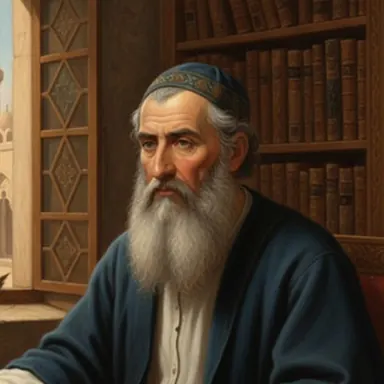
The Work, Legacy and Torah Teaching of Rabbenu Chananel ben Chushiel: The Transitional Link between the Geonic Period and the Period of the Rishonim
14 min read2,851 words
Summary
The text surveys the figure of Rabbenu Chananel ben Chushiel, a highly influential Torah sage who was active in Kairouan in Morocco in the 11th century and served as a historical transitional link between the Geonic period and the period of the Rishonim. The source stresses his innovative exegetical enterprise on the Babylonian Talmud, which was characterized by a systematic summary of the sugyot (Talmudic discussions), the revival of the use of the Jerusalem Talmud as an exegetical tool and meticulous care for the precision of the text. Alongside his halakhic achievements, the text describes his rationalist approach rejecting anthropomorphism and his intellectual struggle against the Karaite movement through his commentaries on Scripture. In conclusion, the text clarifies how his spiritual legacy spread throughout the Torah world, from his disciple the Rif to the sages of Ashkenaz and Sepharad, and became an inseparable part of the canon of modern Gemara study.
Rabbenu Chananel ben Chushiel (known as Rabbenu Chananel, and in foreign languages Ḥananel ben Ḥushiel; died around the years 1050–1057 CE) is considered one of the most central and influential figures in the history of Torah literature [cite: 1, 2, 3, 4]. His spiritual and exegetical work in North Africa during the 11th century marked a historic turning point: the transition from the exclusive Torah centers of the Geonim of Babylonia to the era of the "Rishonim" in the West [cite: 2, 5, 6]. As head of the Kairouan yeshiva in Tunisia, Rabbenu Chananel laid the foundations for the rational-systematic method of interpreting the Babylonian Talmud, revived engagement with the Jerusalem Talmud, and stabilized a halakhic and exegetical methodology that deeply influenced both the sages of Sepharad and the sages of Ashkenaz and France [cite: 5, 6, 7, 8].
Biographical Background, the Torah Center in Kairouan and Historical Context
Rabbenu Chananel was born, apparently, at the end of the 10th century (around the years 965–990 CE) [cite: 1, 2, 3, 4]. According to some studies and historical sources, his original name was Elchanan, but he was known to the public by the name Chananel [cite: 2]. His father, Rabbenu Chushiel ben Elchanan, was one of the sages of Italy (from the settlements of southern Italy, apparently from Bari), who emigrated to Kairouan in Ifriqiya (present-day Tunisia) and established there an independent and flourishing Torah center [cite: 2, 5, 6]. A well-known historical tradition links his father's arrival with the story of the "Four Captives," a tale expressing the transfer of the Torah center of gravity from Babylonia to the expanses of the Mediterranean basin [cite: 5, 6].
Upon his father's death, Rabbenu Chananel inherited the leadership of the yeshiva and the community in Kairouan, acting alongside his contemporary and colleague, Rabbenu Nissim ben Yaakov (Rabbenu Nissim Gaon) [cite: 2, 6]. Alongside his spiritual standing as a judge and as head of the study hall, Rabbenu Chananel was a man of property and great wealth, who used his riches for extensive financial support of Torah scholars and Torah institutions in Kairouan and beyond [cite: 2, 5]. Following his death, when he left behind nine daughters and no sons, and in combination with the persecutions and political upheavals that befell North Africa during the 12th century, the splendid Torah center in Kairouan declined and gradually disappeared [cite: 5]. Nevertheless, the written legacy of Rabbenu Chananel survived and was disseminated throughout the Jewish world [cite: 5, 6].
| Biographical / bibliographical parameter | Details and historical data |
|---|---|
| Period of activity | The 11th century (born c. 965–990, died c. 1050–1057) [cite: 1, 2, 3, 4, 6] |
| Main place of activity | Kairouan (Qayrawan), North Africa (Tunisia) [cite: 1, 2, 3, 5] |
| Public office | Head of the yeshiva and judge of the community in Kairouan [cite: 2, 6] |
| Influential figures and teachers | Rabbenu Chushiel (his father), close affinity to the teaching of Rav Hai Gaon and Rav Saadia Gaon [cite: 2, 4, 5, 9] |
| Notable disciples and protégés | Rav Yitzhak Alfasi (the Rif), Rav Natan of Rome (author of the "Arukh") [cite: 2, 5, 6, 10] |
| Main works | Commentary on the Babylonian Talmud (mainly Moed, Nashim, Nezikin), commentary on the Torah, commentary on Ezekiel [cite: 1, 3, 6, 11] |
The Exegetical Enterprise on the Babylonian Talmud: Methodology and Structural Innovations
The most famous and influential work of Rabbenu Chananel is his commentary on the Babylonian Talmud [cite: 1, 4, 6]. This work is considered the first attempt in the history of the Oral Torah to create a continuous, systematic and comprehensive commentary on the sugyot of the Talmud (Shas), unlike the specific responsa or collections that characterize the literature of the Geonim [cite: 6]. The commentary covered mainly the orders Moed, Nashim and Nezikin, together with individual tractates from other orders such as Berakhot and Chullin [cite: 1, 6].
The Principles of the Exegetical Method and Teaching the Course of the Sugya
Unlike Rashi's verbal-structural method of interpretation, which advocates a focused explanation of each and every phrase and of the details of the language, Rabbenu Chananel adopted a concise and synthetic methodology [cite: 12]. The commentary does not detain the learner over every word, but formulates the general content of the sugyot, sets out the main course of the give-and-take (shakla ve-tarya), and summarizes the halakhic conclusion that emerges from it [cite: 12]. Rabbenu Chananel regarded the work of interpreting and translating the Talmudic sugya as a religious service of the first order, which he called "the work of Heaven" [cite: 2].
Incorporating the Jerusalem Talmud as an Exegetical and Halakhic Tool
One of the boldest and most significant innovations of Rabbenu Chananel was the revival of regular study of the Jerusalem Talmud and its transformation into an exegetical tool of the first order for understanding the Babylonian Talmud [cite: 5, 7, 13]. Until his days, the Jerusalem Talmud suffered from relative neglect in the centers of Babylonia. The study hall in Kairouan, led by Rabbenu Chananel and Rabbenu Nissim, systematically compared sources from the Land of Israel and from Babylonia [cite: 7, 13]. Rabbenu Chananel used the Yerushalmi to decide doubts about the reading of the Bavli, to explain obscure mishnayot, and even to propose a different division and punctuation of the words of the Tannaim and Amoraim [cite: 13, 14, 15]. These positions and explanations, drawn from the Yerushalmi through the commentary of Rabbenu Chananel, later seeped into the works of the Rif, the Rambam and the Tosafists [cite: 7, 8, 10].
Textual Criticism and Textual Meticulousness
In his commentaries Rabbenu Chananel displayed a high textual sensitivity. He engaged in emending readings, compared different manuscripts of the Gemara, and decided on the correct reading according to the rules of parallel sugyot and according to traditions that reached him from his teachers and from the Geonim of Babylonia [cite: 2, 12, 16]. The fluency of his text served as a touchstone for Sephardi and Ashkenazi sages alike in their attempt to establish the original Talmudic text.
Subordination to the Authority of the Geonim and the Transition to Halakhic Independence
Despite his originality, Rabbenu Chananel stood on the seam line between the periods. In his Talmudic and halakhic work he displayed absolute loyalty to the rulings and traditions of the Geonim of Babylonia, foremost among them Rav Hai Gaon and Rav Saadia Gaon [cite: 2, 5, 6]. He often submitted to the decisions of the Geonim and declared explicitly that his generation did not have the authority to disagree with their halakhic determinations [cite: 6]. This approach later changed with his disciple, the Rif, who adopted greater independence in legal decision on the basis of independent analysis of the sugyot [cite: 6].
His Biblical Teaching, Theology and the Polemic against the Karaites
Alongside his extensive Talmudic work, Rabbenu Chananel composed a comprehensive commentary on Scripture (the Pentateuch and the Book of Ezekiel) [cite: 3, 11]. Although his complete work on the Torah has not survived in its entirety to our day, extensive parts of it were preserved through detailed quotations in the writings of medieval commentators, foremost among them Rabbenu Bachya ben Asher and the Ramban [cite: 2, 8, 11, 17].
The intellectual conception of Rabbenu Chananel was characterized by a synthesis of peshat (plain-meaning) interpretation, the rejection of anthropomorphism and a resolute intellectual struggle against the sectarian currents of his time [cite: 11, 18, 19]. In his commentary on the Torah a sharp polemical motive stands out against the Karaite movement, which denied the authority of the Oral Torah [cite: 11]. Rabbenu Chananel used the explanation of the verses of the Pentateuch to prove the necessity of the tradition of the Oral Torah, and showed how many practical commandments (such as the laws of the Sabbath, the festivals and monetary law) cannot be put into practice in the abstract without the explanation and detail received in the tradition of the Sages [cite: 11].
Like the approach of the Geonim of Babylonia (such as Rav Saadia Gaon and Rav Hai Gaon), Rabbenu Chananel adopted a rationalist and critical approach toward aggadic sayings and the corporeal descriptions appearing in the words of the Sages [cite: 17, 18, 19]. Every expression attributing a form, limbs or material values to the Holy One, blessed be He, was interpreted by him allegorically or as a metaphor meant to make the matter comprehensible to the ear [cite: 18, 19]. Midrashim and aggadot that contradicted common sense or the principles of faith were not taken literally, but as parables with a moral and conceptual message [cite: 17, 19]. This rational conception contributed greatly to the formation of the philosophical-Torah approach that developed later in Spain and Egypt in the Rambam [cite: 2, 7, 10].
Comparative Methodological Analysis
To appreciate the methodological uniqueness of Rabbenu Chananel, one must note the differences between him and central sages of his time and after him.
| Parameter of comparison | Rabbenu Chananel (Kairouan) [cite: 2, 5] | Rav Hai Gaon (Babylonia) [cite: 2, 5, 6] | Rashi (Ashkenaz/France) [cite: 5, 12] | Rav Yitzhak Alfasi, the Rif (North Africa/Spain) [cite: 5, 6, 10] |
|---|---|---|---|---|
| Structure of the Talmudic work | Continuous, thematic and concise commentary on the course of the sugya [cite: 12] | Focused responsa and specific explanations of words/passages [cite: 6] | Phrase-by-phrase commentary, verbal and detailed [cite: 12] | Digest of the Talmud (concentrating the halakha and omitting superfluous give-and-take) [cite: 5, 6, 10] |
| Reliance on the Yerushalmi | Most central; systematic comparison and rulings according to it [cite: 5, 7, 13] | Limited; absolute priority to the Babylonian Talmud | Restricted; occasional use only | Very extensive (following Rabbenu Chananel) [cite: 6, 7, 10] |
| Attitude to the authority of the Geonim | Absolute subordination and avoidance of open dispute [cite: 6] | Represents direct Geonic authority | Exegetical independence alongside respect for tradition | Independent analysis and decision even against the Geonim [cite: 6] |
| Position on the page of the printed Talmud | Alongside the text (mainly in the orders Moed and Nezikin) [cite: 1, 5, 12] | Not printed on the page | On the page, on the inner side [cite: 12] | Printed separately at the end of the tractate [cite: 5, 7] |
His Disciples, the Dissemination of His Writings and His Influence on the Chain of Tradition
The influence of Rabbenu Chananel spread with the utmost speed beyond the borders of North Africa, and encompassed all the Jewish centers in East and West [cite: 5]. The greatest of his disciples was Rabbi Yitzhak Alfasi (the Rif), who adopted his teacher's methodology in dividing the sugyot, in using the Jerusalem Talmud and in analyzing the text, and made it the basis for his great halakhic work, "Sefer HaHalakhot" [cite: 2, 5, 6, 10]. Extensive parts of the Rif's work are based directly on the words of Rabbenu Chananel, sometimes in anonymous quotation and sometimes with open discussion [cite: 6]. Another distinguished disciple was Rabbi Natan ben Yechiel of Rome, author of the book "Arukh," who wove into his Talmudic dictionary hundreds of interpretations, linguistic definitions and readings originating in the commentaries of Rabbenu Chananel, and thereby contributed to the dissemination of his legacy in Italy and Europe [cite: 5]. Likewise, Shmuel HaNagid, one of the leaders of Spanish Jewry, maintained close contact with him and was deeply influenced by his teaching [cite: 2, 6].
During the 12th century the commentaries of Rabbenu Chananel reached France and Ashkenaz, and became a permanent asset in the study halls of the Tosafists and of Rabbi Shlomo Yitzhaki (Rashi) [cite: 5, 8, 20]. The Tosafists treated his rulings and his readings with the utmost seriousness, and based a considerable part of their difficulties and answers on the citations of his words [cite: 7, 20]. At the same time, in the Torah center in Spain and Egypt, the Rambam saw in Rabbenu Chananel one of the pillars of halakhic decision, and his conceptions passed through the Rif into the halakhic codex "Mishneh Torah" [cite: 7, 10]. Further sages such as the Ramban, Rabbenu Bachya ben Asher and the Rashba made extensive use of his commentaries on Scripture and the Talmud, and copied whole passages from his writings [cite: 5, 8, 11, 15, 17].
The Discovery of the Manuscripts and His Reception into the Printed Talmudic Canon
Despite his eminent standing, the commentary of Rabbenu Chananel on the Talmud circulated for hundreds of years mainly through manuscripts and quotations in the books of the Rishonim [cite: 6]. Thousands of pieces and fragments of his commentaries were uncovered during the 19th and 20th centuries in the Cairo Genizah, a source that testifies to the wide dissemination of his writings in the Middle East and North Africa [cite: 6].
With the development of Hebrew printing, and especially in the edition of the Babylonian Talmud of the Widow and Brothers Romm press (the Vilna Shas, 1880–1886), a place of honor was established for the commentary of Rabbenu Chananel [cite: 1, 5, 12]. The commentary was incorporated in the margins of the page of the Gemara in many tractates (mainly in the orders Moed and Nezikin), alongside the commentaries of Rashi and the Tosafot [cite: 1, 5, 12]. This honor was granted to a very small number of sages, and it expresses the general recognition of Rabbenu Chananel as a foundational commentator of the Talmud [cite: 5].
Conclusions and Summary
Rabbenu Chananel ben Chushiel represents a unique point on the horizon of the history of halakha and Jewish thought [cite: 2, 5, 6]. His work combined the eastern Geonic tradition of Babylonia with the openness and creativity of the new Torah centers in the West [cite: 2, 5, 6]. His pioneering contribution was expressed in the creation of the first continuous commentary on the Babylonian Talmud, which formulates the course of the sugya and its conclusions in a concise and orderly manner, in returning the Jerusalem Talmud to the center of the stage of study and legal decision, and in establishing a methodology of textual emendation and textual precision [cite: 1, 2, 5, 6, 7, 12, 13, 16].
In addition, the formulation of a rational theological conception that rejects anthropomorphism and sets clear limits in the interpretation of the aggadot of the Sages, together with raising central disciples and a direct influence on the great shapers of halakha and exegesis (from the Rif and the Rambam to Rashi, the Tosafists and the Ramban), established his standing [cite: 5, 7, 8, 10, 17, 18, 19]. Thanks to this foundational enterprise, the work and teaching of Rabbenu Chananel remain to this day an inseparable cornerstone of the study of the Talmud and of halakhic decision in all the Diasporas of Israel [cite: 1, 5, 12].
Sources20
- 1.Rabbeinu Chananel on Chagigah | The Sefaria Library, sefaria.org/Rabbeinu_Chananel_on_Chagigah
- 2.Commentators:R. Chananel b. Chushiel/0/en - ALHATORAH.ORG, alhatorah.org/Commentators:R._Chananel_b._Chushiel
- 3.Chananel Ben-chushiel - McClintock and Strong Biblical Cyclopedia, biblicalcyclopedia.com/C/chananel-ben-chushiel.html
- 4.Chananel ben Chushiel — Actor - Fame.am, fame.am/person/chananel-ben-chushiel
- 5.Major Sepharadic Rishonim - Chabad.org, chabad.org/library/article_cdo/aid/2617022/jewish/Major-Sepharadic-Rishonim.htm
- 6.Evolution of Torah: Muslim Spain and North Africa - Jewish Theological Seminary, jtsa.edu/torah/eot-season-2-episode-2/
- 7.Talmud - Wikipedia, en.wikipedia.org/wiki/Talmud
- 8.מחברים | מקורות מתוך ספריית ספריא, sefaria.org.il/topics/category/authors
- 9.Hebrew Rabbenu Chananel ben Chushiel on Talmud Masechet Berachot רבינו חננאל | eBay, ebay.com/itm/375782854836
- 10.Halachot Rav Alfas by Yitzhak ben Ya'akov Alfasi (the Rif), cja.huji.ac.il/browser.php?mode=set&id=37806
- 11.Rabbeinu Chananel on Numbers | Sefaria Library, sefaria.org/Rabbeinu_Chananel_on_Numbers
- 12.אנציקלופדיה יהודית דעת - תלמוד בבלי ;, daat.ac.il/encyclopedia/value.asp?id1=841
- 13.הרהור כדיבור – בין כוונה לאמירה, asif.co.il/wp-content/uploads/2025/11/הרהור-כדיבור.pdf
- 14.מהו ה'כי' היווני לדעת הרמב”ם? / הרב יעקב סייג - מכון שלמה אומן, machonso.org/hamaayan/?gilayon=46&id=1395
- 15.בישול בצד המיחם – תלמוד בבלי: שבת לח ע״ב, י–יא | שטייגן, app.shtaygen.ai/gold/SHB_A03_O01_S08_M01
- 16.תחת אדום או תחת ישמעאל - מחלקי המים, mayim.org.il/?meyuhadim=תחת-אדום-או-תחת-ישמעאל
- 17.חברותא - ברכות - תורת אמת, toratemetfreeware.com/online/f_02337.html
- 18.Torah Shelemah Shemot 14 – תורה שלמה שמות יד – Rashi HaMefoar – AlHaTorah.org, rashi.alhatorah.org/Dual/Torah_Shelemah/Shemot/14.31
- 19.על מצוות הסיעוד, על אהבת הרע ועל הרופא כחבר - מכון שלזינגר, medethics.org.il/article/r0791013a/
- 20.סדר פרשיות התפילין - רבנו תם ועוד - ישיבת הר ברכה, yhb.org.il/shiurim/the-order-of-the-tefillin-passages/