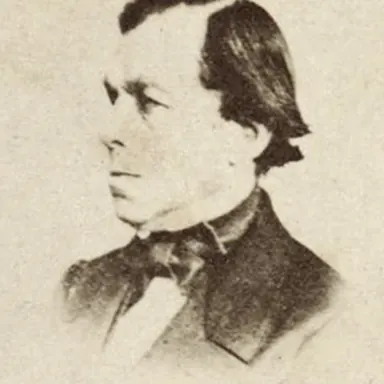
Combining scholarly research with loyalty to tradition.
Biography
An orientalist and scholar of Judaism who returned ibn Gabirol to the history of philosophy and edited the Guide of the Perplexed from the Arabic original.
includes 2 inspiration linksThe generations follow the Rambam’s introduction to the Mishneh Torah. A dashed line is inspiration, not direct transmission.
The Scholarly Work and Torah-Philosophical Teaching of Solomon Munk
18 min read·3,699 words
Summary
The text surveys the scholarly and public work of Solomon Munk, a French-Jewish scholar who was a key figure in the Chokhmat Yisrael movement in the 19th century. At the focus of the article stand his unprecedented research contributions, headed by the revelation of the identity of Solomon ibn Gabirol as the author of the philosophical book "Mekor Chayyim," alongside the publication of the first scholarly edition of the "Guide of the Perplexed" in the original language. The author of the article stresses how Munk, despite his blindness, used Semitic linguistics and philology to prove the originality and centrality of Jewish thought in shaping Western and Christian culture. Beyond academia, the text describes Munk's decisive involvement on the national plane, especially in his role as interpreter in the delegation to rescue the Jews of Damascus, where he secured their full acquittal thanks to his linguistic precision. In sum, the source presents Munk as a spiritual architect who bridged the Torah tradition and modern scholarship, while defending the honor of the Jewish people and its rights through intellectual superiority.
Solomon (Salomon) Munk (1803–1867) represents one of the most fascinating and influential figures in the history of the Science of Judaism (Wissenschaft des Judentums) and of Orientalist scholarship in the 19th century [cite: 1, 2]. Munk, who was born in Germany and worked in France, served as a vital link in the transmission of ideas and research methodologies between the German and French spheres [cite: 1, 2, 3]. A unique combination of profound traditional Talmudic education from his father's home and from the great Torah scholars of Silesia, together with outstanding command of Semitic linguistics and classical philosophy, enabled him to bring about a veritable revolution in the understanding of medieval Jewish and Muslim thought [cite: 1, 2, 4]. His research was not merely dry scholarly contribution, but bore a distinctly defensive and emancipatory character, intended to prove the central place of Judaism in shaping Western culture and Christian scholasticism [cite: 1, 5, 6].
Biographical Background and the Intellectual Path of Solomon Munk
Solomon Munk was born in Gross-Glogau in Prussia (today Poland) to a Jewish family with a deep attachment to tradition [cite: 2]. His father, who was a beadle in the local Jewish community, gave him his initial education in Hebrew and Scripture [cite: 2, 7]. After his father's death, Munk continued his Torah studies in the Talmud class of Rabbi Jacob Joseph Ettinger, where he acquired outstanding mastery of rabbinic and halakhic literature [cite: 2]. Already at the age of fourteen he displayed such great expertise that he served as Torah reader in the synagogue of the "Malbish Arumim" society in his native city [cite: 2].
In 1820 Munk moved to Berlin, where he entered the sphere of influence of the pioneers of the "Science of Judaism" and forged firm bonds of friendship with Leopold Zunz [cite: 2]. At that time he devoted himself to the study of Greek and Latin together with the philologist A. W. Zumpt and the thinker Eduard Gans [cite: 2]. Because of the institutional restrictions in Prussia, which prevented Jews from obtaining academic posts or government degrees, Munk decided to emigrate to France, but not before spending a semester at the University of Bonn, where he studied Arabic with the renowned Orientalist Georg Freytag and Sanskrit with Christian Lassen [cite: 2, 8].
Upon arriving in Paris in 1828, Munk found his initial livelihood as a private tutor in the homes of the Rothschild family, and in particular taught the young brothers Alphonse and Gustave de Rothschild [cite: 2, 9]. In 1838 he was appointed to catalogue manuscripts in Hebrew, Chaldean, Syriac and Arabic in the National Library in Paris (Bibliothèque Nationale) [cite: 2]. His strenuous and Sisyphean work with the ancient manuscripts eventually led to the complete loss of his sight in 1850 [cite: 9]. Despite his blindness, Munk continued extensive and groundbreaking scholarly activity for another seventeen years [cite: 9].
Below is a chronological survey of the principal milestones in the life and career of Solomon Munk:
The Discovery of Mekor Chayyim and the Establishment of Solomon ibn Gabirol's Standing
Munk's most dramatic scholarly discovery, which was published in 1846 and caused an enormous sensation in the world of research, concerned the identity of the author of the philosophical book Fons Vitae (The Fountain of Life) [cite: 9, 10, 11]. This metaphysical Neoplatonic work, which survived in its entirety only in a Latin translation from the 12th century made by Dominicus Gundissalinus and John of Seville, was well known in medieval Christian scholasticism [cite: 10, 12]. Prominent Christian thinkers, such as John Duns Scotus and William of Auvergne, relied on the work and saw in it proof of the truth of Christianity, on the assumption that its author, called "Avicebron" or "Avencebrol," was a Muslim or Arab-Christian philosopher [cite: 9, 10, 13].
Munk, while rummaging through the manuscripts of the National Library in Paris, came upon a manuscript of the Spanish sage Shem Tov ben Yosef ibn Falaquera from the 13th century [cite: 14, 15]. This manuscript contained a Hebrew translation and abstract of a work called Mekor Chayyim [cite: 14]. Munk carried out a meticulous textual comparison between Falaquera's passages and the Latin translation of the Fons Vitae and found a complete word-for-word correspondence [cite: 9, 14]. This discovery led to the unequivocal conclusion that the mysterious "Avicebron" was none other than the great Jewish poet and philosopher Rabbi Solomon ibn Gabirol [cite: 9, 10, 14].
Ibn Gabirol wrote the book originally in Arabic under the title Yanbu' al-Hayat, but the book was almost entirely forgotten among Jewish scholars [cite: 10, 12, 13]. The complete absence of citations from Scripture, from the Talmud or from any other religious source in the work contributed to its lack of popularity in the Jewish street, but facilitated its absorption into the Christian Church [cite: 10, 13]. Munk published his findings in his monumental book Mélanges de Philosophie Juive et Arabe (1857–1859), which included the Hebrew text of Falaquera's Likkutim (excerpts), its translation into French, and an in-depth study of ibn Gabirol's metaphysical system, which is based on the conception of universal spiritual matter (universal hylomorphism) and the role of the divine will as mediator in creation [cite: 9, 12].
This discovery changed the writing of the history of philosophy from the ground up [cite: 16]. Munk used it to refute the claim of the German historian Heinrich Ritter, who held in his book on the history of philosophy that the Jews had produced no independent and original thought in the Middle Ages and were passive followers of the Arabs [cite: 1, 16]. The proof of ibn Gabirol's originality and of his decisive influence on the great Christian philosophers provided modern Judaism with a first-rate apologetic tool in its struggle for equal rights and for intellectual appreciation from the European scientific community [cite: 1, 5, 6].
The Publication of the Guide of the Perplexed in the Arabic Original and Its Translation into French
The pinnacle of Munk's scholarly work was the first critical edition of the Judeo-Arabic original of the Guide of the Perplexed (Dalalat al-Ha'irin) by Maimonides (Rambam), accompanied by an annotated and detailed French translation called Le Guide des Égarés [cite: 9, 17, 18]. The work was published in three hefty volumes between 1856 and 1866 [cite: 2, 9].
Until the appearance of Munk's edition, the Jewish and Christian public in Europe read the book mainly through the Hebrew translations of Samuel ibn Tibbon and Judah al-Harizi, or through secondary Latin translations that were riddled with corruptions and misunderstandings [cite: 19, 20]. Munk, who turned directly to the Arabic manuscripts written in Hebrew letters (Judeo-Arabic), labored to refine the original text and cleansed it of copyists' errors that had accumulated over centuries [cite: 2, 9, 20].
In the course of his translation and notes, Munk devoted extensive space to analyzing the translation methods of the Rishonim, and especially that of Samuel ibn Tibbon [cite: 21, 22]:
Terminological precision versus literalness: Munk bestowed great praise on ibn Tibbon for his outstanding scientific precision and his ability to create Hebrew philosophical terminology ex nihilo [cite: 22, 23]. Munk defined ibn Tibbon as the "prince of translators" and justified the preference for the term "nevukhim" (perplexed), from the Tibbonian version, over "to'im" (the straying), since the term describes precisely the psychological and intellectual state of the learner who is in a heart-rending inner conflict between the dictates of human reason and the faith of the Torah [cite: 22, 24].
The weaknesses of al-Harizi's translation: By contrast, Munk pointed out that Judah al-Harizi's translation tended toward literary simplification and biblical rhetorical flourishes, while sacrificing the conceptual precision necessary for understanding Maimonides' metaphysical arguments [cite: 23, 25].
Munk was not content with translating words, but opened a window onto the spiritual and cultural world of Maimonides by reconstructing the philosophical sources of Aristotle's books of Physics and Metaphysics, as well as the writings of the Islamic mutakallimun (the "Mu'tazila" and the "Ash'ariyya") and the great Muslim philosophers [cite: 2, 13, 26]. Munk's edition turned the study of Maimonides into an exact science, and set new standards of philological research on which many modern translations (such as that of Shlomo Pines) relied to a great extent [cite: 27, 28].
However, Munk's historicist approach aroused in the course of time criticism from later thinkers, headed by Leo Strauss [cite: 29]. Strauss argued that Munk, being captive to the modern conception of progress of the 19th century, tended to interpret Maimonides in an overly historical manner, which blocked his deep understanding of the unique esoteric and hermeneutic character of the Guide of the Perplexed, which is meant to slip past the eyes of the masses and speak only to the select few [cite: 24, 29].
Additional Scholarly Contributions and Philological Activity
Alongside these two giant undertakings, Munk left an indelible mark in a long series of studies and philological discoveries that deciphered the figures of the sages of the Golden Age in Spain and North Africa [cite: 2, 9]:
Study of Hebrew grammar: In his book Notice sur Abul Walid Merwan ibn Djanah... (1850–1851), which won the prestigious "Volney" Prize from the French Institute, Munk exposed and illuminated the revolutionary work of Rabbi Jonah ibn Janah and of other Hebrew grammarians of the 10th and 11th centuries, and thereby laid a scientific foundation for the study of the development of the Hebrew language in the Middle Ages [cite: 2].
Study of Rav Saadia Gaon: Munk published a pioneering study on Rasag's translations and commentaries on Scripture, and revealed an ancient Persian translation of the Book of Isaiah, which broadened the geographical and linguistic perspective of the Science of Judaism [cite: 2].
Study of the history of the Land of Israel: His geographical-historical work Palestine (1845) presented a comprehensive archaeological and historical description of the Holy Land [cite: 2]. This book was later translated into German and served as a first-rate aid for scholars of Scripture and biblical history at that time [cite: 2].
Study of the disciples of Maimonides: In his research of 1842, Munk proved that Joseph ben Judah ibn Shim'on, the foremost disciple of Maimonides, to whom the Guide of the Perplexed was dedicated, is not identical with the philosopher and physician Joseph ben Judah ibn Aknin [cite: 30]. Munk pointed out that the interchange of names between Yosef ben Yehuda and Yusuf ibn Yahya was a common phenomenon among Jews in Islamic lands, and thereby resolved a deep historiographical confusion that had accompanied the study of the history of the sages of Spain [cite: 30].
Discoveries outside Jewish thought: Even after he lost the light of his eyes, Munk succeeded in deciphering and translating complex Phoenician inscriptions found in Marseille and on the sarcophagus of Eshmunazar, king of Sidon [cite: 2]. He also discovered the lost Arabic manuscript of al-Biruni's description of India, an achievement that made him a revered figure among scholars of general Eastern culture as well [cite: 2].
His Defense of the Jewish Communities and the Damascus Blood Libel
Munk's public and scholarly activity always combined pure intellectualism with Jewish national commitment [cite: 1]. The Damascus blood libel of 1840, regarded as one of the historical turning points in shaping modern Jewish mutual responsibility and solidarity, enlisted Munk on the front line of the diplomatic and public struggle [cite: 31, 32, 33]. Following the arrest and torture of the leaders of the Jewish community in Damascus on the false charge of ritual murder, a delegation of European Jewish notables went to Egypt (which then ruled Syria) to act before the ruler Muhammad Ali [cite: 31, 34, 35].
Munk joined the delegation as deputy and chief interpreter of the French-Jewish statesman Adolphe Crémieux [cite: 9, 36]. Munk's philological expertise in the Arabic language proved decisive at a most critical moment of the negotiations [cite: 2, 9]. When Muhammad Ali proposed signing a decree (firman) for the release of the prisoners, Munk discovered (although some attribute this to Louis Loewe, Montefiore's secretary) that the word "pardon" or "mercy" (la grâce / mercy) had been inserted into the Arabic text of the draft [cite: 2, 9].
Agreement to this wording would have left the guilt of the murder in place and presented the release as a mere gesture of grace on the part of the ruler [cite: 2, 9]. Munk demanded firmly that the wording be changed, and following Crémieux's insistence the word was replaced with words indicating "freedom and peace" and "the doing of justice" (justice) [cite: 2, 9, 37]. This change secured the full and absolute acquittal of the Jews of Damascus of all guilt [cite: 2, 35].
This journey had long-term implications for Munk's cultural work [cite: 9]:
Educational modernization: Munk used his stay in Cairo and Alexandria to promote a comprehensive reform of the local Jewish educational system [cite: 2, 9]. He encouraged the establishment of modern schools on European models, which combined secular and scientific studies alongside Torah studies [cite: 2, 9].
Religious reconciliation: He worked energetically to bring hearts closer and to prevent the social and religious rupture between the community of Rabbanite Jews and the community of the Karaites in Egypt [cite: 9].
Literary acquisition: During the journey Munk acquired dozens of precious manuscripts in Arabic and Hebrew for the National Library in Paris, and thereby contributed to rescuing spiritual treasures of Eastern Jewry from corruption and destruction [cite: 2, 9].
Beyond his practical activity, Munk's political thought sought to bridge French nationalism and Jewish identity [cite: 38]. Together with the thinker Joseph Salvador, Munk tended to present deep conceptual parallels between the political and constitutional structure of the ancient Israelite community and the ideology of the modern French republic [cite: 38]. This move was intended to show that the republican values of equality, liberty and fraternity of peoples are not foreign to Judaism, but are firmly anchored in the biblical and prophetic tradition, and thereby gave Jews an inner spiritual justification for their full integration as equal citizens in their new homeland [cite: 38].
His Philosophical Teaching and the Historiography of Jewish Thought
In his scholarly and historiographical works Munk presented an orderly doctrine defining the character and development of Jewish philosophy across the generations [cite: 39]. In his informative work Esquisse historique de la philosophie chez les Juifs (which was published in English in 1881), Munk divided Jewish thought into periods and characterized its conceptual boundaries [cite: 39].
Munk held the position that Jewish philosophy reached its peak of flourishing and perfection in the 12th century, through the synthetic enterprise of Maimonides, who sought to reconcile Aristotelian rationalism with monotheistic religious faith [cite: 39]. From this standpoint, Munk examined other thinkers:
Yehuda HaLevi and the struggle against philosophy: Regarding the Kuzari of Rabbi Yehuda HaLevi, Munk wrote that although it presents a comprehensive theological system for justifying rabbinic Judaism, in practice it is "a veritable military campaign against philosophy" [cite: 17]. Munk stressed that Yehuda HaLevi's struggle was directed against the mistaken pretension of autonomous human reason to attain supreme metaphysical truth without the need for historical divine revelation [cite: 17].
Rabbi Isaac Abravanel as an example of decline: Munk devoted only limited space to the thought of Don Isaac Abravanel [cite: 39]. In his eyes, Abravanel represented the remnants of the late scholastic tendency, which tried in a desperate and unoriginal manner to reconcile religious dogmas with a philosophical rationalism whose time had passed [cite: 39]. Munk saw in Abravanel a thinker situated on the seam between the Middle Ages and the Renaissance, who drew simultaneously on Jewish and Christian thought, to be sure, but did not present an independent philosophical breakthrough and functioned mainly as a preserver and disseminator of earlier knowledge in periods of cultural decline [cite: 39].
This historiography became an accepted academic canon throughout the 19th century, and determined that the main value of Jewish philosophy lies in its rationalist tendency and in its fruitful dialogue with general culture [cite: 1, 39].
Below is a summary of Solomon Munk's important scholarly and historical writings, presenting their specific research contribution:
Summary and Conclusions
Solomon Munk was not merely a brilliant philologist or a diligent archival researcher, but a spiritual architect who redefined the boundaries and value of Jewish thought in the eyes of the modern scientific world [cite: 1, 42]. Through uncompromising philological work—carried out for the most part in complete blindness and relying on tremendous willpower and a phenomenal memory—Munk succeeded in reopening the scholarly gates to the understanding of medieval Judeo-Arabic literature [cite: 2, 9].
His research on Solomon ibn Gabirol and Maimonides proved empirically that the Jewish Middle Ages were not a period of stagnation and religious dogmatism, but a period of free creativity, fruitful cultural dialogue and profound philosophical synthesis that directly influenced Christian scholasticism and the development of Western thought as a whole [cite: 1, 6, 12].
Alongside his academic contribution, Munk combined deep social and national commitment, expressed in the rescue of the Jews of Damascus and in drafting the legal declaration that defended their honor, as well as in acquiring dozens of ancient manuscripts that ensured the preservation of the Torah heritage for coming generations [cite: 2, 9]. His scholarly work and Torah teaching remain to this day a cornerstone for every researcher, learner and man of the spirit who seeks to grasp the secret of the synthesis between fidelity to tradition and open, universal scientific research [cite: 1, 43].
8.Judaism's Embrace of Islam: An Historical Inquiry into the Role of Islam in Modern Jewish Thought - Harvard University, cmes.fas.harvard.edu/file_url/1663
The Work and the Torah and Scholarly Teaching of Solomon Munk: A Renaissance of Jewish-Arabic Philosophy in the 19th Century
21 min read·4,268 words
Introduction: The Intellectual Revolution of Jewish Orientalism in France
The 19th century was marked by a dramatic transition for European Jewry, from a culture of closing itself within the four cubits of halakha and Talmud toward a world of science, critical research and integration into modern academia. At the heart of this process stood the figure of Solomon Munk (Salomon Munk), a scholar who succeeded in bridging the gap between traditional yeshiva scholarship and the philological precision of Western Orientalism.[1, 2] Munk was not only an Orientalist in the narrow sense of the word; he was an architect of a new Jewish identity, one based on recognition of Judaism's enormous contribution to world philosophy and science, especially through the complex interface with Islamic culture in the Middle Ages.[1, 3, 4]
Munk's work spread across many fields: from the scholarly editing of the writings of Maimonides and Rasag, through shattering discoveries in Neoplatonic philosophy, to geographical and archaeological research on the Land of Israel.[5, 6, 7] His uniqueness lies not only in his academic achievements, but also in his moral strength—his ability to continue his monumental lifework even after completely losing his eyesight, becoming a symbol of intellectual triumph over physical limitation.[5, 7] This report seeks to analyze in depth his work, his Torah teaching and his decisive influence on the Science of Judaism (Wissenschaft des Judentums) and on the study of general philosophy.
Beginnings: From the Ghetto of Silesia to the Halls of Science in Berlin
Solomon Munk was born on May 14, 1803 (or 1802 according to some sources) in Gross-Glogau in Prussia (today Poland).[5, 6, 8] His father, Lippmann Samuel Munk, was a community employee of limited means who served as a cantor and teacher, and he was the one who gave his son the beginnings of his education in Hebrew and Scripture.[5, 6, 8] After his father's death, Munk continued his Torah studies in the Talmud class of Rabbi Jacob Joseph Oettinger, where he stood out for his talents so that at the age of fourteen he was already appointed "ba'al koreh" (Torah reader) in the local synagogue.[6, 8]
Munk's deep Torah background was not merely a passing stage of his childhood; it formed the foundation for all of his later scholarly work. His direct understanding of Talmudic issues and of the rabbinic style enabled him to approach the manuscripts of the Middle Ages not as foreign objects but as a living part of his cultural identity.[1] In 1820 Munk moved to Berlin, where he was exposed for the first time to the winds of Enlightenment and to the first shoots of "Chokhmat Yisrael."[6, 8] In Berlin he made contacts with Leopold Zunz, the father of the scientific study of Judaism, and with the philologist A. W. Zumpt, under whom he began to study Latin and Greek.[6, 8]
His studies at the University of Berlin (1824) exposed him to the peak of German thought of the period. He heard the lectures of Hegel on philosophy, of Bopp on comparative linguistics and of Böckh on classical studies.[6, 8] This combination of Hegelian philosophy and rigorous Orientalist philology shaped Munk's thought; he aspired to show that Judaism is not a historical "fossil," as some German thinkers claimed, but a living and creative force that is integrated into the development of the general human spirit.[1, 3, 9]
Station of Study
Influential Figures
Main Subjects of Study
Influence on His Thought
Gross-Glogau
Rabbi Jacob Joseph Oettinger
Talmud, Scripture, Jewish tradition
Scholarly foundation and command of Hebrew
Berlin (gymnasium)
Leopold Zunz, A. W. Zumpt
Classical languages (Greek, Latin)
Entry into the world of "Chokhmat Yisrael"
University of Berlin
Hegel, Bopp, Böckh
Philosophy, linguistics, Orientalism
Scientific methodology and historical perspective
University of Bonn
Freytag, Lassen
Arabic, Sanskrit
Philological specialization in Semitic and Indo-European languages
Emigration to Paris: The Encounter with Emancipation and the National Library
The laws of the Prussian state at that time barred Jews from the possibility of obtaining academic degrees or from integrating into teaching and government posts.[6, 8, 10] This reality forced upon Munk a "voluntary exile," and in 1828 he moved to Paris, the center of Enlightenment and Jewish emancipation.[5, 6, 8] In Paris Munk found a far more open intellectual environment, and won the support of figures such as the poet Michael Beer and members of the Rothschild family, for whom he served as a private tutor.[6, 8, 10]
His joining the National Library in Paris (Bibliothèque Nationale) in 1838 as curator and cataloguer of Oriental manuscripts was the turning point of his career.[5, 6, 8] In this institution, which held one of the world's most important collections of Hebrew, Arabic and Syriac manuscripts, Munk found the raw material for his great discoveries. He devoted his time to meticulous cataloguing of the manuscripts, work that demanded not only immense linguistic knowledge but also a deep understanding of medieval philosophy and science.[6, 8, 11]
His research in Paris placed him as a pioneer in the field of "Judeo-Arabic." Munk understood that large parts of medieval Jewish creativity were written in Arabic, and that one cannot understand Maimonides or Rasag without complete command of the cultural and linguistic context of Islam.[1, 2] This approach was revolutionary, since it challenged the Eurocentric view of Judaism and emphasized the cultural "symbiosis" between Judaism and the Arab world.[1, 2, 9]
The Mission to Egypt and the Damascus Blood Libel (1840): Science in the Service of the People
In 1840 the Jewish world was shaken by the Damascus blood libel—the false accusation against Jews of the ritual murder of a Catholic monk. Adolphe Crémieux and Sir Moses Montefiore organized a diplomatic delegation to the East to bring about the release of the prisoners and the clearing of the Jews' name.[6, 7, 10] Munk, thanks to his command of Arabic and his Orientalist erudition, was added to the delegation as adviser and interpreter.[6, 7, 10]
Munk's activity in Egypt was not merely technical. He played a critical role in drafting the "firman" (the royal decree) of Muhammad Ali, ruler of Egypt. According to some sources, Munk (or Louis Loewe) noticed that the Arabic draft stated that the Jews were being granted "pardon" (mercy), a word hinting that they had been guilty and received forgiveness.[6, 8, 10] Following his insistence, the word was changed to "justice" or "freedom" (justice/freedom), which constituted official recognition of the complete innocence of the accused.[6, 8, 10]
Beyond the political aspect, the mission to Egypt enabled Munk to broaden his scholarly and Torah horizons:
1.Acquisition of manuscripts: Munk acquired for the National Library in Paris a rare collection of manuscripts, especially ancient Karaite literature from Cairo, which shed new light on the history of the currents within Judaism and on the development of biblical interpretation.[6, 7, 10, 11]
2.Education and modernization: He worked together with Crémieux to establish modern schools for the Jews of Egypt, out of a belief that broad education is the best tool for combating antisemitism and ignorance.[6, 8, 10]
3.Contact with the communities of the East: The direct encounter with the Jews of Islamic lands strengthened in Munk the conception that Judaism is a universal religion with deep roots in the East, a conception that served him later in his scholarly struggles against Christian historians.[1, 9]
Event
Year
Munk's Role
Result and Influence
The Damascus blood libel
1840
Interpreter and adviser to the Crémieux–Montefiore delegation
Release of the Jews and clearing their name of suspicion of ritual murder
Drafting of the firman
1840
Philological editing of the Arabic decree
Change of the terminology from "pardon" to "justice," recognition of innocence
Establishment of schools
1840-1841
Educational adviser
Modernization of Jewish education in Egypt and the Ottoman Empire
Manuscript-acquisition journey
1840
Acquired for the Bibliothèque Nationale
Enrichment of the Paris collection with rare Karaite and Judeo-Arabic manuscripts
The Discovery of Ibn Gabirol and Avicebron: Correcting a Historical Wrong
One of Munk's most stunning achievements, which entered his name into the history of general philosophy, was the identification of the author of the book "Mekor Chayyim" (Fons Vitae).[10, 12, 13, 14] For hundreds of years "Avicebron" was regarded as a Muslim or Arab-Christian philosopher, and his book became one of the pillars of Christian scholastic philosophy. Thinkers such as Albertus Magnus and Thomas Aquinas discussed his system without knowing that he was a Jew, Solomon ibn Gabirol.[2, 12, 13, 14]
In 1846 Munk discovered in the National Library a manuscript of Shem Tov ben Yosef ibn Falaquera (from the 13th century), which included "excerpts" translated into Hebrew from the book "Mekor Chayyim" by ibn Gabirol.[2, 10, 13, 14] Through a meticulous comparison between Ibn Falaquera's Hebrew text and the Latin translation of the Fons Vitae, Munk proved that they were exactly the same work.[2, 10, 13, 14]
This discovery was not merely a bibliographical curiosity; it had profound implications for the understanding of Jewish philosophy:
Restoring the philosophical standing: Until then ibn Gabirol was known mainly as a religious poet ("Keter Malkhut"). Munk showed that he was also an original and bold philosopher, the first to bring Neoplatonism into Europe.[2, 13, 14]
Universal hylomorphism: Munk analyzed ibn Gabirol's system, which maintains that all beings (including souls and intellects) are composed of matter and form, and showed how this conception influenced Christian thought and the doctrine of the divine will.[12, 13, 14]
Cultural context: The discovery proved that Jewish philosophy did not live in a bubble, but was an integral part of the Arab-Muslim philosophical discourse, to the point that Christian readers could not discern the Jewish origin of the author.[1, 2]
Munk published his findings in his monumental work Mélanges de philosophie juive et arabe (1859), a book that became a foundational work in the study of medieval philosophy.[5, 10, 13, 15]
"The Guide of the Perplexed": The Lifework and the Editing of the Arabic Text
If the discovery of ibn Gabirol brought Munk fame in the world of general philosophy, the editing and translation of Maimonides' "Guide of the Perplexed" were his most important contribution to the world of Torah and Jewish scholarship.[6, 7, 10] Between 1856 and 1866 Munk published three volumes under the title Le Guide des égarés.[6, 10, 16]
Until Munk, the "Guide of the Perplexed" was studied among the Jewish public mainly through the translation of Samuel ibn Tibbon. Although ibn Tibbon was an authoritative translator, his Hebrew language was at times artificial and difficult for the modern reader to understand, and he did not always render accurately the original Arabic philosophical terms.[16, 17, 18, 19] Munk, being an Orientalist of stature, approached directly the Arabic original written in Hebrew script (Judeo-Arabic).[6, 8, 10]
The innovations in Munk's work on Maimonides:
1.Printing the Arabic original: Munk was the first to publish a critical edition of the original Arabic text, using many manuscripts from Oxford, Paris and Leiden.[6, 8, 10] This enabled scholars to understand the linguistic nuances of Maimonides and to uncover his connections to the terminology of Aristotle, al-Farabi and Ibn Sina.[6, 8, 16]
2.An exemplary French translation: Munk's translation is regarded to this day as one of the most accurate and elegant. He succeeded in conveying the complexity of Maimonidean thought into a modern European language without losing the philosophical depth.[6, 10, 16]
3.Interpretation and notes: Munk added extensive footnotes that served as a kind of encyclopedia of medieval philosophy. He compared Maimonides' words with their Greek and Arabic sources, and explained the theological context in which the book was written.[2, 6, 8]
Munk saw in Maimonides the perfect model of rational Judaism. For him, the "Guide of the Perplexed" was not merely a historical book, but an educational tool for the modern Jew who seeks to combine religious faith with free scientific thinking.[1, 20]
Volume
Year of Publication
Main Content
Munk's Research Emphases
Part I
1856
Divine attributes, anthropomorphism, negation of corporeality
Analysis of the Arabic terminology of the names of God
Part II
1861
Proofs of the existence of God, the creation of the world, prophecy
Comparison with Aristotelian sources and Ibn Sina
Part III
1866
The Account of the Chariot, the reasons for the commandments, providence, the purpose of man
Rational explanation of the commandments and their historical context
The Study of Rav Saadia Gaon and the Early Grammarians
Munk was not content with Maimonides and ibn Gabirol. He was among the first in the 19th century to lift up the figure of Rav Saadia Gaon (Rasag), the father of Jewish philosophy in the Middle Ages.[6, 7] In 1838 Munk published his work "A Note on Rav Saadia Gaon and His Arabic Translation of Isaiah" (Notice sur R. Saadia Gaon et sur une Version Persane d'Isaie).[6, 7]
In this study, Munk not only identified lost fragments of Rasag's translations, but also showed how Rasag laid the foundations for linguistic and philosophical research in Judaism.[6, 7] Munk emphasized the importance of Rasag as one who fought the Karaites with rational and philological tools, and thereby shaped the face of rabbinic Judaism for generations.[7, 11]
In addition, Munk devoted important studies to early Hebrew grammarians, headed by Abu al-Walid Marwan ibn Janah (Rabbi Jonah ibn Janah).[1, 6, 8] His work on ibn Janah and on other grammarians of the 10th and 11th centuries won him a prestigious prize (Prix Volney) from the Institut de France.[6, 8] This work revealed the scientific precision with which the sages of Spain engaged in the study of the Hebrew language, a precision that served as an inspiration to Munk himself in his philological work.[1, 6]
"Palestine": The Geographical and Historical Description of the Holy Land
One of Munk's most widely read works, which went beyond the bounds of the narrow academic circle, was his book Palestine, Description Géographique, Historique et Archéologique (1845).[6, 7] The book was published as part of a large encyclopedic series called "L'Univers Pittoresque" and was intended to present to the educated reader a comprehensive picture of the Land of Israel.[6, 21]
In this book Munk demonstrated his ability to integrate diverse sources:
Scripture and the Sages: Identification of geographical sites according to the descriptions in Scripture and in the Mishnah.[6, 21, 22]
Classical and Arabic history: Use of the writings of Josephus, Roman historians and Muslim geographers in order to reconstruct the history of the land under various rulers.[6, 21, 23]
Archaeology and topography: A description of the physical finds and the geological structure of the land, as known at that time.[6, 21]
The book was translated into German (by M. A. Levy) and enjoyed wide circulation also among Jews who wished to know the land of their ancestors not only through prayer books but as a living geographical and historical entity.[6, 21] In the book Munk emphasized the continuity of the Jewish presence in the land and the centrality of Jerusalem in national consciousness, and thereby contributed to the consolidation of modern Jewish identity before the rise of political Zionism.[22, 23, 24]
Blindness and Heroism of the Spirit: Deciphering in the Darkness
Munk's great personal tragedy befell him in 1850. As a result of overly strenuous work on ancient manuscripts and straining his eyes at night, his sight began to weaken until he lost it completely in 1852.[5, 6, 7, 10] For a scholar whose entire world was founded on reading rare texts, this could have been the end of his career. But Munk, with fierce willpower and the aid of a phenomenal memory, continued to create.[5, 7]
It was precisely during the period of his blindness that he completed the enterprise of the "Guide of the Perplexed" and the "Mélanges."[6, 8, 10] He would dictate his translations and notes to secretaries, and reconstruct in his mind the structure of the manuscripts he had seen in the past. An astonishing testimony to his abilities was the deciphering of the Phoenician inscriptions on the sarcophagus of Eshmunazar II, king of Sidon.[6, 8, 25] Munk succeeded in "reading" the inscriptions by means of the sense of touch and a deep philological understanding of the Semitic languages, and was among the first to give an accurate interpretation of the ancient script.[6, 8, 25]
In 1858 he was elected a member of the "Academy of Inscriptions and Belles-Lettres" (Académie des Inscriptions et Belles-Lettres), and in 1864 he reached the professional peak of his life: his appointment as professor of Hebrew at the Collège de France.[5, 6, 7, 8] He succeeded Ernest Renan, who had been dismissed because of his radical views.[5, 6, 7] The appointment of Munk, a blind and tradition-observant Jew, was received with enthusiasm in France; even the conservative Catholic press praised the appointment as a symbol of the triumph of intellect and justice.[7]
His Torah Teaching: A Judaism of Reason, Ethics and Universalism
Solomon Munk's Torah teaching was not formulated as a halakhic book or as a religious manifesto, but is woven like a scarlet thread through all his scholarly research. It can be characterized through several central axes:
1. Rationalism and reconciliation between religion and science
Munk believed wholeheartedly that there is no contradiction between the Torah and human reason. Following Maimonides, he saw scholarly research as a tool for the service of God.[1, 20] For him, the "Guide of the Perplexed" was the model for a Judaism that does not fear general philosophy but uses it to deepen the understanding of the Divinity and the commandments.[1, 9, 20] He opposed fanatical currents that sought to shut themselves off from the world, but equally opposed radical Reform that sought to sever Judaism from its historical roots.[1]
2. The universality of Judaism
Munk fought against the Christian-German narrative (especially the Hegelian one) that presented Judaism as a "particularistic" and merely legal religion. In his research on ibn Gabirol and on medieval philosophy, Munk showed that Judaism carried a universal message of ethics and reason that deeply influenced Western culture as a whole.[1, 3] He argued that it was Judaism that preserved rational thought for Europe during the "dark" Middle Ages.[2, 3]
3. The connection between Judaism and Islam (Jewish Orientalism)
Munk was among the first to stress the spiritual and cultural closeness between Judaism and Islam.[1, 9, 26] He saw in the "Golden Age" in Spain proof that Judaism can flourish within a rational Muslim environment. He used Islam as a "mirror" through which the Jewish sources could be better understood, and emphasized that Maimonides and Rasag wrote in Arabic not out of compulsion but as part of a shared intellectual discourse.[1, 2] This approach also served him as a political tool in France, to show that the Jews are "citizens of the world" with a global cultural contribution.[1, 27]
4. Rejection of the myth of the ideal "Golden Age"
Although Munk admired Jewish-Arabic philosophy, he was a realist historian. He was the first to write at length about the persecutions of the Almohad dynasty (Almohads) in the Maghreb and in Spain, persecutions that forced the family of Maimonides to flee their homeland.[1] In this he showed that the relationship between Judaism and Islam was complex and fraught with tension, and not only an idyll of tolerance.[1]
Principle in His Teaching
Expression in His Research
The Scholarly/Torah Aim
Rationalism
The edition of the "Guide of the Perplexed"
Demonstrating harmony between Torah and philosophy
Universalism
Identification of ibn Gabirol as Avicebron
Demonstrating the influence of Judaism on European thought
Rigorous philology
The study of ibn Janah and Rasag
Restoring scientific precision to the Jewish linguistic tradition
National pride
"Palestine" and the mission to Egypt
Strengthening the bond with the Land of Israel and the identity of the people
The Struggle with Heinrich Ritter and General Historiography
Munk did not act in a vacuum; he was part of an intellectual front that defended the honor of Judaism against the dominant Christian academia. A prominent example of this is his debate with the German historian Heinrich Ritter.[3, 4] Ritter, who wrote a highly regarded history of philosophy, almost ignored the Jewish contribution, or presented it as a footnote to Arab philosophy.[3, 4]
Munk sharply criticized Ritter's book and proved to him, through his discoveries on ibn Gabirol and Maimonides, that the development of European thought cannot be understood without the Jewish thinkers.[2, 3] Ritter, in his scholarly integrity, accepted Munk's arguments. In the second edition of his book, he added an extensive chapter on Jewish philosophy and changed his view regarding the role of the Jews as cultural intermediaries and as original creators.[2, 3, 4] This success of Munk's marked the entry of the Science of Judaism into the heart of the general academic discourse in Germany and France.[2, 3]
His Legacy and Influence Across the Generations
Solomon Munk died in Paris on February 5, 1867.[5, 6, 7] He left behind a generation of disciples and successors who shaped Jewish Orientalism in France and in Europe as a whole. Figures such as Joseph Naphtali Derenbourg (Joseph Derenbourg), who also studied Rasag and ibn Janah, regarded Munk as their teacher and rabbi.[1]
Munk's influence is evident to this day on several planes:
1.Founding the study of Judeo-Arabic: Munk laid the methodological foundation for the study of Jewish texts written in Arabic, a field that experienced a renewed flourishing in the 20th century with scholars such as Shlomo Pines and Georges Vajda.[1, 28]
2.Restoring ibn Gabirol's figure: Without Munk, it is possible that "Mekor Chayyim" would have remained a Latin work foreign to Judaism. Munk restored to the Jewish people one of its most original thinkers.[2, 13, 14]
3.The scholarly standard for Maimonides: Munk's edition of the "Guide of the Perplexed" served as the basis for all later translations and studies (such as those of Friedländer, Pines and Schwarz).[16, 18, 19, 28]
4.The figure of the Hebrew-European scholar: Munk proved that one can be a Jew faithful to his tradition, an active communal leader (as secretary of the Consistory), and at the same time a scientist of world renown accepted by all factions of society.[1, 6, 7, 10]
Summary: The Great Luminary of Chokhmat Yisrael in France
Solomon Munk was a figure of contrasts that fused into a single harmony: German by origin but French in spirit; a graduate of the yeshiva yet a pioneer of academia; a man who lived in physical darkness yet spread immense scholarly light.[5, 7] His Torah teaching was not detached from life, but served as a tool for liberating the Jewish people from the shackles of prejudice, both internal and external.[1]
In his scholarly work he not only "rediscovered" the past, but created a bridge to the future—a future in which Judaism is recognized as a vital and inseparable component of the spiritual heritage of humanity.[2, 3] Solomon Munk remains in historical memory as the one who restored the "Guide" to the perplexed of the generation of emancipation, and as the one who proved that the power of thought and spirit is stronger than any limitation of matter or sight.[7] His achievements are eternal testimony that Jewish wisdom, when combined with scientific precision and deep faith, is able to break through the boundaries of time and language and to illuminate the way of an entire world.[1, 2]
Sources28
1.Paul B. Fenton, “Salomon Munk and the Franco-Jewish Discovery of Orientalism,” in Ottfried Fraisse, ed., Modern Jewish Scholarship on Islam in Context (Berlin: de Gruyter, 2019), 267-290 - Academia.edu, academia.edu/37882054/
3.The Debate Between Salomon Munk and Heinrich Ritter on Medieval Jewish and Arabic History of Philosophy - ResearchGate, researchgate.net/publication/274054106
26.Susannah Heschel, “German-Jewish Scholarship on Islam as a Tool of De-Orientalization,” New German Critique 39:3 (2012) - Academia.edu, academia.edu/37953899/