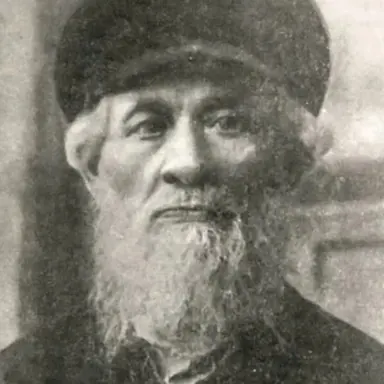
The Work and Torah Teaching of Rabbi Shlomo Elyashiv, the Leshem
15 min read3,021 words
Summary
This survey describes the life and teaching of Rabbi Shlomo Elyashiv, known by his epithet the "Leshem," who is considered one of the greatest kabbalists in Lithuania and in Jerusalem in the modern era. The text presents him as a link combining analytical Lithuanian scholarship with mystical depth, focusing on his monumental work "Leshem Shevo ve-Achlama" and on his distinctive conception of the question of the tzimtzum (divine contraction). Beyond his thought, the source emphasizes the rabbi's public work in preserving kabbalistic manuscripts and making them accessible, his close ties with Rabbi Abraham Isaac HaKohen Kook, and his far-reaching influence on the world of Torah to this day. The aim of the work is to illuminate the Leshem's decisive contribution to turning the esoteric teaching into an ordered, law-governed system that serves as a vital instrument for coping spiritually with the challenges of modernity.
In the intellectual and kabbalistic landscape of the modern era, the figure of Rabbi Shlomo Elyashiv, known by his epithet the "Ba'al ha-Leshem," stands as a pillar bridging classical Lithuanian Kabbalah and the renewed flowering of the esoteric teaching in the Land of Israel. His comprehensive activity, which spanned eighty-five years of life, is not limited to the writing of profound theoretical works, but constitutes an enterprise of preservation, editing, analysis and dissemination of the Lurianic corpus and that of the Gra. His figure represents the "fourth mouth" in the chain of transmission of the Vilna Gaon, and he is considered one of the greatest kabbalists of recent centuries, whose influence went beyond the borders of Lithuania and reached as far as the communities of Baghdad and Jerusalem.[1, 2]
Roots and Spiritual Growth in the Lithuanian Milieu
Rabbi Shlomo Elyashiv was born in the year 5601 (1841) in the town of Zagare in Lithuania, in a Torah milieu steeped in deep traditions of learning. His father, Rabbi Chaim Chaikel, was a scion of a family with a significant kabbalistic lineage, reaching back to the holy Ari and to the famous kabbalist Rabbi Shimshon of Ostropol.[3, 4] This lineage is not merely a biographical detail; it constitutes the psychological and spiritual foundation on which the Ba'al ha-Leshem grew, as one who felt a personal responsibility for the continuity of the Jewish mystical tradition.
Already in his youth Rabbi Shlomo was revealed as a Torah prodigy with a phenomenal memory and a sharp analytical ability. At the age of thirteen he moved to Minsk to study in the yeshiva of Rabbi Gershon Tanchum, one of the prominent Torah figures in Lithuania at that time.[1, 3] There, in the heart of scholarly Lithuania, his personality was formed as one who is not content with knowing the plain meaning alone, but strives to investigate the metaphysical roots of halakha and of reality. At the age of nineteen he married Bat-Sheva Esther, who by mutual agreement took upon herself the burden of earning a livelihood so as to allow her husband to devote himself to the study of Torah without interruption, while he consciously gave up official rabbinic posts.[3]
The move to Telz marked the beginning of his complete dedication to the esoteric teaching. Under the guidance of the kabbalist Rabbi Yosef Reizin, Rabbi Shlomo was exposed to the depths of Kabbalah, living in asceticism and with a diligence that bordered on self-sacrifice.[1] The testimony of Rabbi Yosef Yehuda Bloch, head of the Telz yeshiva, emphasizes that the Leshem's achievements were not the fruit of natural talent alone, but the result of strenuous inner work, weeping and prayer for divine illumination.[3]
Biographical Milestones of Rabbi Shlomo Elyashiv
The Magnum Opus: Leshem Shevo ve-Achlama
The central work of Rabbi Shlomo Elyashiv, "Leshem Shevo ve-Achlama," is one of the most important and comprehensive kabbalistic works written in the modern era. The name, taken from the names of stones of the High Priest's breastplate, is not mere rhetoric, but holds deep personal allusions: "Leshem Shevo" contains the letters of his name (Shlomo Elyashiv), and the word "Achlama" contains the letters of the name of the patron Ovadia Lochman, who financed the publication of the books.[1]
The series consists of four main parts, intended to create a coherent and complete system for understanding Lurianic cosmology and the Creator's governance of His world. Whereas the writings of the Ari and of the Gra are sometimes characterized by terse language and allusions, the Ba'al ha-Leshem expanded and explained every concept with a detail and precision reminiscent of Talmudic scholarship.[1, 2, 3]
The Structure and Parts of the "Leshem" Series
Beyond these parts, Rabbi Shlomo composed "Sha'ar ha-Poneh Kadim," which includes 232 gates dealing with the beginning of the emergence of the tzimtzum and the vacated space (ha-chalal ha-panui). The scope of the material and the clarity of the formulation have made the Leshem's books a vital aid for students of Kabbalah, since he succeeds in bringing the most abstract concepts down into the language of human thought without losing their mystical depth.[3, 5]
His Torah Teaching: The Methodology of Lithuanian Kabbalah
Rabbi Shlomo Elyashiv is considered the central shaper of Lithuanian Kabbalah in recent generations. His distinctiveness lies in the "analytical" approach to mystical texts. Rabbi Abraham Isaac HaKohen Kook, who was his disciple and close friend, described the Leshem's method as an application of "Talmudic pilpul" to the writings of the Ari.[2] Instead of accepting kabbalistic concepts as mere symbols, the Leshem analyzed them with the same logical tools used in the study of Gemara and halakha, attempting to reconcile apparent contradictions within the words of the Ari and between the Ari and the Gra.[2]
He saw the kabbalistic system as a tight logical structure in which every detail is derived from the principles that preceded it. This conception was meant to show that the entire Torah, even in its most hidden parts, is a "Torah of truth" that can be understood and defined with the tools of reason. The Leshem combined the rationalism of the Rishonim with the symbolic complexity of the later kabbalists, such as the author of "Torat Chacham," and created a synthesis that turned the esoteric teaching into an ordered, law-governed system.[2]
The Question of the Tzimtzum and the Method of Complex Literalism
One of the stormiest theological debates in the world of Kabbalah concerns the interpretation of the concept of "tzimtzum" in the writings of the Ari. Whereas many kabbalists, especially in Hasidic teaching and in the system of the Ramchal, saw the tzimtzum as a mere "parable" (a concealment of the light from created beings), the Ba'al ha-Leshem inclined to a more literalist approach, which sees the tzimtzum as a real process within the "will" of the Creator.[6, 7, 8]
He sharply criticized those who wished to turn the concepts of Kabbalah into mere philosophical metaphors. In his view, the kabbalistic images describe an objective spiritual reality taking place in the upper worlds, and are not merely an explanatory device for the capacity of human comprehension.[8] Nevertheless, his teaching is not simplistic; he distinguished between the "essence" of the Creator, of which nothing at all can be said, and His "will," in which all the kabbalistic processes of tzimtzum, reshimu (residual impression) and kav (line) take place.[6, 7]
The Leshem developed a model of a divine "ebb and flow," based on processes of expansion and withdrawal. In his view, all of reality is driven by a constant tension between the revelation of the light for the sake of creation and its withdrawal for the sake of creating a space in which created beings can exist as separate entities.[2]
A Comparison of Conceptions of the Tzimtzum in the World of Kabbalah
The Leshem saw the position of the Ramchal in "Da'at Tevunot" as a danger to the study of Kabbalah, since it could lead to an excessive abstraction of the Torah.[8] Nevertheless, in his later writings one can find a more conciliatory tone toward the Ramchal, out of recognition of his enormous contribution to the defense of the tradition of Israel in the period of the Haskalah.[8]
His Work as Editor and Publisher of Manuscripts
An inseparable part of Rabbi Shlomo Elyashiv's work was his involvement in printing and preserving the writings of the great kabbalists who preceded him. He saw himself not only as an original thinker, but as a link in the chain of transmission whose duty is to save the pearls of wisdom from oblivion and loss.[1] He was the driving force behind the printing of the writings of the Gra, of R. Yitzhak Eizik Haver and above all of the writings of the Ramchal.[1, 3]
In a letter from the year 5658 (1898), the Leshem stated explicitly that "almost all the writings of the Ramchal up to that time were brought to print through my efforts and because of me."[1] The most prominent case is the printing of the book "Derekh Hashem" in Amsterdam in 1896. Until that time, the book existed only in manuscripts circulated in narrow circles. The Ba'al ha-Leshem, with his clear-sighted vision, understood that the generation needed such a systematic work of faith in order to cope with the challenges of modernity and the Haskalah.[1]
He worked in cooperation with philanthropists such as Ovadia Lochman and Ben Zion Norik, who understood the importance of the task and provided the funding needed to print these heavy and complex books.[1] This activity teaches us about the personality of the Leshem as one who placed the good of all Israel and the preservation of the people's spiritual treasures above every personal consideration.[1]
The Connection with Rabbi Kook and the Immigration to the Land of Israel
The relationship between Rabbi Shlomo Elyashiv and Rabbi Abraham Isaac HaKohen Kook is a moving and significant chapter in the history of the Old and New Yishuv in the Land of Israel. The connection began when Rabbi Kook served as rabbi in the town of Zeimel, when he had the privilege of studying Kabbalah from the Leshem during an intensive stay in Shavel.[4] Rabbi Kook saw the Leshem as his foremost teacher in the esoteric teaching, and the Leshem's books deeply influenced the shaping of Rabbi Kook's kabbalistic and national teaching.[2, 10]
After the First World War, as the situation in Europe grew worse, Rabbi Shlomo Elyashiv turned for help to Rabbi Kook, who was already serving as chief rabbi of the Land of Israel. Thanks to Rabbi Kook's immediate intervention and to his obtaining the required "certificates," the elderly kabbalist was able to immigrate to Jerusalem in the year 5684 (1924), together with his son-in-law, his daughter and his young grandson Yosef Shalom Elyashiv.[3, 4]
Upon his arrival in Jerusalem, the Leshem was received with reverence by the sages of Jerusalem of all communities. Many stories were woven around the personal relationship between the two; for example, the story of Rabbi Kook's fur coat that was given to the Leshem on a cold night, a coat that became a family heirloom in the hands of his grandson.[4] Rabbi Shlomo Elyashiv saw Rabbi Kook not only as a disciple, but as a great leadership figure, and used to study with him and from him in his last years in Jerusalem as well.[3]
Mutual Influence: Kabbalah and Zionism
The Leshem's teaching gave a tailwind to Rabbi Kook's conception of the holiness of the body and of nationhood. The Leshem held that the power of limitation exists within the limitless, an idea that Rabbi Kook developed into a complete teaching on the holiness of matter and of earthly activity in the Land of Israel.[2] The studies of Jonathan Garb point out that the Leshem's teaching includes references to strengthening the physical body as part of the spiritual process of the general tikkun, a conception that fitted well with the spirit of the period of building the Land.[10]
The Leshem held that in our generation, engaging in Kabbalah is not merely permitted but obligatory, since it serves as the only instrument that can return straying souls to their root.[2] This conception, which Rabbi Kook shared, turned the study of the esoteric from a marginal and secret factor into a central factor in the Jewish renewal of the 20th century.[11, 12]
A Legacy for the Generations: The Grandson and the Tzaddik of Jerusalem
The legacy of the Ba'al ha-Leshem was preserved first and foremost through his grandson, Rabbi Yosef Shalom Elyashiv, who in later years became one of the greatest halakhic decisors of the Haredi public.[3, 13] In the Leshem's last years in Jerusalem, when his eyesight grew weak, the young grandson served as his grandfather's "eyes" and as his scribe. He recorded his novel Torah insights and notes, and thereby the continuity of the family's Torah tradition was assured.[1] Although Rabbi Yosef Shalom Elyashiv was known above all for his immense mastery of the Talmud and the halakhic codes, his foundations in the esoteric teaching were laid directly by his grandfather.[1, 14]
Another central figure in the Leshem's close circle was Rabbi Aryeh Levin, the "Tzaddik of Jerusalem." Rabbi Aryeh, who was related by marriage to Rabbi Yosef Shalom Elyashiv, considered it a great privilege to serve the Ba'al ha-Leshem. He described with reverence the hours in which he stood beside the kabbalist and held the lamp for him so that he could study, out of a feeling of complete self-effacement before his holiness.[1, 3] It was Rabbi Aryeh Levin who wrote the booklet "Toldot Ba'al Leshem Shevo ve-Achlama," which is a historical source of the first rank on his life and conduct.[3]
His Influence on the World of Torah and the Yeshivot
The teaching of the Ba'al ha-Leshem seeped into all strata of the Torah public. The Chofetz Chaim, one of the greatest of the generation, admired him as one who acted on the plane of "tikkun olamot" (rectification of the worlds).[1] The Chazon Ish too, despite his central occupation with the revealed Torah, greatly esteemed the Leshem's books and kept them on his table.[1] His books have become an inseparable part of the study of Kabbalah in many yeshivot, and they are studied to this day in Torah centers such as the "Mercaz HaRav" yeshiva and in Lithuanian and Sephardic circles alike.[1, 2]
The fact that the "Ben Ish Chai" recited the "Shehecheyanu" blessing over the Leshem's book attests to the universality of his teaching. The Leshem succeeded in creating a kabbalistic language that is on the one hand faithful to the Lithuanian sources and on the other hand speaks to the hearts of kabbalists of all communities.[1]
Modern Research and Academic Insights
In recent years scholarly interest in the Ba'al ha-Leshem has grown, especially among scholars dealing with the history of modern Jewish mysticism. Scholars such as Jonathan Garb analyze the figure of the Leshem as one who brought Kabbalah to a peak of "professionalism" and autonomy within the Lithuanian world of Torah.[11, 15] Garb points out that the Leshem worked to turn Kabbalah into an organized system combining mystical psychology with intricate cosmology.[16]
Research emphasizes the role of the Leshem in the transition between the 19th and 20th centuries, a period in which the world of Kabbalah underwent processes of globalization and broad dissemination.[11, 12] The Leshem saw the publication of books as an instrument for saving the Jewish soul from external influences, and thereby contributed to the change in consciousness regarding the secrecy of the esoteric teaching.[2]
Psychological and Sociological Aspects of His Teaching
Scholars see in the Leshem's writings an attempt to explain the structure of the human soul through the structure of the upper worlds. Concepts such as "the yearning of the soul" and "processes of connection" take on in his work a meaning that is both metaphysical and existential.[16] Research likewise points to the tension between the Leshem's personal asceticism and his energetic public activity in disseminating books, a paradox characteristic of many of the great mystics who felt a responsibility toward their generation.[11]
Summary and Conclusions
Rabbi Shlomo Elyashiv, the Ba'al ha-Leshem, was a unique figure in the history of Jewish thought. He succeeded in combining sharp Lithuanian scholarship with uncompromising mystical depth, and in turning the esoteric teaching into a living, pulsating system even amid the storms of modernity. His books, "Leshem Shevo ve-Achlama," have remained foundational books for every seeker of knowledge, and his work as editor and publisher ensured the survival of enduring treasures of the Jewish spirit.
His relationship with Rabbi Kook, his influence on halakhic ruling through his grandson Rabbi Yosef Shalom Elyashiv, and the esteem he enjoyed from all ends of the Torah spectrum attest to his centrality and to the strength of his personality. The Leshem proved that Kabbalah is not merely a relic of the past, but a relevant and life-giving teaching, capable of giving meaning and purpose to Jewish existence in every generation. His legacy continues to shine in the study halls and yeshivot, combining intellectual precision with cleaving to God, and the defense of tradition with a deep understanding of the needs of the hour.
Sources16
- 1.The Lost Legacy of the Leshem - Mishpacha Magazine, mishpacha.com/the-lost-legacy-of-the-leshem/
- 2.A Tribute to Rav Shlomo Elyashiv, Author of Leshem Shevo v ..., seforimblog.com/2016/03/a-tribute-to-rav-shlomo-elyashiv-author/
- 3.רבי שלמה אלישיב – ויקישיבה, yeshiva.org.il/wiki/index.php/רבי_שלמה_אלישיב
- 4.Rabbi Shlomo Elyashiv (Eliashov) - Tzadikim - Daily Zohar, dailyzohar.com/tzadikim/974-Rabbi-Shlomo-Elyashiv-(Eliashov)
- 5.Leshem - Rabbi Shlomo Elyashiv zt"l - Mekor Judaica, mekorjudaica.com/product/leshem-rabbi-shlomo-elyashiv-ztl/
- 6.צמצום (קבלה) – ויקישיבה, yeshiva.org.il/wiki/index.php/צמצום_(קבלה)
- 7.פולמוס הצמצום בין גדולי המחשבה - מעיינותיך, toratchabad.com/פולמוס-הצמצום-בין-גדולי-המחשבה
- 8.ספר הכללים הרב אלישיב - לשם שבו ואחלמה - ספרי חיים, hbooks.co.il/product/לשם-שבו-ואחלמה---ספר-הכללים-הרב-אלישיב
- 9.צמצום הראשון - חב"דפדיה, chabadpedia.co.il/index.php/צמצום_הראשון
- 10.Destruction and Triumph (Chapter 6) - A History of Kabbalah, cambridge.org/core/books/history-of-kabbalah/destruction-and-triumph/CF6A363E66876AADCCCD0AFC3B70070E
- 11.A History of Kabbalah: From the Early Modern Period to the Present Day 1107153131, 9781107153134 - EBIN.PUB, ebin.pub/a-history-of-kabbalah-from-the-early-modern-period-to-the-present-day-1107153131-9781107153134.html
- 12.A History of Kabbalah: From the Early Modern Period to the Present Day 1107153131, 9781107153134 - DOKUMEN.PUB, dokumen.pub/a-history-of-kabbalah-from-the-early-modern-period-to-the-present-day-1107153131-9781107153134.html
- 13.שלמה אלישיב - ויקיפדיה, he.wikipedia.org/wiki/שלמה_אלישיב
- 14.רבי יוסף שלום אלישיב כל המידע והסיפורים - פטירתו כ"ח בתמוז - המאיר לארץ, hameir-laarets.org.il/hilulots/כח-בתמוז-רבי-יוסף-שלום-אלישיב/
- 15.The Chosen Will Become Herds: Studies in Twentieth-Century Kabbalah 9780300155044, dokumen.pub/the-chosen-will-become-herds-studies-in-twentieth-century-kabbalah-9780300155044.html
- 16.Yearnings of the Soul: Psychological Thought in Modern Kabbalah 9780226295947, dokumen.pub/yearnings-of-the-soul-psychological-thought-in-modern-kabbalah-9780226295947.html