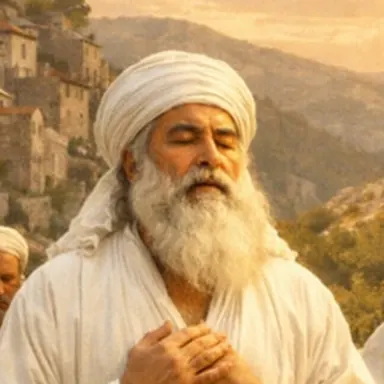
The Work and Torah Teaching of Rabbi Shlomo ha-Levi Alkabetz: Architect of the Kabbalah and Liturgy of 16th-Century Safed
14 min read2,826 words
Summary
This survey describes the many-sided figure of Rabbi Shlomo ha-Levi Alkabetz, who was one of the central thinkers of Safed in the 16th century and served as a link between the Sephardic tradition and the mysticism of the Land of Israel. The text details his liturgical and exegetical contribution, with an emphasis on the composition of the formative liturgical poem "Lekha Dodi" and on the founding of spiritual customs such as the Tikkun Leil Shavuot and welcoming the Sabbath in the fields. Beyond his extensive literary output, which includes commentaries on Scripture and on Kabbalah, the source emphasizes his role as a spiritual leader and teacher who laid the theoretical foundation for the great kabbalists who came after him. By presenting his ties with key figures such as Yosef Karo and the Ramak, the article seeks to illuminate Alkabetz's formative influence on shaping the face of Jewish thought and mystical experience for generations.
The 16th century stands as one of the most fateful and fertile junctures in the history of Jewish thought, and at its center stands the city of Safed as a spiritual capital of mystical renewal. Within the complex fabric of majestic figures active in this period, Rabbi Shlomo ben Moshe ha-Levi Alkabetz is a key figure who connected the world of classical Sephardic scholarship with the daring mysticism of the Land of Israel.[1, 2] Alkabetz was not merely a gifted liturgical poet who composed "Lekha Dodi," but a phenomenal thinker, a profound biblical exegete, and a spiritual leader who shaped the way of life of the community of kabbalists, while laying the theoretical foundation on which the systems of Rabbi Moshe Cordovero (the Ramak) and Rabbi Yitzhak Luria (the Ari) grew.[2, 3, 4]
Chapter 1: Biographical Foundations – From Salonika to Safed by Way of Adrianople
The life story of Rabbi Shlomo Alkabetz is a story of wandering, longing and spiritual ascent. He was born in Salonika, apparently in the year 5265 (1505), to a family of exiles from Spain.[1, 5, 6] He grew up at the very heart of the great Torah center of the Ottoman Empire, where he absorbed the profound learning tradition of the Sephardic yeshivot.
The Years of Study and Formation in Salonika
Alkabetz studied in the beit midrash of Rabbi Yosef Taitatzak, who was not only a distinguished halakhic authority but also a kabbalist of enormous influence.[1, 2] Under his guidance, Alkabetz developed an integrative approach that combines the plain meaning with the esoteric, aggadah with Kabbalah. In the year 5289 (1529) he married the daughter of Rabbi Yitzhak ha-Kohen, one of the wealthy men of Salonika.[1, 2, 6] As a wedding gift to his father-in-law, Alkabetz presented his first completed work, "Manot ha-Levi" on the Scroll of Esther – an act that attests to his early standing as a scholar and exegete of great stature.[2, 7]
The Encounter in Adrianople and the Founding of the Tikkun Leil Shavuot
Shortly after his marriage, Alkabetz decided to go up to the Land of Israel. On his way, he stopped in the city of Adrianople, where he met Rabbi Yosef Karo, the future author of the "Shulchan Arukh."[2, 5, 8] This encounter was a turning point in Jewish mystical history. In Adrianople the two instituted the custom of the "Tikkun" on the night of Shavuot, after experiencing the revelation of a "Maggid" – a heavenly voice that spoke from Karo's throat and urged them to go up to the Holy Land.[4, 6] This experience was documented in detail by Alkabetz, and became an authoritative source for establishing the custom throughout the Jewish diaspora.[5]
Settling in Safed and His Spiritual Centrality
Around the year 5295 (1535), Alkabetz arrived in Safed.[1, 2, 5] In this city he found fertile ground for spreading his teaching. He joined the head of the rabbis of Safed, Rabbi Yosef Karo, and his brother-in-law and foremost disciple, Rabbi Moshe Cordovero (the Ramak), who married Alkabetz's sister.[1, 2] Alkabetz served as head of a yeshiva in Meron and as a central rabbinic figure in Safed, leading practices of asceticism, repentance and longing for redemption.[1, 2, 4]
Biographical Milestones of Rabbi Shlomo Alkabetz
Chapter 2: The Literary Enterprise – Exegesis, Homily and Esoteric Teaching
Rabbi Shlomo Alkabetz was one of the most prolific writers of his time. His work extends over the whole of the Bible, the liturgy and speculative Kabbalah. His distinctiveness lies in his ability to combine different levels of interpretation while maintaining a conceptual consistency focused on the bond between God, Israel and the Land.[9]
Commentary on the Five Scrolls
Alkabetz saw the Scrolls as key texts for understanding the situation of the people of Israel in history.
- Manot ha-Levi (the Scroll of Esther): This is a wide-ranging commentary that emphasizes the miracle hidden within nature. Here Alkabetz presents a daring thesis, according to which Esther was married to Mordecai even before she was taken to Ahasuerus, and continued her relationship with him in the palace as well, out of an understanding of the needs of the hour and of divine providence.[6] He combines here kabbalistic homilies on the secret of the lot and the pur.
- Ayelet Ahavim (the Song of Songs): Alkabetz interprets the Song of Songs not only as a national allegory but as a mystical relationship between the sefirah of Tiferet and the sefirah of Malkhut.[2, 7, 10] The work was completed in 1532 and printed in Venice in 1552.
- Shoresh Yishai (the Scroll of Ruth): In this work, completed in 1552, Alkabetz deals with the secrets of kingship and with the foundations of the messianic redemption.[6, 7, 10]
Kabbalistic and Philosophical Works in Manuscript and in Print
Many of Alkabetz's writings were lost or remained in manuscript, but their list attests to the breadth of his thought.[7]
- Brit ha-Levi: a profound kabbalistic commentary on the Passover Haggadah, which interprets the Exodus from Egypt as a process of the redemption of the Shekhinah.[2, 7, 10]
- Lechem Shlomo and Mittato shel Shlomo: these works deal with the sanctification of the material. "Lechem Shlomo" focuses on the secrets of the meal and the blessings, while "Mittato shel Shlomo" discusses the mystical meaning of sexual union as a reflection of supernal unifications.[6, 7, 11]
- Apiryon Shlomo and Ne'im Zemirot: commentaries on the Torah, the Early Prophets and Psalms, which combine the plain meaning with kabbalistic homily.[6, 7]
- Shomer Emunim: a clarification of the foundations of Jewish faith in the face of the challenges of the time, from a kabbalistic perspective that gives meaning to the suffering of exile.[6, 7, 11]
Catalogue of the Works of Rabbi Shlomo Alkabetz
Chapter 3: "Lekha Dodi" – The Manifesto of the Redemption of the Shekhinah
The best-known work of Rabbi Shlomo Alkabetz is the liturgical poem "Lekha Dodi," which has become an inseparable part of the prayer book in all the communities of Israel.[1, 2, 13] The poem is not merely a song of adoration for the Sabbath; it constitutes a concise summary of his kabbalistic and national teaching.
The Structure and the Acrostic
The poem is built of nine stanzas and a recurring refrain. The acrostic of his name – "Shlomo ha-Levi" – appears at the beginnings of the first eight stanzas.[7, 13, 14] The opening and the close deal with the Sabbath, while the six central stanzas (3-8) are devoted to longing for the rebuilding of Jerusalem and for redemption.[15] This circular structure hints that the joy of the Sabbath cannot be complete as long as the people of Israel and the Shekhinah dwell in exile.[14, 15]
The Layers of Meaning of the "Beloved" and the "Bride"
Alkabetz uses the images of bridegroom and bride to describe cosmic relationships:
- The national layer: the beloved is the people of Israel and the bride is the Sabbath. The people of Israel is called to go out of the profane in order to meet its spiritual partner.[14, 15]
- The theological layer: the beloved is the Holy One, blessed be He, and the bride is the Congregation of Israel (Knesset Yisrael).[14]
- The kabbalistic layer: the bride is the sefirah of Malkhut, called the "Shekhinah." On the eve of the Sabbath this sefirah ascends and unites with the upper sefirot, and the kabbalists' activity in song and jubilation was meant to assist this process of the "ascent of Malkhut."[2, 7, 14]
Central Motifs in the Poem
Chapter 4: The Practice of "Gerushin" and Mystical Service in the Field
Rabbi Shlomo Alkabetz was not content with theoretical study, but developed mystical practices meant to bring the believer to devekut (cleaving to God) and illumination.[5] The most famous of them is the practice of "gerushin" (self-imposed exiles).
The Philosophy of Wandering
The term "gerushin" in Alkabetz's vocabulary refers to a deliberate, voluntary going into exile.[5, 8] Alkabetz and his disciples used to set out on journeys on foot in the mountains of the Galilee, far from their homes and families. The aim was to identify with the "exile of the Shekhinah." Alkabetz believed that when a person is exiled from his place and feels the insecurity of the road, he becomes a fit vessel for receiving secrets of the Torah that are spoken only in situations of distress and sorrow.[5, 7]
"Sefer Gerushin" and the Inspiration of the Place
The words of Torah spoken in the course of these tours of the graves of the righteous (such as those of Rabbi Shimon bar Yochai, Hillel the Elder and Shammai) were recorded in "Sefer Gerushin."[8] Alkabetz believed that the Land of Israel is the only space in which the "secrets of the Torah" can be fully attained, and that the air of the Galilee and physical proximity to the graves of the Tannaim have a direct influence on the quality of mystical attainment.[1, 2] He used to prostrate himself on the graves of the righteous in order to bind himself to their souls and to merit the flow of new spiritual abundance.[1, 2]
Going Out to the Fields to Welcome the Sabbath
Alkabetz is considered the initiator of the physical custom of the kabbalists going out to the fields outside Safed on the eve of the Sabbath.[5] Dressed in white garments, they would turn westward toward the sunset and welcome "the Sabbath Queen."[5, 14] This act was understood as a magical-theurgical action meant to draw the holiness of the Sabbath into the realm of the profane, and to strengthen the power of the Shekhinah against the forces of the "sitra achra" (the Other Side).[2, 14]
Chapter 5: His Theological Teaching – Between God and Israel
The studies of Prof. Bracha Sack have uncovered a profound theological system in Alkabetz's writings, centered on three axes: God, the Torah and Israel.[3, 9, 16]
Divinity and Unity
Alkabetz grappled with complex questions concerning the multiplicity of the sefirot as against the unity of God. In his works he makes clear that the sefirot are not separate entities but "vessels" through which the simple divine light acts. He places special emphasis on the sefirah of Malkhut, as the link connecting the upper worlds with this world, and saw in it the focus of human service in the days of exile.[9]
The Torah as an Instrument of Tikkun
In her book "Kerem Haya li-Shlomo," Sack points out that Alkabetz saw the Torah as the mystical map of the universe. Every single commandment has a cosmic significance that affects the balance between Chesed (lovingkindness) and Din (judgment) in the upper worlds.[9] He encouraged adherence to the beliefs of the Torah and saw in them the only shield of the people of Israel against sinking into the despair of exile.[9]
The Attitude to Science and External Philosophy
Alkabetz expressed a conservative and reserved position toward the sciences and the secular philosophy of his time.[5] He believed that all true wisdom is hidden in the Torah and the Kabbalah, and that the attempt to understand God with rational-human tools alone is bound to lead to error. For him, "Kabbalah" is a truth received through tradition and heavenly revelation, and not one that can be deduced through logical inquiry.[5]
Comparing Conceptions: Kabbalah versus Philosophy in Alkabetz's Teaching
Chapter 6: Teacher-Disciple Relations and Influence on Later Generations
Rabbi Shlomo Alkabetz stood at the center of a social-spiritual network of ties that changed the face of Judaism.
The Teacher of the Ramak
Rabbi Moshe Cordovero, one of the greatest kabbalists of all time, saw Alkabetz as his foremost teacher in Kabbalah.[1, 2] The relationship between them was complex and fascinating: Alkabetz was his brother-in-law and his teacher, but as the Ramak developed, Alkabetz recognized his stature and himself became, to a certain extent, his disciple, which attests to Alkabetz's immense humility.[2] The Ramak's system, characterized by order and systematic method, drew a great deal from Alkabetz's early exegesis and practical customs.[9]
The Connection with Rabbi Yosef Karo
The connection with the author of the "Beit Yosef" was one of deep spiritual partnership. The two studied together in Adrianople and in Safed, and together experienced the revelations of the "Maggid."[2, 4, 6] It was Alkabetz who gave the mystical seal of approval to Karo's activity, and their shared stories became a founding myth of the Safed community.[4, 6]
Further Disciples and Their Influence
Alkabetz influenced an entire generation of creative figures:
- Rabbi Shmuel Uceda: author of "Midrash Shmuel" on Pirkei Avot.[2, 6]
- Rabbi Eliezer Azikri: author of "Sefer Haredim" and of the liturgical poem "Yedid Nefesh."[2, 4]
- Rabbi Avraham Galante: author of "Yareach Yakar" on the Zohar.[2, 6] These figures continued Alkabetz's line, which combined mussar, Kabbalah and pietistic public leadership.
The Spiritual Family Tree of Alkabetz's Circle in Safed
Chapter 7: Alkabetz's Legacy in the Age of the Ari's Kabbalah
With the arrival of the Ari in Safed in 1570, Kabbalah underwent a theological revolution. Nevertheless, the figure of Alkabetz remained revered in the eyes of the Lurianic kabbalists as well. The Ari adopted the poem "Lekha Dodi" and gave it kabbalistic "kavanot" (mystical intentions) according to his new system, thereby ensuring the poem's survival within the new world of prayer.[2, 17]
Alkabetz's conception of redemption, based on gradual tikkun and on the ascent of the Shekhinah through keeping the Sabbath, fitted well into the Lurianic myth of the "sifting of the sparks." Even today, when one studies his printed books such as "Manot ha-Levi" or "Shoresh Yishai," one can see in them the foundations of modern Jewish mysticism, which seeks holiness within everyday reality and hope within destruction.[2, 13, 15]
Summary
Rabbi Shlomo ha-Levi Alkabetz was far more than the author of a popular song. He was an architect of spiritual life, a man who understood that Kabbalah cannot remain only between the pages of books, but must go down to the fields, to the meals, to the bedchambers and to communal song.[1, 5, 15] In his activity and his teaching, he bridged the gap between Salonika and Safed, between Sephardic scholarship and the mystical experience of the Land of Israel, and between the generation of the exiles and the generation of redemption.[1, 2, 9]
For the community of kabbalists in Safed, he was the "hasid" who showed the way to solitary contemplation and devekut, and for the people of Israel throughout its generations, he remains the voice that calls us every Sabbath eve to shake ourselves from the dust, to put on garments of splendor and to go out to greet the bride – the Sabbath, which is the source of blessing and redemption.[13, 14] His extensive body of work, a large part of which still awaits redemption from manuscript, is a testimony to the power of the Jewish spirit to renew itself and to create out of the depths of pain and longing.[7, 9]
Sources17
- 1.רבי שלמה אלקבץ – ויקישיבה, yeshiva.org.il/wiki/index.php/רבי_שלמה_אלקבץ
- 2.Rabbi Shlomo Alkabetz - Most renowned for his 'Lecha Dodi' hymn, sung at the inauguration of the Sabbath. - Chabad.org, chabad.org/kabbalah/article_cdo/aid/380713/jewish/Rabbi-Shlomo-Alkabetz.htm
- 3.ברכה זק - ויקיפדיה, he.wikipedia.org/wiki/ברכה_זק
- 4.The Kabbalah of Tzefat - Jewish Theological Seminary, jtsa.edu/torah/exploring-kabbalah-episode-6/
- 5.Solomon ben Moses Alkabetz - Jewish Virtual Library, jewishvirtuallibrary.org/solomon-ben-moses-alkabetz
- 6.Solomon Alkabetz - Wikipedia, en.wikipedia.org/wiki/Solomon_Alkabetz
- 7.Rabbi Shlomo Alkabetz: Works - An important Kabbalist, Rav Alkabetz is most known for his 'Lecha Dodi' poem - preview2.centers.chabad.org, chabad.org/kabbalah/article_cdo/aid/380720/jewish/Rabbi-Shlomo-Alkabetz-Works.htm
- 8.ר' שלמה הלוי אלקבץ - הספרייה הלאומית, nli.org.il/he/discover/music/jewish-music/piyut/articles/figures/rabbi-shlomo-halevi-alkabetz
- 9.כרם היה לשלמה - מוסד ביאליק, bialik-publishing.co.il/index.php?dir=site&page=catalog&op=item&cs=4941
- 10.שלמה אלקבץ - װיקיפּעדיע, yi.wikipedia.org/wiki/שלמה_אלקבץ
- 11.שלמה אלקבץ - ויקיפדיה, he.wikipedia.org/wiki/שלמה_אלקבץ
- 12.Shlomo HaLevi Alkabetz | Texts from the Sefaria Library, sefaria.org/topics/shlomo-halevi-alkabetz
- 13.לכה דודי: הכירו את הפיוט העתיק שמקבל את פני השבת - הידברות, hidabroot.org/article/1202807
- 14.לכה דודי – מילים, פירושים וביצועים | ר' שלמה הלוי אלקבץ | פיוט | הספרייה ..., nli.org.il/he/piyut/Piyut1song_010005500000005171/NLI
- 15.לכה דודי - ר' שלמה אלקבץ - לב לדעת, levladaat.org/materials/לכה-דודי-ר-שלמה-אלקבץ/
- 16.בשערי הקבלה של רבי משה קורדוברו - מוסד ביאליק, bialik-publishing.co.il/index.php?dir=site&page=catalog&op=item&cs=1009
- 17.The Ari: Rabbi Isaac Luria | My Jewish Learning, myjewishlearning.com/article/isaac-luria/