Skip to contentGo to the list of all sages
Ozar Chachamim
  1. /
  2. Acharonim
  3. /
  4. Rabbi Eliyahu Guttmacher
עבENРУ
Acharonim1796–1874Greiditz

Rabbi Eliyahu Guttmacher

Kabbalah and practical redemption

  • Settling the Land
  • Kalischer
  • Messianism
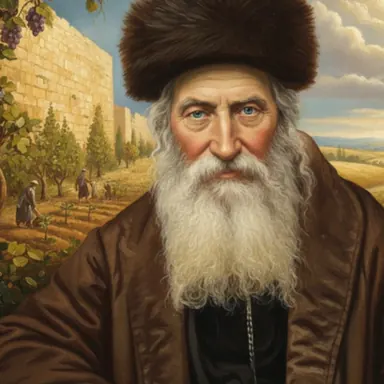
Illustration: Rabbi Eliyahu Guttmacher
Illustration from the podcast episode
Read the research
· 27 min
Listen
Watch the video
⬡Show in the network
🌌Show in the Tower of Generations
🔗The path to another sage

Listen to the episode

Podcast episode · Rabbi Eliyahu Guttmacher

Open in Spotify
The player loads from Spotify only when you click.
Open in Spotify

Watch the video

Rabbi Eliyahu Guttmacher

Open on YouTube (opens in a new tab)

Rabbi Eliyahu Guttmacher – The Saint of Greiditz Who Opened the Gates of Practical Redemption

The video loads from YouTube only when you click.
Open on YouTube (opens in a new tab)

Core Concept

Redemption begins with action – settlement, agriculture and the commandments that depend on the Land.

Biography

A kabbalist and forerunner of religious Zionism who saw settlement of the Land as the beginning of redemption.

Related sages2

Teachers1

  • Rabbi Akiva EgerAcharonim

Influenced by1

  • Rabbi Zvi Hirsch KalischerModern

The Road to Sinai

49 stations on the road
  1. MosesGeneration 1
  2. 43 more generations
  3. Rav Shmuel ben Chofni GaonThe Epistle of Rav Sherira Gaon
  4. 2 more sages
  5. Rabbi Akiva Eger1762–1837
  6. Rabbi Eliyahu Guttmacher1796–1874

includes 3 inspiration linksThe generations follow the Rambam’s introduction to the Mishneh Torah. A dashed line is inspiration, not direct transmission.

✦Fly it in the TowerOpen the full path

Full research

2 documents·5,427 words· 27 min read

Contents27 min read

  1. Rabbi Eliyahu Guttmacher (1796–1874): A Bridge between the Revealed Torah, the Esoteric and the Practical Return to Zion
    • I. Introduction: The Multidimensional Profile of the Tzaddik of Greiditz
    • The Varied Contribution of Rabbi Eliyahu Guttmacher
    • II. A Gaon of the Revealed Torah: Rabbi Guttmacher as Torah Scholar and Halakhic Decisor
    • III. A Divine Kabbalist and a Distant Tzaddik: The Mystical Dimension and Esoteric Leadership
    • IV. The Doctrine of "Atchalta de-Geula": The Activist Theology
    • The Activist Theology of Redemption
    • V. The Organisational Aspect and Influence on Later Generations
    • VI. Summary and the Legacy of the Generations: The Threefold Cord
    • Conclusions
    • Sources
  2. Rabbi Eliyahu Guttmacher (1796–1874): From the Great Halakhists to the Harbingers of Practical Zionism; A Comprehensive Survey of His Work and Torah Teaching
    • A. Introduction: Placing Rabbi Guttmacher at the Crossroads of Modernity and Tradition
    • B. The Shaping of His Rabbinic and Mystical Figure: From Classical Decisor to Messianic Kabbalist
    • Sources
Contents· 41 sections
  1. Rabbi Eliyahu Guttmacher (1796–1874): A Bridge between the Revealed Torah, the Esoteric and the Practical Return to Zion
    • I. Introduction: The Multidimensional Profile of the Tzaddik of Greiditz
    • Methodology and Survey of Research
    • The Varied Contribution of Rabbi Eliyahu Guttmacher
    • II. A Gaon of the Revealed Torah: Rabbi Guttmacher as Torah Scholar and Halakhic Decisor
    • His Literary Work in Halakha and Aggadah
    • The Halakhic Discussion in "Derishat Zion"
    • III. A Divine Kabbalist and a Distant Tzaddik: The Mystical Dimension and Esoteric Leadership
    • The Leadership of the Tzaddik and Rabbinic Recognition
    • The Paradox of Distant Leadership
    • IV. The Doctrine of "Atchalta de-Geula": The Activist Theology
    • The Doctrine of "the Small Deed" (Through "Zakhu": "Achishena")
    • The Activist Theology of Redemption
    • The Redemption of the Soil and the Fulfilment of the Commandments Dependent on the Land
    • The Polemic against Passivity: "The Slumber of Vanity"
    • V. The Organisational Aspect and Influence on Later Generations
    • The Regulations of the Society for the Settlement of the Land of Israel (1867)
    • Influence on Hovevei Zion and the Old Yishuv
    • VI. Summary and the Legacy of the Generations: The Threefold Cord
    • The Vision of Cosmic Rectification
    • His Joint Commemoration in the Land of Israel
    • Conclusions
    • Sources
  2. Rabbi Eliyahu Guttmacher (1796–1874): From the Great Halakhists to the Harbingers of Practical Zionism; A Comprehensive Survey of His Work and Torah Teaching
    • A. Introduction: Placing Rabbi Guttmacher at the Crossroads of Modernity and Tradition
    • 1.1. Defining Guttmacher's Historical Place
    • 1.2. The Need for Theological and Halakhic Analysis
    • B. The Shaping of His Rabbinic and Mystical Figure: From Classical Decisor to Messianic Kabbalist
    • 2.1. Training in the Study Hall of Rabbi Akiva Eger
    • 2.2. The Turn to Kabbalah and Hasidism
    • 2.3. The Years of His Rabbinate and His Struggle against Reform
    • C. The Messianic Teaching: A Theology of Physical Activism
    • 3.1. Working the Land as a "Commandment of Redemption"
    • 3.2. The Rhetoric of the "Kelipah" and the Struggle against the Opponents
    • D. His Practical and Political Work: Organising and Supporting Settlement
    • 4.1. The Alliance with Rabbi Zvi Hirsch Kalischer and the "Kol Kore" (1867)
    • 4.2. Efforts to Found Colonies and Logistical Support
    • 4.3. His Attitude to Education in the Land of Israel: Guarding the Boundaries
    • E. His Halakhic and Homiletic Writing: The Teaching Reflected in His Works
    • 5.1. The Responsa "Rabbi Eliyahu Guttmacher": Halakha for Settlement
    • 5.2. "Derashot ve-Chiddushei Rabbi Eliyahu Guttmacher mi-Greiditz": The Expression of the Messianic Teaching
    • F. Summary and Conclusions: His Legacy and His Place in the History of Religious Zionism
    • Sources

Document 1/2

Rabbi Eliyahu Guttmacher (1796–1874): A Bridge between the Revealed Torah, the Esoteric and the Practical Return to Zion

14 min read·2,880 words

Summary

The text surveys the multidimensional figure of Rabbi Eliyahu Guttmacher, who served as a connecting link between traditional halakha, Kabbalah and early Religious Zionism. The article emphasises how his Torah authority as a Lithuanian prodigy and his mystical power as a "tzaddik" gave unprecedented religious legitimacy to active settlement of the Land of Israel. At the heart of his thought stands the doctrine of "atchalta de-geula" (the beginning of the redemption), which holds that the redemption of the people of Israel depends on concrete human deeds, such as the purchase of land and agriculture, and not only on miraculous expectation. By combining seemingly opposed spiritual worlds, Guttmacher laid the ideological foundation for national activism and offered a spiritual response to the crises of modernity in the 19th century.

I. Introduction: The Multidimensional Profile of the Tzaddik of Greiditz

Rabbi Eliyahu Guttmacher (1796–1874), known by the epithet "the Tzaddik R. Eliyahu Greiditzer" [1], is considered one of the most formative and complex figures of Eastern European Jewry in the 19th century. His historical standing is unique, because he succeeded in bridging Torah worlds that were considered opposed: Ashkenazi genius in the revealed Torah, the mystical world of Kabbalah, and the activist movement for the settlement of the Land of Israel. His work took place against the background of the decline of the traditional communities in Prussia and in Congress Poland, a period that demanded rabbinic leadership both stable and radical.

Guttmacher's importance lies in his ability to give a double religious legitimacy, halakhic and mystical, to the practical national enterprise of the return to Zion. This approach distinguished his movement both from the passive Orthodoxy that advocated passive waiting for the redemption, and from the secular Zionism that was beginning to take shape at that time. Guttmacher turned the return to Zion into a cosmic task of rectification (tikkun), going beyond a simple political or social need.

Methodology and Survey of Research

Research on Rabbi Guttmacher relies to a large extent on biographical-historical documentation, such as Avraham Yitzhak Bromberg's book "Rabbi Eliyahu Guttmacher: The Tzaddik of Greiditz", published in 1968 in the series "Of the Great Figures of Torah and Hasidism".[2] This publication, together with many dozens of bibliographic records attesting to his extensive literary activity [3], makes it possible to examine his complex intellectual and spiritual path. In the research literature he is seen as a key figure who helped in taking responsibility for the future redemption, by placing a spiritual-agricultural deed before messianic expectation.

Rabbi Guttmacher's multidimensional profile is proof that the beginnings of Religious Zionism were not a late invention, but a deep-rooted movement that grew out of mainstream rabbinic genius, which sought an existential and redemptive answer to the crisis of modernisation. Guttmacher, by uniting halakha, mysticism and national action, provided an unprecedented ideological foundation for religious activism.

Below is a table summarising the main fields in which Rabbi Guttmacher was active:

The Varied Contribution of Rabbi Eliyahu Guttmacher

II. A Gaon of the Revealed Torah: Rabbi Guttmacher as Torah Scholar and Halakhic Decisor

Rabbi Guttmacher's intellectual path began with a rigorous and classical Lithuanian education. He was known as one of the greatest disciples of the Gaon Rabbi Akiva Eger (HaGra'a).[1] His thorough training in this study hall established his complete mastery of the revealed Torah: halakha, the Mishnah and the Talmud. This authority in the revealed Torah was a necessary condition for the acceptance of his leadership in the traditional rabbinic world of Eastern Europe, especially when he began to turn the weight of his leadership towards the study of Kabbalah and national activism.

His Literary Work in Halakha and Aggadah

Rabbi Guttmacher left behind "many works in the revealed Torah".[1] The scope of his output attests to his central place in the printing and book activity of his time. Among other things, his novellae on the Mishnah and on the Talmud (Shas) were printed, as well as questions and answers (responsa).[1] The bibliographic documentation confirms his extensive involvement: he appears in 62 different records in the Bibliography of the Hebrew Book, some of them dealing directly with his works and some with other works connected with him, such as "Hagahot Rabbeinu Akiva Eger" (the glosses of Rabbi Akiva Eger) of 1869.[3]

His full mastery of halakha served as the basis of his intellectual capital. It was this that later allowed him to act more freely and with greater authority in the fields of the esoteric and of national action. It is doubtful whether a rabbi who was seen only as a kabbalist or a wonder-worker could have won such sweeping support from the great figures of the generation, as happened when he supported the settlement of the Land.[1] His standing as a halakhic decisor made national activism a legitimate halakhic subject.

The Halakhic Discussion in "Derishat Zion"

The most sophisticated use that Rabbi Guttmacher made of his halakhic authority found expression in his extensive exchange with Rabbi Zvi Hirsch Kalischer concerning a proposal to renew the sacrificial service.[1] Guttmacher was not content with supporting the settlement initiative in principle, but used the skills of halakhic analysis he had acquired in the study hall of HaGra'a to discuss at length the details of the laws of land and of the commandments dependent on the Land.[1]

These discussions, part of whose arguments were printed in Kalischer's foundational book "Derishat Zion" ("Seeking Zion") [1], demonstrated how a revolutionary plan of action could be backed by deep halakhic analysis. Instead of leaving the national idea in the realm of an abstract messianic dream, he brought it into the practical arena of halakhic discussion, and thereby gave it the weight of a real religious obligation.

III. A Divine Kabbalist and a Distant Tzaddik: The Mystical Dimension and Esoteric Leadership

In addition to his deep engagement in the revealed Torah, Rabbi Guttmacher underwent a spiritual transformation that led him to extensive engagement in Kabbalah. This transition was not the fruit of rebellion, but received a tacit seal of approval from the great figures of his generation. The turning point came when Guttmacher found the Book of the Zohar belonging to his teacher, Rabbi Akiva Eger, "full of his notes".[1] This discovery served as a significant signal: engagement in the esoteric, including kabbalistic mysticism, was part of the study tradition of the Lithuanian geniuses, but was kept secret. Following this, Guttmacher himself began to engage in Kabbalah [1], which became the central axis driving his conception of redemption.

The Leadership of the Tzaddik and Rabbinic Recognition

Rabbi Guttmacher became famous throughout the Jewish world for his standing as a "tzaddik and worker of salvations".[1] He even drew so close to Hasidism that he led a community, to a certain extent, as a Hasidic Admor (rebbe).[1] His spiritual standing was recognised even by non-Hasidic geniuses of the generation. Thus, for example, the "Sho'el u-Meshiv" referred to him with the most binding titles: "his honour, the holiness of the Gaon, the holy and pure tzaddik, famed in the world for his fear of Heaven and his holiness, the divine kabbalist".[1] This formal recognition, which combines the title "the Gaon" (the revealed Torah) with "the divine kabbalist" (the esoteric), highlights the unique synthesis of his figure.

The Paradox of Distant Leadership

Despite his standing as a wonder-worker, Guttmacher took an extremely unusual step of leadership: he published an open letter in a newspaper in which he instructed unequivocally "that neither men nor women should come here" to receive his blessing.[1] This step raises questions about his conception of the role of the tzaddik.

The rejection of private petitioners may be interpreted as an act of extreme humility and a desire to avoid exploiting his spiritual power for personal or commercial ends, as was customary in many Hasidic circles. However, a deeper analysis indicates that Guttmacher saw his mystical vocation as a path to collective national rectification. He refused to turn the spiritual power he attained through Kabbalah into an individual service, and directed it instead towards the great rectification of the nation and the Land. His spiritual power was intended, according to his conception, "to fulfil in it the commandments that are possible at this time" and "that it should give its fruit to the people of Israel".[1]

It is reasonable to assume that the ban on mass petitioning also served a pragmatic purpose: preventing a sharp rabbinic controversy over his engagement in practical Kabbalah. In the 19th century the subject of amulets and practical Kabbalah was extremely sensitive, and limiting contact with the public allowed him to preserve his halakhic authority and to focus his spiritual effort on a national goal, while preventing criticism of the use of his powers. In this way he used his standing as a tzaddik to concentrate his power on the cosmic rectification of the unification of the Holy One blessed be He, the Torah (Oraita) and Israel through the redemption of the Land.

IV. The Doctrine of "Atchalta de-Geula": The Activist Theology

Rabbi Guttmacher's thought on practical redemption is the core of his ideological enterprise. He was known for his enthusiastic support for the settlement of the Land of Israel [1], being a central partner and ideological companion of Rabbi Zvi Hirsch Kalischer. This partnership was vital: Kalischer offered the theoretical and philosophical-halakhic framework for the idea of "atchalta de-geula", while Guttmacher, by virtue of his power as a tzaddik and kabbalist, supplied the mystical anchoring and the absolute halakhic legitimacy for action.

The Doctrine of "the Small Deed" (Through "Zakhu": "Achishena")

Guttmacher developed an activist theology that broke away from passive waiting for the miraculous redemption. He argued in many articles that our duty is "to make the atchalta de-geula".[1] The core of his teaching is that the fate of the redemption depends on "a small beginning on our part".[1] This beginning is the "zakhu" (merit) through which God will fulfil the promise of "achishena" (the hastening of the End). He determined that if we perform the initial deed, "all the gates of redemption and salvation will be opened".[1]

This conception changed the messianic paradigm and gave a religious-revolutionary impetus, because it placed practical responsibility on Jewish shoulders, but in a controlled and sanctified way:

The Activist Theology of Redemption

The Redemption of the Soil and the Fulfilment of the Commandments Dependent on the Land

Guttmacher placed special emphasis on the immediate need for "the redemption of the land" and "to bring the soil out of its slumber in the hands of the Arabs".[1] For him, this redemption is not merely an economic or political act, but a binding spiritual-ritual process. The ultimate goal is the establishment of a place of Torah in the Land of Israel and the founding of a settlement of Jewish "tillers of the soil".[1]

His central demand was that the settlers fulfil "the commandments dependent on the Land as is proper" [1], including keeping "Sabbaths and festivals from working it".[1] For him, this is the ultimate act of rectification: the supreme spiritual rectification achieved through Kabbalah must be realised by making the physical land holy through the fulfilment of its halakhic commandments. Only if these conditions are fulfilled "will there be wonders in the world, and there will be fulfilled in us 'Lord, Thou hast been favourable unto Thy land'".[1] In this way Guttmacher created a clear synthesis of the halakhic dimension (the commandments of the Land), the mystical (cosmic rectification) and the practical (Zionist).

The Polemic against Passivity: "The Slumber of Vanity"

One of Guttmacher's most significant contributions was his sharp criticism of the rabbis and communal heads who delayed the commandment of settlement. He argued that these figures, some of them tzaddikim and geniuses, were in "the slumber of vanity".[1] He used sharp mystical language, arguing that "the kelipah" (the husk) prevails to hold them back from this lofty commandment by means of "pretexts" (excuses).

In his view, the opponents of practical settlement "want to see the end before the beginning".[1] He argued that they pay no heed to the great principle of the people of Israel, which requires one "to put 'we will do' before 'we will hear'" [1]: that is, there is a demand for immediate practical action of redeeming the soil before the Holy One blessed be He shows the final results of the complete redemption. This conception gave the supporters of practical settlement (Hovevei Zion) a sense of a holy mission that could not be put off.

V. The Organisational Aspect and Influence on Later Generations

Rabbi Guttmacher's theological conception did not remain an abstract idea. He recognised the need to translate the activist vision into practical organisational action, and in this he acted as a proto-Zionist leader.

The Regulations of the Society for the Settlement of the Land of Israel (1867)

Guttmacher's transition from ideological support to administrative action found clear expression in the publication of the "Regulations for the Society for the Settlement of the Land of Israel" in 1867.[3] The publication of formal regulations attests to systematic thinking and a focused attempt to create a stable body for collecting funds and purchasing land, a process typical of national movements in formation. This is a critical stage at which a spiritual vision becomes a financial and organisational plan of action, although the exact details of the regulations are not available in the existing documentation.[2]

The regulations place Guttmacher as a leader not only spiritual but also of settlement, who worked to create a real infrastructure for realising the vision of the redemption of the soil.

Influence on Hovevei Zion and the Old Yishuv

Rabbi Guttmacher, together with his colleague Rabbi Kalischer, served as guides and halakhic authority for the Hovevei Zion movement at its beginnings. They created an ideological bridge between the closed and traditional "Old Yishuv" and the immigrants of "Hovevei Zion", who had begun to incorporate modern elements of national action.

Their conception planted the ideological basis according to which the return to the Land is not merely a social or political solution, but an essential religious commandment, part of the process of the redemption of the people of Israel and of the Land. In this way Rabbi Guttmacher and Rabbi Kalischer shaped the ideological space of modern Religious Zionism, combining mystical-kabbalistic rectification with organisational and practical need.

VI. Summary and the Legacy of the Generations: The Threefold Cord

Rabbi Eliyahu Guttmacher passed away on 24 Tishrei 5635 (1874) [1], leaving behind a unique legacy of synthesis between worlds. His last words, written in his personal diary, reflect the completeness of his sense of mission and his cosmic conception: "I depart to my world comforted, and the Divine Presence longs for her beloved. I feel that the threefold cord of the Torah, the Holy One blessed be He and Israel is being bound together again".[1]

The Vision of Cosmic Rectification

The "threefold cord" (the Torah, the Holy One blessed be He and Israel) is a central kabbalistic concept representing the perfection of rectification. Guttmacher saw his practical enterprise of settling the Land (the active dimension of Israel) as the most effective instrument for reuniting these three components after the separation caused by exile. His feeling of being "comforted" (menucham) [1] probably stemmed from his understanding that the practical action of redeeming the soil had already begun, and that the idea had been embedded at the centre of rabbinic thought. Once the "threefold cord" begins to be bound through the fulfilment of the commandments dependent on the Land, the redemption already becomes inevitable.

His Joint Commemoration in the Land of Israel

Rabbi Guttmacher's legacy has been commemorated prominently in the Land of Israel precisely through the agricultural deed that he championed. The religious kibbutz Sde Eliyahu, located in the Beit She'an Valley, is named after him.[1] This commemoration takes on further meaning in light of its location: Kibbutz Sde Eliyahu lies close to Kibbutz Tirat Zvi, which is named after his colleague, Rabbi Zvi Hirsch Kalischer.[1] This geographical placement demonstrates the historical recognition of their legacy as an inseparable ideological pair who laid the mystical and halakhic foundations for the movement of national-religious return.

Conclusions

Rabbi Eliyahu Guttmacher will be remembered as a paradigmatic figure in 19th-century Jewish history, because his bridging personality made possible a decisive ideological turn. As a Lithuanian gaon, a divine kabbalist and an Admor who withdrew from the standing of the personal tzaddik, he merged all the modes of his spiritual authority in order to lead an activist movement of practical redemption. His doctrine of "atchalta de-geula", which made the redemption conditional on the fulfilment of the commandments dependent on the Land and on the liberation of the soil from "the slumber of vanity" [1], provided the religious anchoring needed to turn the messianic dream into an organisational and political enterprise. In this way he left an indelible mark on national Orthodox Jewish thought.

Sources3

  1. 1.ר' אליהו גוטמאכר – מערכת – ישיבת עוד יוסף חי, odyosefchai.co.il/2019/07/ר-אליהו-גוטמאכר-מערכת
  2. 2.הרב אליהו גוטמכר: הצדיק מגרידיץ - אברהם יצחק ברומברג - Google Books, books.google.com/books/about/הרב_אליהו_גוטמכר.html?id=VMdSngEACAAJ
  3. 3.גוטמאכר אליהו בן שלמה מופיע בביבליוגרפיה של הספר העברי - Hebrew-Bibliography, hebrew-bibliography.com/searchg/גוטמאכר אליהו בן שלמה.aspx

Document 2/2

Rabbi Eliyahu Guttmacher (1796–1874): From the Great Halakhists to the Harbingers of Practical Zionism; A Comprehensive Survey of His Work and Torah Teaching

13 min read·2,547 words

Summary

This survey analyses the figure and thought of Rabbi Eliyahu Guttmacher, one of the pioneers among the "Harbingers of Zionism", who brought about a theological turn in the transition from passive waiting for redemption to practical messianic activism. The text follows his spiritual development from an outstanding halakhic student in the study hall of Rabbi Akiva Eger to his becoming a kabbalist who identified in working the land in the Land of Israel an instrument for hastening the redemption, irrespective of the spiritual level of the settlers. The author emphasises his public work together with Rabbi Kalischer and his rhetorical struggle against his opponents, while presenting a teaching that combines conservative Orthodox loyalty with an innovative national vision. In conclusion, the source presents Guttmacher as one who laid the ideological foundation for Religious Zionism, a legacy that finds tangible expression to this day in agricultural settlements that bear his name.

A. Introduction: Placing Rabbi Guttmacher at the Crossroads of Modernity and Tradition

1.1. Defining Guttmacher's Historical Place

Rabbi Eliyahu Guttmacher (1796–1874) was one of the central figures in shaping the activist messianic consciousness in Orthodox Judaism in the 19th century. He is defined as a rabbi, kabbalist and thinker.[1] His work is especially significant because it took place against the background of sharp social and ideological changes in Central Europe, at the meeting point of Orthodoxy, the Haskalah and Reform.

Rabbi Guttmacher stood at the forefront of the struggle against Jewish Reform while developing a new, radical conception of the realisation of the redemption. He is counted among the "Harbingers of Zionism" [1] and was one of the first to call for practical agricultural settlement in the Land of Israel.[1, 2] Unlike the traditional messianic approach, which demanded passive waiting for a miraculous redemption, Guttmacher, together with his colleague Rabbi Zvi Hirsch Kalischer, called on Jews to take an active part in bringing the redemption nearer through physical action.

1.2. The Need for Theological and Halakhic Analysis

The demand to settle the Land in this period created a need for men of action who had unchallengeable theological authority. Therefore an analysis of Rabbi Guttmacher's teaching requires an examination of the halakhic and kabbalistic legitimacy that enabled him to set in motion so unusual a national-religious project. His messianic teaching in effect offered a theological "operating code" that allowed Orthodoxy to turn the expectation of thousands of years into a concrete physical project, and thereby laid the ideological foundations for the Hovevei Zion movement and Religious Zionism.

While the biographical and intellectual information on Guttmacher is fairly detailed, details of his practical actions to found colonies, as well as the content of his main halakhic responsa, remain missing from the immediate information.[1] This report will try to fill these gaps by reasoned inference, on the basis of the theological principles that guided his rabbinic work.

B. The Shaping of His Rabbinic and Mystical Figure: From Classical Decisor to Messianic Kabbalist

2.1. Training in the Study Hall of Rabbi Akiva Eger

Rabbi Guttmacher's firm halakhic standing, which gave him the legitimacy to act later in a radical messianic way, stems directly from his educational background. Guttmacher was born on 11 Av 5556 (1796) in the town of Borek in Poland.[2] After studying at the Talmud Torah in his town, he moved to the yeshiva in Rawicz.

The central turning point in his training came in 5575 (1815), when he arrived in the city of Posen.[2] Posen was the district city of Borek, and Rabbi Akiva Eger had established a yeshiva there. Guttmacher, who was then 19, was among the first students of this yeshiva.[2] Already at that age he was considered a "prodigy" (illui), and Rabbi Akiva Eger, who was one of the greatest of the generation, drew him close and held him dear.[2]

The close bond with Rabbi Akiva Eger provided Guttmacher with a stable halakhic anchor. Without a firm halakhic standing grown from a distinctly Orthodox study hall, it is reasonable to assume that the idea of practical redemption he conceived would have been rejected out of hand by the rabbinic establishment and considered a baseless "forcing of the End". This basis later allowed him to stand against his opponents with halakhic and ideological strength.

2.2. The Turn to Kabbalah and Hasidism

Rabbi Guttmacher did not remain only within the framework of classical Lithuanian-Prussian learning, but underwent a spiritual transformation that was decisive in shaping his later teaching.

During his studies in Posen he found the Book of the Zohar with the added notes of Rabbi Akiva Eger.[2] This encounter was a turning point, for after it he began to engage in "the wisdom of Kabbalah" and drew close to Hasidism.[2] The use of Rabbi Akiva Eger's notes on the Zohar served as a theological bridge that allowed him to justify engagement in the esoteric teaching before the Prussian-Lithuanian learned public in which he worked, relying on the authority of his teacher.[2]

Kabbalah provided Rabbi Guttmacher with the language needed to explain non-rational processes, such as setting the redemption in motion through physical action, while halakha provided him with the practical framework (responsa) for applying these ideas. Just as he had done during his studies, in his rabbinic activity too he used to record his deeds in a notebook, and every day he would rebuke himself.[2] This practice reflects an interesting combination of the precision and self-examination of a Prussian Torah scholar with the moral and inner demands of Hasidism.

2.3. The Years of His Rabbinate and His Struggle against Reform

In 5578, after the birth of his firstborn son, Rabbi Zvi [2, 3], Rabbi Guttmacher was compelled to take on the yoke of the rabbinate in order to support his family. He served as rabbi in the town of Pleschen, where he founded a large yeshiva in which some four hundred students studied.[2] In 5601 (1841) he was elected to serve as rabbi of the town of Greiditz (Grodzisk Wielkopolski) [2], where he served until the day of his death on 24 Tishrei 5635 (1874).[2]

His public work in Greiditz included maintaining good relations with the gentile governors, who held him in great esteem.[2] This fact attests to leadership ability and diplomatic talent, qualities essential for political and organisational activity on behalf of the Land of Israel. On the religious plane, Rabbi Guttmacher was known as one of "the greatest fighters against the Reformers" [2], which attests to his firm stand for the preservation of halakha and tradition in the face of the challenges of modernity. This stand against religious disintegration sharpened his conviction that an activist solution was needed for the condition of the Jewish nation.

C. The Messianic Teaching: A Theology of Physical Activism

Rabbi Guttmacher's doctrine is the core of his contribution to Jewish thought, and it is what positioned him as a harbinger of Religious Zionism. His messianic teaching was based on the principle that redemption is not a heavenly process alone, but involves initiated human action.

3.1. Working the Land as a "Commandment of Redemption"

Like his partner, Rabbi Zvi Hirsch Kalischer, Guttmacher saw working the land in the Land of Israel as "the beginning of the redemption" (atchalta de-geula).[2] He developed a functional theology in which a physical-agricultural act becomes a mechanism that hastens the redemption.

Guttmacher's radical theological formula focused on defining the minimal condition for setting the process in motion: the settlement of the Land by "130 (kuf-lamed) families" of farmers.[2] The central insight of his approach is that practical redemption will begin "even when Israel will not be worthy of it".[2] This means that the physical act of working the land operates as an autonomous driving force that does not depend on the spiritual state or the degree of righteousness of the settlers. This is a formulation that removes the psychological barrier of the "demand for worthiness", a critical barrier that dictated the endless postponement of the redemption, especially in an era when traditional Judaism was suffering spiritual disintegration because of the challenges of the Haskalah and Reform. This theology allowed Jews, even those who are not perfect tzaddikim, to take part in an enterprise that was still seen as holy and as the foundation of the redemption.

3.2. The Rhetoric of the "Kelipah" and the Struggle against the Opponents

Rabbi Guttmacher had to defend his activist teaching against many Orthodox rabbis who feared forcing the End and acting before the time. He worked hard to influence other great figures of Israel to support the settlement of the Land, among them Rabbi Chaim Elazar Wax of Kalisz, author of the responsa "Nefesh Chaya".[2]

In his sharp response to those rabbis who opposed the idea of immigration and agricultural settlement, Guttmacher used kabbalistic terminology for the purpose of theological polemic: he argued that "the kelipah prevails even over the very greatest tzaddikim, to nullify this good".[2]

The use of the concept of the kelipah (a hindering spiritual force) served as a powerful mechanism for delegitimising his opponents. In this way Guttmacher presented opposition to settlement not as a legitimate halakhic-rabbinic judgement, but as the external, impure and hindering influence of cosmic forces. This rhetoric converted the halakhic dispute into a spiritual and messianic war, thereby defending his own standing as one who acts in readiness for the rectification of the world, and pushed for immediate action to realise the vision of settlement.

D. His Practical and Political Work: Organising and Supporting Settlement

Rabbi Guttmacher was not content with writing messianic thought, but worked hard to turn his teaching into practical reality, in close cooperation with Rabbi Kalischer.

4.1. The Alliance with Rabbi Zvi Hirsch Kalischer and the "Kol Kore" (1867)

Rabbi Guttmacher and Rabbi Zvi Hirsch Kalischer shared a similar messianic vision, and became the central axis of early settlement activity.[2] Their joint work reached its peak in 5627 (1867), when together they issued a public "Kol Kore" (proclamation).[2] This call urged Jews to enlist in the task of settling the Land of Israel and to support the settlers.[2] In addition, Guttmacher invested great efforts in sending letters to various individuals and bodies in order to rouse them to action and to the raising of resources for the settlement of the Land.[2]

4.2. Efforts to Found Colonies and Logistical Support

Rabbi Guttmacher expressed a strong desire to go up to the Land of Israel himself, but his advanced age prevented him.[2] As a result, his activity focused on support, organisation and recruitment from Germany.

Although specific details of his practical involvement in founding colonies such as Ein Zeitim are missing from many documents [1], the very historical association with the names of these settlements, together with his explicit demand for an agricultural settlement of 130 families, indicates active involvement in logistical and economic support for the first settlement initiatives that preceded the institutionalised waves of immigration (aliyot).

4.3. His Attitude to Education in the Land of Israel: Guarding the Boundaries

Despite his national activism and his readiness for theological innovation (physical redemption), Rabbi Guttmacher kept to an uncompromising Orthodox line on matters of spirit and education. He opposed the establishment of new schools in the Land of Israel in place of Talmud Torahs.[2]

This position expresses a consistent theological line: one must act actively for physical redemption through working the land, but this cannot serve as a justification for spiritual compromise or for the secularisation of education. For him, national activism is not an opening for the radical modernisation of religious life, but an instrument for preserving and advancing the traditional framework.

E. His Halakhic and Homiletic Writing: The Teaching Reflected in His Works

Rabbi Guttmacher's books are the institutionalised expression of his halakhic work and his messianic thought, and offer a glimpse of the way in which he combined the world of halakha with his messianic vision.

5.1. The Responsa "Rabbi Eliyahu Guttmacher": Halakha for Settlement

His principal book in the field of halakha is the responsa "Rabbi Eliyahu Guttmacher", published by Mossad HaRav Kook.[2] Although the exact content of his responsa is not detailed in the existing information [1], it can reasonably be inferred that it served as a practical instrument for applying his messianic teaching.

A rabbi of halakhic stature who leads a movement of agricultural settlement must provide halakhic solutions to the challenges arising from these initiatives. It may therefore be assumed that significant parts of the responsa are devoted to the practical questions arising from the application of the commandments dependent on the Land, such as the laws of the sabbatical year (shemitah), terumot and tithes, and the laws of purchasing land from gentiles, in the complex reality of the initial redemption. In addition, the responsa may include indirect halakhic references to the prohibition of forcing the End, providing halakhic justification for his practical work against his opponents.

5.2. "Derashot ve-Chiddushei Rabbi Eliyahu Guttmacher mi-Greiditz": The Expression of the Messianic Teaching

His book of sermons, "Derashot ve-Chiddushei Rabbi Eliyahu Guttmacher mi-Greiditz – al ha-Torah" ("Sermons and Novellae of Rabbi Eliyahu Guttmacher of Greiditz on the Torah") [2], probably represents the platform on which Guttmacher presented his messianic method to the wider public. Books of sermons and novellae are the natural place for in-depth analysis of the kabbalistic and Hasidic sources that guided him, and in it one can find the detailed formulations of the claim that "the kelipah prevails" and of the doctrine of working the land as an unconditional "atchalta de-geula".[2]

F. Summary and Conclusions: His Legacy and His Place in the History of Religious Zionism

Rabbi Eliyahu Guttmacher is a key figure in the history of early Religious Zionism. His theological contribution lies in turning the physical act, and in particular working the land, into an objective trigger of the redemption, irrespective of the spiritual state of the nation. This approach was the way in which he carried the messianic banner from passive theology to national-religious activism.

Rabbi Guttmacher succeeded in combining in a rare way classical Torah learning (an outstanding disciple of Rabbi Akiva Eger), a kabbalistic-messianic vision (engagement in the Zohar and drawing close to Hasidism), and practical political action (the correspondence and the joint "Kol Kore" with Rabbi Kalischer). This combination was essential to shaping the identity of modern Religious Zionism, which sought to take part in the building of the Land as part of "forcing the End" by means of tools that are not alien to tradition.

Rabbi Guttmacher, together with Rabbi Kalischer, created the ideological and rabbinic infrastructure that allowed the Hovevei Zion movement to develop and to gain legitimacy among parts of the Orthodox public. His legacy has been commemorated in the religious kibbutz "Sde Eliyahu" in the Beit She'an Valley, which bears his name and applies his vision of religious agriculture in the Land of Israel.[2] In this way Rabbi Guttmacher's messianic teaching reached physical realisation, reflecting the victory of religious activism over passive waiting.

Sources3

  1. 1.גוטמכר, אליהו (1796-1874) | הספרייה הלאומית, nli.org.il/he/a-topic/987007302872805171
  2. 2.רבי אליהו גוטמאכר – ויקישיבה, yeshiva.org.il/wiki/index.php/רבי_אליהו_גוטמאכר
  3. 3.גוטמכר, צבי בן אליהו (1818-1870) | הספרייה הלאומית, nli.org.il/he/a-topic/987007308608905171

External Links

📜 Sefaria📖 Wikipedia (he)🏛 National Library of Israel

Data source

Ozar Chachamim — Jewish Sages Knowledge Base

ID 203