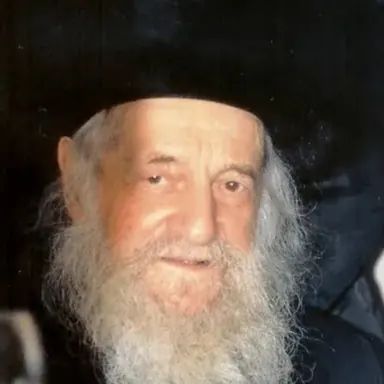
Rabbi Shmuel HaLevi Wosner
15 min read3,007 words
Summary
The article surveys the life and thought of Rabbi Shmuel HaLevi Wosner, who is considered one of the most important halakhic authorities of recent generations and served as a living bridge between the European Torah world destroyed in the Holocaust and the religious revival in the Land of Israel. The text analyses his unique halakhic method, which combines uncompromising conservatism with the ability to decide questions of technology, medicine and modernity, as expressed in his monumental series of books "Shevet HaLevi." Beyond his rulings, the source describes the founding of the Chachmei Lublin yeshiva in Bnei Brak and the development of his community into a Hasidic court of broad influence, while considering his complex attitude to the State of Israel and his ties with a variety of Torah leaders. The aim of the study is to present his figure as a supreme spiritual authority that succeeded in preserving the ancient tradition within a changing world, and in leaving an educational and legal legacy for future generations.
Halakhic Leadership and the Preservation of Tradition in the Modern World: A Comprehensive Study of the Work and Torah Teaching of Maran Rabbi Shmuel HaLevi Wosner
Introduction: The Figure of the Posek of the Generation in the Passage between Worlds
Rabbi Shmuel HaLevi Wosner, known as "the author of Shevet HaLevi," stands as one of the pillars of Orthodox halakha in the twentieth century and the beginning of the twenty-first century. His figure is not only that of an influential halakhic authority, but a living bridge between the European Torah world destroyed in the Holocaust and the rebuilding of that world in the Land of Israel.[1, 2] His work spans more than eight decades of public leadership, teaching in yeshivot and halakhic ruling that encompassed every area of life, from personal questions of family purity to complex questions of medical ethics, advanced technology and the structure of the modern state.[3, 4]
The Torah teaching of Rabbi Wosner is marked by a unique synthesis between the method of study and ruling of the circles of the "Chatam Sofer" from Hungary and the Polish learning of the Chachmei Lublin yeshiva, all under the decisive influence of the "Chazon Ish" in the Land of Israel.[3, 5] This report will analyse in depth the stations of his life, his halakhic method as reflected in his series of books "Shevet HaLevi," his confrontation with the challenges of modernity, and the founding of the "Shevet HaLevi" community, which became a unique Hasidic court in the Haredi landscape.[6, 7]
Chapter 1: The Shaping of His Torah Personality: From Vienna to Lublin
Roots in Vienna and the Intellectual Atmosphere
Shmuel HaLevi Wosner was born on 2 Elul 5673 (1913) in the city of Vienna, at a time when the city was a lively cultural and religious centre in the heart of the Austro-Hungarian Empire.[2, 5] His father, Rabbi Yosef Tzvi, and his mother, Rachel née Schiff, belonged to the social and religious elite of the city's Orthodox community. The Vienna of those days provided fertile ground for the growth of a spiritual leadership that knew the modern world but remained absolutely committed to tradition.[5] Already in his youth Wosner was marked by uncommon diligence, and eyewitnesses from that period describe a boy who used every free moment for in-depth study.[1]
The Revolution of the Chachmei Lublin Yeshiva
The most significant station in shaping his path of study was his joining the Chachmei Lublin yeshiva (Yachal) in Poland at the age of 18.[1] The yeshiva, founded by Rabbi Meir Shapiro, was a revolutionary institution that sought to restore the honour of the Torah by providing excellent living conditions for the students, combined with the highest level of study.[8] Wosner became one of the principal students of Rabbi Meir Shapiro and of the mashgiach Rabbi Shimon Zelichover.[5]
At the Chachmei Lublin yeshiva Wosner not only acquired his enormous mastery of the Shas, but was also exposed to the esoteric teaching. He was part of a select group of students who were permitted to take part in in-depth lessons in Kabbalah, which added another layer to his future halakhic teaching.[1] The deep bond with Rabbi Meir Shapiro instilled in him the conception of public responsibility: the rabbi is not only a halakhic instructor within his own four cubits, but a leader entrusted with the needs of the entire generation.[1, 5]
His Marriage and the Connection to the Hungarian Tradition
In the year 5695 (1935) Rabbi Wosner married Bracha Gelber, daughter of Rabbi Avraham Eliyahu Gelber, who was head of the Pressburg community.[1, 5] This marriage formed a critical point of connection to the tradition of the "Chatam Sofer." Pressburg was the fortress of conservative Orthodoxy, and through it Rabbi Wosner inherited the uncompromising approach toward changes in custom and tradition, an approach that would accompany him in his later rulings on matters of modesty and technology.[3]
Chapter 2: The Move to the Land of Israel and the Establishment of His Halakhic Authority
The Jerusalem Years and the "Ohel Torah" Kollel
Upon his aliyah to the Land of Israel in the year 5699, Rabbi Wosner settled in Jerusalem and joined the "Ohel Torah" kollel.[5] This institution was at the time a hothouse for the great poskim of the next generation, and Rabbi Wosner studied there alongside figures such as Rabbi Yosef Shalom Elyashiv and Rabbi Shlomo Zalman Auerbach.[9] In this period he began to develop his ties with the veteran poskim of Jerusalem, foremost among them the Maharitz Dushinsky, from whom he learned the secrets of practical halakhic instruction.[5] His first rabbinic post was in the Givat Shaul neighbourhood of Jerusalem, where he began to stand out as a posek of broad vision.[5]
The Encounter with the Chazon Ish and the Founding of Zikhron Meir
In the year 5707 (1947) a dramatic turn took place in the course of his life when he was called by the philanthropist Yaakov Halperin to establish the Chachmei Lublin yeshiva in Bnei Brak and to serve as rabbi of the Zikhron Meir neighbourhood.[2, 5] The Bnei Brak of those days was at the beginning of its development as a Torah centre, and the Chazon Ish, who was the supreme authority in the city, encouraged the appointment wholeheartedly.[5]
The Chazon Ish saw Rabbi Wosner as a continuer of the path of the old Torah world and valued his halakhic precision. The bond between the two was close, and Rabbi Wosner regarded the Chazon Ish as his principal teacher in the Land of Israel, which deeply influenced his rulings on electricity on the Sabbath, agriculture and the use of technology.[3, 10] Rabbi Wosner became the av beit din of the neighbourhood and its mara de-atra (local halakhic authority), a role that included running a kashrut system and mikvaot, and supervising Sabbath observance in the developing city.[5]
Chapter 3: His Halakhic Teaching: "Responsa Shevet HaLevi"
The Methodology of Ruling: Between Plain Meaning and Pilpul
Rabbi Wosner's central work, the series of responsa "Shevet HaLevi," comprises 11 volumes (and in new editions 12 volumes) covering all four parts of the Shulchan Arukh.[11, 12, 13] His methodology of ruling is marked by a conservative approach that is nevertheless aware of reality. Unlike poskim who expand at length on theoretical pilpul, Rabbi Wosner always strives for a clear practical decision.[9]
In his responsa he combines sources from the Talmud, the Rishonim and the Acharonim, with special emphasis on the poskim of Hungary (such as the "Chatam Sofer" and the "Maharam Schick") and the poskim of Poland and Lithuania.[3, 9] His rulings are considered "the pillar of halakhic instruction" in the Hasidic public, but they are also accepted and highly valued in the Lithuanian public because of their scholarly depth and precision.[2]
Rulings on Technology and Modernity
One of Rabbi Wosner's great challenges was adapting halakha to the rapid technological developments of the 20th century. His approach was complex:
- Electricity on the Sabbath: Under the influence of the Chazon Ish, Rabbi Wosner took a stringent approach that sees the activation of an electric circuit as the Torah-level prohibition of "boneh" (building).[10] He firmly opposed the use of Sabbath elevators in residential buildings, which led to the special building regulations in Bnei Brak that limit the height of buildings.[3, 14]
- Smart electrical devices: The rabbi discussed the question of sensors and the electronic eye. His central ruling is that one should avoid activating sensors on the Sabbath, but in cases where a person has no intention of activating them and it happens indirectly, there is room to be lenient under certain conditions.[3, 4]
- The internet and communications: Rabbi Wosner was one of the first to identify the spiritual dangers of the unfiltered internet. He ruled a sweeping prohibition on keeping internet without a filter, and even determined that one who keeps such a device is disqualified from giving testimony, a determination with broad legal and halakhic implications in the Haredi world.[3]
Chapter 4: Medical Ethics and Fertility: "Shevet HaLevi" in the Service of Medicine
Rabbi Wosner was considered the supreme authority for the "Mayanei HaYeshua" hospital in Bnei Brak, and served as a member of the institution's rabbinic committee.[2, 5] His involvement in the field of medicine was deep and daily, as he decided questions of life and death.
Defining the Moment of Death and Organ Transplantation
In the famous dispute over the definition of the moment of death, Rabbi Wosner stood on the conservative side. He rejected the determination of "brain death" as a halakhic definition of death, and ruled that as long as the heart beats, the person is considered alive and it is forbidden to take organs from him for transplantation.[3] This position posed significant challenges for the medical system in Israel, but it was accepted as binding halakha among most of the Hasidic public.[3]
Questions of Fertility and Artificial Insemination
In his book "Shiurei Shevet HaLevi on Hilkhot Niddah," Rabbi Wosner laid the foundation for dealing with modern fertility problems.[2, 4]
- Artificial insemination: The rabbi permitted artificial insemination with the husband's semen in cases of proven medical need, but limited this to cases of fulfilling the basic commandment of "be fruitful and multiply" (a son and a daughter) and not beyond, out of a desire to preserve the naturalness of the Jewish family.[15]
- Egg donation: At first the rabbi opposed the egg donation law out of concern over the confusion of lineage and unknowing marriages between relatives. After tight supervision mechanisms were put in place in coordination with the rabbis, he gave his consent in principle under very restrictive conditions.[3]
Chapter 5: The Founding of the "Shevet HaLevi" Hasidut and the Leadership of the Community
From a Community to a Hasidic Court
One of the fascinating phenomena in Rabbi Wosner's work is the transformation of his community, which began as a community of graduates of the Chachmei Lublin yeshiva and of Hungarian émigrés, into a Hasidic group in every respect.[2, 6] At first Rabbi Wosner was perceived as a halakhic authority and rosh yeshiva, but over the years his students began to treat him with the trappings of a Hasidic rebbe: holding "tishen," receiving the public for advice and blessing, and the writing of "kvitlach."[2, 6]
"Shevet HaLevi" communities spread beyond Bnei Brak and were established in prominent Haredi centres such as Jerusalem, Ashdod, Elad and Beitar Illit, as well as in communities abroad.[2] The community educates its children in the "Chug Chatam Sofer" institutions, which stress the combination of Hasidic fear of Heaven with halakhic meticulousness in the style of Hungarian Jewry.[2]
His Successors and Present Leadership
After his death on 15 Nisan 5775 at the age of 101, his grandson, Rabbi Yosef Binyamin Wosner, was crowned Rebbe of the "Shevet HaLevi" Hasidut and rosh yeshiva of Chachmei Lublin.[2, 7, 16] This process symbolized the final institutionalization of the community as a fully-fledged Hasidic court. His eldest son, Rabbi Chaim Meir Wosner, also held central rabbinic posts in London and in Bnei Brak until his death.[5, 17]
Chapter 6: His Educational Teaching and Worldview
Education and Guidance for Teachers
Rabbi Wosner saw the education of children as the foundation of the existence of the Jewish people. He stressed that the role of the "melamed" is not a technical profession but a spiritual mission.[18] In one of his famous letters he determined that a melamed who treats his work like a bank clerk transgresses the prohibition of "doing the work of the Lord deceitfully."[18] He demanded that educators be a personal example of fear of Heaven and diligence in Torah, and saw the personal bond between rabbi and student as an indispensable instrument for transmitting the tradition.[18]
His Attitude to the State of Israel and to Zionism
Rabbi Wosner's attitude to the State of Israel was complex and ambivalent. On the one hand, he did not take part in elections to the Knesset, a line characteristic of the conservative circles in Bnei Brak, and he did not go up to the Western Wall (although he permitted others to do so).[2] On the other hand, he did not refrain from cooperating with the state authorities in municipal matters; he instructed people to vote in the elections for the municipalities of Bnei Brak and Beit Shemesh in order to secure the religious needs of the community, and his yeshiva received government funding.[2] His approach was pragmatic: using the state's institutions to strengthen religion without granting the state a religious-messianic value.[2]
The Connection with Chabad and the Lubavitcher Rebbe
A unique point in his teaching was his great esteem for Chabad Hasidism and its leaders. His ties with Chabad began already in Europe with the Rebbe the Rayatz, and continued with his famous visit to the Lubavitcher Rebbe in the year 5736.[1] Rabbi Wosner was deeply impressed by the Rebbe's erudition and the breadth of his knowledge, and called him "the greatest of the giants."[1] He publicly supported the Rebbe's enactment of the daily study of the Rambam and even spoke at the central celebrations of the completion of the Rambam.[1] This connection attests to the breadth of Rabbi Wosner's horizons, who knew how to appreciate Torah greatness outside his immediate circle as well.[1]
Chapter 7: A Bibliographical Survey of His Works
Rabbi Wosner's works have become foundational books in the modern Jewish library. The following is a summary of his main Torah writings:
- Responsa Shevet HaLevi (11–12 volumes): the crowning glory of his work. The questions were sent to him from all over the world and cover every area of life. The volumes are arranged according to the parts of the Shulchan Arukh (Orach Chaim, Yoreh De'ah, Even HaEzer, Choshen Mishpat) and include detailed indexes.[11, 12, 13]
- Shiurei Shevet HaLevi (Hilkhot Niddah): this book is considered the "Tanakh" of halakhic instructors in the field of family purity. It summarizes the rabbi's in-depth lectures and presents clear decisions on intricate medical and halakhic questions.[2, 4]
- Chiddushei Shevet HaLevi on the Shas: a series of books collecting his novellae on the tractates of the Talmud, usually with an approach of plain meaning and clarification of the words of the Rishonim.[2]
- Shevet HaLevi on the Torah: sermons and explanations on the weekly Torah portions, combining moral and Hasidic ideas with halakhic discussions.[2]
Chapter 8: Summary and Conclusions: The Legacy for the Generations
Rabbi Shmuel HaLevi Wosner left behind a multi-dimensional legacy. He succeeded in building a world of Torah and halakha out of the ruins of Europe, and in raising up generations of rabbis and poskim who continue his path in halakhic courts throughout the world.[2, 5] His figure as "the posek of the generation" stemmed not only from his astonishing erudition, but above all from his ability to give halakhic security to the Haredi public in an era of far-reaching technological and social change.[3]
His work in Bnei Brak turned the neighbourhood in which he worked, Zikhron Meir, into a symbol of religious stability. The re-establishment of the Chachmei Lublin yeshiva was a historic closing of the circle for him, and it became a spiritual centre combining Polish learning with Hasidic tradition.[2, 6] On the halakhic level, the "Shevet HaLevi" books will continue to be a source of authority of the first rank for anyone who seeks to find the word of God in modern reality.[9, 12]
Rabbi Wosner proved that it is possible to be absolutely committed to the tradition of the "Chatam Sofer" ("the new is forbidden by the Torah") and at the same time to confront with courage and wisdom the innovations posed by the twentieth century. His legacy lies not only in the books he wrote, but in the thousands of students and families who to this day see him as their spiritual guide.[2, 3, 5]
Sources18
- 1.שמואל הלוי ואזנר - חב"דפדיה, chabadpedia.co.il/index.php?title=שמואל_הלוי_ואזנר&mobileaction=toggle_view_mobile
- 2.שמואל הלוי ואזנר - ויקיפדיה, he.wikipedia.org/wiki/שמואל_הלוי_ואזנר
- 3.שמואל הלוי ואזנר – ויקיפדיה, he.wikipedia.org/wiki/שמואל_הלוי_ואזנר#פסיקתו_והשקפתו
- 4.הרב שמואל הלוי וואזנר – ויקישיבה - אתר ישיבה, yeshiva.org.il/wiki/index.php/הרב_שמואל_הלוי_ואזנר
- 5.מוינה ועד בני ברק • תולדות חייו של הגר"ש וואזנר זצוק"ל – JDN – חדשות ..., archive.jdn.co.il/gallery/473631/
- 6.חסידות שבט הלוי - ויקיפדיה, he.wikipedia.org/wiki/חסידות_שבט_הלוי
- 7.שמואל הלוי ואזנר - Wikiwand, wikiwand.com/he/articles/שמואל_הלוי_ואזנר
- 8.ישיבת חכמי לובלין - ויקיפדיה, he.wikipedia.org/wiki/ישיבת_חכמי_לובלין
- 9.books.doc - Eretz Hemdah, eretzhemdah.org/data/uploadedfiles/ftpuserfiles/books/books.doc
- 10.חוברות אקטואליה-שימוש בחשמל בשבת - ישיבת היכל אליהו כוכב יעקב, torat-hayim.com/ישיבת-היכל-אליהו-כוכב-יעקב-לימוד-חינם-ב/חוברות-אקטואליה/חוברות-אקטואליה-שימוש-בחשמל-בשבת/
- 11.Shaalos UTeshuvos Shevet HaLevi - 12 Vol. Set - שו"ת - שבט הלוי - סט 1 - SeforimDeals.com, seforimdeals.com/products/shaalos-uteshuvos-shevet-halevi-12-vol-set-שות-שבט-הלוי-סט-12-כרכים
- 12.זול ספר ספרי קודש - שו"ת שבט הלוי 12 כר' / הרב שמואל הלוי וואזנר, zolsefer.co.il/שו-ת-שבט-הלוי-12-כר-הרב-שמואל-הלוי-וואזנר.html
- 13.שו"ת שבט הלוי החדש יב' כרכים עם מפתחות / הרב וואזנר - אוצר הספרים, sefer.org.il/items/3727617-שו-ת-שבט-הלוי-החדש-יב-כרכים-עם-מפתחות-הרב-וואזנר-הוצאה-לאור-אברמוביץ
- 14.פרק יז - חשמל ומכשיריו - פניני הלכה, ph.yhb.org.il/category/שבת/17-חשמל-ומכשיריו/
- 15.פוריות – פרקי מבוא - עולמות, olamot.net/shiurim/פוריות-פרקי-מבוא/
- 16.יוסף בנימין ואזנר - ויקיפדיה, he.wikipedia.org/wiki/יוסף_בנימין_ואזנר
- 17.הרב חיים מאיר וואזנר זצ"ל אב"ד שבט הלוי וראש ישיבת חכמי לובלין ברגעים נדירים HaRav Chaim Meir Wosner - YouTube, youtube.com/watch?v=VhSliv6iRV0
- 18.סיפר אבי מורי זצ"ל: לפני עשרות שנים זכיתי להשתתף באסיפת מחנכים, אשר בראשה עמד הגה"צ רבי אליהו אליעזר דסלר זצ"ל. בפתח דבריו אמר הרב דסלר כך: "אני עומד כאן וחושש לדבר". לנוכח מבטיהם התמהים של המלמדים, ביאר הרב דסלר את דבריו: "סבורים אתם שאני עומד לדבר רק, dirshu.co.il/342144-2/