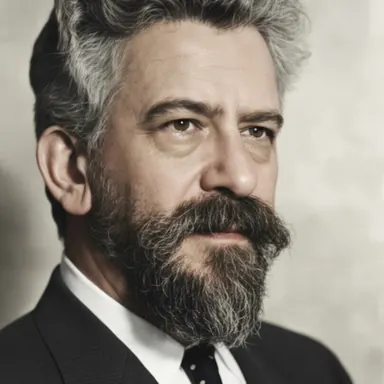
Abraham Joshua Heschel: A Phenomenology of Holiness and Justice
23 min read4,623 words
Summary
This source surveys the teaching and life of Abraham Joshua Heschel, a central thinker who succeeded in bridging the world of Hasidism and modern Western philosophy. The text outlines the theological revolution Heschel brought about, founded on the concept of "radical amazement" and on the view that God is not an abstract entity but a vital presence that is involved in history and needs the partnership of human beings. The author of the article stresses that for Heschel faith does not amount to the performance of technical rituals but constitutes a mandate for social activism, as expressed in his famous struggle for civil rights alongside Martin Luther King. Through his foundational books on the Sabbath, on prophecy and on the tension between truth and integrity, Heschel is presented as one who turned prayer into living action that seeks to repair a broken and desensitized world.
The Theological Revolution and Prophetic Activism of Abraham Joshua Heschel: A Phenomenology of Holiness and Justice
Jewish thought in the twentieth century faced an unprecedented existential and intellectual crisis, squeezed between the physical destruction of European Jewry and the dominance of modern rationalism, which threatened to empty religious life of its spiritual content.[1, 2] Within this turbulent space, the figure of Abraham Joshua Heschel (1907–1972) stands out as a unique and dazzling bridge, connecting the depths of Hasidic and kabbalistic mysticism with existentialist philosophy and Western phenomenology.[3, 4, 5] Heschel, who was born in Warsaw to an illustrious family of Hasidic rebbes and educated at the universities of Berlin, created an intellectual synthesis that sought to restore to modern Judaism the divine "pathos" and "radical amazement," while turning theology into a binding mandate for uncompromising social and political action.[6, 7, 8, 9] His work and his Torah teaching are not merely cold academic research in the history of ideas, but a bold attempt to make God present within broken human history, through a combination of mystical insight, phenomenological analysis of prophetic consciousness and social activism rooted in the depths of tradition.[10, 11, 12, 13]
The Biographical Background and Hasidic Roots as the Basis of His Thought
Understanding Heschel's teaching requires a careful look at his biographical and cultural point of departure, which forms the foundation of all his later writing. Heschel was born on 11 January 1907 in Warsaw, Poland, the son of a family of Hasidic rebbes with an illustrious lineage reaching back to the Baal Shem Tov.[3, 9] He was named after his great-great-grandfather, Rabbi Abraham Joshua Heschel of Apta, known as the "Ohev Yisrael" (Lover of Israel).[3] The environment of his childhood was saturated with intense Hasidic spirituality, which saw every single moment as an opportunity to encounter the Divine Presence and to discover the sparks of holiness in everyday reality.[12, 14] This heritage gave him the basis for what he later called "depth theology": the recognition that faith is not a set of abstract dogmas or dry laws, but an existential state of wonder, awe and total commitment.[7, 10, 15]
In the late 1920s Heschel took an unusual step when he moved to Berlin for university studies, a step that reflected the tension built into his soul between the old world of holiness and the world of science and learning.[3, 9, 16] There he was exposed to modern research methods and studied with the greatest scholars of the period, among them Hanoch Albeck, Julius Guttmann and Leo Baeck at the Hochschule für die Wissenschaft des Judentums.[3, 4] Nevertheless, Heschel felt deep disappointment with academic coldness and with the disconnect between historical research and the vitality of religious life, a feeling that accompanied him throughout his professional career and moved him to criticize the academy for its indifference to matters of the spirit.[1, 12, 17] His doctoral dissertation on the prophets, later published as one of his most influential books, was an attempt to use phenomenological tools to uncover the living core of the prophetic experience: divine pathos and human sympathy.[7, 12, 18, 19]
Depth Theology and Radical Amazement as Categories of Cognition
One of the central concepts most identified with Heschel's teaching is "radical amazement." Heschel argued that the beginning of religion, and of authentic human thought in general, lies not in the logical question of whether God exists, but in the basic human capacity to feel wonder and astonishment in the face of reality.[7, 10, 23] For him, the world is not merely a collection of objects for utilitarian use, but a living testimony to the infinite and the sublime. Radical amazement is a pre-conceptual state in which a person stands before the "ineffable," and it is this that makes possible the passage from indifferent observation to religious commitment.[2, 10, 24]
Heschel distinguishes between "theology" and "depth theology." While classical theology deals with the formulation of beliefs, dogmas and ordered systems of thought, depth theology deals with the existential foundation of faith: with the psychological and spiritual processes that take place within a person before he begins to formulate claims about God.[7, 10, 15] He criticized the modern tendency to turn religion into a frozen institution or a system of soulless rituals, which he called "religious behaviorism," and argued that religious beliefs should be "windows" to the sublime and not "screens" that hide it.[10, 12, 24]
Heschel's analysis points out that modern man suffers from "spiritual insensitivity." Science and technology, despite their tremendous achievements in the conquest of space, have made the world a place taken for granted and devoid of holiness, and have thereby imprisoned man within himself.[1, 5] Heschel argued that "wonder is the awareness that nothing is to be taken for granted," and that this experience is not only aesthetic but moral in its essence; when a person is flooded with wonder, he understands that he is not the master of the world but a guest within it, and that something is required of him in return for the gift of life.[2, 7, 10] This feeling of "debt" (indebtedness) is the basis of the commandment and of moral duty toward others.[7]
The Phenomenology of Prophecy and the Doctrine of Divine Pathos
The summit of Heschel's historical-philosophical research is his work on the prophets, which is the key to understanding his conception of the divine. Unlike many biblical scholars who saw the prophets as ecstatic or primitive figures, Heschel saw them as the supreme model of the religious personality, marked by extreme sensitivity to human suffering and to the divine will.[12, 25, 26] The central concept he developed in this context is "divine pathos."[7, 10, 18, 19]
Heschel argues that the God of the Bible is not the "Unmoved Mover" of Aristotelian philosophy, an indifferent, abstract and unchanging entity cut off from human emotions.[7, 19, 27] On the contrary, the God of the Bible is "the Most Moved Mover"; He is a God who is deeply involved in history, who cares about the fate of orphans and widows, who responds with anger to injustice and with compassion to suffering.[7, 19, 26, 28] Pathos is not a metaphysical description of God's essence, but a description of the divine relation to the world: God as a being turned toward man and in need of him.[10, 18, 19, 27]
The prophet, according to Heschel, is a person who lives in "sympathy" with the divine pathos. He is not merely a messenger who conveys information, but a person whose soul echoes the emotions of God.[7, 18, 19] When the prophet sees social injustice, he sees not only a violation of a human moral law, but a living injury to God Himself. This insight leads to Heschel's radical statement that "God is in need of man" for the completion of the work of creation.[7, 10, 14, 23, 27] Man is not only the image of God, but an active partner and a constant concern of the Creator.[7, 18]
An Architecture of Time: The Sabbath as a Spiritual Palace
Heschel's book "The Sabbath," published in 1951, is considered one of the most influential and widely read works of modern Judaism, and it is a model of theological-poetic writing.[5, 29, 30] In this book Heschel develops the idea that Judaism is fundamentally a "religion of time" and not a religion of place or space.[5, 29, 30, 31] Heschel argues that modern technical civilization is wholly invested in the conquest of space: in building machines, in accumulating possessions and in mastering matter. The Sabbath is the Jewish attempt to build an "architecture of holiness" made not of stone or mortar, but of minutes and hours.[29, 30, 31, 32]
For Heschel, the Sabbath is not merely a day of passive rest from work, but "a palace in time" that we build anew every week.[30, 31, 32, 33] It is a day of disconnection from the tyranny of matter and from the race after achievement and profit.[30, 33, 34] On this day a person does not "use" the world but is "present" before it; he does not try to change reality but to celebrate its very existence.[5, 30, 34] The Sabbath is a kind of "foretaste of the world to come," a moment of real redemption within history, in which the soul can be freed from its loneliness and reconnect with the divine source.[31, 32, 34]
Heschel stresses that the first holiness mentioned in the Bible is attributed not to an object or a place (such as Mount Sinai or the Tabernacle), but to time ("and He sanctified it," the seventh day).[30, 31] This insight constitutes a sharp critique of the human tendency to worship the tangible and the material.[5, 31] The Sabbath teaches us that the holiness of life is more important than the holiness of things, and that the conquest of the self is more important than the conquest of space.[30, 33] As noted in later analyses of his book, Heschel's Sabbath is not only a halakhic obligation but a "spiritual discipline" that enables modern man to survive the erosion of industrial life.[31, 34]
Torah from Heaven: The Dialectic of Rabbinic Thought
In his monumental Hebrew work, "Torah min ha-Shamayim be-Aspaklaryah shel ha-Dorot" (Torah from Heaven in the Mirror of the Generations), Heschel offers a comprehensive phenomenological and historical analysis of the history of the religious thought of the Sages, going beyond the accepted research approaches of his time.[27, 35, 36] He identifies two main theological currents, which he attributes to the schools of Rabbi Akiva and Rabbi Yishmael, and sees them as prototypes of all Jewish thought throughout the generations.[36, 37, 38]
Rabbi Yishmael represents the "realistic" and human approach: "The Torah spoke in the language of human beings."[11, 37] According to this approach, revelation is a historical event that was adapted to the limitations of human consciousness, and the law is intended first and foremost for the repair of society and of man in this world.[11, 37, 38] In contrast, Rabbi Akiva represents the "mystical" and transcendent approach: every letter and every crownlet in the Torah carries infinite cosmic meaning, and the commandments are instruments for directly influencing the upper worlds and the divine dynamic.[5, 11, 37, 38]
Heschel argues that vital and authentic Judaism does not choose one of the poles, but exists within the dialectical tension between them.[5, 11] He shows how this dynamic of "near and far," "man and God," continues through the period of the Geonim, the Middle Ages and on to Hasidism and the Kabbalah.[27, 35] For Heschel, the understanding that Rabbi Akiva and Rabbi Yishmael are the "pillars" of the Jewish theological edifice makes it possible to see intellectual pluralism as a supreme religious value and not as a historical malfunction.[38, 39]
His Attitude to Halakha: Between Religious Behaviorism and the Intention of the Heart
Heschel's position on halakha was complex and aroused many controversies among his contemporaries. He sharply criticized what he called "pan-halakhism": the view that reduces all of Judaism to a system of laws and the minutiae of deeds, while neglecting the conceptual and experiential side (aggadah).[5, 11, 40] For Heschel, halakha without aggadah is like a body without a soul, and he warned that excessive strictness over mundane details could turn religion into a technical burden that crushes the spirit.[13, 17, 40] On the other hand, he criticized the liberalism that had abandoned the commandment, and argued that a person cannot arrive at faith through abstract thought alone; a "leap of action" is required.[10, 13]
Heschel saw the commandment as "prayer in the form of a deed" and as a way in which man gives physical expression to the will of God.[10, 13] He stressed the importance of "intention" (kavanah) and warned against turning ritual into soulless "religious behaviorism."[12, 24] He argued that the religious crisis of his generation stemmed not from the challenges of science, but from the fact that the religious message had become "insipid" and devoid of vitality.[12] According to Heschel, the task of the Jew is "to redeem the commandments" from routine and to turn every act into a living encounter with the Creator.[13, 40]
His critique of Orthodoxy focused at times on the tendency toward "devotion to the law instead of devotion to God."[12, 41] He argued that there are moments when absolute loyalty to legal procedure can cause "grief to God," especially when it comes at the expense of compassion and moral integrity.[41] This insight was central for his students in the Conservative movement, who sought to develop a halakhic approach that combines loyalty to tradition with moral and historical sensitivity.[39, 42, 43]
Activism as Sacred Service: "The Legs That Prayed"
For Heschel, theology could not remain imprisoned between the pages of books; it demanded realization in the social and political sphere. He saw the prophets of Israel as a model of activism that stems not from secular political ideology, but from a deep religious duty arising from partnership with the divine pathos.[6, 17, 23, 25] His dramatic involvement in the civil rights movement in the United States, and especially his close relationship with Dr. Martin Luther King Jr., made him a symbol of "activist Hasidism."[9, 21, 44]
Heschel argued that "in a free society, some are guilty, but all are responsible," a sentence that became one of the mottos most identified with him.[2, 12, 23] He saw racism as "idolatry" and a desecration of God's name in the deepest sense, since it degrades the image of God in man.[2, 21, 45] In the march from Selma to Montgomery in 1965, when he walked alongside King, Heschel expressed his famous feeling: "I felt as if my legs were praying."[9, 20, 40] In this way he redefined the concept of prayer as a bodily and political act that seeks to bring justice to the world.
In addition to the struggle against racism, Heschel was one of the prominent religious voices who came out against the Vietnam War, arguing that "to speak about God and remain silent on Vietnam is blasphemous."[8, 9, 23] He also worked tirelessly on behalf of Soviet Jewry, urging the Jewish leadership and his friend Elie Wiesel to raise the voice of the "Jews of silence."[12, 44] Heschel's involvement in all of these was not a distraction from his Torah work, but its supreme realization: "the eruption of prophecy into history."[23, 25]
No Religion Is an Island: The Turn in Interreligious Relations
Heschel was a pioneer and trailblazer in the field of interreligious dialogue, an approach that stemmed from a deep recognition that the spiritual crisis of modernity threatens all of humanity.[23, 46] In his famous lecture at Union Theological Seminary in 1965, entitled "No Religion Is an Island," he argued that in a world in which nihilism and indifference are gaining ground, the different religions must find a common language of holiness and justice.[23, 46] He stressed that "religious truth does not shine in a vacuum" and that the prestige of every religion is bound up with the prestige of the other religions.[46]
His most significant contribution in this context was his decisive influence on the drafting of the Catholic Church's document "Nostra Aetate."[23, 46] Heschel met Pope Paul VI and Cardinal Bea, and pressed for a radical change in Catholic liturgy and theology toward the Jews.[46, 47] Thanks to his personal intervention, passages calling for the conversion of the Jews were omitted, and the shared responsibility of the members of all religions for the fate of humanity was recognized.[5, 23, 46, 47]
Heschel believed that religious diversity is part of the divine plan in "this aeon," and that no religion has a monopoly on holiness or on absolute truth.[5, 23, 46] This openness of his did not stem from relativism, but from a "depth theology" that recognizes that God is greater than any human dogma.[46] He developed deep friendships with Protestant and Catholic theologians, such as Thomas Merton and Reinhold Niebuhr, who saw him as one of the most authentic and important religious voices of the twentieth century.[23, 46, 48]
A Passion for Truth: The Kotzker and Kierkegaard as a Spiritual Testament
Heschel's last book, "A Passion for Truth," completed just a few weeks before his death in 1972, is a kind of existential summary of the tensions that accompanied his life.[15, 16, 49] In this book Heschel draws a fascinating comparison between two singular figures: Rabbi Menachem Mendel of Kotzk, the rebellious Hasidic rebbe, and Søren Kierkegaard, the Danish existentialist philosopher.[15, 49, 50] For him these two represented the uncompromising struggle for inner truth and religious integrity against the falsehoods of the establishment and of society.[15, 16, 49]
Heschel saw the Kotzker as the complementary opposite of the Baal Shem Tov; while the Baal Shem Tov stressed love, joy and optimism, the Kotzker demanded piercing truth, suspected hidden motives and scorned every form of habit and religious complacency.[15, 49, 51, 52] Kierkegaard, like the Kotzker, came out against the established church, which had lost the fervor of faith and become an empty social ritual.[15, 16, 49] Heschel shows how both loathed "religious mediocrity" and demanded that man stand before God in absolute integrity and existential solitude.[15, 49]
The book reflects the fact that Heschel himself was not only a man of wonder and joy, but also a man who lived in constant tension with the world and its injustices.[16] He identified with the statement that "conformity is deformity" and saw the search for truth (emet) as the highest task of man.[15, 49] In the last chapters of the book he discusses whether truth can be attained on earth at all, and reaches the conclusion that the passion for truth itself is the strongest testimony to the existence of God within man.[15, 49]
Controversy and Criticism: Heschel versus Orthodoxy and Rationalism
Despite his enormous influence, Heschel's teaching was not accepted without opposition. In the Orthodox world, figures such as Rabbi Joseph Dov Soloveitchik and Rabbi Eliezer Berkovits presented entirely different theological and methodological alternatives.[40, 53] Soloveitchik, "the man of halakha," saw the objective law and the logical structure of the Torah as the only point of departure, whereas Heschel gave decisive weight to aggadah, to subjective experience and to "pathos."[40, 54] Soloveitchik had reservations about Heschel's use of emotional categories to describe the divine, and feared that such an approach could lead to a dangerous anthropomorphism.[40]
Eliezer Berkovits criticized Heschel for what he perceived as a blurring of the boundaries between the transcendent God and finite man.[40, 54] Berkovits argued that Heschel's conception of "pathos" impairs the sovereignty and infinity of God.[54, 55] On the academic side, there were those who criticized Heschel because his books seem more like "prose poems" or Hasidic sermons than systematic philosophical studies.[56] Certain scholars at JTS even had reservations about Heschel's popularity among the broad public and about his preference for spirituality over dry textual analysis.[5, 17]
Nevertheless, Heschel's supporters argued that it was precisely his ability to go beyond the narrow boundaries of the academy that allowed him to save modern Judaism from fossilization.[3, 10, 12] They saw him as a figure who restores to man his "soul" after the destruction of Europe, and reminds him that faith is not only knowledge but "a response to a call."[12] The controversies surrounding his figure only strengthened his standing as a thinker who managed to touch the most exposed nerves of Jewish and human existence in the twentieth century.[40, 52]
Legacy and Influence: Neo-Hasidism and Jewish Renewal
Heschel's legacy continues to shape the face of modern Judaism, especially in North America but also in Israel and throughout the world. He is considered one of the fathers of the "neo-Hasidic" movement, which sought to translate the depths of Eastern European Hasidism into a psychological and theological language relevant to modern Jews.[57, 58, 59] Central figures in the Jewish renewal movements, such as Arthur Green and Zalman Schachter-Shalomi, see Heschel as their main source of inspiration for combining tradition, mysticism and social responsibility.[57, 58, 59]
Within the Conservative movement, Heschel has remained an exemplary figure who taught how loyalty to halakha can be combined with intellectual openness and extreme moral sensitivity.[22, 36, 43] His work on "Torah from Heaven" serves to this day as a basis for developing a pluralistic Jewish theology that does not give up the sources.[38, 39, 43] In the Christian world too, his books are studied in seminaries and universities as a model of authentic dialogue that respects the uniqueness of each tradition while finding the common human denominator.[19, 23, 46]
Heschel's importance today stems not only from his writings, but also from the model he set as a "prophetic intellectual": a person who does not shut himself up in an ivory tower but goes out into the street to realize the values in which he believes.[6, 9, 25, 26] As was noted at ceremonies in his memory, Heschel taught us that the opposite of good is not evil, but indifference.[28] His words continue to resound as a wake-up call to humanity in its search for meaning in a world of crises and uncertainty.[2, 6, 10, 23]
Summary and Conclusions
Abraham Joshua Heschel was a unique figure in the history of Jewish thought, a man who lived at one and the same time in the depths of the past and at the frontier of the future.[3, 5, 8] His work and his Torah teaching offer a holistic solution to the modern identity crisis, through a combination of the three ways to the knowledge of God: wonder in the face of creation, sympathy in the face of prophetic pathos, and devotion to a life of holiness and commandments.[7, 10, 24]
The conclusion that emerges from all his writings is that religion is not a system of final answers, but the art of asking the right questions.[10, 12] Heschel taught that God is not an "object" we speak about, but the "subject" who speaks to us, and that the greatness of man is measured by his ability to listen to the divine call and to answer it with "Here I am."[2, 7] In a world threatened by alienation and technology, Heschel's call to "radical amazement" and to an "architecture of time" remains a vital imperative for anyone who seeks to live a life of meaning, justice and holiness.[10, 23, 30, 32] His work remains a testimony that the human spirit, when connected to its sources, can be a reality-changing force that brings a little light into the darkness of history.[8, 12, 14]
Sources59
- 1.Abraham Joshua Heschel's Critique of Modern Society, ajr.edu/wp-content/uploads/AbrahamJoshuaHeschelCritique_Ramon.pdf
- 2.The Legacy of Abraham Joshua Heschel | Tikkun, tikkun.org/the-legacy-of-abraham-joshua-heschel/
- 3.Abraham Joshua Heschel | Research Starters - EBSCO, ebsco.com/research-starters/history/abraham-joshua-heschel
- 4.Abraham Joshua Heschel | Prophetic Activist, Civil Rights Leader & Philosopher | Britannica, britannica.com/biography/Abraham-Joshua-Heschel
- 5.Abraham Joshua Heschel - Wikipedia, en.wikipedia.org/wiki/Abraham_Joshua_Heschel
- 6.זרקור לקהילת השל | 10.12.24 | משנתו של אברהם יהושע השל - מרכז השל, heschel.org.il/story_70153/
- 7.The Radically Amazing Life & Times of Rabbi Abraham Joshua Heschel - Praying With My Legs, prayingwithmylegs.com/about/heschel/index.htm
- 8.Abraham Joshua Heschel - Leo Baeck Institute - Library of Lost Books, libraryoflostbooks.com/reading-room/abraham-joshua-heschel/
- 9.Heschel, Abraham Joshua | The Martin Luther King, Jr. Research ..., kinginstitute.stanford.edu/heschel-abraham-joshua
- 10.Abraham Joshua Heschel: A Prophet's Prophet | My Jewish Learning, myjewishlearning.com/article/abraham-joshua-heschel-a-prophets-prophet/
- 11.The Mystic's Fight Against Injustice - Common Reader - WashU, commonreader.wustl.edu/mystics-fight-injustice/
- 12.Abraham Joshua Heschel: An Appreciation | jewishideas.org, jewishideas.org/article/abraham-joshua-heschel-appreciation
- 13.The Development of Neo-Hasidism: Echoes and Repercussions Part II: Abraham Joshua Heschel and Zelda Schneurson Mishkovsky | The Lehrhaus, thelehrhaus.com/scholarship/the-development-of-neo-hasidism-echoes-and-repercussions-part-ii-abraham-joshua-heschel-and-zelda-schneurson-mishkovsky/
- 14.Chapter 1. Abraham Joshua Heschel, Prophet of Divine Pathos - De Gruyter Brill, degruyterbrill.com/document/doi/10.1515/9781400874408-003/html
- 15."A Passion For Truth" by Abraham Joshua Heschel (Book Review) - ProQuest, search.proquest.com/openview/286a91999f2c78d2aaf263b40472823e/1?pq-origsite=gscholar&cbl=1817128
- 16.ABRAHAM JOSHUA HESCHEL, A PASSION FOR TRUTH Daniel Berthold-Bond - Brill, brill.com/previewpdf/journals/rrj/5/2/article-p265_7.xml
- 17.אברהם יהושע השל – ויקיפדיה, he.wikipedia.org/wiki/אברהם_יהושע_השל
- 18.Major Themes in Modern Philosophies of Judaism, CHAPTER 6; Dr ..., sefaria.org/Major_Themes_in_Modern_Philosophies_of_Judaism,_CHAPTER_6%3B_Dr_AJ_Heschel's_Theology_of_Pathos
- 19.Divine pathos or impassibility?. Earlier this month I read Abraham J… | by Ben Nasmith | Medium, medium.com/@BNasmith/divine-pathos-or-impassibility-7a12de8ca18c
- 20.Abraham Joshua Heschel | Jewish Women's Archive, jwa.org/teach/livingthelegacy/documentstudies/abraham-joshua-heschel
- 21.Martin Luther King, Jr. and Rabbi Heschel: A friendship of spirituality and social justice - Granby Drummer, granbydrummer.com/2024/01/martin-luther-king-jr-and-rabbi-heschel-a-friendship-of-spirituality-and-social-justice/
- 22.JTS Launches Website Celebrating the Life and Influence of Rabbi Abraham Joshua Heschel - Jewish Theological Seminary, jtsa.edu/news/jts-launches-website-celebrating-the-life-and-influence-of-rabbi-abraham-joshua-heschel/
- 23.Spiritual Audacity: Abraham Joshua Heschel's Story | Reform Judaism, reformjudaism.org/blog/spiritual-audacity-abraham-joshua-heschels-story
- 24.God in Search of Man - Wikipedia, en.wikipedia.org/wiki/God_in_Search_of_Man
- 25.Review of Spiritual Audacity: The Abraham Joshua Heschel Story - CSB and SJU Digital Commons, digitalcommons.csbsju.edu/cgi/viewcontent.cgi?article=1296&context=social_encounters
- 26.Abraham Joshua Heschel, Harlem Rabi, Civil Rights Advocate And More, 1907 – 1972, harlemworldmagazine.com/abraham-joshua-heschel-harlem-rabi-civil-rights-advocate-and-more-1907-1972/
- 27.The Theology of Abraham Joshua Heschel - First Things, firstthings.com/the-theology-of-abraham-joshua-heschel/
- 28.Arnold Eisen — The Spiritual Audacity of Abraham Joshua Heschel | The On Being Project, onbeing.org/programs/arnold-eisen-the-opposite-of-good-is-indifference-sep2017/
- 29.The Sabbath - Jewish Museum Shop, shop.thejewishmuseum.org/the-sabbath
- 30.The Sabbath: Its Meaning for Modern Man by Abraham Joshua Heschel - Goodreads, goodreads.com/book/show/345500.The_Sabbath
- 31.The Sabbath: Its Meaning for Modern Man, by Abraham Joshua Heschel, commentary.org/articles/will-herberg/the-sabbath-its-meaning-for-modern-man-by-abraham-joshua-heschel/
- 32.A Palace for God, and for Us | Reform Judaism, reformjudaism.org/learning/torah-study/torah-commentary/palace-god-and-us
- 33.Rabbi Abraham Joshua Heschel | The Modern Rabbi, themodernrabbi.com/tag/rabbi-abraham-joshua-heschel/
- 34.Review: The Sabbath by Abraham Joshua Heschel - Bite-Sized Exegesis, bitesizedexegesis.com/2017/06/21/review-the-sabbath-by-abraham-joshua-heschel/
- 35.Torah min Hashamayim Ba-aspaklaria shel Hadorot (Theology of ..., muse.jhu.edu/article/258797/summary
- 36.תורה מן השמים באספקלריה של הדורות [סט שלם בשלושה כרכים] / השל, אברהם יהושע [העשל] - הגלריה לספרות - ספרים משומשים, נדירים ועתיקים - The Book Gallery, bookgallery.co.il/content/hebrew/bookpageschema.asp?bookpageid=129804
- 37.The Mystery Founder of Rabbinical Judaism - BooksnThoughts.com - Dr Israel Drazin, booksnthoughts.com/the-mystery-founder-of-rabbinical-judaism/
- 38.The Perfect Torah Versus the Evolving Torah - Part 3 - David Cardozo Academy, cardozoacademy.org/writers-guild/the-perfect-torah-versus-the-evolving-torah-part-3/
- 39.“THE PILGRIMAGE TO MANY TRUTHS” - Sinai Temple, sinaitemple.org/learning_with_the_rabbis/writings/2005/090305PilgrimageToMany.pdf
- 40.The Blogs: Was Rabbi Abraham Joshua Heschel Orthodox and does it matter?, blogs.timesofisrael.com/was-rabbi-abraham-joshua-heschel-orthodox-and-does-it-matter/
- 41.רב־שיח: אברהם יהושע השל בין נבואה להלכה | הרב פרופ' גורדון טאקר - YouTube, youtube.com/watch?v=K2wmAp2wwb8
- 42.רכש לבקו שורד: halakhic and metahalakhic arguments concerning - The Rabbinical Assembly, rabbinicalassembly.org/sites/default/files/public/halakhah/teshuvot/20052010/tucker_homosexuality.pdf
- 43.Heschel on Prophecy: Spirituality and Activism - Jewish Theological ..., jtsa.edu/wp-content/uploads/2022/12/Gordon-Tucker-Scholar-Stream-Nov-2022.pdf
- 44.MLK, Heschel, social activism and 'progressive piety' - Jewish Journal, jewishjournal.org/2023/01/19/mlk-heschel-social-activism-and-progressive-piety/
- 45.(1963) Rabbi Abraham Joshua Heschel, "Religion and Race" | BlackPast.org, blackpast.org/african-american-history/1963-rabbi-abraham-joshua-heschel-religion-and-race/
- 46.Jewish Christian Relations Today: the legacy of Abraham Joshua Heschel - The Oxford Institute | of Methodist Theological Studies, oxford-institute.org/wp-content/uploads/2013/04/2007-10-chester.pdf
- 47.Abraham Joshua Heschel and Nostra Aetate: Shaping the Catholic Reconsideration of Judaism during Vatican II - MDPI, mdpi.com/2077-1444/7/6/70
- 48.Abraham Joshua Heschel and Thomas Merton - The Rabbinical Assembly, rabbinicalassembly.org/sites/default/files/public/resources-ideas/cj/classics/heschel/abraham-joshua-heschel-and-thomas-merton.pdf
- 49.A Passion for Truth: Abraham Joshua Heschel: 9781879045415 - Christianbook.com, christianbook.com/a-passion-for-truth/abraham-heschel/9781879045415/pd/45419
- 50.A Passion for Truth - Heschel, Abraham Joshua: 9780374511845 - AbeBooks, abebooks.com/9780374511845/Passion-Truth-Heschel-Abraham-Joshua-0374511845/plp
- 51.A Passion for Truth by Abraham Joshua Heschel | Review - Spirituality & Practice, spiritualityandpractice.com/book-reviews/view/7350/a-passion-for-truth
- 52.Abraham Joshua Heschel's Philosophy of Judaism and its Interrelation with 'New Thinking', researchgate.net/publication/31170216_Abraham_Joshua_Heschel's_Philosophy_of_Judaism_and_its_Interrelation_with_'New_Thinking'
- 53.Eliezer Berkovits, Evil Empires, and Zionism - Azure - Ideas for the Jewish Nation, azure.org.il/article.php?id=261
- 54.REVIEW: Faith and History - Tradition Online, traditiononline.org/review-faith-and-history/
- 55.A Relevant Traditionalist - First Things, firstthings.com/essential-essays-on-judaism/
- 56.Heschel Transcendent - Jewish Review of Books, jewishreviewofbooks.com/articles/1005/heschel-transcendent/
- 57.A New Hasidism | Hebrew College, hebrewcollege.edu/blog/a-new-hasidism/
- 58.Shaping the Neo-Hasidic Canon - Jewish Currents, jewishcurrents.org/shaping-the-neo-hasidic-canon
- 59.Neo-Hasidism - Jewish Studies - Oxford Bibliographies, oxfordbibliographies.com/abstract/document/obo-9780199840731/obo-9780199840731-0220.xml