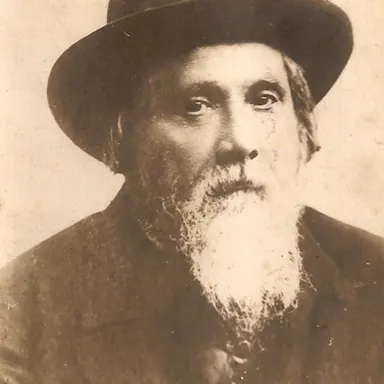
The Work and Torah Teaching of Rabbi Meir Simcha HaKohen of Dvinsk: Scholarship, Thought and Leadership in a Time of Change
24 min read4,708 words
Summary
This survey sketches the outlines of one of the most influential Torah figures of the modern era, Rabbi Meir Simcha HaKohen of Dvinsk, presenting the unique combination of classical Lithuanian scholarship, deep philosophical thought and courageous public leadership. The text examines the creative tension between his two major works: "Or Same'ach," based on an incisive legal-halakhic analysis of the teaching of Maimonides (Rambam), and "Meshech Chochmah," which offers a rationalist theological conception that denies intrinsic holiness to objects and stresses human responsibility. Alongside his literary work, the source stresses his historical role as a leader in times of crisis, from his standing by his community in the First World War to his identification of the beginning of the redemption in the San Remo Conference, a view that made him a bridge between the old world of Torah and the national upheavals of the twentieth century. All in all, the article seeks to show how his legacy has remained relevant thanks to the fusion of loyalty to tradition with a historiosophical vision that identifies the hand of Providence in modern processes.
Biography and Leadership in a Time of Crisis
Rabbi Meir Simcha HaKohen of Dvinsk, known to the generations by the names of his monumental works "Or Same'ach" and "Meshech Chochmah," is counted among the greatest rabbis and spiritual leaders in Eastern Europe at the end of the nineteenth century and the beginning of the twentieth century—the twilight period of the old world of Torah before the destruction of the Holocaust [cite: 1, 2, 3]. He was born in 5603 (1843) in the town of Butrimonys (also known as Butrimantz or Baltrimanitz) in the Vilna district of Lithuania, to Rabbi Shimshon Kalonymus HaKohen and Osnat [cite: 2, 3, 4, 5]. His birth was linked to a blessing given to his father by his teacher, Rabbi Meir of Tiktin, that a son would be born to him who would enlighten the eyes of Israel with his Torah, and after him the child was named "Meir Simcha" [cite: 4]. His parents' home was a meeting place for Torah scholars, among them Rabbi Meir HaLevi Horowitz of Tiktin, who used to stay with them as a guest [cite: 2].
Rabbi Meir Simcha's childhood was marked by the danger of the forced conscription of Jewish children into the Tsar's army (the "kidnapping of the Cantonists") [cite: 4]. One morning at dawn his mother was warned by a mysterious passer-by that her son was about to be kidnapped during the night, and his parents decided to smuggle him away and hide him in a bedding chest in the bedroom [cite: 4]. The kidnappers' search of the house came to nothing, and the child was saved and devoted his life to ascending the path of Torah [cite: 4]. His brilliant talents were revealed already in his youth, when he was sent to study under the rabbi of Slobodka, Rabbi Moshe Danishevsky [cite: 2, 3]. It is told that when he was about ten years old he was found by the beadle of the study hall standing on the ladder of the bookcase and immersed in his study for an entire night, without having noticed at all that the congregation had already dispersed to their homes after the evening prayer [cite: 4].
At the age of seventeen he married Chaya, the daughter of the wealthy Rabbi Tzvi Paltiel Makovsky of Bialystok, and moved to live in his father-in-law's house [cite: 2, 4, 5]. His wife took upon herself the burden of earning a living and successfully ran a commercial business, with the aim of enabling her husband to study Torah without interruption [cite: 2, 5, 6]. This arrangement lasted many years, during which Rabbi Meir Simcha sat in the "Gemilut Chesed" synagogue in Bialystok and studied Torah some eighteen hours a day with extraordinary diligence [cite: 4]. During this period he studied in chavruta with his friend Rabbi Yosef Zundel Hutner, and drew close to the local rabbi, Rabbi Yom Tov Lipman Halperin (author of "Oneg Yom Tov"), as well as to Rabbi Yitzhak Leib Grossberg (author of "Shai LaMora" on tractate Bekhorot) [cite: 2, 6].
In 5648 (1888), following the death of the Lithuanian rabbi of Dvinsk, Rabbi Reuven HaLevi Levin, the rabbinic post was offered to Rabbi Meir Simcha [cite: 2, 5]. Although he was a distinct Lithuanian (a "Mitnaged"), his unifying personality led to his unanimous acceptance by all the factions in the city, and he served in this role for close to forty years [cite: 2, 5]. His leadership was characterized by extreme simplicity, modesty and deep social sensitivity; he consistently refused to have his meager salary raised by the community leaders, arguing that public funds should be directed to the needy [cite: 5]. His fame reached the far corners of the Diaspora, and he declined offers to serve in high rabbinic posts in Jerusalem, in New York and in Kovno [cite: 6].
During the years of his tenure, several wondrous events were recorded that shook the city of Dvinsk. The most prominent of them, documented in the book of Isser Harel (one of the community's alumni and later head of the Mossad and the Shin Bet), concerns the flooding of the Daugava (Dvina) River because of a rapid thaw of snow [cite: 1, 2, 5]. The waters rose and threatened to breach the protective embankment and destroy the Jewish houses [cite: 3, 5]. In the midst of an emotional prayer, Rabbi Meir Simcha went out wrapped in his tallit to the embankment, followed by a crowd of thousands [cite: 3, 5]. As he ascended the embankment and offered his prayer, the ice began to move and crack, the waters receded and the city was saved [cite: 3, 5, 6]. In keeping with his rationalist outlook, the rabbi refused to see in this event a personal miracle or evidence of his holiness, but rather a simple human supplication that was received with favor before the Creator of the world [cite: 2].
The hardest test of leadership for his community came with the outbreak of the First World War, when Dvinsk became a combat zone heavily shelled by German artillery because of the large military fortress located there [cite: 7]. While most of the inhabitants and the wealthy fled, Rabbi Meir Simcha chose to remain with the poor who were left in the city, and declared that as long as nine Jews remained in the city, he would be the tenth to complete a minyan [cite: 7, 8]. In those days of distress he displayed courageous halakhic rulings; he permitted the use of flour from the market for baking matzot because of danger to life, and also delivered encouraging and forgiving sermons toward the young people who had abandoned religion because of the horrors of the war, explaining that their steadfastness under the yoke of persecution gives satisfaction to their Creator [cite: 9].
At the end of his days he suffered a heavy personal loss; his wife Chaya died, and standing at her grave he said that within a year he would join her—a prophecy that fulfilled itself with his death within a few months, on 4 Elul 5686 (1926), in a hotel in Riga to which he had traveled for medical treatment [cite: 2, 3, 4, 6]. All his children died in the prime of their lives without children, including his son-in-law Rabbi Avraham, who died in Warsaw in 5678 [cite: 6]. His legacy was commemorated in the establishment of the "Or Same'ach" yeshiva in Jerusalem, the "Meshech Chochmah" yeshiva in Bnei Brak, and in streets named after him throughout the country [cite: 6].
The Creative Division: Or Same'ach versus Meshech Chochmah
Rabbi Meir Simcha's Torah work divides into two parallel channels that complement each other, but represent completely different literary genres and modes of thought [cite: 2, 9]. Whereas his work "Or Same'ach" focuses on rigorous and meticulous halakhic-legal analysis following the order of Maimonides' "Mishneh Torah," his book "Meshech Chochmah" turns to the channel of thought, interpretation and historiosophy on the Five Books of the Torah [cite: 9, 10]. This methodological distinction was defined by Rabbi Meir Simcha himself, who used to say that he could have composed the "Or Same'ach" already in his youth, since it is based on acuity, breadth of knowledge and textual analysis, but the "Meshech Chochmah" he could compose only in his old age, after years of intellectual maturity, understanding of the human soul and contemplation of the course of history [cite: 9].
The Methodology of Study and Ruling in the Or Same'ach
The work "Or Same'ach" is considered one of the foundational books of yeshiva scholarship in the modern era [cite: 10]. The author's original style and independent approach place him in a standing similar to that of the classical commentators on Maimonides, as he systematically refines Maimonides' halakhic writing and develops it beyond the plain sense of the declared halakha [cite: 10, 14, 15].
One of the prominent characteristics of the "Or Same'ach" is the innovative and intensive use of the Jerusalem Talmud as a first-rate tool for interpreting Maimonides [cite: 10, 16]. The comprehensive study by Dr. Yitzhak Cohen of the work of Rabbi Meir Simcha reveals how the rabbi identified Maimonides' structural dependence on the literature of the Land of Israel [cite: 10, 14, 16]. The "Or Same'ach" assumed that in many places where Maimonides' ruling contradicts the Babylonian Talmud, the key to understanding the ruling lies in the readings or the discussions of the Jerusalem Talmud [cite: 10, 11].
Thus, for example, in a complex halakhic discussion concerning the authority of the king in the laws of forbidden sexual relations, the "Or Same'ach" proposes an original solution based on the discussion of the Yerushalmi in tractate Sanhedrin (the chapter "Nigmar HaDin"), and shows how royal law draws its force from a distinctive political conception that is not entirely subject to the ordinary rules of procedure of the Sanhedrin [cite: 17].
The rabbi develops the Maimonidean codification while combining abstract logical principles with uncompromising textual precision [cite: 8, 14, 15]. An analysis of several discussions demonstrates the depth of his rulings:
- Capital cases and the Sanhedrin: On the discussion of a Sanhedrin in which all opened first in a capital case and all said "guilty"—that the accused is acquitted, the "Or Same'ach" establishes a dramatic novel ruling according to which this law applies only to the Great Sanhedrin, and not to the lesser courts of twenty-three, a ruling that was accepted as a fundamental principle in the study of the laws of the Sanhedrin [cite: 18].
- Blessings and oaths of a minor: In the discussion of a minor who recites a blessing or takes an oath, the "Or Same'ach" distinguishes between answering amen after a minor's oath and answering amen after his blessing [cite: 18]. He explains that whereas a minor's oath is considered a full oath with respect to the one who answers after it, with blessings it is required that the one reciting the blessing be under obligation (bar chiyuva) in order to discharge the obligation of the listener, and therefore answering amen after a minor's blessing is not considered as one who has uttered the blessing with his own mouth [cite: 18].
The prohibition of building with wood in the Temple ("Do not deviate" / "You shall not plant for yourself an Asherah"): The "Or Same'ach" analyzes the prohibition against building a wooden structure in the Temple courtyard (such as a sukkah on the festival of Sukkot), and rules innovatively that the prohibition applies only to structures that combine two cumulative conditions: construction made of wood, and construction of a permanent character [cite: 18]. He proves that sekhakh made of straw and leaves is not included in this prohibition, and thereby resolves the question of the eating of the remainders of the meal-offerings by the Kohanim on the festival of Sukkot [cite: 18].
The law of an apostate with regard to the entire Torah at a time of persecution: Turning to Rashi's reading in tractate Avodah Zarah, the "Or Same'ach" clarifies the status of an apostate at a time of persecution as one whose heart has inclined to idolatry in an essential way, and thereby he analyzes the psychological aspect of the sin and not only the physical act that follows from it [cite: 18].
The telling of the Exodus from Egypt: The "Or Same'ach" investigates the omission of the word "to sanctify it" in the words of Maimonides in the context of the commandment to tell of the Exodus from Egypt, and proposes a methodological comparison with the law of remembering the Sabbath, while revealing the midrashic sources that underlie Maimonides' halakhic formulation [cite: 18].
This comprehensive methodology reveals independent tendencies in ruling, which move along the seam between accepting the authority of the halakhic code and the freedom of scholarly creativity and innovation [cite: 14, 15].
His Theological Teaching and the Thought on the Holiness of the Tablets in the Meshech Chochmah
Rabbi Meir Simcha's book on the Torah, "Meshech Chochmah," written over five decades and published only after his death, is a pearl of thought that combines psychological, social and historiosophical insights [cite: 9, 12, 13].
The central and most famous theological axis in the "Meshech Chochmah" appears in his commentary on the portion Ki Tisa, and presents a radical anti-fetishist conception of the concept of holiness in Judaism [cite: 19, 20, 21]. In his analysis of the episode of the golden calf and the breaking of the tablets by Moses, Rabbi Meir Simcha lays down a firm theological principle: there is no object, place or person in the world that holds intrinsic, inner or metaphysical holiness [cite: 21, 22]. The only holy one in reality is the Creator, blessed be He, whereas every other holiness in the world—whether it is the Land of Israel, the Temple, the Tablets of the Covenant or Mount Sinai—is nothing but relative holiness that stems solely from the command of the Creator and from the duty of Israel to keep the Torah [cite: 21, 22].
The rabbi explains that the motive of the children of Israel in making the calf was not denial of God, but a search for a material mediation of holiness, out of the thought that Moses, the man who brought them up from Egypt, was the source of holiness [cite: 20, 21]. When Moses delayed in coming, they sought to replace him with a golden calf that would serve as a mediating object [cite: 20, 21]. Moses our teacher, understanding the depth of this idolatrous error, broke the first tablets—which were a direct work of God—in order to demonstrate to the people that the tablets themselves are nothing but a worthless "piece of stone" without the actual keeping of the Torah by Israel [cite: 21, 22, 23].
Rabbi Meir Simcha draws attention to the symbolic fact that precisely the first tablets, which were made by Heaven, were broken, whereas the second tablets, which Moses hewed with his own hands (the work of human hands), remained whole in the Ark of the Covenant [cite: 21, 22]. Thereby it was proven that there is no intrinsic holiness in the created, and that the power of the Torah is realized only through the active cooperation and commitment of man to fulfill the will of the Creator [cite: 21, 22]. In this way, explains the "Meshech Chochmah," all the prophets of Israel proceeded when they cried out against the illusion that the physical presence of the Temple of the Lord in Jerusalem would protect the people from destruction without moral and social repair [cite: 22].
Alongside this insight, the "Meshech Chochmah" abounds in rationalist interpretations that seek to give a logical meaning to the biblical events [cite: 9]:
The faith of the forefathers toward the redemption (Shabbat HaGadol): In his commentary on the portion Ekev, Rabbi Meir Simcha explains that understanding the meaning of "Shabbat HaGadol" lies in the wondrous trust and complete faith that the children of Israel displayed in Egypt [cite: 24]. When they took the Passover lamb (the god of Egypt) and tied it to their beds in preparation for its slaughter, knowing clearly that at midnight all the firstborn of Egypt would be killed, they displayed an inconceivable level of trust [cite: 24]. It was this faith that qualified them to receive the Sabbath, which is based entirely on trust and faith in the creation of the world [cite: 24].
The double reward of Pinchas: In his explanation of the figure of Pinchas, the "Meshech Chochmah" separates the two actions he performed [cite: 9]. Pinchas stopped the plague and saved lives in Israel, and for this he received an immediate reward in this world—"My covenant of peace" [cite: 9]. On the other hand, for his zeal for the sanctification of God (a deed that requires absolute purity of intention without personal interest), his reward was kept for him for the World to Come [cite: 9].
The difference in leadership between Moses and Aaron and Nadav and Avihu: Rabbi Meir Simcha likens Moses and Aaron to a "mother" who cares in the long term for the health of the infant and feeds it with the food proper for it, whereas Nadav and Avihu were likened to a "wet nurse" who feeds the infant with foods pleasing to her own palate, without considering the future harm that may be caused to it [cite: 9]. The leadership of Nadav and Avihu was based on lofty individual spiritual attainments, but lacked public responsibility and adaptation to the level of the simple people [cite: 9].
A Theory of Exile and Redemption: "Berlin Is Jerusalem" and the San Remo Letter
An examination of Rabbi Meir Simcha's teaching reveals a consolidated historiosophical conception regarding the cyclicality of life in exile, alongside the identification of modern national processes as an expression of divine Providence [cite: 25, 26].
In his famous commentary on the portion Bechukotai, the "Meshech Chochmah" describes an almost mathematical historical regularity that governs the fate of the people of Israel in its various exiles (Spain, northern Europe and elsewhere) [cite: 26, 27]. According to this theory, when the people of Israel arrives in a new territory in exile, it finds temporary rest, establishes centers of Torah and begins to flourish [cite: 26, 27].
However, economic and social tranquility brings with it a spiritual danger: the following generations begin to forget their origin, abandon the Holy Tongue in favor of foreign languages, and seek to resemble the surrounding gentile society [cite: 26]. The climax of this process comes when the Jew imagines that the exile is his permanent home, and develops the dangerous view that "Berlin is Jerusalem" [cite: 26, 28].
At the moment when the true desire to return to the Land of Israel is forgotten, and when the foreign culture becomes the essence of existence, then "a raging wind and tempest" arises [cite: 13, 26, 28]. A wave of antisemitism and persecutions rises and uproots the Jew from his stock, drives him to a new place where he does not know the language, and forces him to remember that he is a stranger in a foreign land [cite: 26]. In this upheaval the Torah in its depth and its pilpul is temporarily forgotten, but in the new land the holy feeling awakens anew, and the following generations return to spreading Torah and expanding its borders [cite: 26]. This chilling forecast, written decades before the rise of Nazism in Germany, is considered one of the most precise and astonishing historical prophecies in the history of Jewish thought [cite: 6].
Alongside his warning against the dangers of assimilation in exile, Rabbi Meir Simcha identified the national awakening and the Balfour Declaration, and after it the San Remo Conference in 5680 (1920), as clear signs of purposeful divine guidance [cite: 25, 29, 30, 31]. In a letter he sent (which was later connected with fundraising for Keren Hayesod), he wrote these historic words: "Now Supreme Providence has brought it about that at the assembly of the enlightened kingdoms in San Remo, a decree was issued that the Land of Israel shall belong to the people of Israel" [cite: 25, 29, 30, 31].
This determination carried far-reaching halakhic implications with regard to the issue of the "Three Oaths" mentioned in tractate Ketubot (which forbids mass immigration "as a wall" or rebellion against the nations of the world) [cite: 30, 32]:
The annulment of the force of the oaths: Rabbi Meir Simcha ruled that from the moment the nations of the world themselves recognized the right of the people of Israel to the Land and gave official permission for it, the fear of the oaths was removed [cite: 25, 30, 31].
The return of the commandment of settling the Land: With the removal of the political impediment, the commandment of settling the Land of Israel (which is equal in weight to all the commandments of the Torah) returned to its full and practical force [cite: 25, 31].
The duty of practical assistance: The rabbi determined that every Jew is obligated to help with all his ability to fulfill this commandment and to support the physical building of the Land [cite: 25, 31].
This positive and bold position aroused fierce controversies in anti-Zionist and Haredi circles, which tried to argue that the letter was forged, or that the international license had lapsed in light of the secular conduct of the Zionist leaders [cite: 31, 32, 33]. Nevertheless, the historical sources confirm the authenticity of his words, which place him as one of the pioneers of the statist-halakhic outlook of the period of the beginning of the national flowering [cite: 25, 29, 30].
Public Leadership and Relations within the Rabbinic Network
Rabbi Meir Simcha's activity went far beyond the borders of Dvinsk, and he became one of the central policy-makers of Russian Jewry [cite: 34].
One of the fascinating chapters in his public leadership is the complex relationship with the Torah giant who served alongside him in the rabbinate of Dvinsk—Rabbi Yosef Rosen, known as "the Rogatchover" [cite: 35, 36]. The two geniuses led the two communities in the city (the Lithuanian and the Hasidic) for decades [cite: 2, 35, 36]. Whereas Rabbi Meir Simcha represented systematic scholarship, which seeks to resolve contradictions and build textual harmony while bringing Scripture close to common sense, the Rogatchover held an incisive analytical method that breaks down every concept into its primary components and redefines them with rigorous philosophical-legal tools [cite: 10, 35].
Despite these methodological gaps, which led to stormy scholarly debates, deep mutual esteem prevailed between them [cite: 35, 36]. Upon the death of Rabbi Meir Simcha, the Rogatchover expressed deep pain and sorrow and shed tears, while admitting that his colleague had attained at the end of his days knowledge of the Torah in its entirety [cite: 35].
Outside his city, Rabbi Meir Simcha won extraordinary admiration from the heads of the Lithuanian yeshivot and the great men of the generation [cite: 9]. Rabbi Chaim Soloveitchik of Brisk and Rabbi Avraham Yitzhak HaKohen Kook called him by the rare title "prince of the Torah" [cite: 3, 9]. On one occasion, during a rabbinic conference, Rabbi Chaim of Brisk asked his son to bring the book "Or Same'ach" with him so that he could present it publicly and show the genius of its author [cite: 9].
In 5670 (1910) Rabbi Meir Simcha took part in the historic "Petersburg Conference"—the most influential assembly of rabbis, which determined the positions of Haredi Judaism vis-à-vis the Russian government on matters of religion and education [cite: 34]. At this conference he worked shoulder to shoulder with the Chofetz Chaim, the Rebbe Rashab of Lubavitch and Rabbi Chaim Ozer Grodzinski [cite: 34].
His close ties with the Chofetz Chaim later gave rise to a rumor that the Chofetz Chaim mentioned Rabbi Meir Simcha by his full name in his book "Mishnah Berurah" in order to appease him after a stormy argument that took place between them at the conference [cite: 37]. However, a precise chronological examination refutes this rumor completely, since the last volume of the Mishnah Berurah was printed in 5667 (1907)—about three years before the Petersburg Conference [cite: 37]. The refutation of this legend heightens the historical truth: the Chofetz Chaim chose to mention Rabbi Meir Simcha's full name in his monumental work solely out of recognition and admiration for his unprecedented Torah greatness, a privilege not accorded to other sages of their generation [cite: 37].
Summary
Rabbi Meir Simcha HaKohen of Dvinsk leaves a Torah legacy that is a model of perfect fusion of pure halakha, bold theological thought and practical public leadership [cite: 9, 10]. His method of study, which refines the code of Maimonides by means of the Jerusalem Talmud, has become a permanent asset in the yeshiva world to this very day [cite: 10, 14, 38].
At the same time, his commentary "Meshech Chochmah" continues to fertilize modern religious thought thanks to its rationalist and anti-fetishist conception of holiness, which places human responsibility and moral action above any holy material object [cite: 21, 22, 38].
His deep understanding of Jewish history—from identifying the existential dangers of cultural assimilation in the Diaspora to identifying the San Remo Conference as the gateway to redemption and the annulment of the historical oaths—establishes him as a rare bridge figure, who influenced very diverse religious circles and combined absolute loyalty to tradition with foresight and a brilliant realistic vision [cite: 6, 25, 26].
Sources38
- 1.100 שנה לפטירתו: עובדות מרתקות על רבי מאיר שמחה הכהן מדווינסק, ה"משך חכמה" - הידברות, hidabroot.org/article/1214972
- 2.מאיר שמחה הכהן - ויקיפדיה, he.wikipedia.org/wiki/מאיר_שמחה_הכהן
- 3.8 עובדות על רבי מאיר שמחה הכהן מדווינסק שיום פטירתו ד' אלול - מוקד תהילים ארצי, tehillim-center.co.il/article/3722
- 4.ההסכמה שקיבל ה'אור שמח' מהרשב"א כיצד השכין ה'אור שמח' שלום בין בני זוג? ארגז המצעים שהציל את ה'אור שמח' - דרשו, dirshu.co.il/245565-2/
- 5.10 מי יודע • רבי מאיר שמחה הכהן - אמס MS, emess.co.il/radio/131159
- 6.הרב מאיר שמחה הכהן מדאוגבפילס (דווינסק) – Rabi Meir Simcha of Dvinsk (1843–1926), lat-est.org.il/historic_archive/3794/
- 7.ד' אלול - יום פטירת ה'אור שמח' | יומא דהילולא - פורום אוצר התורה, forum-otzar-hatorah.co.il/threads/ד-אלול-יום-פטירת-האור-שמח.7066/
- 8.HebrewBooks.org - רמב"ם הלכות תפלה וברכת כהנים פרק יא הלכה יז, hebrewbooks.org/rambam.aspx?rid=675&bid=20&hilite=
- 9.הגאון ר' מאיר שמחה הכהן זצ"ל / הרב חיים ראובן רבינוביץ, daat.ac.il/daat/kitveyet/shana/hagaon-4.htm
- 10.אור שמח (ספר) - ויקיפדיה, he.wikipedia.org/wiki/אור_שמח_(ספר)
- 11.HebrewBooks.org - רמב"ם הלכות גירושין פרק יב הלכה ז - פ' אור שמח, hebrewbooks.org/rambam.aspx?mfid=8701&rid=3674
- 12.משך_חכמה, tashma.co.il/books/learn/1033/משך_חכמה
- 13.משך חכמה. ריגא, תרפ"ז. מהדורה ראשונה - ווינרס מכירות פומביות, winners-auctions.com/items/משך-חכמה-ריגא-תרפז-מהדורה-ראשונה/
- 14.אור שמח - הלכה ומשפט יצחק כהן זול ספר ספרי קודש, zolsefer.co.il/ספרים-הדר.html/אור-שמח-הלכה-ומשפט-משנתו-של-הרב-מאיר-שמחה-הכהן-על-משנה-תורה-לרמבם-יצחק-כהן
- 15.'אור שמח' - הלכה ומשפט - מוסד ביאליק, bialik-publishing.co.il/index.php?dir=site&page=catalog&op=item&cs=1605
- 16.Judaica-Portal - KOBV, judaica.kobv.de/advancedSearch.do?fq=person%3Aכהן%2C+יצחק+בן+מרדכי&sortCrit=score&sortOrder=desc&hitsPerPage=10&index=internal&f1=author&v1=Meir+Simḥah+ha-Kohen%2C+of+Dvinsk+1843-1926&conj1=&f2=&v2=&conj2=&f3=&v3=&conj3=&f4=&v4=&conj4=&f5=&v5=&conj5=&f6=&v6=&conj6=&f7=&v7=&plv=2
- 17.סנהדרין יט ע"א - סמכות המלך אל מול מערכת המשפט של התורה - מכון משפטי ארץ, dintora.org/Show_article/1222
- 18.התקשרות 1278 | הרבי וה"אור שמח" על הרמב"ם - צעירי חב"ד, chabad.org.il/Magazines/Article.asp?ArticleID=14820&CategoryID=2355
- 19.פסול לך - דברי סיום לבבא קמא ופרשת כי תשא | Voices on Sefaria, sefaria.org/sheets/547644
- 20.משך חכמה, כי תשא | האוסף של ספריא, sefaria.org.il/Meshekh_Chokhmah,_Ki_Tisa
- 21.יישר כוחך ששיברת את הלוחות! - מקוה.נט, mikve.net/content/486/
- 22.יישר כוחך ששברת - ערוץ 7, inn.co.il/news/517040
- 23.פרק 24 - שמחה הכהן מדווינסק: אין שום עניין קדוש בעולם - בית אבי חי, bac.org.il/podcasts/?podcastID=20382
- 24.משך חכמה/ספר דברים/פרשת עקב - ויקיטקסט, he.wikisource.org/wiki/משך_חכמה/ספר_דברים/פרשת_עקב
- 25.תוקפו של יום, asif.co.il/wp-content/uploads/2023/03/14.pdf
- 26.משך חכמה, בחקתי יא | האוסף של ספריא, sefaria.org.il/Meshekh_Chokhmah,_Bekhukotai.11
- 27.לא מאסתים ולא געלתים - מחלקי המים, mayim.org.il/wp-content/uploads/2016/09/Bhukotay_75.pdf
- 28.הן עם לבדד ישכון - מנחת אשר, minchasasher.com/he/shiur/parsha-vort/הן-עם-לבדד-ישכון/
- 29.פרשת וארא - מקומה של ארץ ישראל בהשקפת היהדות - הרב משה צבי וקסלר, haravweksler.com/post/פרשת-וארא-מקומה-של-ארץ-ישראל-בהשקפת-היהדות
- 30.תחילת דיון תורני ורציני בהמשך לתגובה על - אזמרך בלאמים, yoel-ab.com/forumIn.asp?top_id=3727&m_id=3699&title=%F9%EC%E5%ED%20%EE%F0%E7%ED...
- 31.שלוש השבועות | Family Wiki | Fandom, danielventura.fandom.com/he/wiki/שלוש_השבועות
- 32.'מאה שנים לזיוף המכתב של האור שמח' פרק ג' - ילקוט השבעתי אתכם, yhe.center/single-post/מאה-שנים-לזיוף-המכתב-של-האור-שמח-פרק-ג
- 33.תמיכת הר' קוק בקרן היסוד - אזמרך בלאמים, yoel-ab.com/forumIn.asp?top_id=20270&m_id=20270&title=%FA%EE%E9%EB%FA%20%E4%F8%27%20%F7%E5%F7%20%E1%F7%F8%EF%20%E4%E9%F1%E5%E3
- 34.ועידת פטרבורג: מכתב היסטורי מהגאון רבי איצ'לה מפוניבז'. תר"ע - ווינרס מכירות פומביות, winners-auctions.com/items/ועידת-פטרבורג-מכתב-היסטורי-מהגאון-רבי/
- 35.שיחה:יוסף רוזין - חב"דפדיה, chabadpedia.co.il/index.php?title=שיחה:יוסף_רוזין&mobileaction=toggle_view_desktop
- 36.מאורות - פורטל הדף היומי, daf-yomi.com/Data/UploadedFiles/DY_Item/35191-sFile.pdf
- 37.המחלוקת והאגדה על ה... "משנה ברורה" - כיכר השבת, kikar.co.il/haredim-news/349499
- 38.מאה שנים להסתלקותו של רבי מאיר שמחה הכהן מדווינסק - מכללת הרצוג, herzog.ac.il/news/מהנעשה-במכללה/מאה-שנים-להסתלקותו-של-רבי-מאיר-שמחה-הכה/