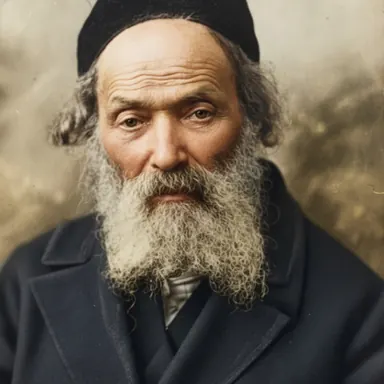
Rabbi Yisrael Meir HaKohen of Radin: A Historical and Torah Analysis of the Work of the Chofetz Chaim
16 min read3,287 words
Summary
This source surveys the life and the vast Torah enterprise of Rabbi Yisrael Meir HaKohen of Radin, known by his appellation the Chofetz Chaim, who acted as a spiritual bridge between the old world and modernity. The text stresses how the leader succeeded in turning guarding one's speech and moral conduct into a binding halakhic system, alongside writing the Mishnah Berurah, which served as the decisive code of rulings for Ashkenazi Jewry. Alongside his literary work, the source describes his active public leadership, which included founding "Agudat Israel," support for girls' education and the establishment of institutions to rescue the world of Torah. The purpose of the article is to present a figure who combined rare personal modesty with a broad strategic vision, which sought to strengthen the Jewish individual and community in the face of the upheavals of the modern era and the expectation of redemption.
The Leadership and Halakhic Teaching of Rabbi Yisrael Meir HaKohen of Radin: A Historical and Torah Analysis of the Work of the Chofetz Chaim
The Foundations of Growth and the Historical Background of the Teacher of All Israel
Rabbi Yisrael Meir HaKohen Kagan of Radin, known in Jewish historiography as the "Chofetz Chaim," represents a spiritual leader who succeeded in crossing the boundaries of communities and sectors in a period of violent upheavals in the Jewish world. He was born on 11 Shevat 5599 (1839) in the town of Zhetl in the Horodna district, then under the rule of the Russian Empire, and died in Radin on 24 Elul 5693 (1933), on the eve of the rise of Nazism and the great destruction of European Jewry.[1, 2] His life, which spanned almost a century, formed a bridge between the old world of the Eastern European Jewish shtetl and the modern era with all its political, social and spiritual challenges.[3]
He devoted the years of his youth to intensive study in Vilna, the "Jerusalem of Lithuania," where he was recognized as an exceptional prodigy. He was deeply influenced by his teacher, Rabbi Nachumke of Horodna, and by his studies in the legendary Volozhin yeshiva, which was the Torah center of gravity of the period.[3] This period shaped his scholarly outlook, which combines classical Lithuanian depth with uncompromising moral devotion. Despite his extraordinary learning, he chose the path of modesty and refused to accept official rabbinic posts in large cities, out of a desire to preserve his intellectual freedom and to devote his time to writing and to spreading Torah among the masses of the people.[1, 4]
The historical context in which he worked was one of increasing erosion of the walls of religion in the wake of the Haskalah movement, nationalism and socialism. The Chofetz Chaim recognized that the old communal structures were crumbling, and that there was a need to create new and accessible Torah tools that would strengthen the Jewish individual in his daily struggles. This conception underlay all his literary and public enterprises, from the establishment of the Radin yeshiva to the writing of the most comprehensive halakhic codes of the modern era.[1, 4]
Milestones and Formative Events in the Life of the Chofetz Chaim
The Revolution of Speech: The Canonization of Jewish Ethics
The most significant contribution of Rabbi Yisrael Meir to Jewish thought and halakhic practice is without doubt the transformation of the prohibition of lashon hara (evil speech) and gossip from a voluntary "measure of piety" into an integral and binding part of the "Shulchan Arukh."[10] Before the publication of his books, the subject of guarding one's speech was considered a vague moral matter, in which many stumbled through lack of knowledge and the absence of a clear legal basis. The Chofetz Chaim recognized that the laxity in this area stemmed from the perception that speech is "optional" and is not subject to a precise system of laws.[5, 10]
His book "Chofetz Chaim" was built on a classical halakhic pattern: division into simanim and se'ifim, and source references in the accompanying work "Be'er Mayim Chaim."[4, 11] He gathered all the Torah prohibitions and commandments connected with speech, enumerating 31 commandments (17 negative and 14 positive) that are violated as a result of forbidden speech.[5] The revolution lay not only in the ordering of the information, but in granting halakhic status to the aggadic and moral sayings of the Sages and the Rishonim, treating them as normative sources in every respect.[10]
Following this, he published the book "Shemirat HaLashon," which constitutes the moral and conceptual complement to the halakhic work. The book discusses the practical ways of coping with the urge to speak lashon hara, and stresses the importance of Torah study as a central instrument for refining the soul and speech.[11, 12] The Chofetz Chaim argued that the destruction of the Second Temple and the delay of the redemption stem to a great extent from the sin of lashon hara, and therefore repair in this area is a necessary condition for the building of the Third Temple.[5] This view linked the moral conduct of the individual with the national and messianic destiny of the people of Israel.
The consequences of the revolution were enormous. Guarding one's speech became a brand, a way of life characteristic of Haredi and religious Judaism to this day. Nevertheless, there were those who saw in this move a certain danger as well, of blurring the natural human dimension in moral conduct, since formal halakhic obligation may at times come at the expense of inner moral feeling.[10] Despite this, the Chofetz Chaim's success in instilling this subject in public consciousness is considered one of the great educational achievements of the 20th century.
The Structure and Scope of the Commandments of Guarding One's Speech according to the Chofetz Chaim
Mishnah Berurah: The Unification of Ashkenazi Halakhic Ruling
The work that made Rabbi Yisrael Meir the supreme halakhic authority for Ashkenazi Jewry is the "Mishnah Berurah." The work, written over about thirty years, is a comprehensive commentary on the "Orach Chaim" part of the Shulchan Arukh, which deals with all the daily practices of the Jew—from rising in the morning until going to sleep, through prayers, Sabbaths and festivals.[4, 6]
The need for the "Mishnah Berurah" arose as a result of an enormous accumulation of opinions among the Acharonim, which created confusion for the ordinary learner who sought to know the "practical halakha." The Chofetz Chaim was not content with quoting the opinions, but summarized them and decided between them out of a comprehensive view of the Talmudic discussions and the Rishonim.[4, 6] His method of ruling is characterized by a tendency toward stringency, but he takes care to bring lenient opinions as well and notes when one may rely on them in a time of pressing need.[4]
The structure of the book includes three main parts printed together:
- Mishnah Berurah: The body of the ruling and the halakhic decision, concisely and clearly.[1]
- Biur Halakha: An in-depth scholarly discussion of the sources of the law, intended for Torah scholars who seek to understand the roots of the ruling.[1]
- Sha'ar HaTziyun: References to the sources on which the author relied in the "Mishnah Berurah," with citations of the books of earlier decisors.[1]
The book's reception was rapid and total. It pushed aside earlier popular works such as the "Chayei Adam" of Rabbi Avraham Danzig and the "Arukh HaShulchan" of Rabbi Yechiel Michel Epstein, and became the basic textbook in every study hall.[4] Its standing today is such that every rabbi who issues rulings in an Ashkenazi community sees the "Mishnah Berurah" as the binding point of departure for every ruling.[13]
It is interesting to note the human aspect behind the writing of the book. The Chofetz Chaim's son, Rabbi Aryeh Leib, revealed in his memoirs that the work was at times shared with sons-in-law and assistants, which explains certain internal contradictions that exist between different parts of the work.[14] Nevertheless, the authority attributed to the Chofetz Chaim himself gives the book its unique validity.
The Division of the Volumes and the Main Subjects of the Mishnah Berurah
Ahavat Chesed and Social Teaching
Alongside his engagement with the laws "between man and God" and with speech, the Chofetz Chaim devoted an orderly teaching to the world of lovingkindness and society. His book "Ahavat Chesed" is considered a cornerstone for understanding the social obligations of the Jew. He argued that acts of lovingkindness are not merely an act of monetary charity, but a broad concept that includes help with one's body, one's soul and one's money.[15, 16]
In this book, the Chofetz Chaim explains that the commandment "Love your neighbor as yourself" obliges a person to see to all the needs of his fellow.[16] He details laws connected with interest-free loans (the law of the positive commandment "If you lend money"), hospitality to guests, visiting the sick and accompanying the dead.[15, 17] The author stresses that lovingkindness is the pillar on which the world stands, and that the entire Torah begins and ends with acts of lovingkindness.[15, 16]
His writing in this area was not merely theoretical. The Chofetz Chaim was known for his extreme caution regarding any suspicion of theft. He used to stamp the "proofread" seal on his books only after checking them personally, to make sure that no defective book left his hands, which might constitute fraud against the buyer.[6, 18, 19] Many stories describe how he avoided becoming rich and even blessed his son-in-law that he should not be wealthy, arguing that wealth is a hard trial that distances a person from the service of the Creator.[20] His poverty was famous, and he preferred to live in extreme modesty in Radin, devoting all his resources to running the yeshiva and supporting the needy.[20]
Likkutei Halakhot and the Preparation of the Kohanim for the Temple
A unique and fascinating facet of the Chofetz Chaim's teaching is the tangible and practical expectation of the coming of the Messiah. Unlike approaches that saw the redemption as a distant religious concept, the Chofetz Chaim lived the redemption at every moment. He held that the lack of expertise in the laws of the sacrificial service delays the redemption, for when the Temple is built, there will be no one who knows how to serve in it.[1, 21, 22]
To this end he established the "Kollel Kodashim" in Radin and composed the book "Likkutei Halakhot." The book was written on the model of the book of the "Rif" on the tractates of the Talmud of the order Kodashim (such as Zevachim, Menachot, Bekhorot and Arakhin), on which the Rif's commentary had not originally been written.[18, 23] His aim was to create a "little Talmud" that would enable Kohanim and Torah scholars to study the practical laws of the Temple service clearly.[23]
In addition, he encouraged the compilation of lists of Kohanim of established lineage in the various towns, so that the moment permission is given, there will be Kohanim ready for the service.[21, 22] This activity was accompanied by additional works such as "Avodat HaKorbanot" and "Tzipita LiYeshua," which were intended to instill in the public the awareness that the redemption may take place "today, if you will hearken to His voice."[4, 24, 25]
The Public and Political Leadership of the Chofetz Chaim
Despite his image as a righteous man detached from the world, the Chofetz Chaim was a strategist and political leader who shaped the face of the Haredi public in Europe. He was one of the initiators of the founding of the "Agudat Israel" movement in 1912, out of an understanding that Orthodox Judaism needed an umbrella organization to represent it before governments and before the secular and Zionist movements.[1, 8]
The Va'ad HaYeshivot and Support for the World of Torah
One of his most important enterprises was the establishment of the "Va'ad HaYeshivot" (Council of Yeshivot) in Vilna in 5684 (1924), together with Rabbi Chaim Ozer Grodzinski.[7, 9] After the First World War, the yeshivot in Eastern Europe were on the verge of economic collapse. The Chofetz Chaim proposed imposing a "compulsory tax" on every Jewish family for the maintenance of the yeshivot, and the council became the central economic and spiritual body uniting the dozens of yeshivot in Poland and Lithuania.[9] The leadership of the Chofetz Chaim gave the council the necessary legitimacy among the Jewish public at large.
Girls' Education and the "Beit Yaakov" Network
Another revolutionary step was his open support for Sarah Schenirer and for the establishment of the "Beit Yaakov" network for girls' education.[1, 8] In those days, institutional Torah education for girls was an innovation that aroused fierce opposition in conservative circles. The Chofetz Chaim, in his shrewdness, understood that without a proper Jewish school, the daughters of Israel would be swept into the government schools and the modern movements. His famous letter on the subject gave the halakhic "seal of approval" to a revolution that changed the face of the Jewish family in the 20th century.[1, 26]
His Political Positions and Attitude toward Zionism
The Chofetz Chaim took a reserved position toward the Zionist movement and its institutions. He feared that the secular national aspiration would come at the expense of commitment to Torah and the commandments, and therefore refused to join the Agency or to establish a joint parliamentary bloc.[1] He even tried to persuade Rabbi Yitzchak Yaakov Reines, founder of "Mizrachi," to retract his support for Zionism, but nevertheless maintained respectful relations with him.[1] With regard to the Land of Israel, despite his reservations about the Zionist movement, he showed enormous affection for the Land and a fierce desire to go up to it in his last years, a plan that was not carried out because of the entreaties of his disciples, who feared being left without his leadership.[1, 24, 25]
Guidance Literature for Specific Audiences
Rabbi Yisrael Meir identified the specific needs of groups in the population that were exposed to spiritual risks, and composed dedicated books for them:
- "Nidchei Yisrael": A book written for Jews who emigrated to distant lands (such as the United States) or served in foreign armies. The book contains halakhic guidance and encouragement in faith adapted to the hard conditions of life outside the cohesive Jewish community.[1, 27]
- "Geder Olam": A work devoted to women, dealing with the importance of modesty and the preservation of the identity of the Jewish woman in a changing world.[1]
- "Sefat Tamim": A book dealing with the prohibitions of lying, deceit, theft and fraud in commerce, aimed at businessmen and merchants.[4, 28]
- "Taharat HaBayit": A halakhic and moral book on family purity, a subject in which the Chofetz Chaim saw supreme importance for the continuity of the generations.[1]
- "Davar BeIto": Encouragement in matters of forbidden foods, a subject that had become breached in many places as a result of the wars and wanderings.[4, 28]
A Comparison of the Chofetz Chaim's Major Books
Personal Conduct and the Exemplary Figure
Beyond his books, the "Chofetz Chaim" became a legend in his own lifetime thanks to his personal conduct. He was a symbol of extreme integrity; it is told that he once traveled in a wagon with cattle dealers who began to speak lashon hara. He tried to dissuade them from it gently, and when he did not succeed, he asked the wagon driver to let him off in the middle of the road, despite the hardship, so as not to stumble in hearing lashon hara.[6]
His caution regarding the pleasures of this world was legendary. He refused to accept honor and gifts, and made his living from a small shop that his wife ran, while insisting on exact weights and measures to the utmost limit.[20] His physical figure—short of stature, dressed in simple but always clean clothes—reflected his view that a Jew is a "king's son" and must look clean and orderly despite poverty.[20]
In his old age, when he was very weak, he showed his disciple that all his teeth had remained healthy and whole. He explained this by the fact that he had guarded his mouth from all forbidden speech, and the Holy One, blessed be He, had guarded him in return.[6] This simple faith, together with halakhic depth and a strategic view of the needs of the generation, made him a leader whose words were heard with reverence from the Polish emperor down to the last Jew of the shtetl.[7]
Conclusions and an Assessment of His Work
Rabbi Yisrael Meir HaKohen of Radin was not only a halakhic decisor, but an architect of Orthodox Jewish culture in the modern era. His work was characterized by three main vectors that were combined in a rare synergy:
- Halakhic standardization: Through the "Mishnah Berurah," he gave Ashkenazi Jewry a uniform code that unified customs and rulings, and created a shared halakhic language that survived the move to America and to Israel.
- Moral institutionalization: By turning ethics into halakha in the "Chofetz Chaim," he created a mechanism of social and personal oversight over speech and society, which raised the moral bar of the religious community.
- Institutional activism: The establishment of Agudat Israel, the Va'ad HaYeshivot and Beit Yaakov proved that he understood the importance of organizational power in the struggle over the character of the Jewish people in an age of secularization.
His Torah teaching continues to guide millions of Jews throughout the world, and his books are an inseparable part of every Jewish library. The Chofetz Chaim proved that the figure of a poor and remote righteous man can be the most influential on the greatest movements of history, and that the power of the written word and of clean speech can shape reality for generations.[1, 4, 22]
Sources28
- 1.ישראל מאיר הכהן - ויקיפדיה, he.wikipedia.org/wiki/ישראל_מאיר_הכהן
- 2.92 שנה לפטירתו של החפץ חיים - 10 עובדות לדמותו הגדולה - הידברות, hidabroot.org/החפץ-חיים/
- 3.רבי ישראל מאיר הכהן מראדין ה'חפץ חיים' - כ"ד אלול - ברסלב סיטי, breslevcity.co.il/הילולת-הצדיקים-כד-אלול-רבי-ישראל-הכהן-מ/
- 4.משנה ברורה | ספריא, sefaria.org.il/Mishnah_Berurah
- 5.ה'חפץ חיים': כל מה שרציתם לדעת על הספר המפורסם ועל מחברו הגדול - הידברות, hidabroot.org/article/229479
- 6.החפץ חיים - קורות חייו מנהגיו וחיבוריו העצומים - פרשת יהדות, parashat.co.il/chafe-chaim/
- 7.החפץ חיים - איגוד יוצאי וילנה והסביבה בישראל, vilna.co.il/היסטוריה-ומורשת/אישים/רבנים-ואנשי-דת/החפץ-חיים/
- 8.10 עובדות על "החפץ חיים" שיום פטירתו כ"ד באלול - מוקד תהילים ארצי, tehillim-center.co.il/article/3744
- 9.ועד הישיבות – ויקיפדיה, he.wikipedia.org/wiki/ועד_הישיבות
- 10.ההלכה והמוסר - מהפכת ה"חפץ חיים" - צריך עיון, iyun.org.il/sedersheni/ההלכה-והמוסר-מהפכת-החפץ-חיים/
- 11.שמירת הלשון - ויקיפדיה, he.wikipedia.org/wiki/שמירת_הלשון
- 12.שמירת הלשון, toratemetfreeware.com/online/f_01605.html
- 13.כללי הוראה בהלכות מסופקות, asif.co.il/wp-content/uploads/2021/04/Maalyyot-19-145-167.pdf
- 14.סתירות בפסקי המשנה ברורה (פסחים מו ע"א) - פורטל הדף היומי, daf-yomi.com/DYItemDetails.aspx?itemId=55274
- 15.אהבת חסד, פתיחה לעניני מדת החסד ב, sefaria.org.il/Ahavat_Chesed,_Introduction.2
- 16.הסוד לחיים טובים יותר: הכירו את הספר "אהבת חסד" של החפץ חיים - הידברות, hidabroot.org/article/1196330
- 17.אהבת חסד - תורת אמת, toratemetfreeware.com/online/f_01815.html
- 18.לקוטי הלכות לחפץ חיים. [4] כרכים. עם הכיתוב המרטיט "מוגה" - ווינרס מכירות פומביות, winners-auctions.com/items/לקוטי-הלכות-לחפץ-חיים-4-כרכים-עם-הכיתוב/
- 19.ליקוטי הלכות. למרן החפץ חיים מראדין. מהדורה ראשונה עם הכיתוב 'מוגה' בכתי"ק. עותק מיוחס לגדולי המוסר בליטא. | בית המכירות תפארת, tiferetauctions.com/auction/296-מכירה-53-שבט-he/lot-31-ליקוטי-הלכות/
- 20.מרן החפץ חיים זצ"ל: 7 סיפורים מרתקים ש(אולי) לא שמעתם מעולם על ה'חפץ חיים' - הידברות, hidabroot.org/article/1173713
- 21.החפץ חיים זצוק"ל עורר מאוד על לימוד... - פורטל הדף היומי: הודעה בחלון חדש, daf-yomi.com/Forums/Message.aspx?id=109354
- 22.החפץ חיים זצוק"ל עורר מאוד על לימוד סדר קדשים. הוא שלח לרבנים שישבו ..., dirshu.co.il/556576/
- 23.דרך חכמה, והוא פירוש וביאור על ספר משנה תורה סדר קודשים, חלק ראשון, מאת הרב שמריהו יוסף חיים קניבסקי, בני ברק – ספריית אסיף, asif.co.il/wpfb-file/al-b-16-9-pdf/
- 24.מכתב היסטורי אודות ניסיונות העליה לארץ ישראל, מאת רבי אהרן הכהן - חתנו של מרנא החפץ חיים, winners-auctions.com/items/מכתב-היסטורי-אודות-ניסיונות-העליה-לאר/
- 25.למה סגר מרנא ה'חפץ חיים' את חנותו? • 82 שנים לפטירתו - אמס, emess.co.il/radio/232097
- 26.מי היתה "אמנו שרה"? - אל מדף ספרי ההיסטוריה, sharon-geva.com/2020/01/מי-היתה-אמנו-שרה/
- 27.נדחי ישראל – ויקיטקסט, he.wikisource.org/wiki/נדחי_ישראל
- 28.רבי ישראל מאיר הכהן | טקסטים ודפי מקורות מן התורה, התלמוד וספריית המקורות של ספריא., sefaria.org.il/topics/israel-meir-kagan